

Anterior veneers (laminates) can help restore chipped, stained, or slightly uneven front teeth with minimal tooth reduction. Learn when veneers work best, how they differ from crowns or resin, and how to maintain a natural-looking smile long term.
“I bit into something hard and chipped my front tooth a little. I can’t unsee it every time I look in the mirror.”
“My front teeth look too yellow—and whitening doesn’t help at all.”
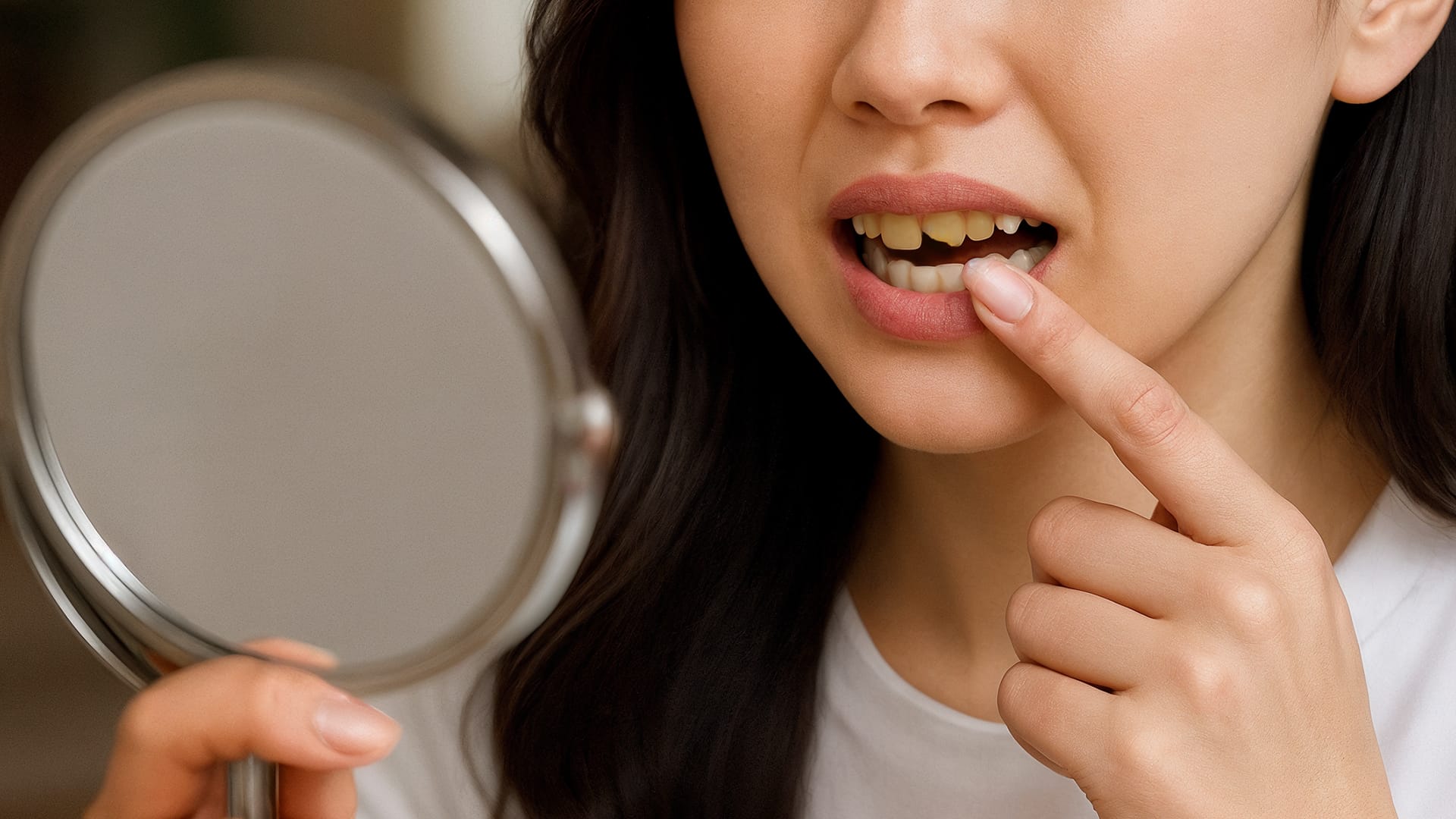
Sound familiar? When you smile or speak, your front teeth are the first thing people notice—so they play a major role in your overall impression. Even if the tooth isn’t severely damaged, a small chip or a tiny gap can cause significant stress and make it hard to smile confidently.
The good news is that today, there are treatment options—such as anterior veneers (often called “laminates” in Korea)—that can help restore the appearance of front teeth while minimizing damage to the natural tooth.
In this article, we’ll explain—in an easy, patient-friendly way—when anterior veneers tend to be most effective, why veneers may be preferred over crowns (which cover the entire tooth) or resin fillings (used to repair decay), and how to care for your smile so the results can last.
1.What are anterior veneers?
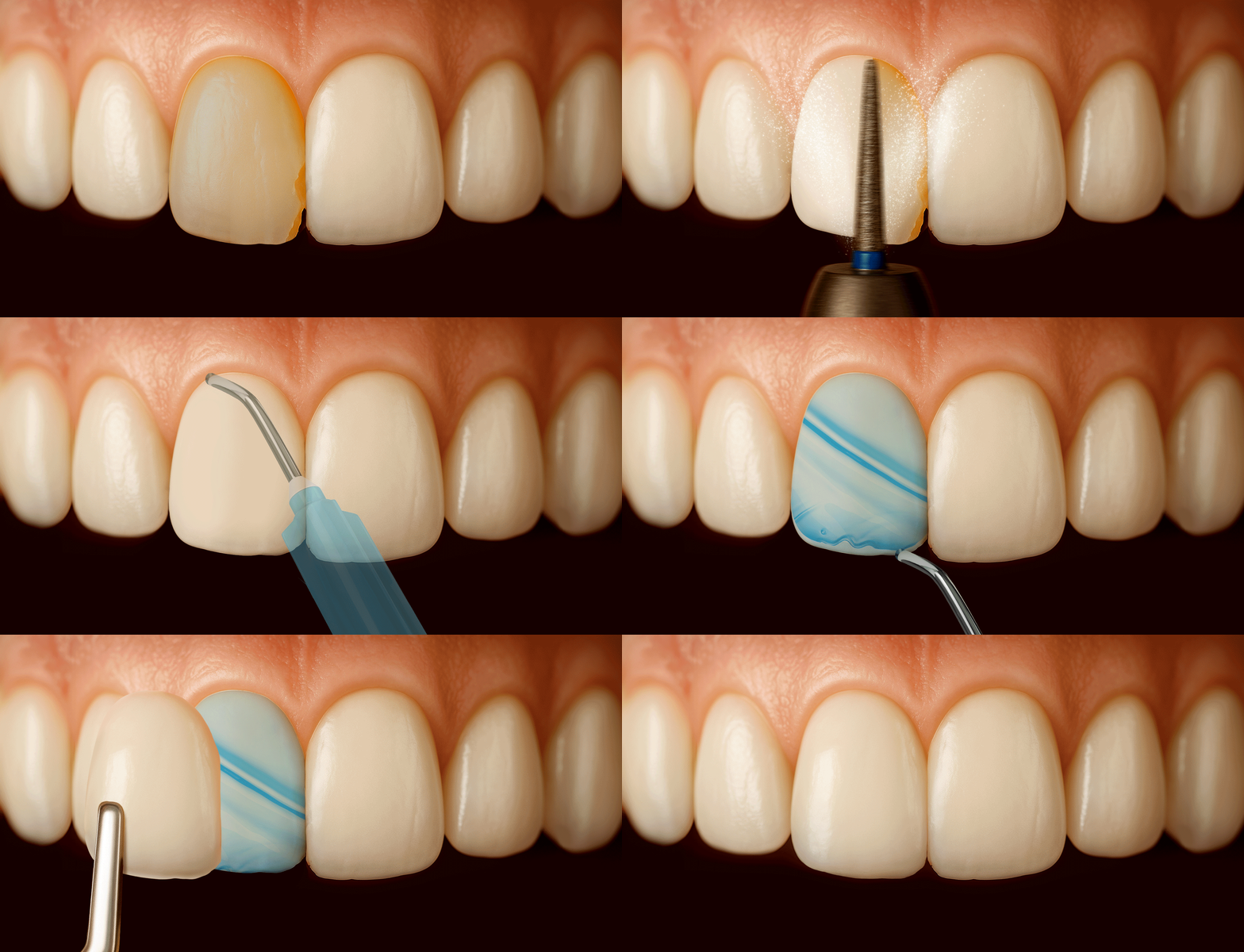
Anterior veneers are a treatment where the outermost surface of the front tooth is adjusted very slightly, and then a thin ceramic shell—about the thickness of a fingernail—is bonded to the tooth using a specialized dental adhesive.
The main goal is to restore a natural-looking smile by harmonizing the color, shape, and length of a tooth that is damaged or aesthetically unsatisfying with the surrounding teeth.
In the past, teeth that were chipped or discolored were often treated with crowns that fully cover the tooth. However, crowns typically require substantial tooth reduction, which can mean sacrificing more healthy tooth structure.
Veneers, by contrast, often involve minimal reshaping—and in some cases may involve no reshaping at all—allowing you to preserve as much healthy tooth as possible while improving appearance. As ceramic materials have advanced, it has become possible to choose from a wider range of shades. Thanks to the material’s translucency, veneers can be matched to your original tooth color for a natural result, or designed to look brighter—similar to a whitened shade—depending on your goals.
2.When are anterior veneers a good option?
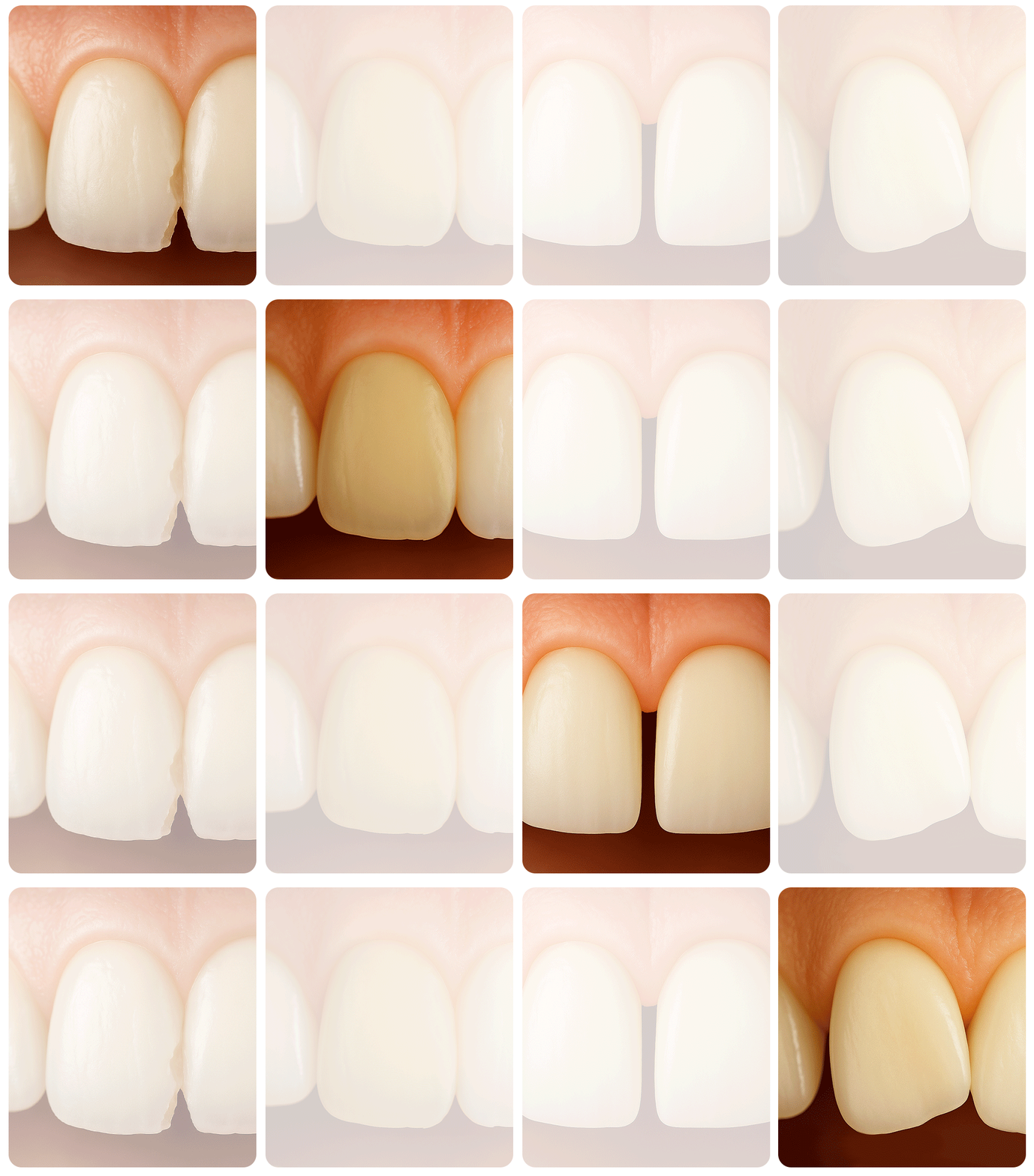
If you’re dealing with concerns about your front teeth, you may wonder when veneers are the best choice. Veneers can be particularly effective in situations like the following:
1) Minor chips or wear (when damage is not severe)
If the edge of a front tooth is slightly chipped from biting something hard, or if the tooth edge has worn down, veneers can restore the tooth’s shape cleanly—covering the damaged area as part of the overall design. Compared with resin that fills only the chipped area, ceramic veneers are less likely to change color over time and may last longer. Also, chips sometimes come with fine cracks around the area, and a veneer may help reinforce those regions as part of the restoration.
2) Severe discoloration that whitening does not improve
If discoloration is caused by intrinsic factors—such as medication-related staining (e.g., tetracycline) or a tooth that has darkened after the nerve inside the tooth has died—whitening may not produce meaningful improvement. Veneers cover the outer surface with a ceramic shell in the shade you select, which can help create a more consistent, brighter-looking smile line.
3) Gaps between front teeth or irregular tooth shape
Veneers can help when there is spacing between the front teeth, when a tooth looks noticeably smaller than neighboring teeth, or when tooth shape is irregular (for example, “butterfly-shaped” teeth). In many cases, veneers can fill space and balance proportions by adding material with minimal reshaping of the natural tooth.
4) When you want to improve slightly misaligned front teeth without full orthodontics
If your overall alignment is acceptable but one or two front teeth are slightly rotated or angled, veneers may create the appearance of a more even smile—similar to the visual effect of minor alignment correction. This can be appealing when you want improvement relatively quickly without a long orthodontic timeline.
3.Three reasons veneers may be preferred for front teeth
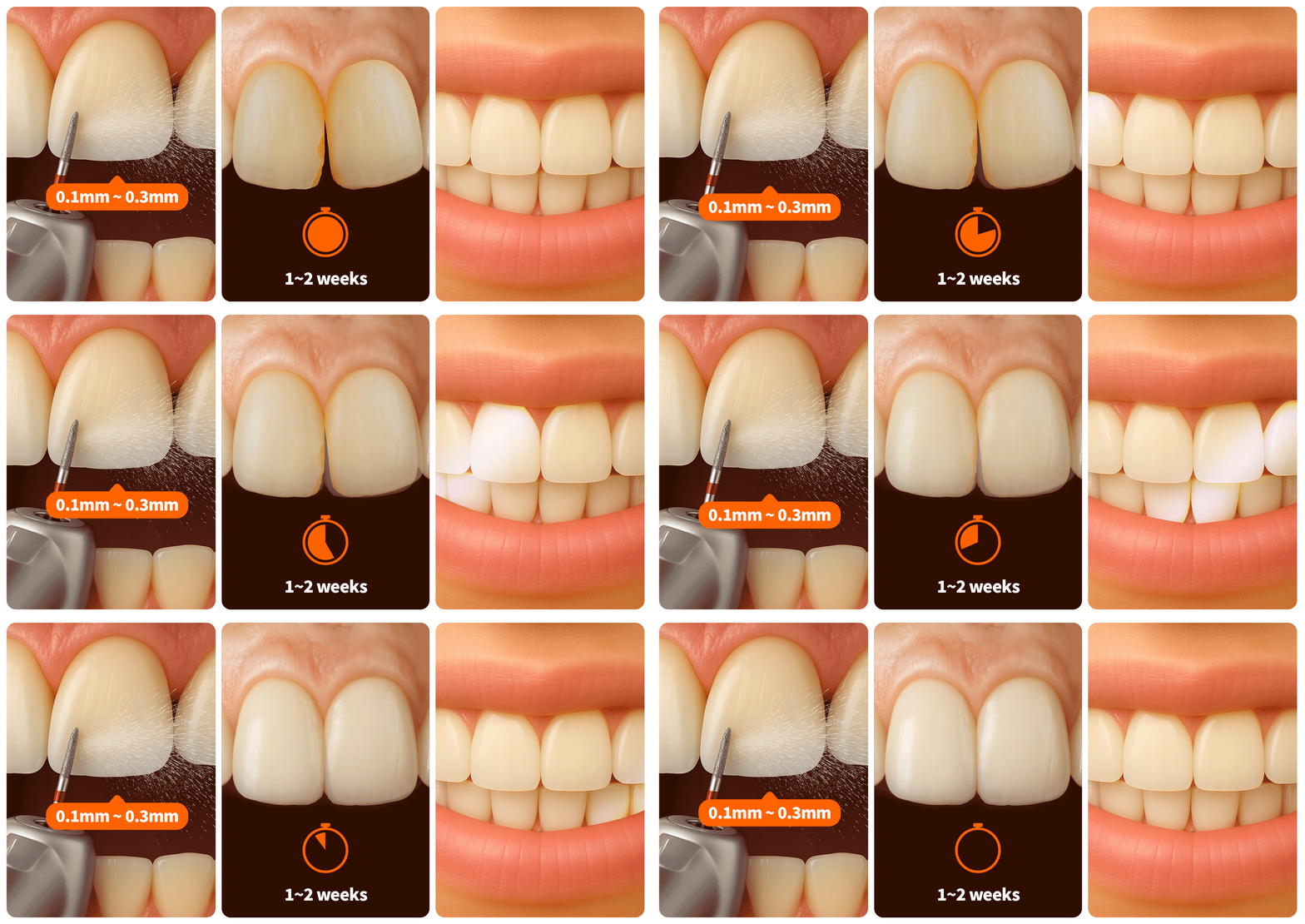
In the situations above, crowns, orthodontic treatment, or resin-based restorations may also be considered. Even so, veneers are often discussed because of two practical factors: how much tooth structure is removed and how long treatment takes.
1) Less tooth reduction than crowns
Crowns cover the entire tooth, so they typically require substantial tooth reduction. Veneers, on the other hand, usually involve reshaping only the front surface—or sometimes none at all. Preserving healthy tooth structure can be beneficial for long-term tooth vitality and nerve health. If the damaged area is not extensive, choosing a more conservative option may be a reasonable approach.
2) Faster visible change than orthodontics
Minor orthodontic treatment can be an excellent way to change tooth position, but it can take time—often at least several months, and sometimes more than a year. Veneers can provide a visible aesthetic change more quickly, sometimes within about 1–2 weeks.
This can be useful when you have time-sensitive events such as a wedding or an important photo shoot. However, if bite (occlusion) problems are significant, orthodontics may need to be considered first.
3) Longer-lasting aesthetics than resin
Resin restorations can become more yellow over time or may be more prone to chipping. Ceramic veneers tend to maintain their color more consistently, and the material can be stronger than resin—helping you keep a clean, bright-looking smile line for longer.
4. Do veneers require shaving down a lot of tooth?
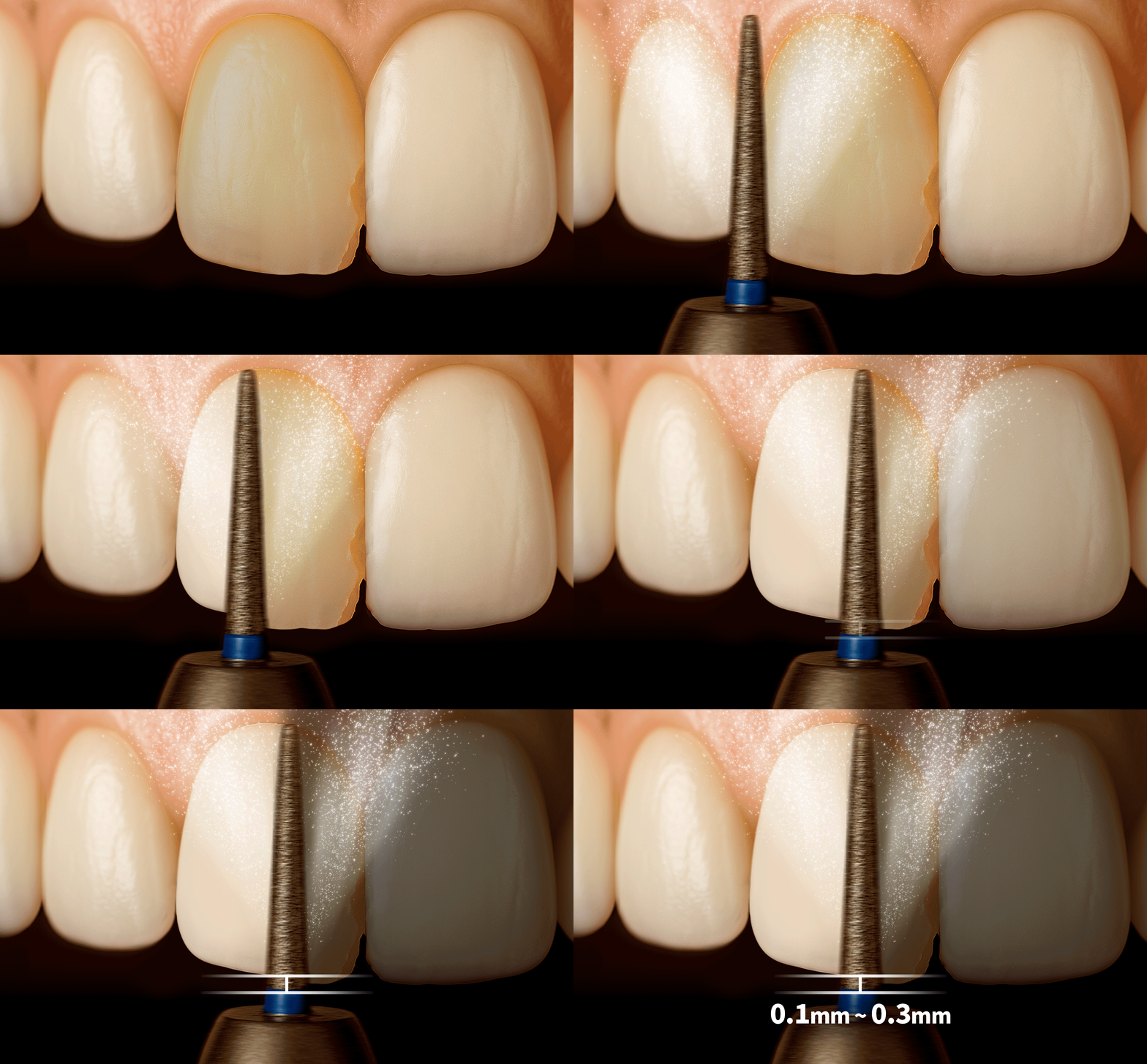
Many people worry that veneers require removing a large amount of tooth structure and that it will cause problems later. This perception often comes from older techniques. A key principle in modern aesthetic dentistry is minimal reduction.
In most cases, the goal is to reshape only within the enamel—the hard outer layer of the tooth—and remove as little as possible. If alignment or shape correction is needed, certain areas may be adjusted, but the tooth should not be reduced without a reason. After smoothing and preparing the surface, the ceramic can bond more predictably, and there can be enough space for the veneer to look natural in thickness once placed.
Why does minimal reduction matter?
If too much tooth structure is removed, the softer dentin layer closer to the nerve may be exposed. When dentin is exposed, sensitivity to cold can occur after treatment, and the veneer may bond less strongly—potentially affecting longevity.
With good care, veneers can last for 10–20 years, and reported success rates can be over 90%. However, the key factors behind these outcomes are minimizing tooth reduction and ensuring meticulous, precise bonding. That’s why it’s important to plan treatment carefully through a thorough consultation with an experienced dental team.
Treatment outcomes, timelines, and experiences can vary by individual, and decisions should be made in consultation with your dentist.
5.How to maintain a beautiful smile line long-term
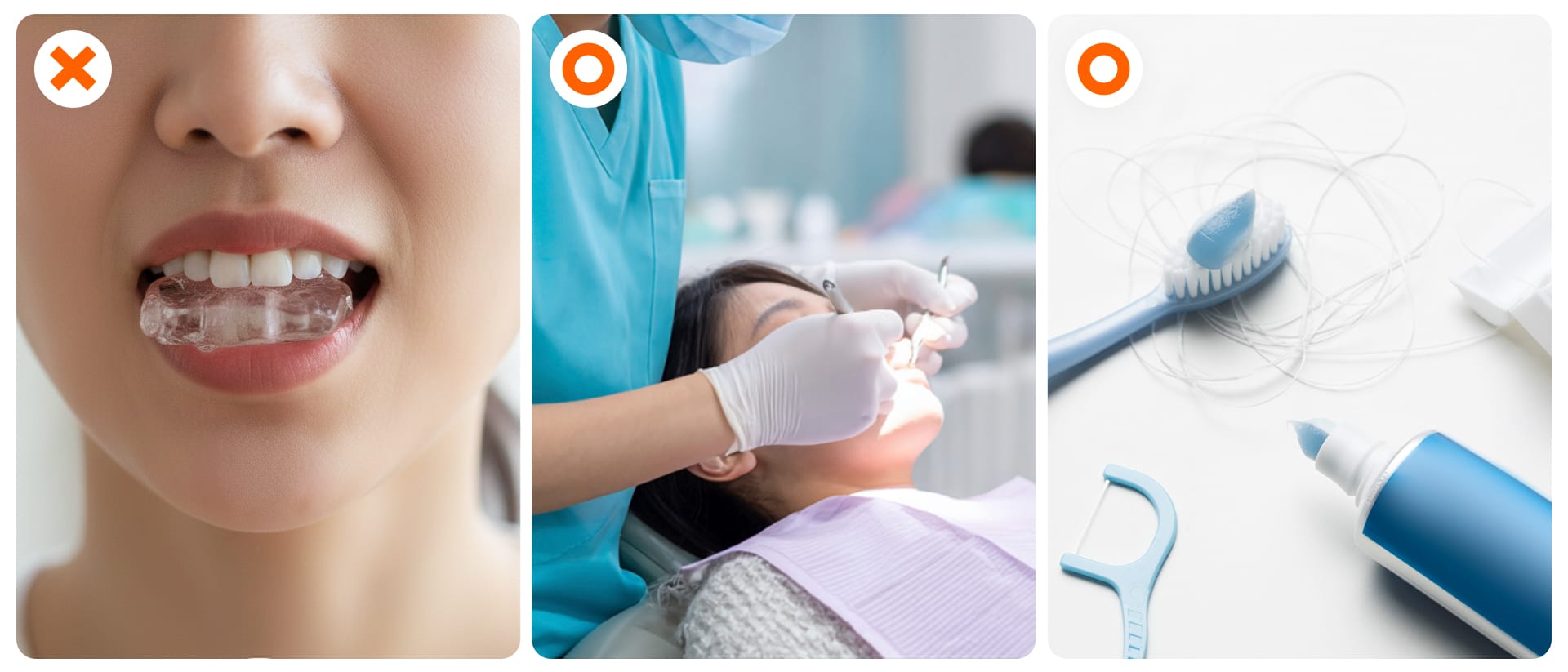
Once you’ve achieved a more attractive smile line with anterior veneers, protecting that result becomes the next priority. Ceramic is stain-resistant and durable, but a few habits can help extend longevity.
1) Avoid hard or tough foods
Just like natural teeth, veneers can chip or debond under strong impact. Avoid biting or tearing hard or tough foods with your front teeth—such as ice, bone-in foods (like ribs), or crab shells. Building the habit of chewing hard foods with your molars can help.
2) Schedule regular dental maintenance
Veneers themselves are resistant to discoloration, but the margin where the veneer meets the natural tooth can change color over time. Visiting your dentist every six months for an exam and professional cleaning can help prevent staining at the margins. If you receive scaling, be sure to tell the dental team that you have veneers.
3) Maintain healthy gums and a stable bite
For veneers to last, gum health and bite stability matter. If gum disease is present or bite forces become unbalanced, excessive stress can be placed on the restoration—raising the risk of chipping or debonding. Ongoing gum care at home is important.
6.Frequently Asked Questions (FAQ)
Q. My front tooth is chipped—do I need root canal treatment?
If the chip is minor and the nerve is not exposed, it may be possible to restore the tooth with a veneer without root canal treatment. However, if the fracture is deep and the nerve is damaged or there is infection, root canal treatment may be needed first to protect the tooth, followed by a veneer or a crown.
Q. Can veneers replace minor orthodontic treatment?
If the front teeth are only slightly misaligned, veneers can create the appearance of straighter teeth by subtly adjusting shape and proportions. This is an aesthetic “optical effect” rather than a true change in tooth position, and it can be appealing for people who want noticeable improvement in a shorter time.
Q. Will my smile look unnatural or “fake” after veneers?
Modern veneer treatment often prioritizes natural-looking results. Dentists consider facial features and gum shape, and match the ceramic’s translucency and shade carefully. After treatment, practicing smiling more confidently can also help you feel more natural in your expression.
Q. Do I really need frequent dental visits after veneers?
Yes. Veneers themselves are resistant to discoloration, but staining can occur at the margins, and gum health can change over time. Regular checkups help monitor the restoration and your gums so you can maintain a healthy, attractive smile line longer.

If chipped front teeth, discoloration, or asymmetry has been bothering you every time you smile, veneers may be an efficient and aesthetically satisfying option. However, for the best outcome, it’s important to choose a dental team that follows a conservative principle of preserving as much natural tooth structure as possible—and that carefully evaluates your bite and gum health as part of the plan. We hope you can achieve a smile line you feel good about through a treatment approach that prioritizes your dental health first.
Sources
- Korean Academy of Aesthetic Dentistry. (2022). Clinical Guidelines for Minimal-Reduction Veneers.
- The Korean Academy of Prosthodontics. (2023). Long-Term Prognosis Studies on Ceramic Veneers.
- Friedman, M. J., et al. (2019). Clinical longevity of porcelain veneers: 20-year review. Journal of Esthetic and Restorative Dentistry, 31(2), 123–130.
※ The copyright for all content on this blog belongs to Medihi. Unauthorized copying, distribution, or derivative use is strictly prohibited, and violations may result in legal action without prior notice.
Recommended reads
 medihi