

In This Article
Atopic dermatitis tends to affect different areas of the body depending on age. We’ll look at how it shifts from the face in infancy to the inner elbows and behind the knees in childhood, along with itch management, ointment use, and maintenance therapy.
1. Why atopic dermatitis in infants often starts on the face
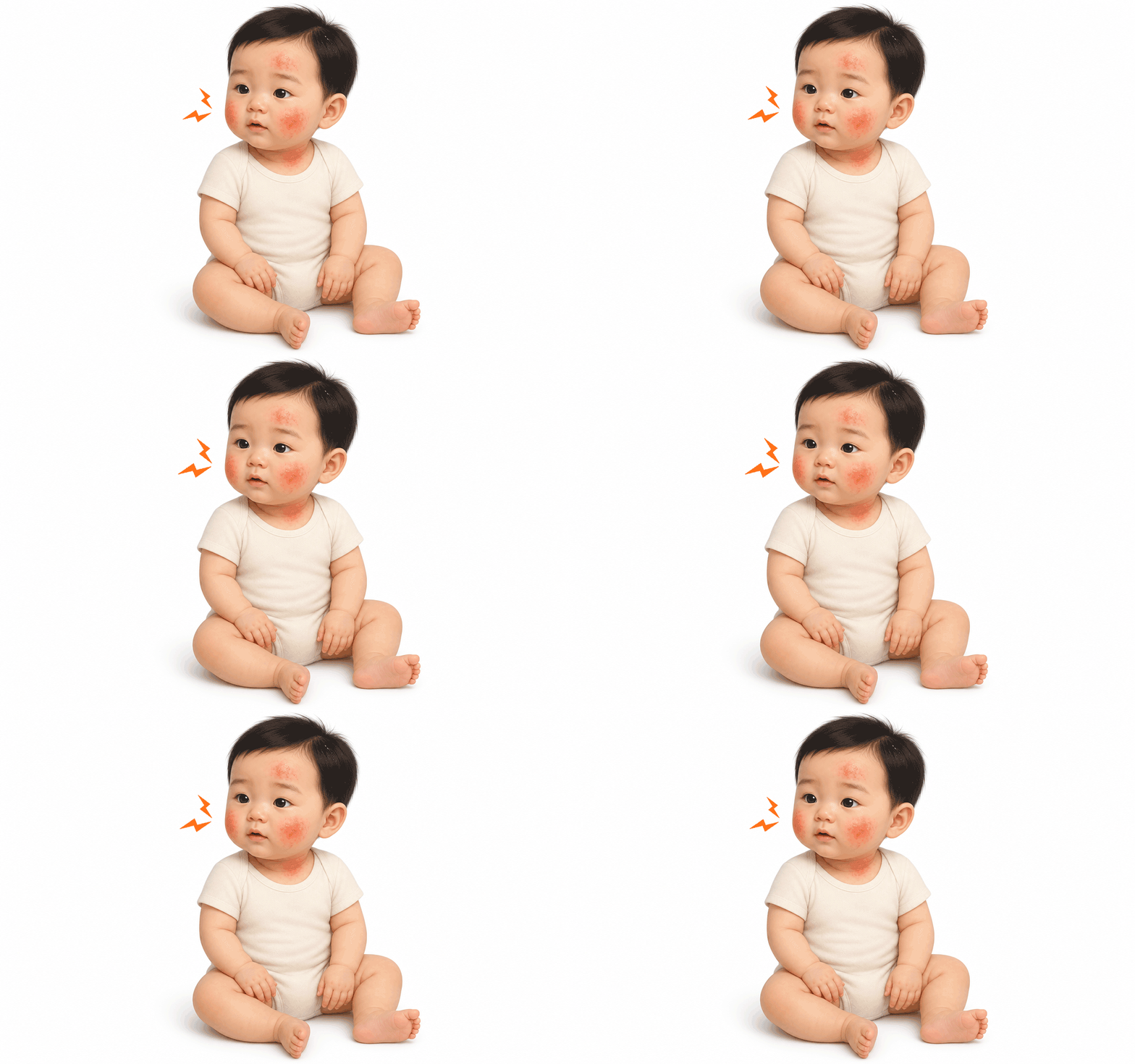
In infants under 2 years old, atopic dermatitis is often first noticed in areas that warm up easily and are frequently exposed to external irritation—both cheeks, the forehead, the neck, and around the scalp. The face may become red and puffy, or yellowish scales may appear on the scalp. Once babies begin crawling, the outer sides of the knees or elbows may also become rough.
Skin changes on the face and scalp can resemble neonatal seborrheic dermatitis or contact dermatitis. Rather than judging based only on where the redness appears, it’s important to get a differential diagnosis from a healthcare professional.
Because infant skin is thinner than adult skin, it is more easily damaged by changes in temperature and humidity. It’s important to keep the indoor environment from becoming too hot and dry (roughly 40–60% humidity) to reduce heat and sweat-related irritation. Use moisturizer generously, and if choosing products feels difficult, using a moisturizer formulated for atopic dermatitis at least twice a day is a good approach.
2. Why the inner elbows and behind the knees are so itchy
After age 2, atopic dermatitis often shifts from the face to flexural areas where the arms and legs bend (the inner elbows and the backs of the knees). These folds experience frequent friction, and sweat and debris can accumulate easily, making them more vulnerable to irritation.
Salt in sweat can irritate the skin and worsen itching. If scratching creates small breaks in the skin, irritants can enter and trigger additional inflammation. To help prevent this, rinse off sweat promptly with lukewarm water, and apply a moisturizer formulated for atopic dermatitis immediately after washing to help maintain a healthy skin barrier.
3. Chronic eczema and lichenification (skin thickening)
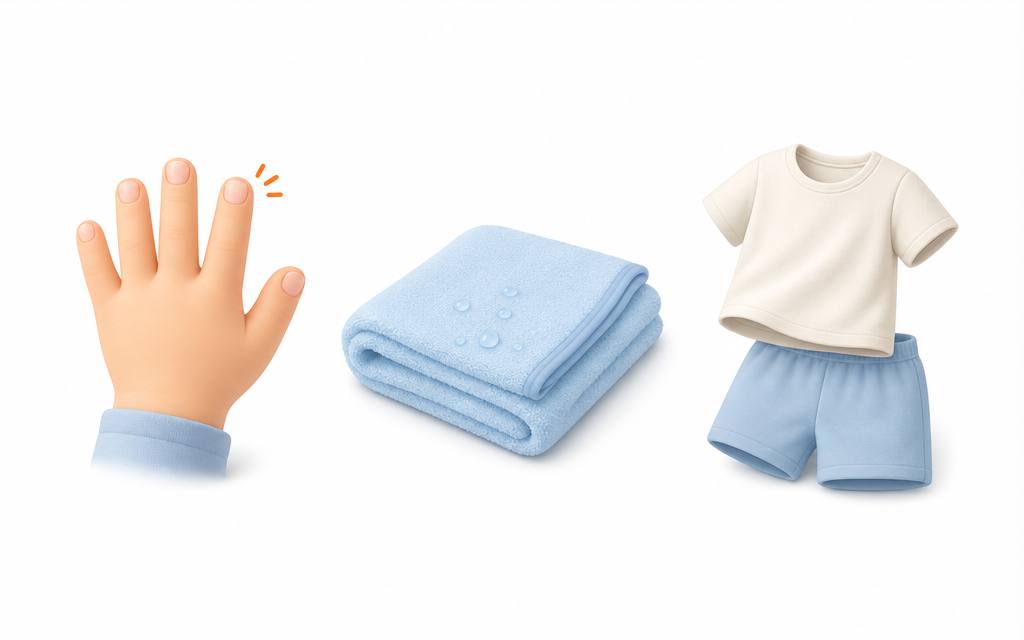
When itchy skin is scratched repeatedly, the skin barrier tries to protect itself by causing excessive growth of the epidermal layer, leading to thickened skin—this is called “lichenification.” Lichenification is a warning sign of chronic eczema, and once it progresses, recovery can be difficult with moisturizer alone.
Before scratches become deeper, it’s important to reduce scratching and respond early to inflammation. Rather than repeatedly scolding a child to stop scratching, it’s more realistic to adjust the environment so their hands naturally scratch less.
✅Three behavior guidelines to follow before scratches become deeper
- Keep nails short and rounded: Helps prevent deep secondary wounds caused by scratching.
- Wear breathable, soft cotton clothing: Reduce friction and dress the child in thin cotton clothes that absorb sweat well.
- Soothe with a cool wet towel & apply a moisturizer formulated for atopic dermatitis: After using a wet towel, moisture can evaporate, so be sure to apply moisturizer afterward.
If using a wet towel is difficult, it can help to keep moisturizer in the refrigerator and reapply it frequently whenever itching flares. Also, there are various anti-itch moisturizers formulated for atopic dermatitis; in some cases, these may be prescribed at a clinic.
4. When to use anti-inflammatory medication along with moisturizer
If the skin becomes red and swollen, oozes, or the itching is severe, you should also use the prescribed anti-inflammatory topical treatment. Delaying treatment can allow inflammation to become chronic, so it’s important to use medication appropriate for the size and depth of the affected area and apply it exactly as directed.
Medication choice and duration vary depending on skin thickness, age, and symptom severity. In particular, thin areas such as around the eyes, the face, and the neck require caution with topical steroids. After age 2, non-steroidal immunomodulators (topical calcineurin inhibitors) may be considered as an alternative. Apply ointment thinly only to the lesions, and apply moisturizer several times a day.
It’s important not to decide on your own when to stop using the ointment; discontinuation should be determined in consultation with a dermatologist based on the skin’s condition. Stopping too early can lead to frequent relapses and may ultimately result in needing even more topical medication.
5. What is maintenance therapy to reduce relapse?
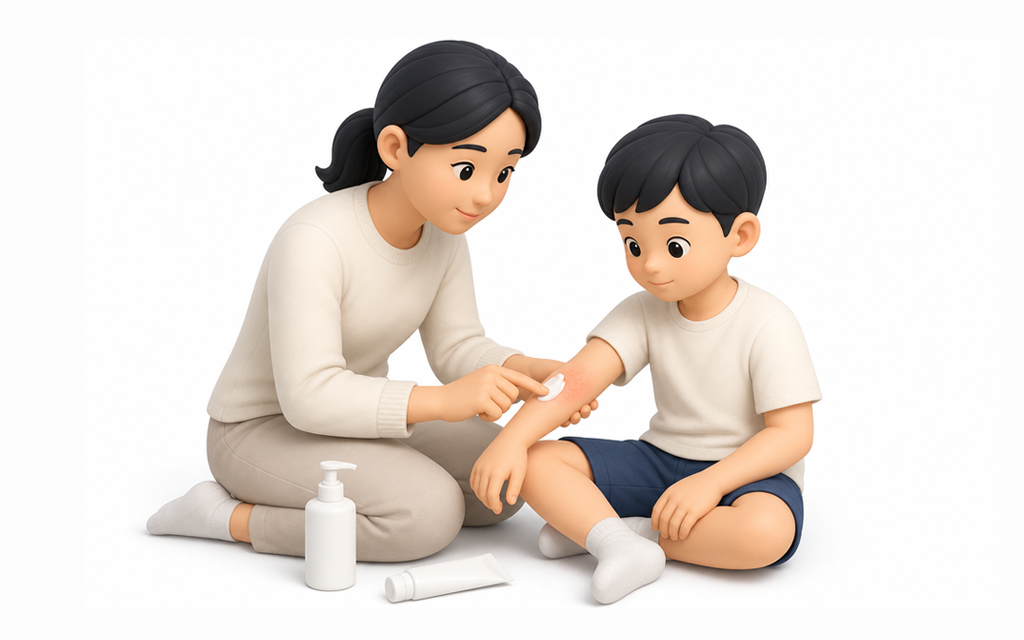
Maintenance therapy is a method of using medication intermittently even after a rash or scratches have calmed down, in order to suppress residual microscopic inflammation. If you stop the ointment immediately just because itching has improved, symptoms may relapse—so guidelines recommend proactive management even after improvement.
✅Three checklists for safe maintenance therapy
- Continue intermittent scheduled application: Apply a non-steroidal immunomodulator (topical calcineurin inhibitor) consistently twice a week to areas that have improved.
- Coordinate the stopping point with a healthcare professional: Don’t stop on your own just because the skin looks clear; decide the timing through follow-up care.
- Maintain continuous barrier moisturization: Even on days you don’t apply ointment, apply moisturizer sufficiently to prevent moisture loss.
Most non-steroidal immunomodulators can generally be used long-term without major skin-related side effects.
6. Frequently Asked Questions (FAQ)
Q. If only my child’s face is red and rough, could it still be atopic dermatitis?
If your child is under 2 years old, it’s quite possible. Eczema can appear on the face, scalp, and neck, but because it can resemble other skin conditions, evaluation by a healthcare professional is needed.
Q. What should I do if flexural areas keep getting itchy repeatedly?
Rinse off sweat with lukewarm water and manage indoor temperature and humidity. Apply a moisturizer formulated for atopic dermatitis generously immediately after washing to support the skin barrier.
Q. How long is it safe to use a steroid ointment?
Follow the prescribed frequency, potency, and duration. Reducing or stopping on your own can lead to frequent relapses and chronic inflammation, so discuss any changes with a healthcare professional.
Q. When should I seek care more urgently?
If thick yellow crusts form on the skin or if there is oozing. Treatment should also be reconsidered if itching disrupts sleep or if inflammation suddenly spreads.
This health content has been reviewed by medical professionals, compiled from authoritative domestic and international sources, and is regularly updated in accordance with the latest clinical guidelines.
Sources
- Annals of Dermatology, 2023 Consensus Korean Diagnostic Criteria for Atopic Dermatitis, 2023.
- KDCA (Korea Disease Control and Prevention Agency) National Health Information
- Allergy, Asthma & Immunology Research, Prevalence and Comorbidities of AD in Korean Children/Adolescents (1995–2022), 2022.
※ The copyright for all content on this blog belongs to medihi. Unauthorized copying, distribution, or derivative use is strictly prohibited, and violations may result in legal action without prior notice.