

In This Article
A black triangle is a condition where the gum tissue recedes and a dark, triangular space becomes visible between teeth. If you try to cover the entire space too aggressively, the teeth can end up looking wider and more square. That’s why it’s important to first evaluate the cause and gum condition, then decide on the treatment scope and aftercare plan together.
1. Why do gaps form between teeth?
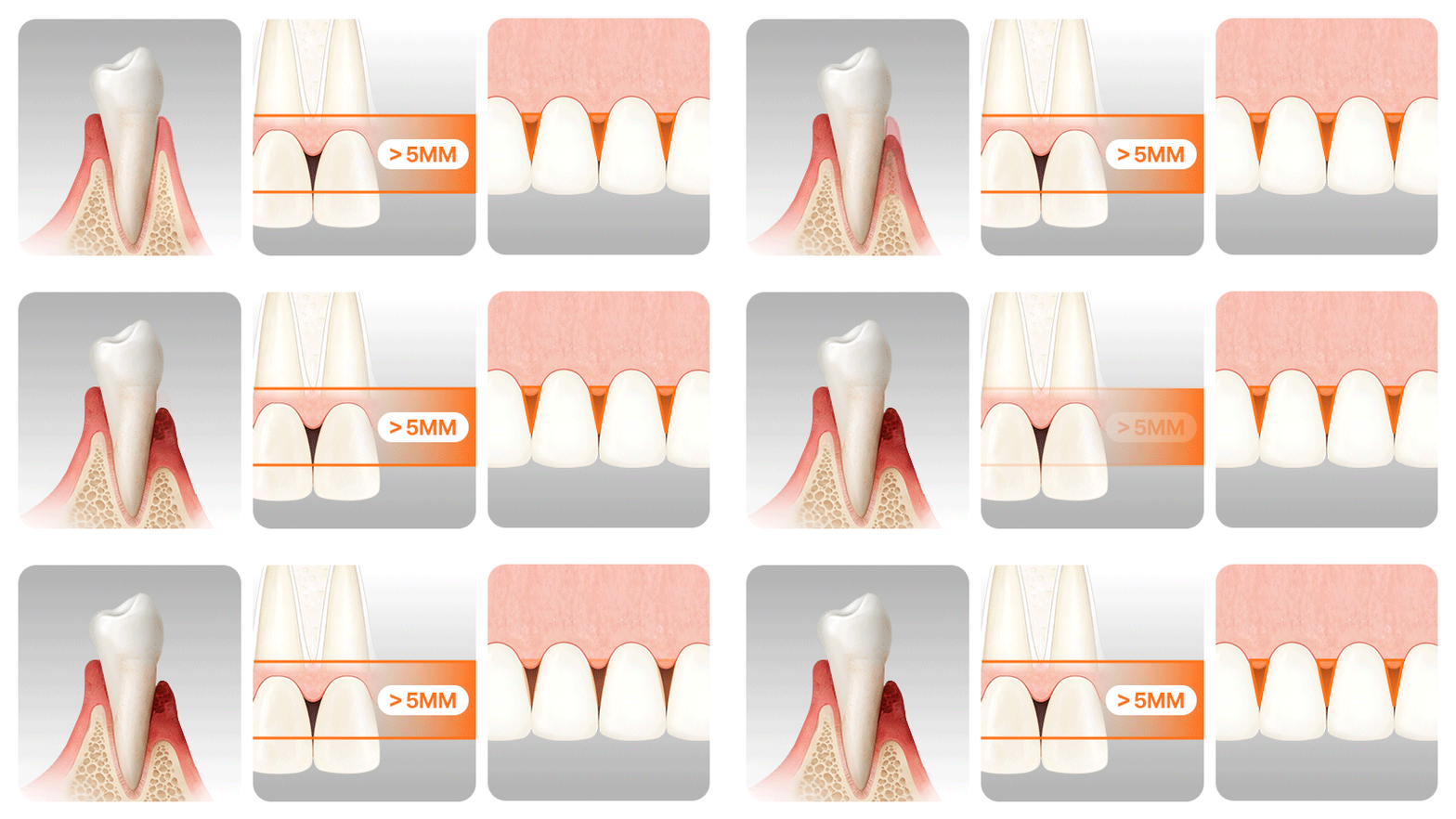
In many cases, black triangles are not simply caused by teeth shifting sideways. More often, the gum tissue that used to fill the space between teeth moves downward, revealing an empty area. Possible causes include progression of periodontal disease, traumatic oral hygiene habits, divergence in tooth root angles, age-related tissue shrinkage/atrophy, and treatment-related factors. Beyond cosmetic changes, black triangles may also contribute to plaque buildup, increased sensitivity at the tooth root, and localized inflammation.
Before treatment, it’s important to assess more than just the size of the space—bone loss around the gums, tooth shape, and alignment should also be evaluated. If the gum bone level drops, the gumline may recede along with it. And if the contact point between teeth is more than 5 mm away from the gum bone crest, it may be difficult for the gum tissue to fill the space. If the tooth/root shape narrows sharply like an inverted triangle, the empty space can look larger and may be harder to camouflage.
2. Why can teeth look bigger?
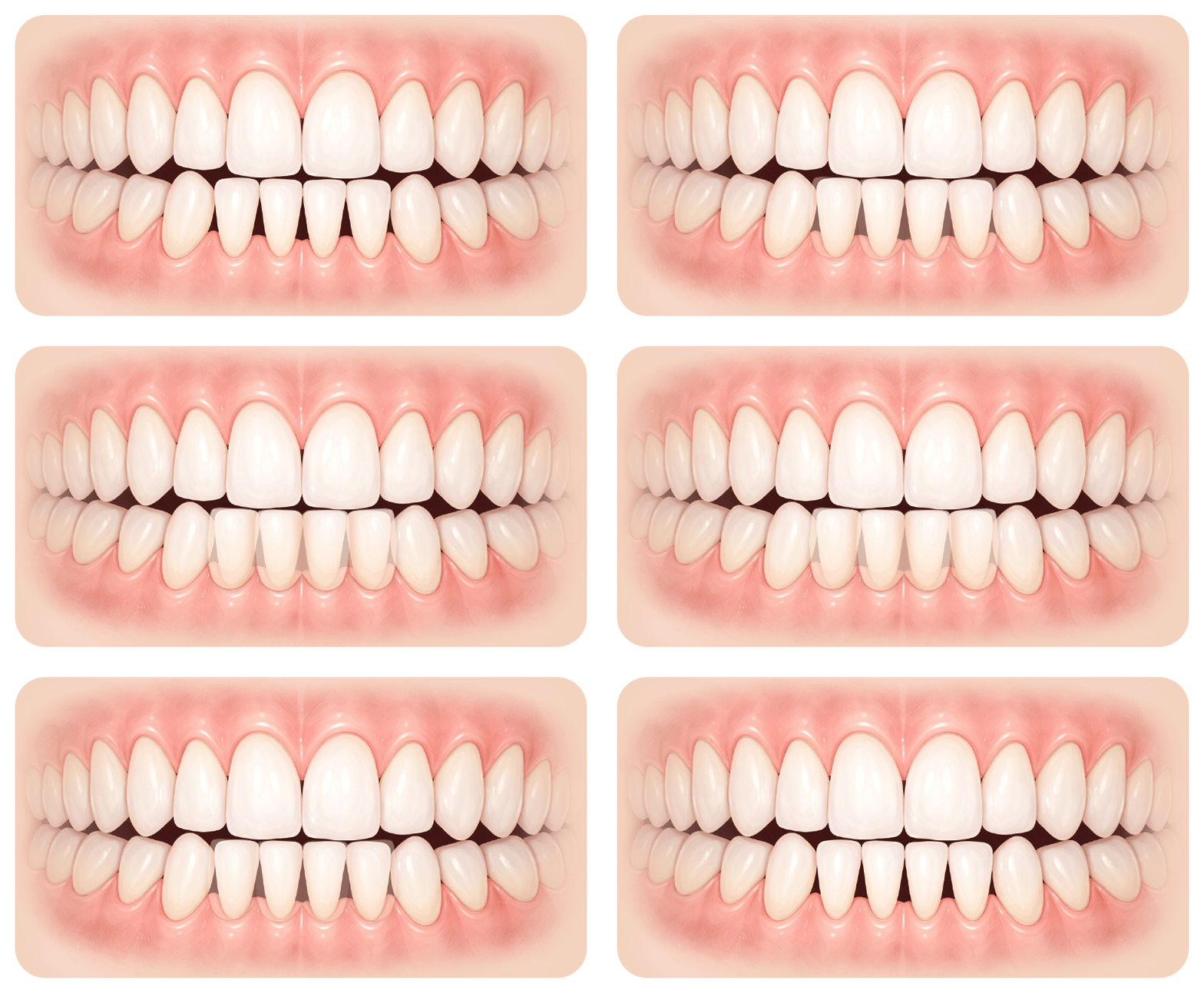
When covering the space with veneer or resin, teeth can appear larger because the width near the root (gumline) side must be increased to fill the empty area. If the original tooth shape is already close to an inverted triangle, adding material to both sides can make the overall outline look more rectangular.
The more completely you try to close the space, the wider the lower portion of the tooth becomes—sometimes making the result look artificial. Food debris may also accumulate more easily around the widened area. For that reason, before treatment it’s helpful to review how tooth width and shape may change if the space is fully closed, and to confirm flossing and hygiene considerations after treatment as well.
3. What defines a natural-looking design?
If the space is small and the tooth shape is closer to triangular, options may include minor reshaping between teeth or partially filling the area with resin. Advantages can include minimal tooth reduction and the possibility of same-day treatment. On the other hand, if the space is wide and gum recession is significant, fully filling the gap can make the teeth look excessively large.
In such cases, even when adjusting tooth shape with veneer, leaving a small amount of space rather than closing everything can look more natural. If the root-side width increases, the angle between the gum and tooth can change, potentially making food impaction more likely. Therefore, both aesthetics and ease of post-treatment hygiene are considered together. During consultation, it’s recommended to review the expected tooth shape if the space is fully closed, the gum condition, and the management plan (including home care) before deciding.
4. When should gum treatment be considered first?
If a black triangle has noticeably enlarged, it may be more important to check gum health first than to focus only on appearance. If the gums are red and swollen or bleed during brushing, proceeding immediately with gap-covering treatment may reveal new spaces later as swelling subsides.
If gum inflammation is ongoing, the recommended sequence may be to reduce inflammation first through scaling and periodontal (gum) treatment. Plaque can accumulate more easily where restorations meet the gumline, which can make hygiene more challenging. When gum bone height has decreased, it may be preferable to stabilize gum health first and focus on maintaining the remaining bone rather than attempting to fully close the space.
5. How should you manage it after treatment?
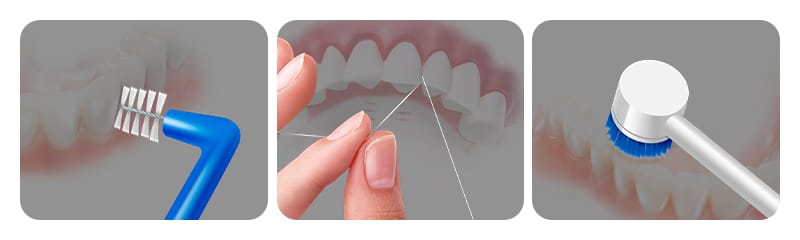
After covering a black triangle with resin or veneer, the shape where the tooth and gum meet can change, so you may need a different hygiene approach than before. If the space has narrowed, it’s better to confirm the appropriate size rather than forcing a previously used thick interdental brush into the area.
With floss, instead of simply moving it up and down, you may be instructed to clean by wrapping the floss around the restoration margin. Resin can become rougher over time, and that surface may develop staining or plaque buildup. At regular checkups, you can assess whether polishing is needed to smooth the surface, along with scaling.
6. Frequently Asked Questions (FAQ)
Q. If I close the space with veneer, will my teeth look much bigger?
It depends on the size of the space and your original tooth shape. Small spaces can often be covered in a way that’s less noticeable, but the wider the space, the more the lower portion of the tooth must be widened—making teeth look squarer or larger. In those cases, a design that leaves a small amount of space may look more natural.
Q. Should I choose resin or veneer?
If the space is small and you want to avoid tooth reduction, resin may be considered. Resin can discolor over time, become rougher, chip, or potentially detach. veneer may be presented as an option when color stability, durability, and achieving a smooth surface are priorities, and when the space is larger or broader aesthetic improvement is being considered.
Q. Can a gum graft solve black triangles?
A gum graft may be used to cover exposed root surfaces, but regenerating the pointed gum tissue between teeth (interdental papilla) is structurally challenging and outcomes can be difficult to predict. Even if partial improvement is possible, returning to the original state can be difficult, so restorative/prosthetic treatment may be considered together in some cases.
Q. When should I consider a consultation?
You may consider a consultation if cosmetic discomfort is significant, or if food frequently gets stuck between teeth and gum bleeding or swelling keeps recurring. Black triangles can affect not only appearance but also food impaction and gum maintenance.
This health content has been reviewed by medical professionals, compiled from authoritative domestic and international sources, and is regularly updated in accordance with the latest clinical guidelines.
Sources
- Korean Academy of Periodontology, Guidelines for the Diagnosis and Treatment of Periodontal Disease, 2020.
- Marwan El Mobadder. Photobiomodulation Therapy in the Management of "Black Triangles" Due to the Absence of the Gingival Interdental. 2024 Papilla. https://www.cureus.com/
- Shweta Ann Jacob. The Forgotten Triangular Space: Anatomy, Disease Mechanisms, and Contemporary Management of Interdental Embrasures—A Narrative Review. Cureus. 2026 Jan 22;18(1):e102114
※ The copyright for all content on this blog belongs to medihi. Unauthorized copying, distribution, or derivative use is strictly prohibited, and violations may result in legal action without prior notice.