

Are you wondering which lens to choose for cataract surgery? A more expensive lens is not always the right answer. The most suitable lens depends on your eye condition and lifestyle. In this post, we’ve organized practical criteria to help you choose a cost-effective lens that fits your needs.
“I want to know the most basic and safe cataract surgery option.”

Behind this question, many people carry a mix of anxiety about surgical failure and concern about cost. With complex information and lens prices that can run into the millions of won, it’s natural to feel unsure about what to choose. If you understand how outcomes can be anticipated within your budget, you can see that an expensive option is not the only answer.
When selecting an intraocular lens before cataract surgery, what an ophthalmologist checks first is not flashy advertising or high-priced features. They first evaluate the retina and optic nerve, corneal astigmatism, and the ocular surface—then assess which viewing distance matters most in your daily life.
1. What Is a Monofocal Intraocular Lens? Not a “Basic Model,” but a “Single-Distance Focus” Lens
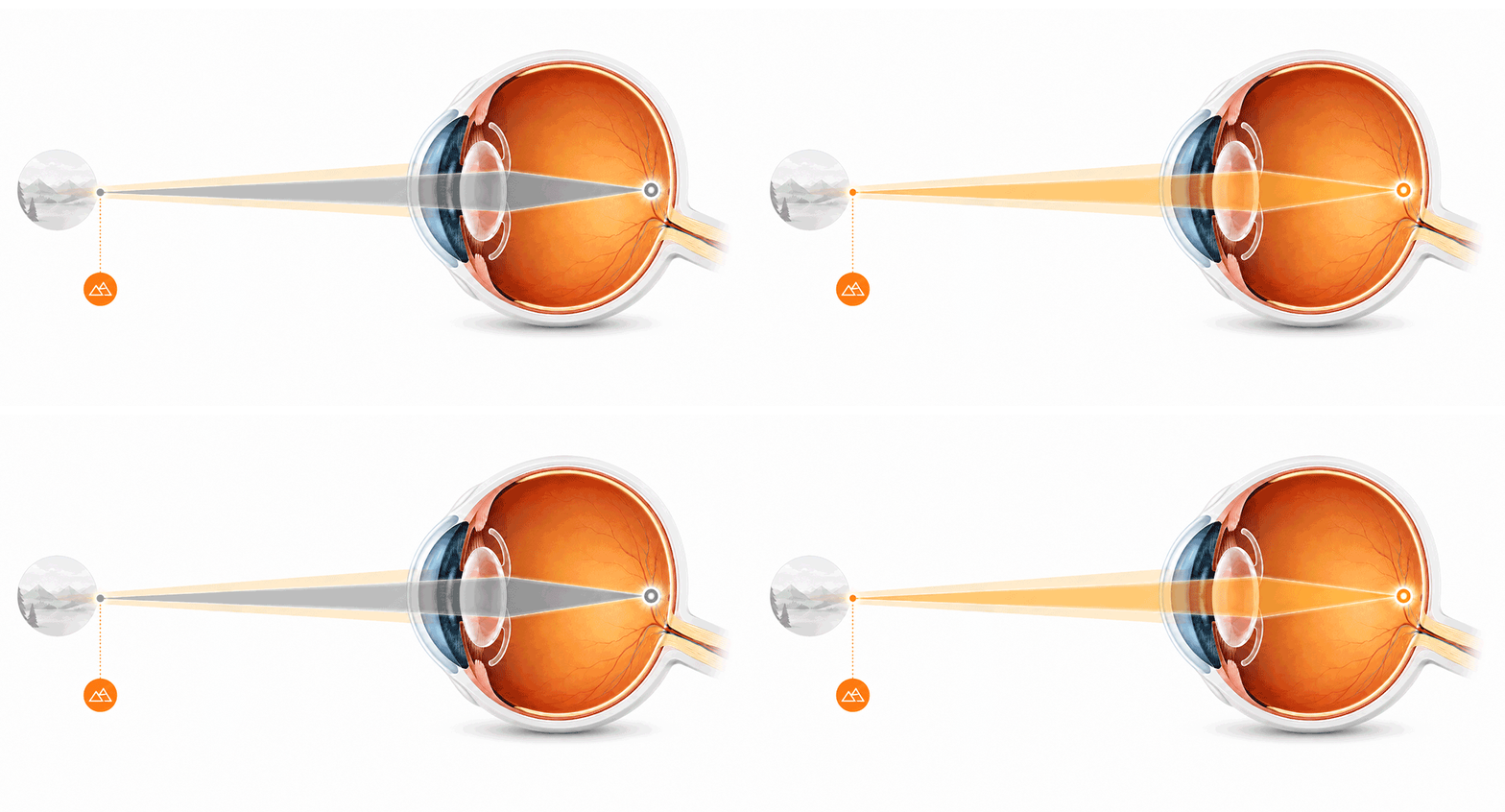
A monofocal intraocular lens is the standard lens implanted after removing the clouded natural lens caused by cataracts. It is designed to focus at one distance—either far or near. Because it’s often called a “basic lens,” some people worry it may perform worse, but this is not about product quality; it’s a difference in optical design.
Because this approach gathers light into a single focal point, it tends to provide clearer vision and more predictable outcomes at the chosen target distance. Unlike multifocal lenses that split light into multiple focal points, monofocal lenses generally have less light loss, and symptoms such as glare or halos (halo/glare) are reported less often. If we compare it to clothing, a monofocal lens is like a suit tailored perfectly for a specific purpose. It may not be comfortable for every situation like sportswear, but it performs neatly and reliably where it’s intended to.
Thanks to decades of accumulated clinical data, postoperative visual stability and predictability are considered very strong. For that reason, this lens is not merely a low-cost alternative—it is often viewed as a solid benchmark for preserving quality of vision.
However, if a patient has significant corneal astigmatism, they may need to consider a toric model among monofocal lenses, which is designed specifically for astigmatism correction. This can reduce residual astigmatism and help achieve better vision. Unlike standard monofocal lenses, toric lenses are typically classified as non-covered (out-of-pocket) items under Korea’s national health insurance system, so it’s wise to confirm costs in advance during consultation.
2. If Cost Matters, Check This First: The Boundary Between Covered vs. Non-Covered Items
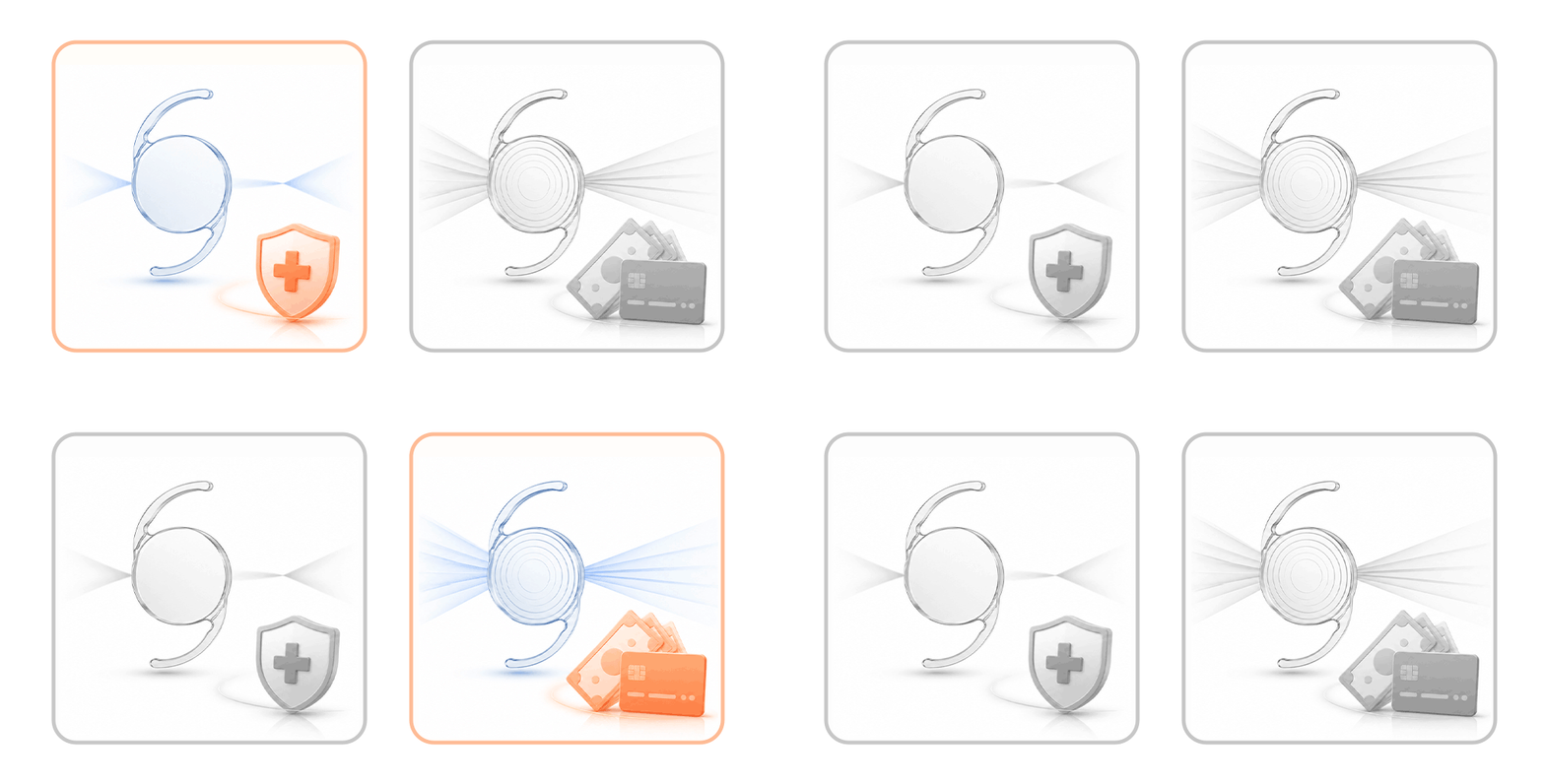
To lower the psychological barrier around surgical costs, the first step is to clearly separate and understand what is covered by national health insurance versus what is not. Standard cataract surgery using a monofocal intraocular lens is a covered service under Korea’s national health insurance, which can significantly reduce the total amount the patient pays.
| Category | Covered (Standard Cataract Surgery) | Non-covered (Presbyopia-correcting Multifocal Surgery) |
|---|---|---|
| Intraocular Lens (IOL) Cost | Covered by National Health Insurance (partial copayment) | Fully paid by patient out-of-pocket (high-cost lens fee applies) |
| Precision Examination Items | Standard tests such as fundus exam and ultrasound are covered | Some non-covered tests, such as specialized biometry, may be added |
| Other Miscellaneous Expenses | Covered by National Health Insurance, including same-day admission and surgical materials | Variations exist depending on hospital-specific non-covered rate criteria |
In contrast, if you choose a multifocal/presbyopia-correcting intraocular lens to reduce dependence on glasses, it is categorized as non-covered, meaning the patient pays the full lens cost. According to public data, non-covered fees can vary by medical institution, so the total surgical cost may differ by multiples. If you value practicality, a covered monofocal lens is a strong, predictable standard option.
✅Cost-conscious cataract surgery consultation checklist
- Did you confirm whether the recommended lens is a health-insurance-covered monofocal lens (covered item)?
- Did you ask for a separate breakdown of any preoperative test fees that are classified as non-covered (special measurements)?
- Before asking for the “total for both eyes,” did you request an itemized cost sheet in writing or as a formal estimate?
3. Why Reading Glasses May Be Needed After Surgery: Choosing Based on Your Daily Viewing Distance

Because a monofocal intraocular lens focuses at only one point, some compromise in daily life is unavoidable. In many cases, surgery is planned with a focus on distance vision (about 1 meter or more), so patients can comfortably see scenery or TV without glasses.
The issue is that a distance-focused design does not replace the eye’s natural accommodation (auto-focusing) ability. To reuse the earlier analogy: wearing a great suit doesn’t make running on a track comfortable. Likewise, if the lens is set for distance, you may need a separate “tool” for near tasks. That’s why reading glasses may be necessary for viewing a smartphone or reading a book.
📌 Alternatives by focus design based on your lifestyle pattern
- If driving and outdoor activities are a major part of your life ➔ Set a distance target (helpful for night vision; use reading glasses for near work)
- If reading, smartphone use, and near tasks are your main activities ➔ Set a near target (minimize reading glasses; wear distance glasses when going out)
- If you want to secure an intermediate range by setting different focuses in each eye ➔ Discuss whether a monovision plan is appropriate with your clinician
Monovision is a design where the dominant eye is set for distance and the other eye is set with slight myopia, so that when using both eyes together after surgery, intermediate distances can be covered as well. However, this approach requires caution. If the prescription difference between the two eyes is large, it can cause dizziness, and in older patients whose brain’s ability to fuse images from both eyes is reduced, adaptation after surgery may be difficult. Therefore, monovision should only be considered after detailed testing and thorough consultation to assess whether adaptation is likely.
It’s also helpful to check your own resistance to wearing reading glasses before surgery. If you don’t find reading glasses particularly bothersome, a distance monofocal lens—with less distortion and a clear field of view—can be a very practical choice.
4. If You Drive Often at Night: Why Contrast Sensitivity Matters in Lens Selection

If you frequently drive or work at night, standard eye chart numbers alone may not fully reflect visual function. In dark environments, contrast sensitivity—the ability to distinguish outlines clearly—can strongly affect day-to-day quality of life.
Multifocal/presbyopia-correcting lenses can reduce dependence on glasses, but because they split light, optical issues such as glare, halos, and reduced contrast sensitivity tend to be reported more often compared with monofocal lenses. On rainy nights or when facing oncoming headlights, these optical discomforts may increase fatigue.
Therefore, if securing night vision is your top priority, a monofocal intraocular lens—associated with less concern about glare and better-maintained contrast sensitivity—often becomes the most practical reference point. What matters is clarifying your lifestyle priorities: what you want to gain, and what you are willing to trade off.
5. If You Have Retinal or Optic Nerve Disease: Why Detailed Testing Comes Before the Lens
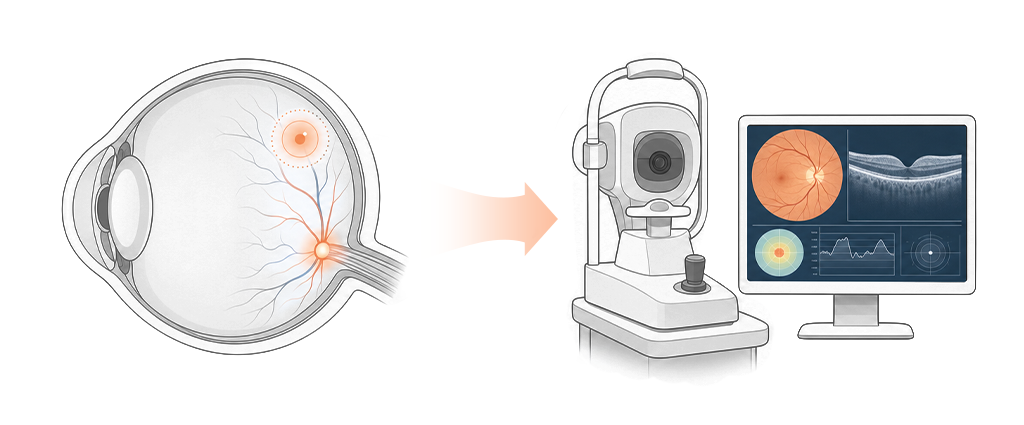
If underlying eye conditions such as macular degeneration, glaucoma, or epiretinal membrane are observed in addition to cataracts, the approach to lens selection must change completely. If the retina or optic nerve function is already reduced, the final achievable vision may be limited regardless of how expensive the lens is.
In these situations, forcing the use of a multifocal lens—which distributes light more complexly to reduce glasses use—may raise concerns that reduced contrast sensitivity could overlap and make objects feel even dimmer. That’s why, for patients with comorbid conditions, monofocal-type lenses that simplify the light pathway are often discussed as a relatively conservative and reasonable alternative. It’s similar to choosing comfortable, stable clothing over something flashy when you’re not feeling well.
Having a comorbid condition does not mean cataract surgery is impossible, and surgery may be planned alongside treatment for retinal disease. Rather than setting expectations too high, it is essential to establish realistic goals with your clinician—how much improvement is feasible given your current eye condition.
🔍Preoperative self-checklist for patients with comorbid eye disease
- Before surgery, did you receive detailed tests such as retinal OCT to evaluate the optic nerve and macula?
- Did your ophthalmologist provide realistic guidance on postoperative visual prognosis considering the comorbid condition?
- If considering a multifocal lens, did you receive a thorough explanation of potential optical discomfort risks?
6. Frequently Asked Questions (FAQ)
Q. If I have surgery with a monofocal lens, how inconvenient will it be to use a smartphone or read books?
If surgery is performed with a distance focus, the eye’s natural accommodation does not return, so near objects at about 30–40 cm may appear somewhat blurry. For comfortable, clear viewing of a smartphone or documents, you may need reading glasses for near work.
Q. What is the difference between health-insurance coverage and non-covered items?
Covered surgery uses a standard monofocal lens and receives national health insurance benefits for a substantial portion of surgical and material costs. In contrast, choosing a multifocal lens for presbyopia correction or using certain specialized measurement devices may be classified as non-covered, meaning the patient pays the full lens cost and any additional test fees—leading to a large difference in total cost.
Q. In what situations should I have an in-depth consultation with an ophthalmologist before cataract surgery?
If your symptoms go beyond general blurriness—such as severe glare during night driving that disrupts daily life—or if comorbid conditions like macular degeneration or glaucoma are suspected, a deeper consultation is needed. Before deciding on a lens type, a comprehensive evaluation through detailed testing should assess prognosis and also establish a cost plan including covered vs. non-covered items.
Q. If my vision becomes cloudy again after surgery, what treatment is done (posterior capsule opacification)?
Even after successful cataract surgery, some people experience cloudy vision again months to years later. This may be a natural phenomenon called posterior capsule opacification. In many cases, repeat surgery is not necessary; vision can be cleared again with a simple YAG laser procedure performed in the outpatient clinic. If symptoms appear, it’s recommended to come in for an exam.

The success of cost-conscious cataract surgery using a monofocal intraocular lens does not depend on whether you choose an expensive lens. It depends on accurately understanding your eye condition (retina and optic nerve), setting priorities for the viewing distances most important in your daily life, and using the health insurance coverage system wisely to anticipate your out-of-pocket costs.
Based on your preoperative test results, discuss prognosis openly with an experienced ophthalmologist. When your criteria are clear, you can make a decision that helps you regain safer, clearer vision without being swayed by cost pressure or information overload.
Sources
- Health Insurance Review & Assessment Service (HIRA), Non-covered medical expense information (cataract/intraocular lens-related items), https://www.hira.or.kr
- Korean Ophthalmological Society & National Academy of Medicine of Korea (joint), Standard Guidelines for Cataract Surgery, 2021
- Li et al., Comparative efficacy and safety of all kinds of intraocular lenses in presbyopia-correcting cataract surgery, *BMC Ophthalmology*, 2024
※ The copyright for all content on this blog belongs to medihi. Unauthorized copying, distribution, or derivative use is strictly prohibited, and violations may result in legal action without prior notice.
Recommended reads
 medihi