

In This Article
Many office workers experience discomfort such as monitor text appearing doubled or vision becoming blurry in the afternoon. These symptoms may reflect not only simple eye fatigue but also a combination of reduced lens accommodation, dry eye, and early cataract & presbyopia changes. Check the clear causes of monitor-related vision decline and step-by-step ophthalmic response criteria.
1. Why monitor text looks blurry every afternoon
Reduced accommodation due to decreased lens elasticity and tear-film instability from prolonged screen viewing can act together, making text on a monitor appear blurry—often more noticeably later in the day.
When you concentrate intensely on a computer screen, your blink rate drops significantly compared with normal. As a result, the tear film covering the ocular surface dries quickly, which can trigger evaporative-type dry eye.
The combination of internal decline in lens accommodation and an external drying environment is called Computer Vision Syndrome or digital eye strain. Compared with the morning, the afternoon—when tear-film disruption and fatigue have accumulated—often brings more pronounced dimness and blur.
2. How the tear film and crystalline lens affect vision
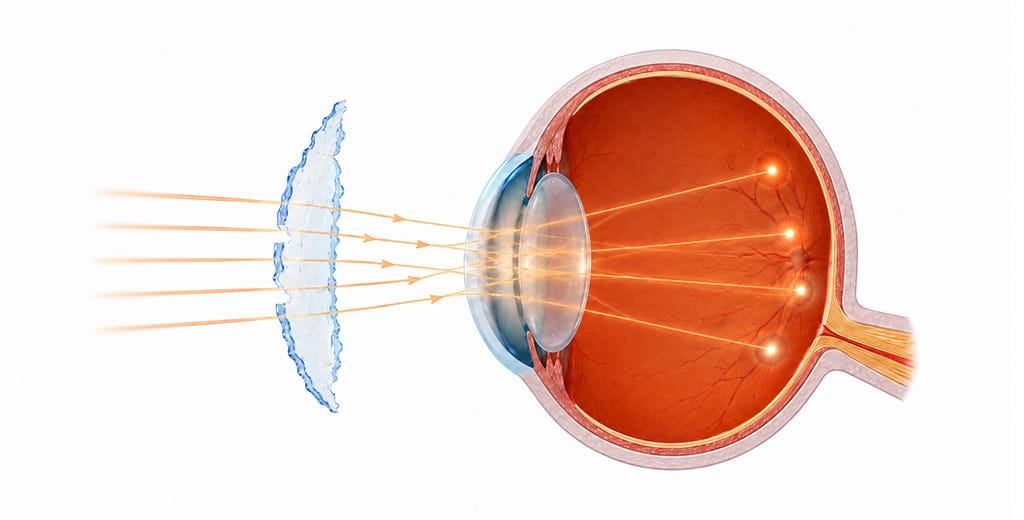
Even if the lens focuses, if the tear film that light passes through is uneven, light can distort and cause fluctuating vision.
In younger age groups, lens elasticity is strong, so focus adjusts immediately as viewing distance changes. But as the ability of the lens to contract and relax declines with age, reduced accommodation becomes more significant.
The first layer light passes through when entering the eye is the surface tear film. Vision becoming temporarily clearer right after artificial tears and then quickly dimming again happens because the tear film breaks up rapidly. To reduce fluctuations, you need to manage reduced accommodation and dry eye together.
3. Key eye-health signals behind afternoon blur and doubling
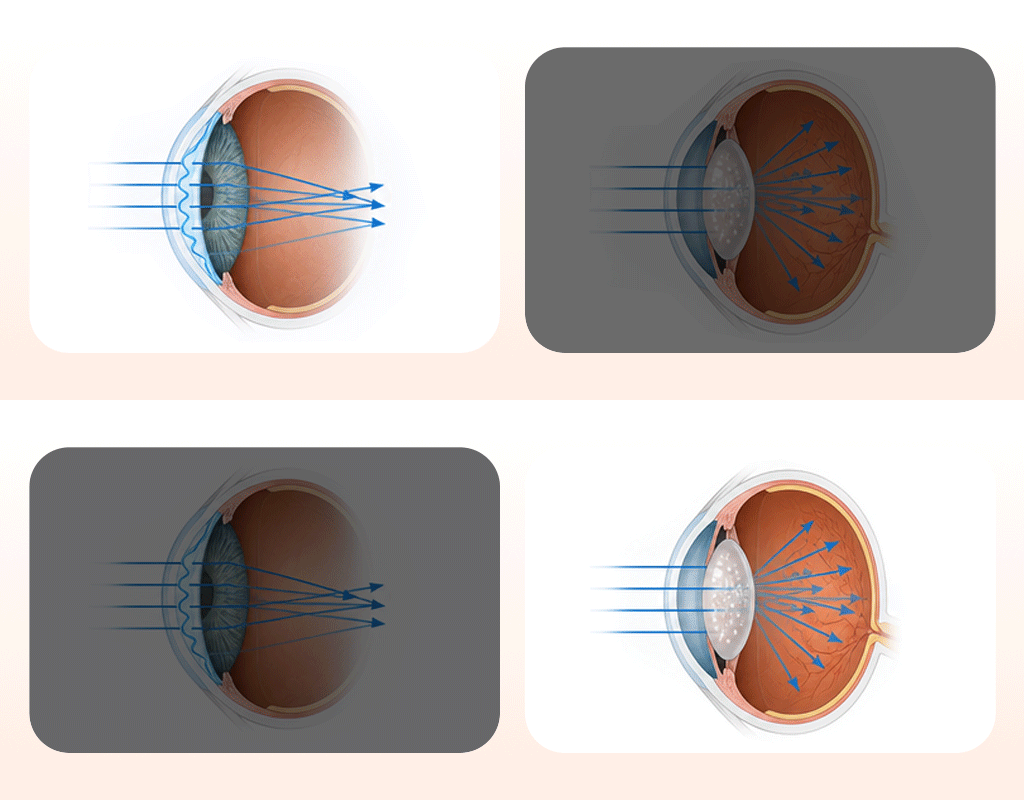
Beyond simple fatigue, these may be warning signs of irregular changes on the corneal surface or early cataract & presbyopia changes where lens opacity begins.
When opacity starts inside the lens, incoming light cannot pass through evenly and instead scatters. This can cause hazy vision or spreading of monitor light.
✅Key signals of afternoon vision decline
- Monocular diplopia: seeing double even with one eye
- Strong afterimages around monitor light or worsening nighttime glare
- Persistent monitor blur even after getting new glasses
If these signs are observed, you should have a detailed eye exam to check for internal tissue changes.
4. Rest methods that reduce accommodative strain

To reduce eye fatigue, slightly lower your monitor gaze, set up your environment based on working distance, and combine it with regular distance-viewing breaks.
If the top of the screen is slightly below eye level, less of the eye surface is exposed, helping prevent tears from drying out.
✅Three principles to reduce eye fatigue
- Set distance categories: coordinate the difference between document distance (35–40 cm) and computer screen distance (50–70 cm).
- The 50/10 break rule: after 50 minutes of work, consciously look far away for 10 minutes.
- Control the indoor environment: maintain humidity with a humidifier and prevent heater/AC airflow from hitting the eyes.
Even environmental improvements alone can reduce excessive tension in the focusing system.
5. Appropriate treatment options by presbyopia symptom pattern
Apply stepwise options depending on dry eye status, the degree of reduced accommodation, refractive changes, and whether lens opacity is present.
If temporary dryness-related fatigue is the main cause, first adjust habits such as using preservative-free artificial tears and taking regular eye breaks. If reduced accommodation clearly interferes with daily work, it is safer to be prescribed computer-distance near-work glasses or progressive lenses tailored to your working distance.
If lens opacity progresses and cataract & presbyopia is diagnosed with significant functional discomfort, cataract surgery may be considered. Multifocal intraocular lens implantation can reduce dependence on glasses, but if you have pre-existing dry eye or retinal disease, a detailed preoperative evaluation is necessary.
6. Frequently Asked Questions (FAQ)
Q. When monitor text is blurry, can I buy ready-made reading glasses?
Without precise measurement of your refractive values and your monitor working distance (50–70 cm), accommodative fatigue can worsen. We recommend an eye exam and a prescription tailored to your working distance.
Q. Do blue-light-blocking glasses prevent monitor presbyopia or cataract & presbyopia?
Clinical evidence is limited that blue light directly damages ocular tissues or causes cataract & presbyopia. Fatigue and blur are mainly driven by dry eye from reduced blinking and prolonged focusing-system tension.
Q. Why do I feel dizzy when I first wear progressive multifocal glasses?
Because distance-to-near power is vertically arranged within one lens, peripheral distortion can occur. Adaptation practice—gently turning your head along with your gaze rather than moving only your eyes abruptly—can help.
Q. When should I go to an eye clinic for testing if I have blurred focus?
If blur persists for weeks despite rest, or if doubling and glare worsen, you should visit. It is safer to check for internal tissue changes beyond simple fatigue.
This health content has been reviewed by medical professionals, compiled from authoritative domestic and international sources, and is regularly updated in accordance with the latest clinical guidelines.
Sources
- Journal of the Korean Society of Occupational and Environmental Medicine, Effects of VDT work on accommodative response and pupillary light reflex, 1997
- Journal of Korean Ophthalmic Optics Society, Management of asthenopia caused by digital device use, 2022
- WHO, World report on vision, 2019
※ The copyright for all content on this blog belongs to medihi. Unauthorized copying, distribution, or derivative use is strictly prohibited, and violations may result in legal action without prior notice.