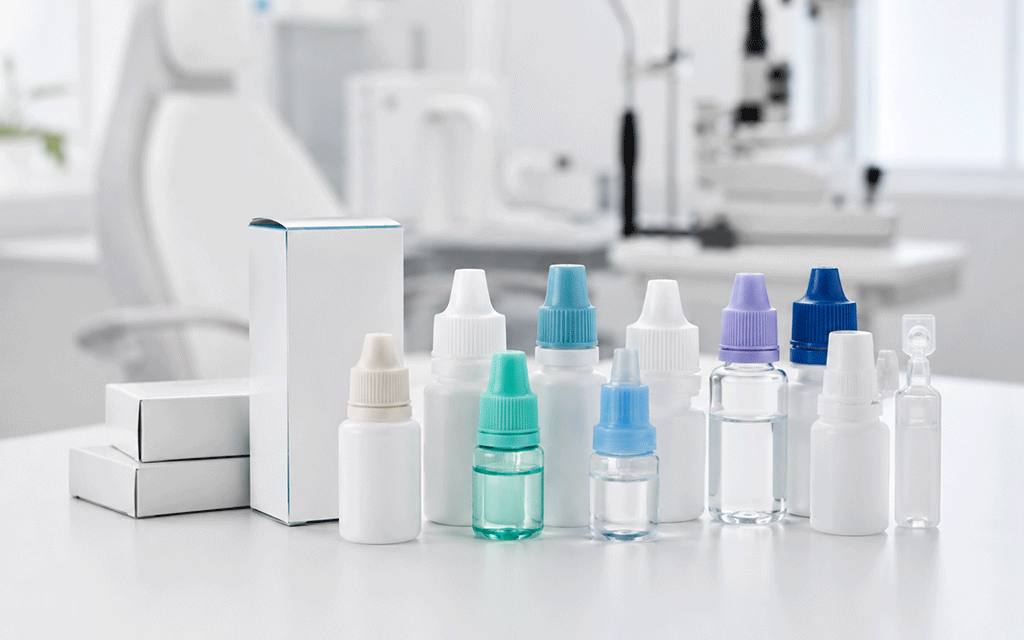

Are you in your early 40s and already noticing your vision getting blurry—leaving you feeling discouraged and anxious? Before hastily concluding “it must be presbyopia” and searching the internet for indiscriminate treatments, it’s important to identify the real cause and manage it safely. Below is a practical, ophthalmology-based approach to help you sort out what’s actually happening with your eyes.
“I’m still in my early 40s, but I feel like presbyopia has already started. It makes me feel sad and anxious.”

Around your 40s, the eye’s natural lens gradually loses elasticity. Experiencing fluctuating vision or a sense of “dimness” is a change no one can fully avoid. Still, when it happens to you, it can feel alarming.
When anxiety leads you to search online, it’s easy to be drawn to tempting ads claiming surgery or a correction method can “fix it instantly.” But choosing a solution before understanding your eye’s exact condition can flip the order of decision-making—and may lead to bigger regret later.
There’s no need to dismiss your discomfort as “just aging,” nor to label yourself as overly sensitive. The first step is to identify, as specifically as possible, the true cause of the changes happening in your eyes.
1. Presbyopia symptoms in your 40s—are they really from lens aging?
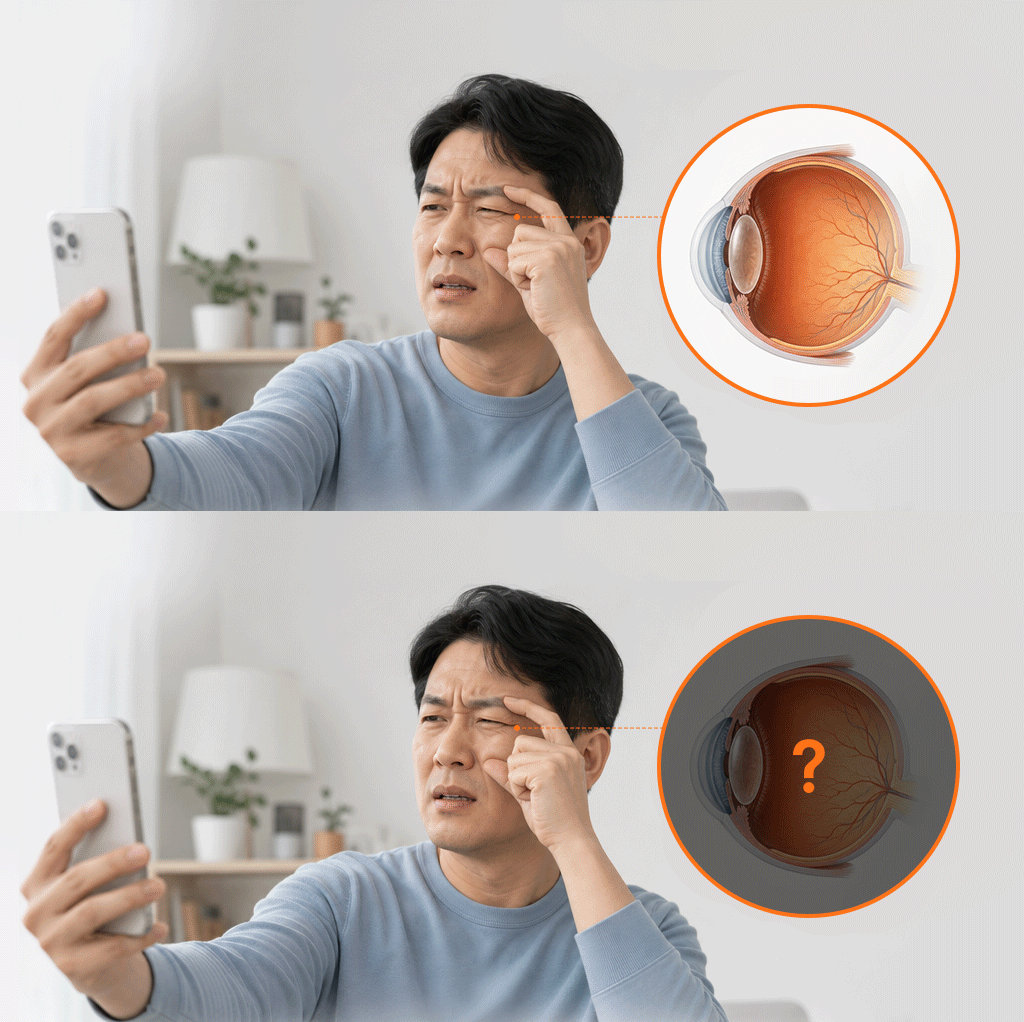
The natural lens inside the eye changes thickness to focus accurately on the retina when shifting between far and near vision. Tiny focusing muscles around the lens repeatedly contract and relax to control this thickness. As you enter your 40s, the lens’s elasticity begins to decline gradually. As a result, when looking at near objects, the lens may not thicken enough—leading to reduced accommodation (focusing power), which is the main physiological cause of presbyopia.
However, blurry vision in many working adults in their 40s often cannot be explained by lens aging alone. After long screen time, the eyes may feel dry and strained, and text may look blurrier later in the day. This kind of up-and-down vision pattern commonly appears when accommodative eye strain, dry eye disease, and uncorrected refractive error overlap.
A simple self-check can help you set an initial direction. If near text is consistently uncomfortable to a similar degree, reduced accommodation is worth suspecting first. On the other hand, if symptoms vary by time of day or work environment, an unstable tear film due to dry eye may be the cause. In that case, it’s more reasonable to confirm through an exam whether other factors are involved.
2. Early presbyopia vs. “pseudo-presbyopia”: how to tell smartphone-era eye strain apart
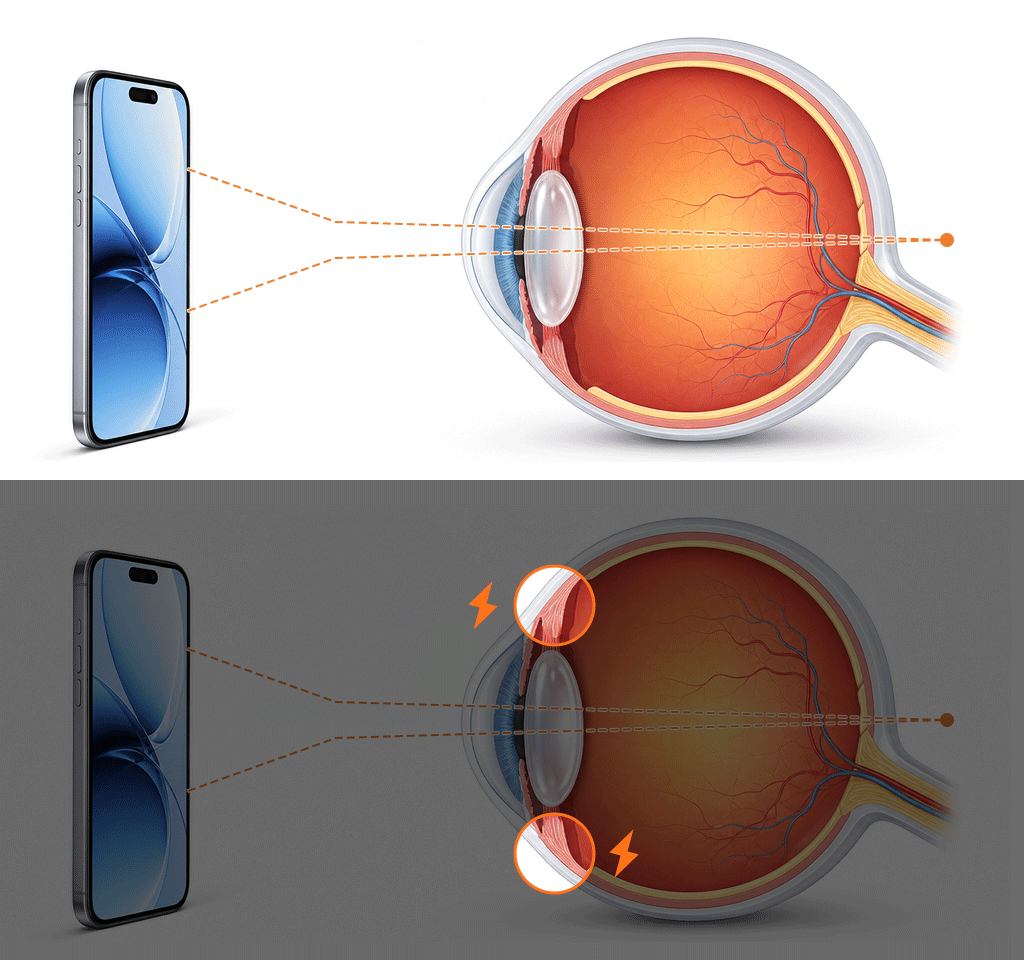
A work environment that involves staring at a smartphone for long periods places a heavy load on the eye’s focusing muscles. When you concentrate on a near screen for a long time, the internal eye muscles remain tightly contracted. This is often called accommodative eye strain, or “pseudo-presbyopia.” It is a reversible phenomenon that can occur regardless of aging.
This difference is easier to understand using a camera analogy. True presbyopia is like a camera lens that has aged so it can’t focus up close. In contrast, smartphone-related eye strain (pseudo-presbyopia) is more like a camera where “the hand holding the lens is shaking” (muscle tension and fatigue). Or it could be like “fog on the lens” (tear film instability).
The result—blurry images—may look similar, but the causes are completely different. If closing your eyes and resting 충분히 (enough) makes text look clear again, pseudo-presbyopia is more likely. Try lightly checking the list below in daily life.
✅ [3-minute self-check] Signs suggesting pseudo-presbyopia
- After computer work, it takes longer than usual for your eyes to refocus when looking far away.
- After using artificial tears or resting with your eyes closed for about 10 minutes, your vision becomes clear again.
- Text that looked sharp in the morning becomes much blurrier toward late afternoon.
- When focusing on a screen, you feel tightness around the eyes or a heavy-headed sensation.
3. Common drivers of fluctuating vision: dry eye, refractive error, and early cataract
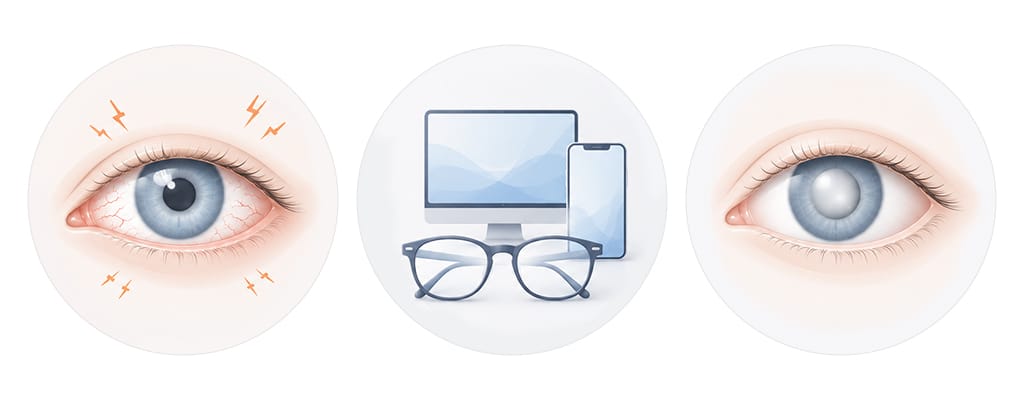
Not all “hazy” vision is due to aging. Working adults in their 40s who continuously stare at monitors can easily develop dry eye depending on indoor air conditions. When the ocular surface is dry and the tear film becomes uneven, dimness and vision fluctuations can occur—often mistaken for presbyopia.
Refractive error (an incorrect prescription) is also a common variable. If you have a tendency toward farsightedness (hyperopia), fatigue and headaches may accompany it, and presbyopia can feel like it’s arriving sooner. What you assumed was an age-related accommodation problem may actually be because your current glasses prescription does not match your real working distance for monitors or smartphones.
In addition, an “early cataract,” where the natural lens gradually becomes cloudy, can also cause visual discomfort. Unlike presbyopia, cataracts tend to make the overall field of view look persistently hazy, and there is a clear difference such as pronounced glare and halos around streetlights or car headlights at night. Because the risk of various eye conditions begins to rise from the 40s onward—not only presbyopia—it’s helpful to clarify the cause through exams like the following.
✅ Key tests commonly checked during a differential evaluation
- Detailed refraction test: Measures changes in glasses prescription and focusing distance.
- Slit-lamp microscopy: Examines lens clouding and the dryness condition of the ocular surface.
- Intraocular pressure and fundus exam: Screens for glaucoma and retinal disease, which become more common after the 40s.
4. Reading glasses vs. progressive multifocals: choosing based on a working adult’s needs

To improve work efficiency and reduce eye fatigue, you need a correction tool that matches your work environment. Rather than automatically preferring expensive lenses, it is more reasonable to prioritize the range and distances you most often use at work.
If you mainly focus on near tasks in the office—such as monitors or documents—single-vision near glasses (reading glasses) can be advantageous. If you frequently switch between explaining meeting materials and checking near notes, progressive multifocal glasses can be a good alternative.
There is a misconception that using reading glasses early makes your eyes worsen faster. Reading glasses are simply a tool to compensate for reduced near focusing ability, and it’s difficult to conclude that wearing them accelerates presbyopia progression. In fact, forcing your eyes to “power through” small text can lead to chronic fatigue.
Recently, for those who find glasses inconvenient, additional presbyopia-correction options aimed at daily convenience have been emerging. These include presbyopia-correcting eye drops that may be prescribed as non-covered services at ophthalmology clinics (e.g., Pilosta), and FDA-approved drops (e.g., Vuity, Vis) that are expected to launch domestically. There are also soft contact lenses designed with a specialized optical zone for presbyopia correction to support near vision (e.g., Mediview), which can be an excellent alternative for active working adults.
| Individual Eye Situation | Recommended Solution | Precautions When Wearing |
|---|---|---|
| Focused near-distance tasks such as computer work or reading | Single-vision reading glasses | Looking at distant objects while wearing them may cause dizziness |
| Frequently switching between computer monitor, meetings, and movement | Progressive addition lenses (PALs) | An adaptation period for peripheral distortion may be required |
| Occupations with high physical activity | Soft contact lenses for presbyopia correction | Eye dryness may worsen, requiring frequent rehydration or rewetting drops |
✅ Checklist before choosing glasses
- When reading monitor text, you tend to unconsciously push your neck forward.
- You have to lift your glasses onto your forehead to read small smartphone text more easily.
- When switching between far and near during work, your refocusing speed is noticeably slower.
- Even with your current glasses, small letters on documents appear doubled or overlapping.
5. Cataract surgery and intraocular lenses: could this be the right correction option for me?
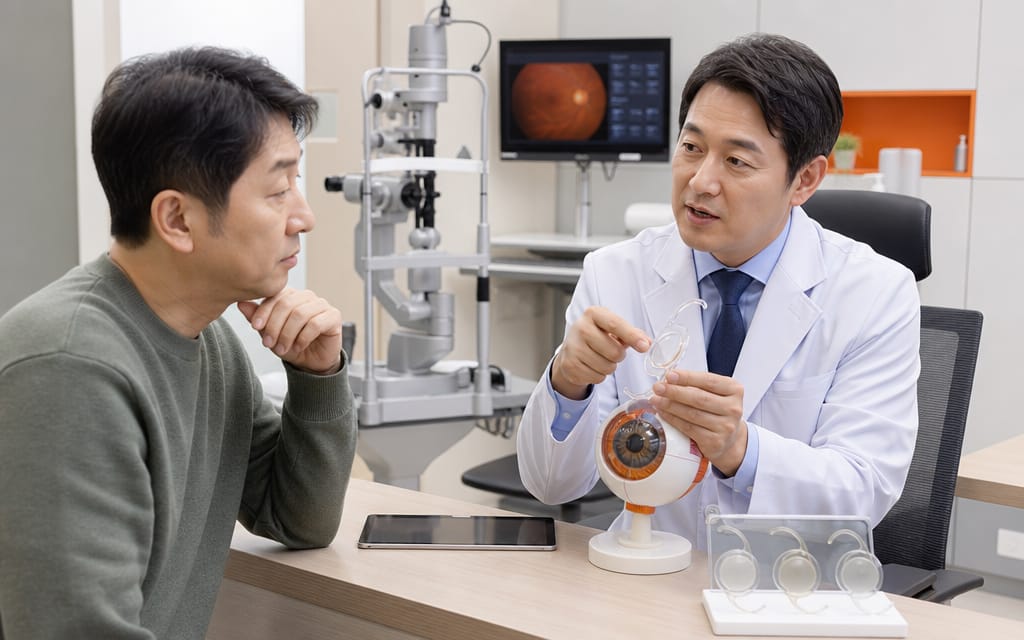
If near-vision discomfort gradually worsens or cataracts are found at the same time, you may consider surgical options. Recently, multifocal intraocular lens surgery is often mentioned as a choice to reduce dependence on glasses. However, it is not automatically the right answer for everyone.
Cataract surgery works by removing the cloudy natural lens and replacing it with an artificial lens. After surgery, there may be an adaptation period during which nighttime glare can occur or contrast sensitivity may feel somewhat reduced. To reduce glare/halos and nighttime contrast reduction, ongoing technical developments include hybrid designs that combine refractive and diffractive approaches, as well as improvements in lens materials to maximize light efficiency. Still, the timing of surgery is not decided by cloudiness alone; it is determined by a comprehensive evaluation of how much daily function is affected.
If you frequently drive long distances at night or your job involves highly precise manual work, you should be especially cautious in making this decision. If residual astigmatism remains or there is an underlying retinal condition, postoperative satisfaction may be limited. A thorough evaluation to clearly analyze your eye condition is important.
6. Frequently Asked Questions (FAQ)
Q. My vision gets noticeably blurrier only in the afternoon—does that mean presbyopia?
It could be an early sign of presbyopia, but it is more likely pseudo-presbyopia from accommodative muscle fatigue accumulated throughout the day, possibly combined with dry eye. After using artificial tears and resting while observing symptom changes, it is safer to get a differential evaluation if discomfort persists.
Q. When is a good time to start using reading glasses?
You can consider them as a practical aid when near-vision discomfort begins to interfere with work or daily function. It is difficult to conclude that using reading glasses itself speeds up aging-related progression. It’s best to adjust the prescription and usage method to your working distance through an ophthalmology clinic or optical shop.
Q. How are presbyopia and cataracts different?
Presbyopia is mainly a phenomenon where near text becomes blurry because focusing ability declines. Cataracts, on the other hand, are an eye condition in which the lens itself becomes cloudy, making both distance and near vision look uniformly hazy, reducing contrast, and causing glare/halos.
Q. When should I consult an ophthalmologist?
If near blur repeats or vision fluctuations increase, identifying the cause can be helpful. In particular, if you notice nighttime glare or a portion of your visual field seems blocked, prompt evaluation is important. From your 40s onward, regular checkups are recommended to screen for eye conditions.

As you enter your 40s, a gradual shift toward hazier vision is one of the natural physical changes you may encounter in life. Rather than becoming anxious too quickly, it can be useful to objectively check your eye fatigue level, dry eye status, and the real trend of your focusing ability.
Lowering the top of your office monitor slightly below eye level can narrow the eyelid opening and may help relieve dryness. Also, if you’ve been looking at a monitor for 50 minutes, build a habit of spending about 10 minutes gazing into the distance outside a window to ease focusing fatigue.
If you clearly understand your eye condition through regular ophthalmology checkups and find realistic options that fit you, you can maintain a more comfortable and clearer work life.
Sources
- Korea Disease Control and Prevention Agency (KDCA), National Health Information Portal, “Presbyopia” (updated regularly; last accessed 2026-06-29)
- Ministry of Health and Welfare · Korean Ophthalmological Society, “Guidelines for Regular Eye Examinations for Public Eye Health”
- Wang et al., 'Influence of presbyopia on smartphone usage', Clinical & Experimental Ophthalmology, 2019
※ The copyright for all content on this blog belongs to medihi. Unauthorized copying, distribution, or derivative use is strictly prohibited, and violations may result in legal action without prior notice.
Recommended reads
 medihi