

In This Article
Do reading glasses make presbyopia come faster or reduce your eyesight? This post summarizes common misconceptions about reading glasses, safe standards for vision correction, and why it’s important to accurately assess the condition of your eyes.
1. Do reading glasses really make presbyopia progress faster?
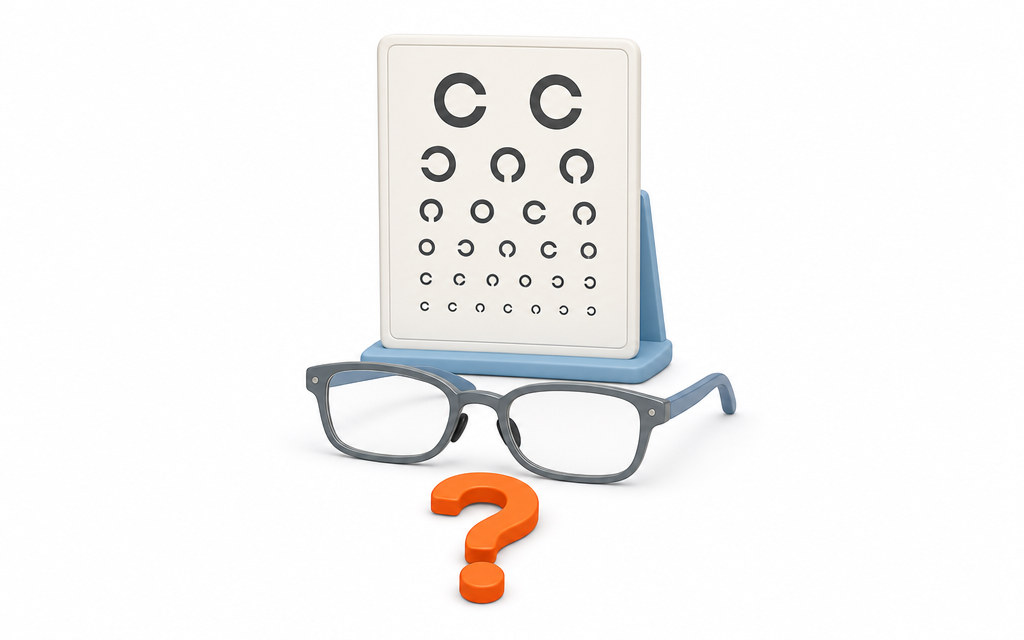
Wearing reading glasses itself does not speed up the progression of presbyopia.
Feeling like your vision has worsened after using reading glasses is a natural change caused by aging of the crystalline lens. The crystalline lens, which acts like the eye’s internal lens, becomes stiffer with age—like an old rubber band that has hardened over time.
As a result, the eye’s ability to accommodate (focus on near objects) gradually declines. Regardless of whether you wear glasses, it is a normal process for the required prescription strength to increase with age.
Research has also shown that wearing appropriately prescribed presbyopia-correcting lenses does not reduce accommodative ability. If your eyes feel uncomfortable, it’s safer to correct the issue rather than forcing yourself to endure it.
2. If you tough it out without reading glasses, will your vision improve?
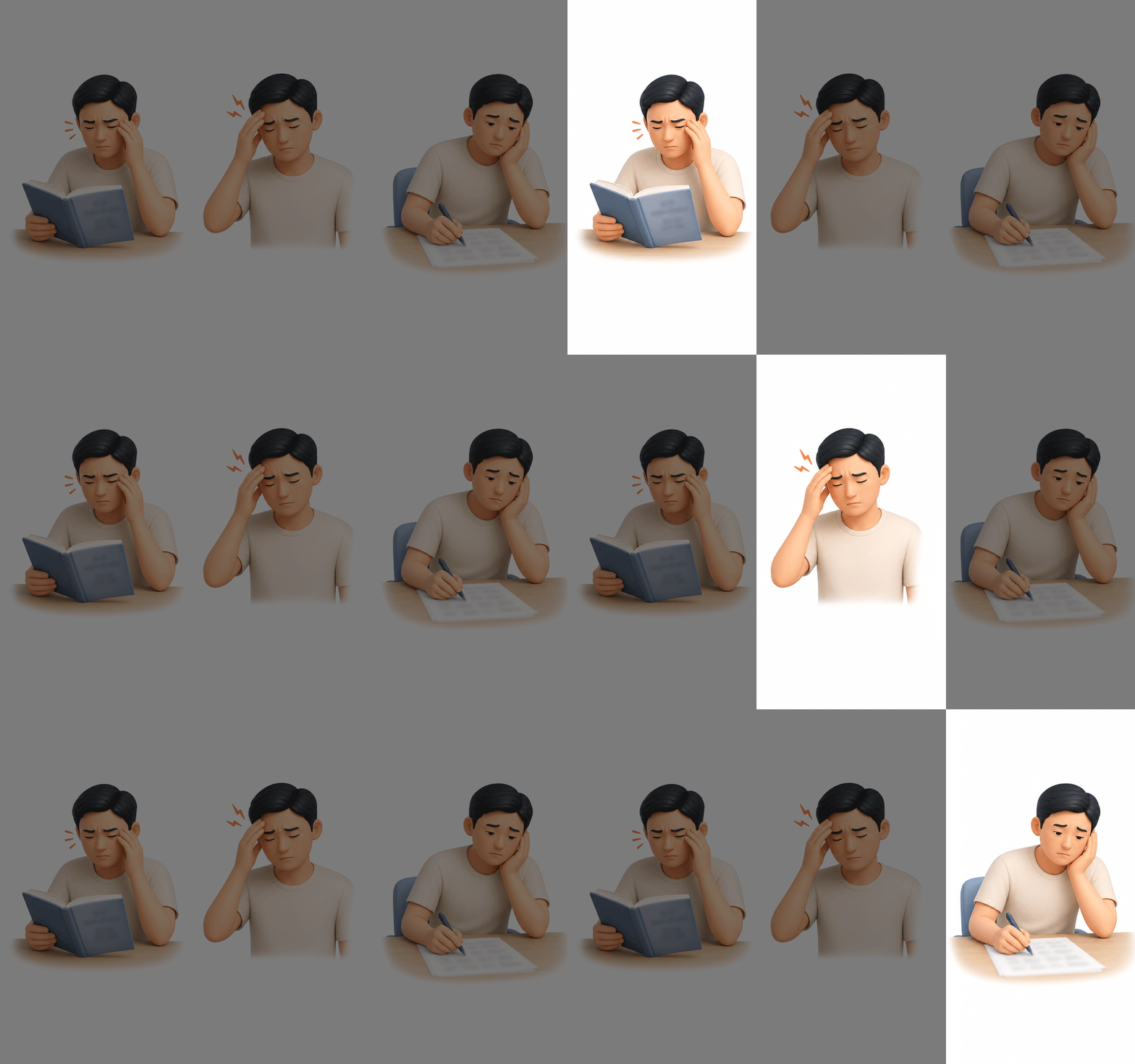
Forcing yourself to go without reading glasses does not help prevent or delay presbyopia in any way.
The core issue in presbyopia is not a lack of “training” of the eye muscles, but rather structural stiffening of the crystalline lens itself. When you strain to read up close despite discomfort, the muscles inside the eye remain in an overly tense state.
✅Three problems that can occur when you try to manage without glasses
- Eye strain (asthenopia): The ciliary muscle inside the eye becomes excessively tense to force focus, which can cause pain.
- Chronic headaches: When accommodative overload continues, the fatigue can be transmitted to the brain and lead to headaches.
- Reduced work efficiency: As vision becomes blurry, concentration drops and reading or work performance declines
3. Why do over-the-counter reading glasses make your eyes feel tired?
Over-the-counter reading glasses that are easy to buy at supermarkets or street shops may cause eye fatigue because they do not reflect each person’s unique visual characteristics. People differ in prescription strength between the two eyes, whether they have astigmatism, and their interpupillary distance.
Mass-produced products are made with the same power for both eyes, cannot correct astigmatism, and may not match your interpupillary distance—leading to image distortion or dizziness.
However, the real risk of over-the-counter reading glasses is not just eye fatigue, but that they can cause you to miss the right timing for an eye exam. While you “get by” temporarily with reading glasses, serious eye diseases such as cataract, glaucoma, and macular degeneration can progress quietly. In particular, glaucoma and macular degeneration often have few noticeable symptoms early on, so if headaches or reduced vision persist, you should stop using them immediately and visit an ophthalmology clinic for a detailed examination.
✅Side effects that may appear with over-the-counter glasses
- Uncorrected astigmatism: Because the astigmatism axis and power are not customized, blurriness in text may remain.
- Mismatched power between eyes: If you have unequal vision between eyes, applying an unsuitable power can increase brain fatigue.
- Misaligned pupil focus: If the lens optical center does not align with the pupil position, images can appear skewed and dizziness may occur.
- Delayed diagnosis of major eye disease: You may miss the early detection and treatment window for conditions such as glaucoma, macular degeneration, and cataract, which often have minimal early symptoms.
4. Why can you suddenly see well up close without reading glasses?
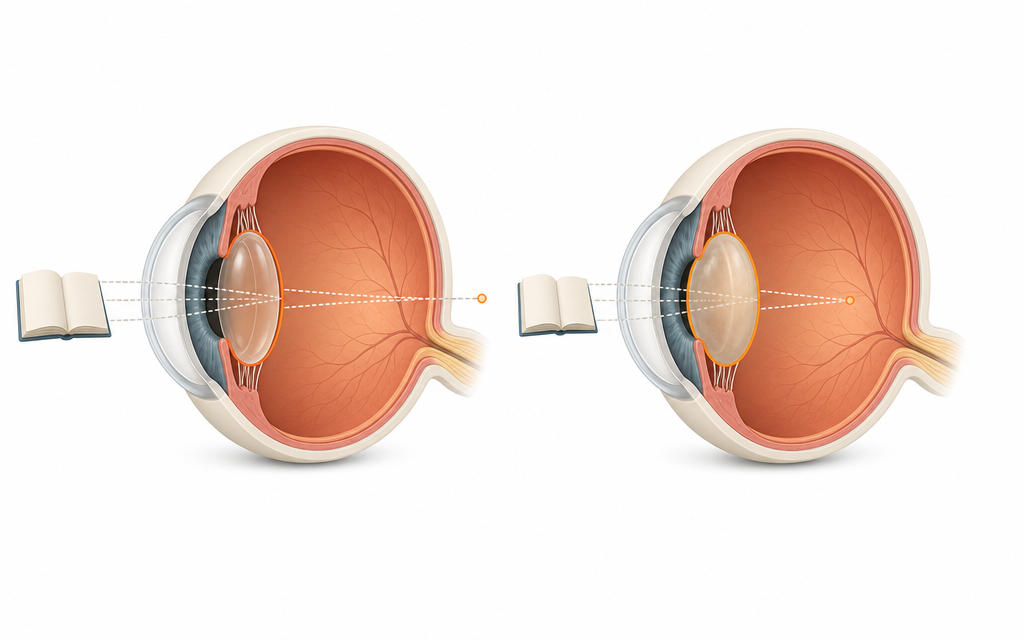
If near text suddenly becomes clear without reading glasses, it may not be “vision recovery,” but a sign of early cataract progression. Medically, this phenomenon is called “second sight.”
Presbyopia does not naturally reverse. This change can occur in early cataract due to “nuclear sclerosis,” where the central part of the crystalline lens hardens, causing a “myopic shift in refraction.” As cataract progresses, the lens’s refractive power increases, temporarily making near focus easier.
If you mistake this for improved vision and leave it unaddressed, you may miss the timing for cataract diagnosis. Along with this phenomenon, you may notice distance vision becoming foggy, nighttime glare/halos, or double vision, so caution is needed.
If your near vision suddenly becomes clearer, don’t dismiss it as a simple change in presbyopia—visit an ophthalmology clinic and have the lens condition checked in detail with a slit-lamp examination.
5.If you have surgery, will you no longer need glasses?
Even if a multifocal intraocular lens (IOL) is implanted during cataract surgery, it is not assured that you will never need glasses for the rest of your life.
Multifocal surgery can reduce dependence on glasses, but due to the optical property of splitting light, you may still need supplemental glasses to fine-tune small residual refractive error after surgery, or you may notice nighttime glare/halos and reduced contrast sensitivity.
In particular, if you have retinal or optic nerve disease such as glaucoma or macular disease, severe astigmatism, or corneal disease, you should be very cautious when considering a multifocal lens. People who drive at night frequently, those whose jobs require detailed near work, or those with perfectionistic expectations may also experience lower satisfaction. The decision should be made after carefully discussing your eye condition and lifestyle with your clinician.
6. Frequently Asked Questions (FAQ)
Q. My reading-glasses prescription keeps increasing—did the glasses make my eyes worse?
No. It’s not because of the glasses, but because the crystalline lens loses elasticity with age. From your 40s through your 60s, accommodative ability continues to decline, so periodic prescription adjustments are a normal physiological process.
Q. I started seeing well up close without reading glasses—do I need an exam?
Yes, a detailed exam is needed. Sudden improvement in near vision is likely a temporary refractive change due to early cataract progression, so you should have a slit-lamp examination.
Q. Should I avoid over-the-counter reading glasses entirely?
Using them temporarily for a very short time is fine. However, with ongoing wear, uncorrected astigmatism and mismatched interpupillary distance can cause chronic headaches and fatigue, so custom-prescribed glasses are recommended.
Q. Can I still use reading glasses after multifocal IOL surgery?
Yes. If small residual astigmatism or farsightedness remains after surgery and you need to read very small print for long periods, light supplemental glasses can improve clarity.
This health content has been reviewed by medical professionals, compiled from authoritative domestic and international sources, and is regularly updated in accordance with the latest clinical guidelines.
Sources
- Korea Disease Control and Prevention Agency (KDCA), National Health Information Portal: Presbyopia and cataract health information guidelines
- Spectacle lenses for presbyopia correction and accommodation changes, *Ophthalmic and Physiological Optics* (PMID: 12535052)
- Clinical outcomes of a new hydrophobic trifocal IOL, *Korean Journal of Ophthalmology*, 2024 (PMC11339033)
※ The copyright for all content on this blog belongs to medihi. Unauthorized copying, distribution, or derivative use is strictly prohibited, and violations may result in legal action without prior notice.