

“Whenever I chew something tough like squid or meat, it stings so much that I unconsciously only chew on the other side.”
“As long as I avoid the painful side, I feel fine for now. It should be okay to wait until my next regular checkup, right?”
Even after investing significant time and effort into getting new teeth, you may find yourself hesitating at the dinner table. Specifically, when a stinging sensation occurs while eating slightly tough foods like pork belly or squid, you might instinctively push food to the side that doesn't hurt. Since avoiding the painful side provides immediate relief, it is common to soothe yourself by thinking, "I'm probably just still in the adaptation period," and choosing to endure it.
However, that temporary comfort might be a signal that is slowly changing your daily chewing habits. If the behavior of avoiding pain becomes a fixed habit, you may face more daily inconveniences than you expect.
Today, based on standards from authoritative health organizations such as the World Health Organization (WHO) and the U.S. Food and Drug Administration (FDA), we will objectively examine what the discomfort you are currently experiencing means for your daily life.
1.Stinging Discomfort: Will You Naturally Adapt Over Time?
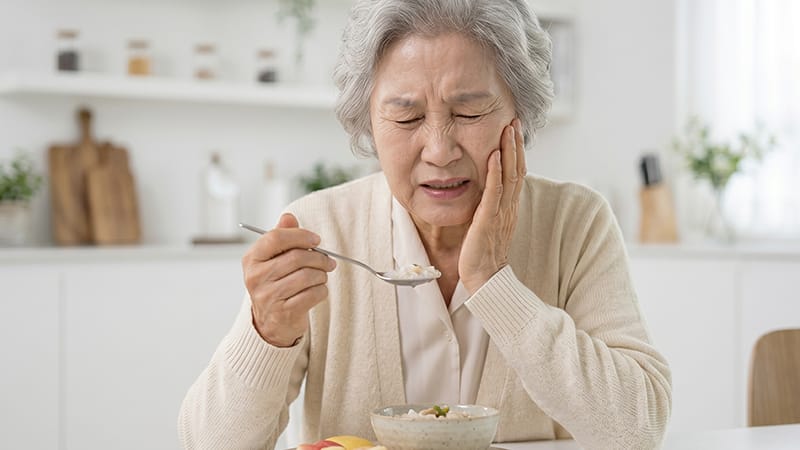
Many people initially believe that discomfort is normal because their new teeth have not yet perfectly adapted like their original ones. Consequently, even if it hurts a little when chewing meat, they often choose to endure it, believing that time will resolve the issue.
However, explanations from authoritative health organizations differ. The U.S. Food and Drug Administration (FDA) provides guidance that if your teeth feel painful, loose, or as if they "do not fit together normally," these are signals that warrant a prompt check-up.
In other words, if you feel recurring pain when chewing, it suggests that something regarding your current chewing function needs verification beyond a simple adaptation process.
Furthermore, according to the Korea Disease Control and Prevention Agency (KDCA) National Health Information Portal, discomfort in specific areas can result from a combination of various factors, including daily eating habits.
Therefore, rather than enduring it unconditionally or assuming it will improve on its own, it is a wise coping strategy to observe changes in your daily life—such as which foods cause repeated discomfort or whether a pattern of chewing on only one side has emerged—and use these as criteria for a check-up.
2.What Happens in Daily Life When You Avoid Chewing on the Painful Side?
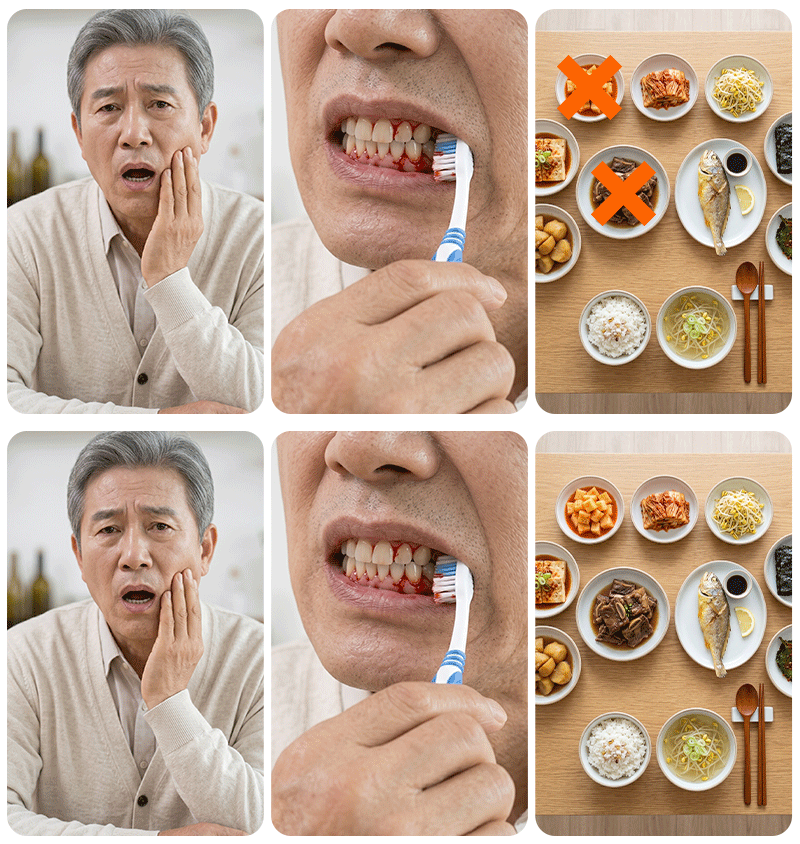
If the habit of chewing on only one side to avoid discomfort persists, several invisible changes can occur in your daily routine.
The first thing you might notice is a change in your food choices. Even if you initially felt stinging only with hard or tough foods, you may gradually start seeking only soft foods, significantly reducing your dining options and the joy of eating.
The World Health Organization (WHO) defines oral health as 'a state of being able to eat, speak, and socialize without pain or discomfort.' A decline in the ability to eat can itself be a signal that your quality of daily life is deteriorating.
Additionally, if the habit of chewing on only one side becomes fixed, it may be accompanied by discomfort such as jaw stiffness or a clicking sound when opening the mouth. You may also experience a persistent sensation where one side of the upper and lower teeth meets first or feels "high."
Furthermore, when brushing your teeth, you may notice that the surrounding gums feel particularly sensitive, bleed, or that a bad taste lingers in your mouth. These are changes that users can notice first.
While these sensory changes sometimes overlap with temporary situations like fatigue, if they persist repeatedly, they can be signs that the balance of your daily eating function is being disrupted.
3.3 Checklist Items You Should Check Right Now
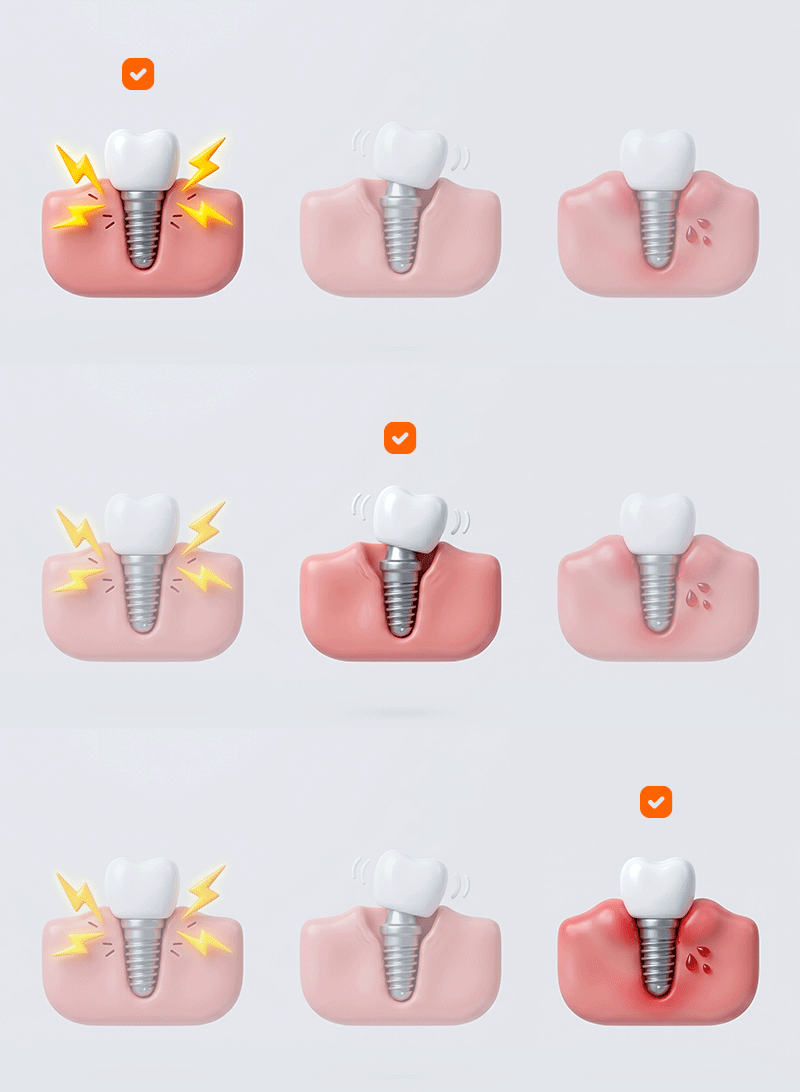
If you are wondering whether the discomfort you are currently experiencing requires a professional check-up, please verify your daily patterns through the objective criteria below.
✔ Does pain occur as a recurring pattern when chewing specific foods? If the same area stings every time you eat hard or tough food, or if the pain returns after a brief period of relief, this serves as a criterion for recommending a check-up.
✔Do you feel that the sensation of your teeth fitting together has changed?
If you are unconsciously using only the opposite side because one side feels like it hits first, feels high, or feels misaligned when chewing, your chewing pattern has changed.
✔Is it accompanied by gum swelling, bleeding, looseness, or a bad odor?
If your gums look sensitive in the mirror and bleed, or if a feeling of slight looseness and a bad taste in the mouth persists, it is advisable to plan for a check-up.
If even one of these three items occurs consistently, it is helpful to review your condition with a professional.
Sources
- U.S. Food and Drug Administration (FDA), “Dental Implants: What You Should Know”, 2021.
- World Health Organization (WHO), “Oral health: Questions and answers”, 2024.
- Korea Disease Control and Prevention Agency (KDCA) National Health Information Portal, “Dental Implants”, 2024.
※ This content is for general informational purposes only and is not a substitute for professional medical advice, diagnosis, or treatment based on individual conditions. We recommend visiting a dentist for an accurate assessment of your condition.