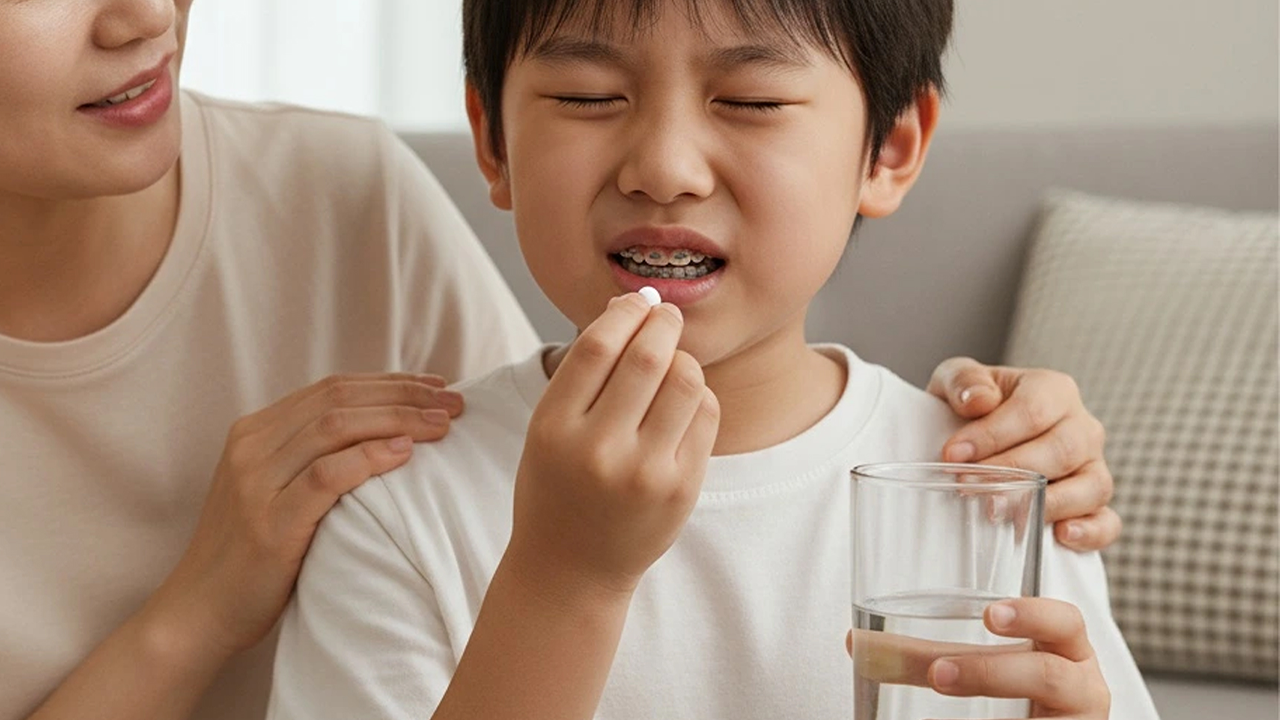

Your child’s underbite (prognathism) or receding chin is not just a cosmetic concern—it can be a sign of how the jawbones are growing. This article explains the jaw growth warning signs parents shouldn’t miss and why growth-phase jaw orthopedics/orthodontics can matter.
“When my child smiles, their lower jaw seems to stick out…”
“They keep lisping—should I be worried?”

At first, it can look like a simple habit or an appearance issue. However, it may be a signal of growth-related changes in the jawbones and teeth.
According to domestic research, about 25–30% of children experience malocclusion, and for many of them, treatment during growth can be addressed without surgery.
In this post, we’ll walk through five jaw-growth warning signs parents shouldn’t overlook, and explain in detail why growth-phase orthodontic care can be important.
1.5 jaw growth warning signs you should check
The key to growth-phase jaw treatment is not missing the signs early.
With just a little attention, parents can often spot these signals. If you notice any of the following, consider consulting a professional.
1) Underbite (reverse bite) where the lower front teeth cover the upper front teeth
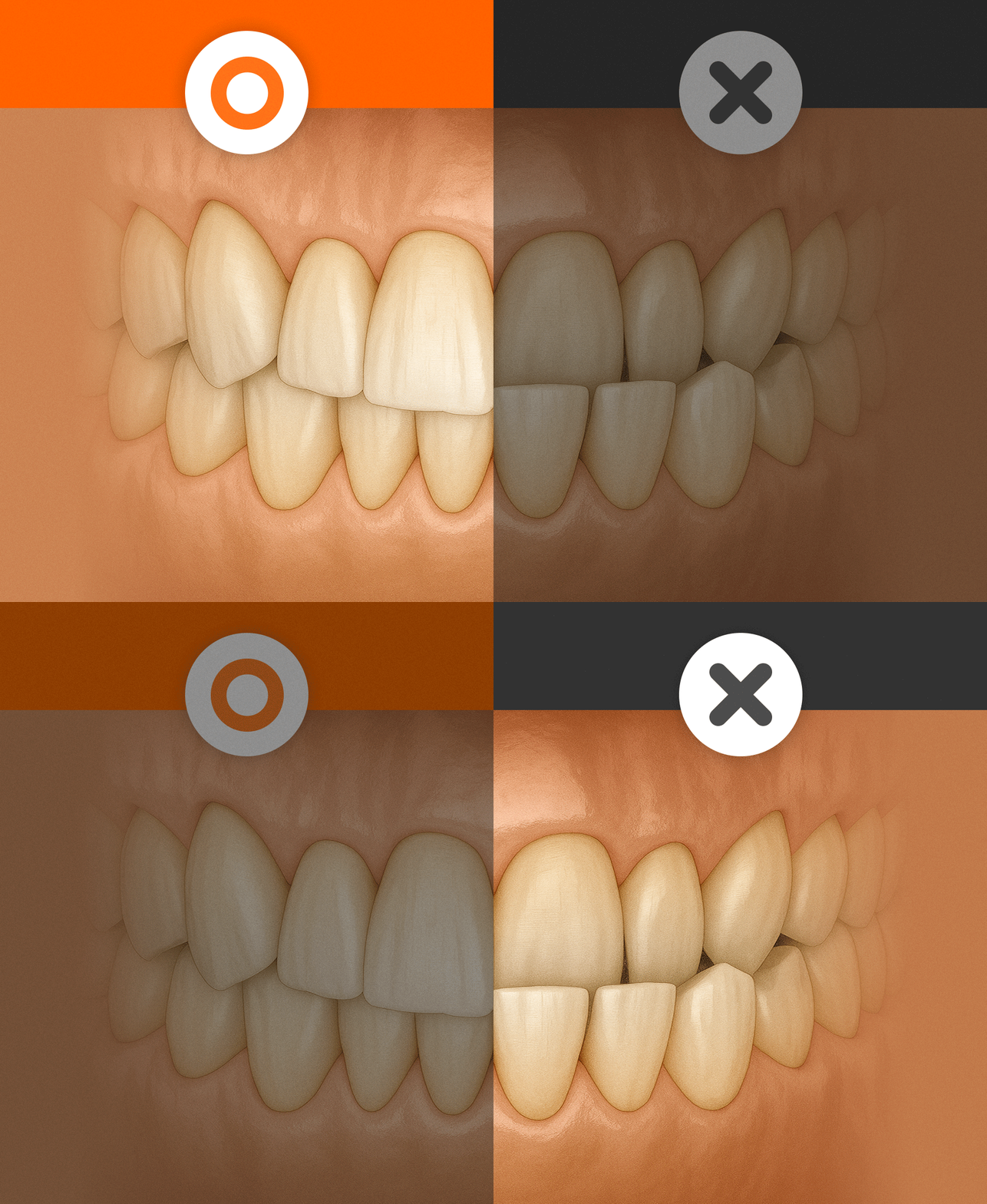
In a typical bite, the upper front teeth slightly overlap the lower front teeth. If the lower teeth come forward and cover the upper teeth, this is an underbite (reverse bite).
If it isn’t corrected early, the lower jaw may continue to grow excessively and progress into a skeletal underbite.
If you identify it early—such as through an at-home underbite check—you may help prevent more severe underbite patterns that can appear later.
2) Open bite where the front teeth do not touch
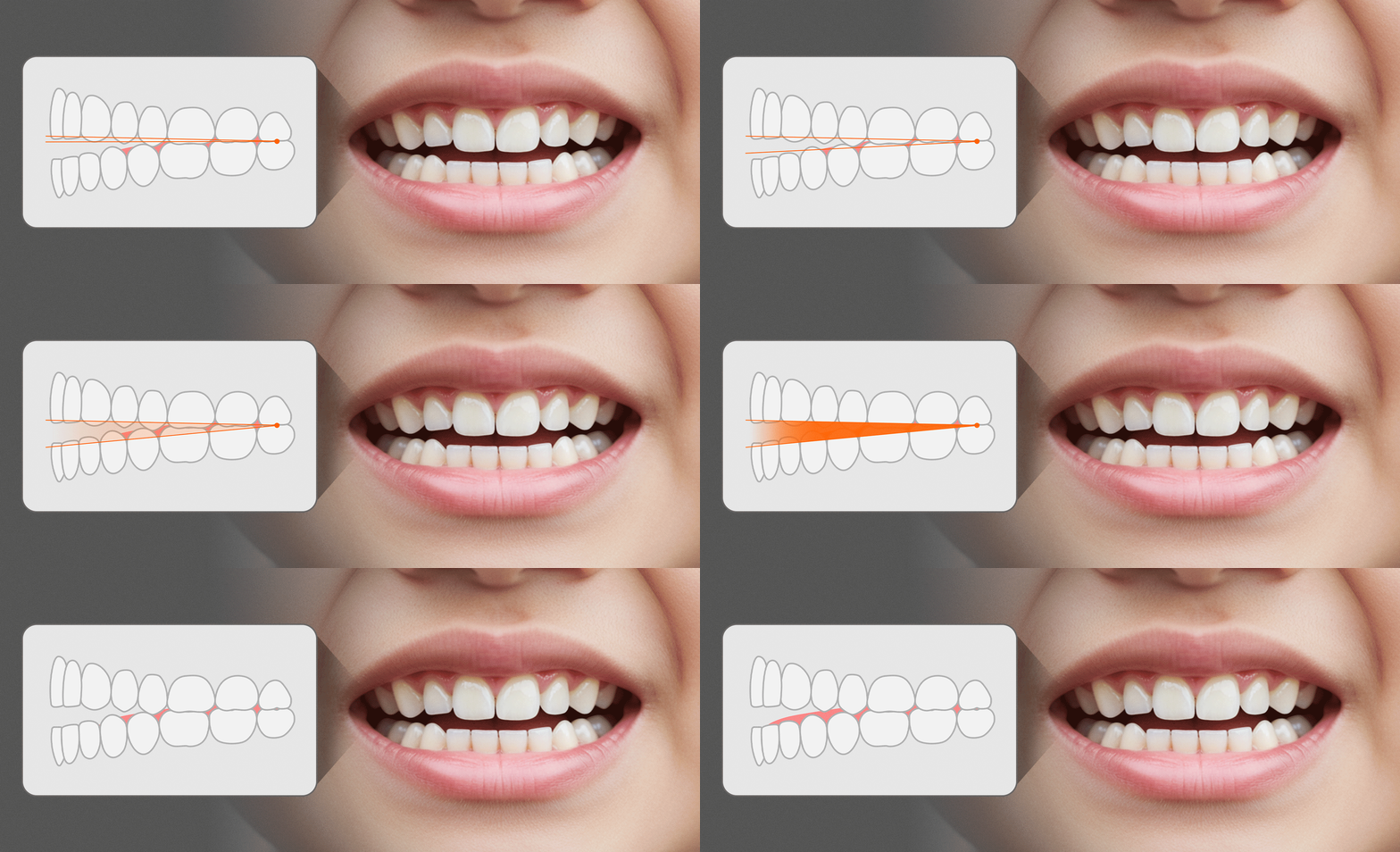
Some children struggle to bite through noodles, or their “s” and “j” sounds come out airy or distorted. This may be due to an open bite, where the front teeth don’t contact properly.
Common contributors include thumb sucking, tongue thrusting, and mouth breathing rather than nasal breathing.
If left unaddressed, chewing forces may concentrate on the back teeth, increasing strain on the jaw joints and accelerating tooth wear.
3) Protrusive upper teeth with deep overlap of the lower teeth (deep bite)
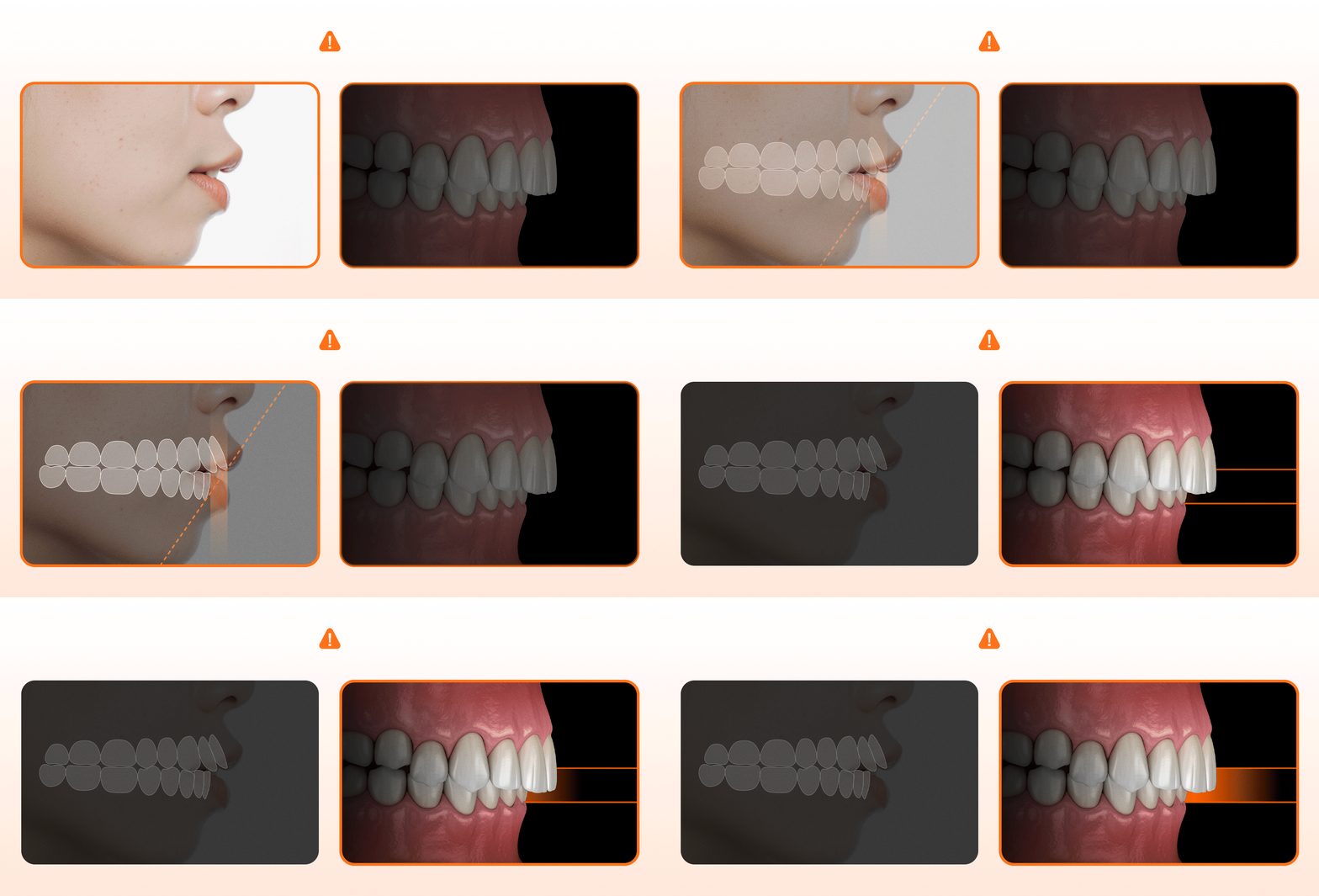
If the lips don’t close easily, mouth breathing becomes more likely, which can raise the risk of tooth issues. A deep bite, where the upper teeth cover the lower teeth excessively, can also increase the risk of gum irritation and tooth wear.
Both situations can be associated with a receding-chin tendency, making facial balance easier to disrupt.
Early intervention for a receding chin can help guide jaw growth toward better facial balance and may support both function and aesthetics.
4) Facial asymmetry
This may look like the chin shifting to one side or the face appearing uneven. A common cause is a crossbite, where the back teeth do not meet properly.
Correcting facial asymmetry during growth can be most effective when the jaw is still flexible. Early correction may help prevent more severe asymmetry in adulthood.
5) Seemingly minor but persistent habits
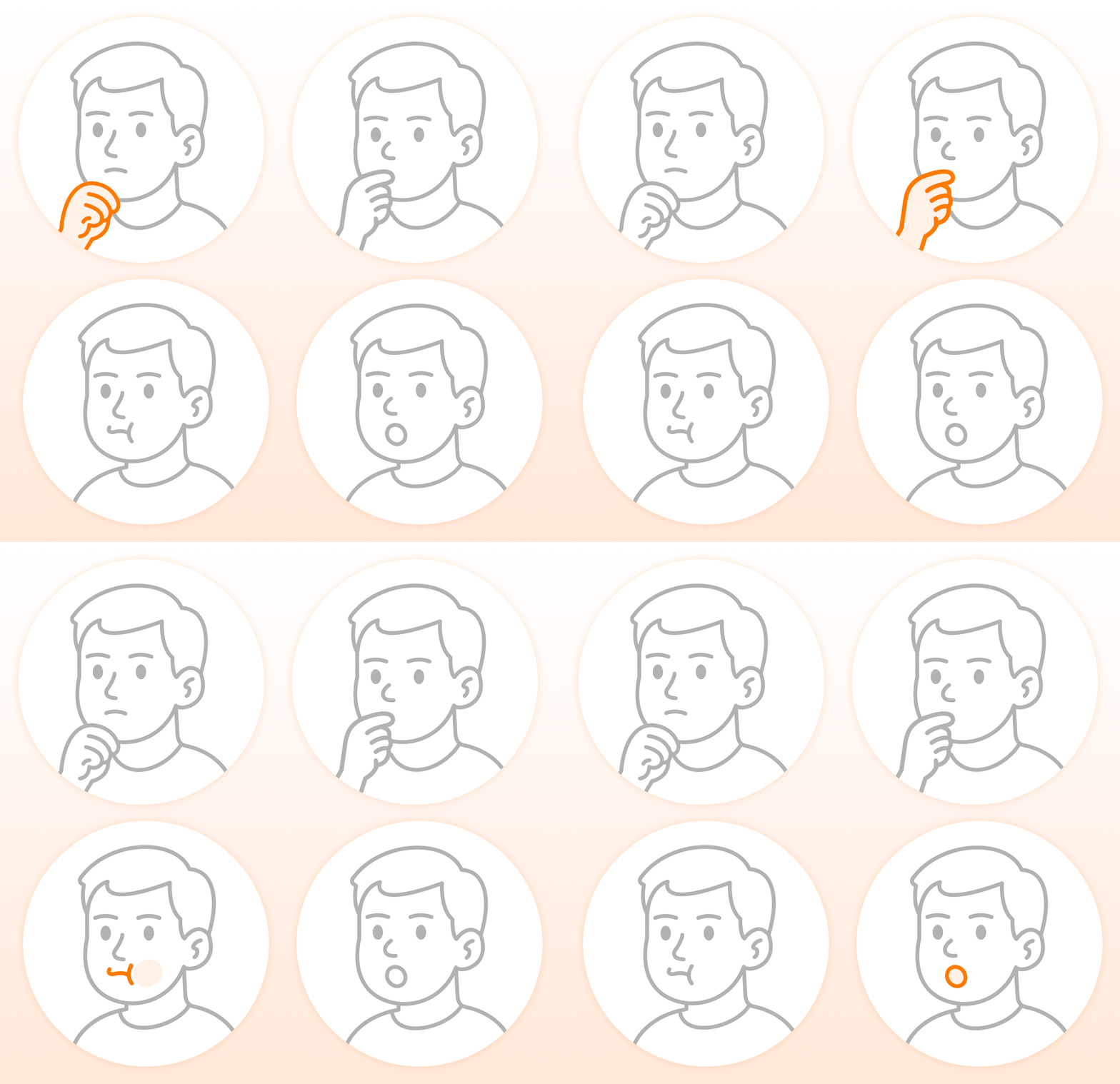
Resting the chin on a hand, chewing only on one side, thumb sucking, and mouth breathing can distort the direction of jaw growth.
Mouth breathing in particular can contribute to a longer facial pattern sometimes described as an “adenoid-type face,” where the jaw appears positioned further back and the face looks longer.
Many parents wonder about genetics vs habits in underbite. Even if there is a genetic tendency, unhealthy habits can worsen the pattern—so habit correction is important.
2.Growth-phase orthodontics vs adult orthodontics: why are they different?
The importance of growth-phase treatment can be explained with one phrase: a “golden window.” Adult orthodontics moves teeth within a jaw that has already finished growing. By contrast, growth-phase jaw treatment may help guide the direction of jaw growth while the bones are still adaptable.
[Growth-phase orthodontics vs adult orthodontics]
| Category | Growth-phase orthodontics | Adult orthodontics |
|---|---|---|
| Bone status | More adaptable → growth direction can be guided | More fixed → primarily tooth alignment |
| Need for surgery | May help prevent the need for surgery | Higher likelihood that surgery may be combined |
| Treatment scope | Jaw growth guidance + tooth alignment | Mainly tooth alignment |
| Typical duration | About 1–2 years on average | About 2+ years on average |
| Quality-of-life impact | May improve speech, chewing, appearance, and confidence together | Improvement focused on alignment and function |
3.Frequently Asked Questions (FAQ)
Q. When should my child get their first orthodontic evaluation?
In general, around age 6–7, when the first permanent teeth begin to come in, is a common time for an initial evaluation. However, if you see clear signs such as an underbite (reverse bite), it can be helpful to consult even earlier.
Q. Do we really need growth-phase orthodontic treatment?
If the issue is only mild tooth crowding, orthodontic treatment as an adult may still be possible. But if there is a jaw-bone pattern—such as an underbite or receding chin tendency (skeletal malocclusion)—growth-phase treatment can be especially important. If the timing is missed, surgery may be considered later in adulthood.
Q. Is underbite genetic, or is it caused by habits?
Genetics vs habits is a common concern for parents. Genetic influence can be strong, but habits such as thumb sucking or resting the chin on a hand can worsen the condition. Even with a genetic tendency, early evaluation and habit correction together can be important.
Q. Can teeth shift again after orthodontic treatment?
Yes. During adolescence, additional jaw growth, or later eruption of wisdom teeth, can contribute to relapse. Wearing retainers consistently and attending regular follow-ups after treatment are important for long-term stability.

Growth-phase jaw treatment is not only about straightening teeth—it can be viewed as an investment in your child’s long-term health and confidence. If your child’s lower jaw appears forward, or their front teeth don’t touch when they smile, it may not be “just a habit.” Take one more careful look at how your child’s teeth meet at home. If you notice worrying signs, consider seeking a professional evaluation. The greatest support for your child’s healthy smile often starts with a parent’s early attention.
Sources
- Korean Association of Orthodontists. (2022). Guidelines for Early Treatment of Growth-Phase Malocclusion.
- JCO Pediatric Orthodontics Review. (2021). The Impact of Early Orthodontic Intervention on Surgical Needs.
- American Association of Orthodontists. (2020). The benefits of early orthodontic treatment.
※ The copyright for all content on this blog belongs to Medihi. Unauthorized copying, distribution, or derivative use is strictly prohibited, and violations may result in legal action without prior notice.
Recommended reads
 medihi