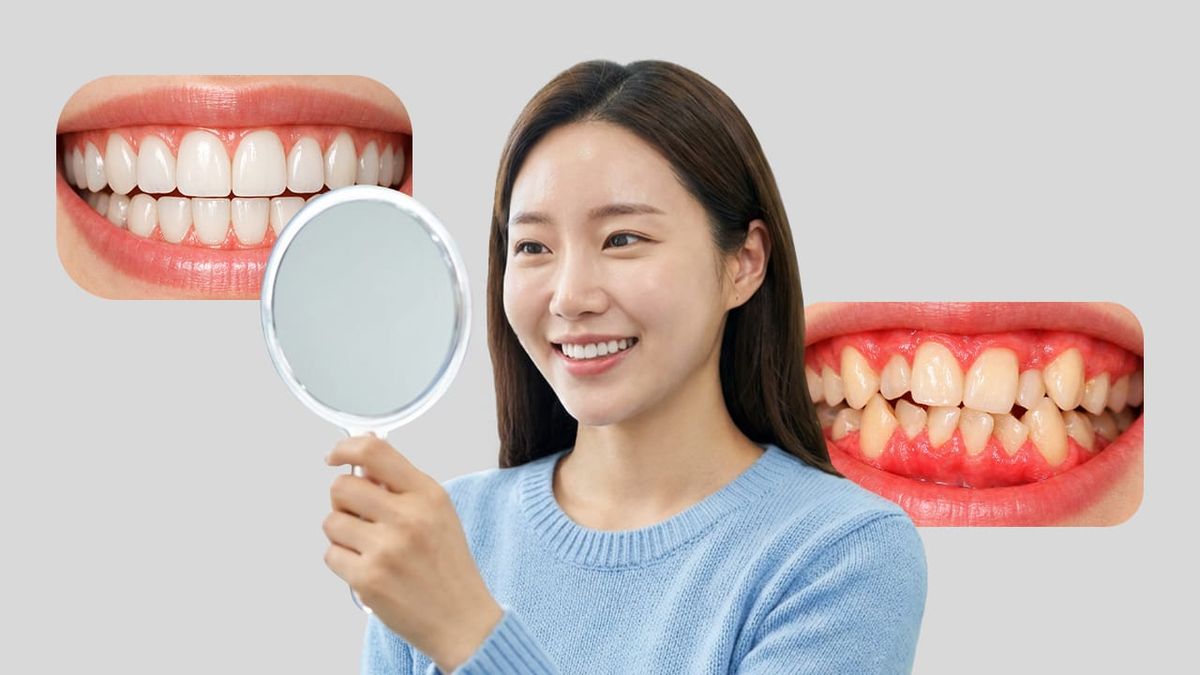

We’ll explain the key differences between two common front-tooth treatments—crowns and veneers—and help you understand which option may be more suitable depending on your tooth condition.
“I’m trying to decide between a crown and veneers for my front teeth. Which one is better?”
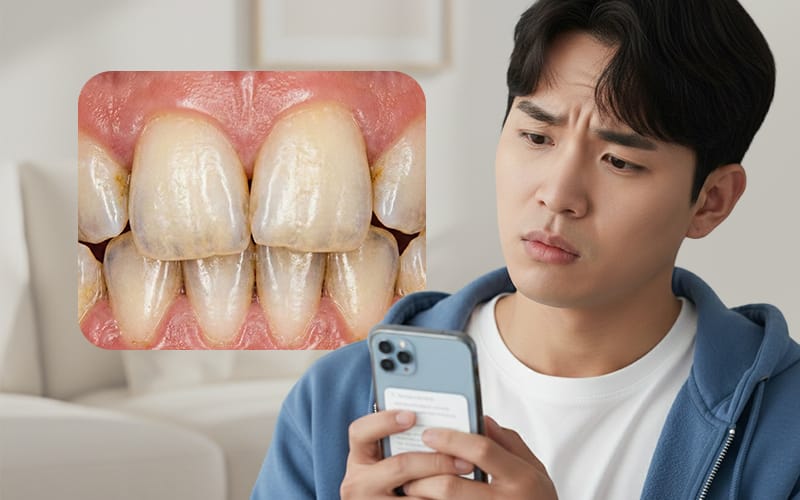
Many people ask, “Isn’t the best treatment the one that removes as little tooth structure as possible?” Preserving natural tooth structure is important, but less reduction is not automatically better in every case.
Depending on how deep the damage is and how your bite (occlusion) functions, the most appropriate approach can differ. That’s why it’s important to understand your tooth’s structural conditions and make a safe choice that matches them.
If the foundation is weak, even the most beautiful restoration won’t last long. So when planning treatment, the top priority should be not aesthetics, but whether the remaining tooth structure can actually support the restoration.
1. Crown vs. Veneers: Which is better?
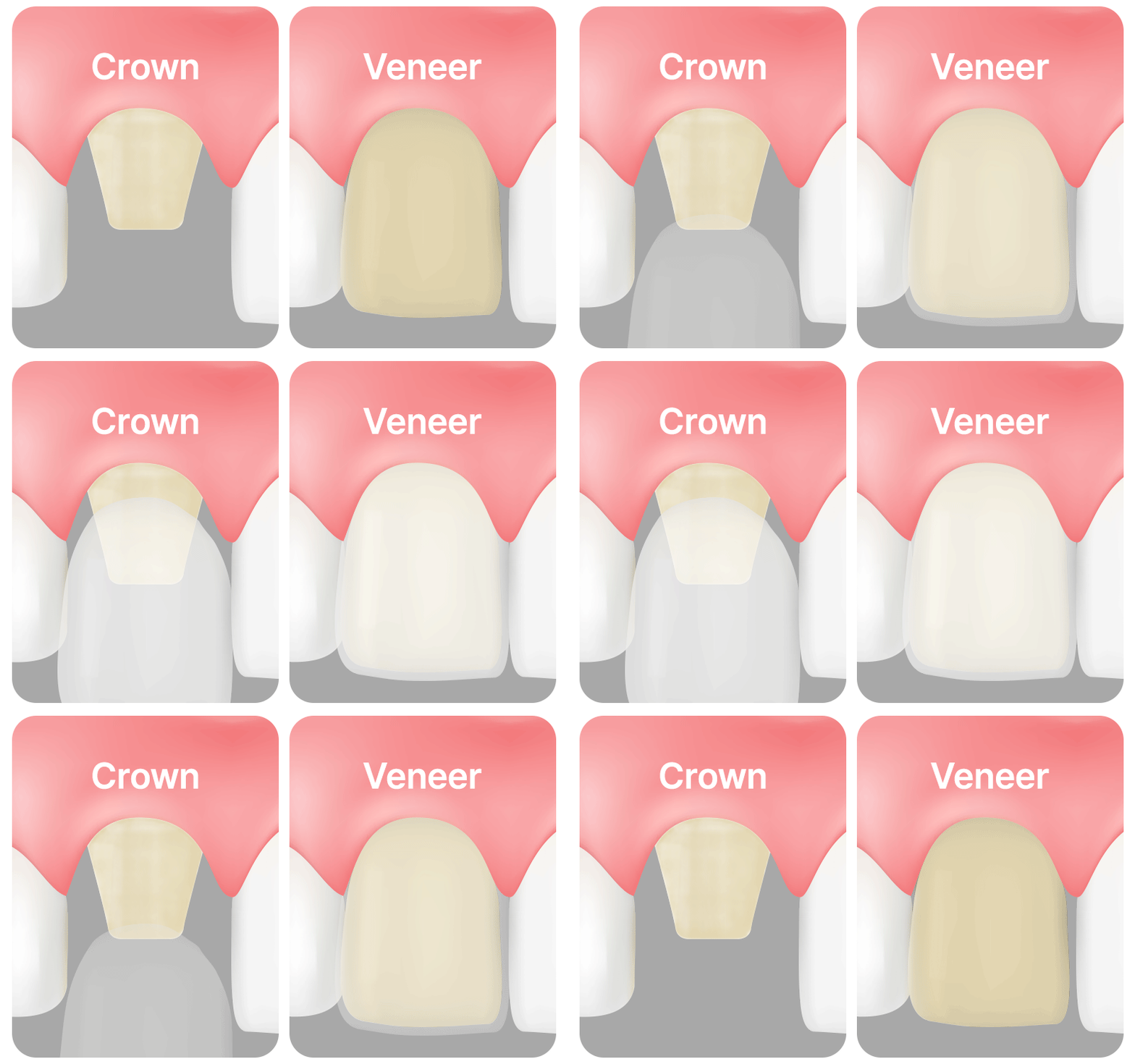
It’s common to think in a simple way: crowns are “bad because they require a lot of reduction,” and veneers are “good because they require less.” But these two treatments have different indications and goals, so you can’t judge them as absolutely good or bad. To make the difference easier to understand, let’s compare them to a “safety helmet” and “tile installation.”
A crown works like putting a safety helmet (reinforcement) over a building whose core support has weakened. If the wall is already broken (decay) or cracked, adding tiles won’t prevent the wall itself from collapsing. In that situation, you need a helmet (crown) to protect the entire tooth from external forces. In other words, the key criterion is not the amount of reduction, but whether the remaining tooth has enough strength to hold up.
Veneers, on the other hand, are like adding tiles to the wall surface (the front surface of the tooth). For tiles to bond firmly, the wall surface must be smooth and strong. That means veneers tend to be advantageous when the tooth surface is healthy.
| Category | Crown (Safety Helmet) | Laminate / Veneer (Tile Work) |
|---|---|---|
| Method | Encases and covers the entire tooth | Minimally shaves the tooth surface and attaches ceramic |
| Recommended For | Patients with teeth weakened by decay or cracks | Patients with relatively healthy and strong tooth surfaces |
| Key Strengths | Prevents fracture from external impacts | High natural tooth preservation rate |
2. With a crown, is root canal treatment required?
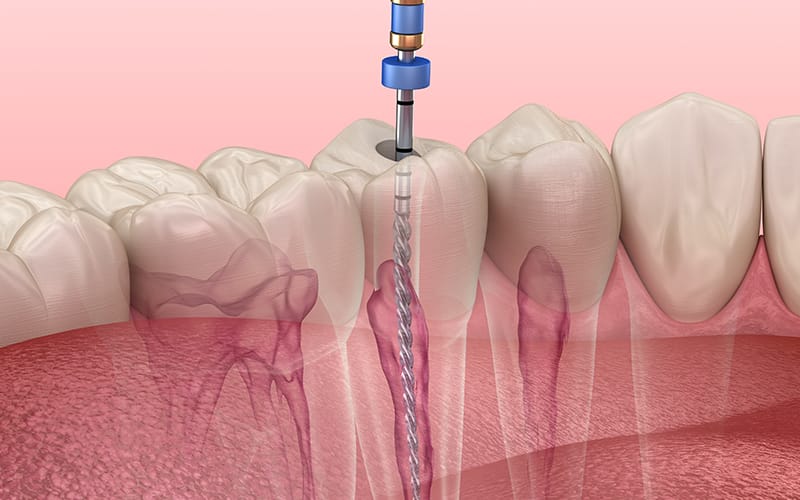
As explained above, if your tooth surface isn’t healthy or you have decay, a crown may be the better option. However, many people hesitate because they believe a crown automatically means they must have root canal treatment. Did you know that a crown does not always require root canal treatment?
A crown can be placed even when the nerve is still alive—this is called a “vital crown.” If the decay or fracture has not reached the nerve, crown restoration can be done while preserving the nerve.
When performing a vital crown, the principle is to preserve the nerve to maintain nutrition supply and sensation. However, if the reduction brings the preparation very close to the nerve, or if there are micro-cracks that raise concern for inflammation, preventive treatment may be considered.
So, getting a crown doesn’t automatically mean you must have root canal treatment—the decision depends on the depth of tooth damage.
3. Are thin veneers really easy to break?
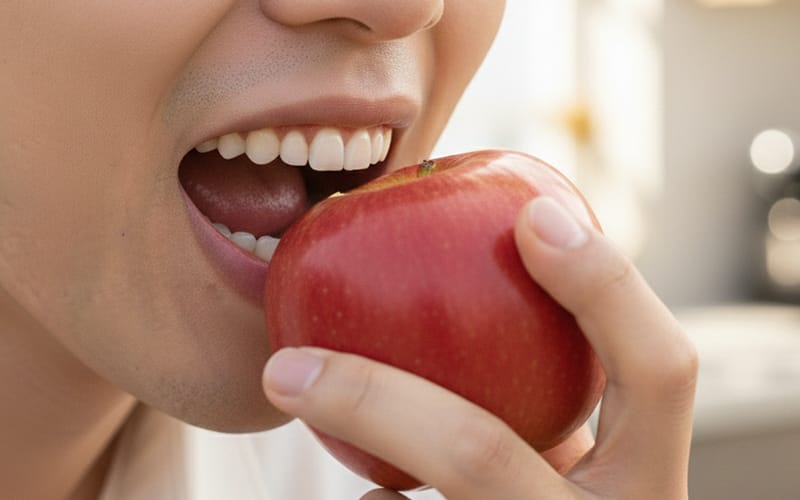
If your tooth surface is relatively healthy, choosing veneers can be a reasonable option. Still, many people worry that veneers are thin and weak, so they might crack or fall off easily. There’s even a saying: “Veneers are so thin you can’t even bite an apple.”
But that concern usually applies when bonding is inadequate or when the bite relationship (occlusion) wasn’t properly considered. Contrary to common fears, veneer durability is not necessarily weak.
Just as tiles don’t easily fall off when they become one with the wall, veneers placed under appropriate conditions can bond tightly to the tooth and provide stable functional support.
4. The key to successful veneers: “Enamel”
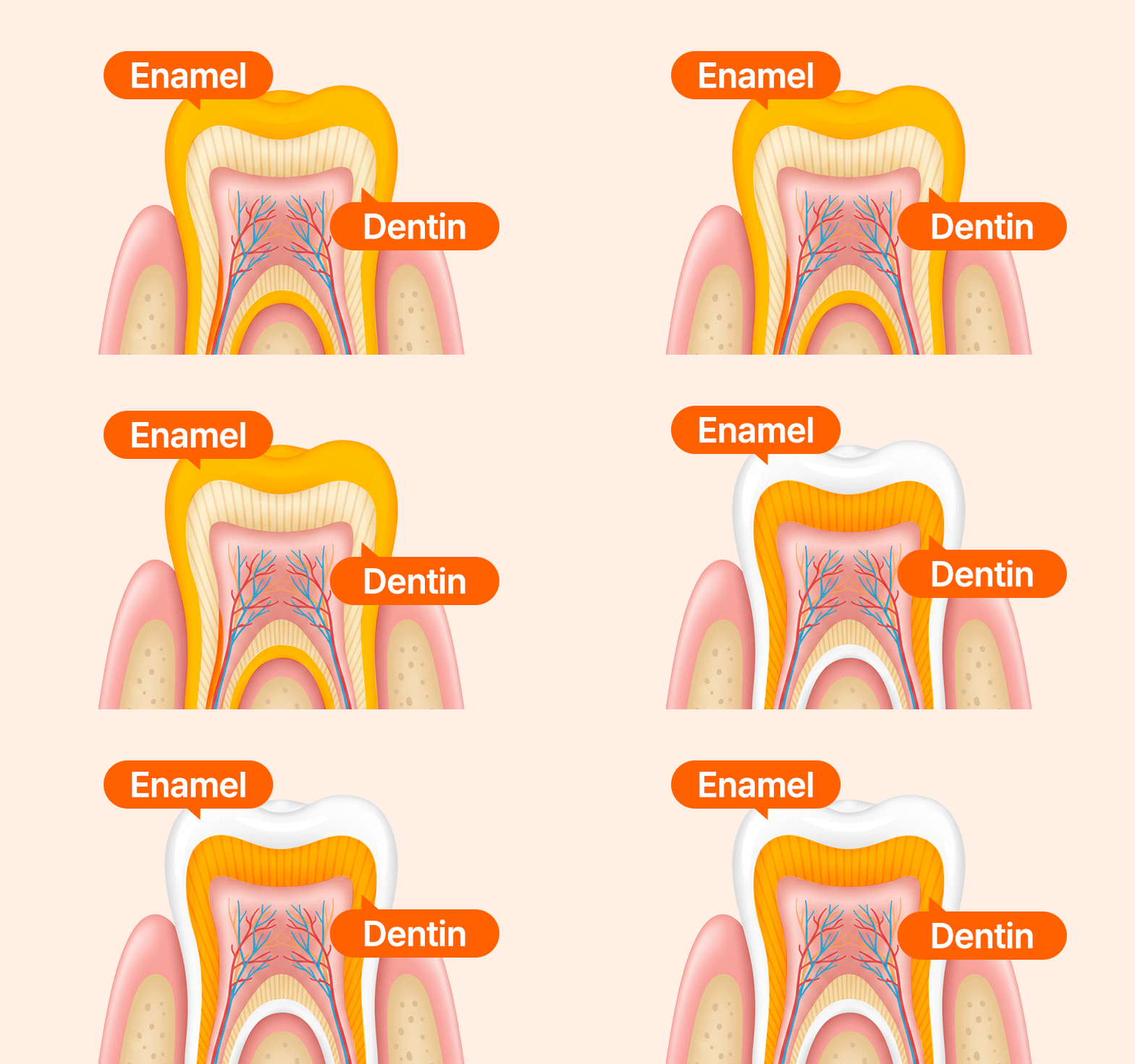
The key to veneer success is “enamel bonding.” Enamel, the outermost layer of the tooth, has properties that allow very strong bonding with ceramic. According to studies, veneers with good enamel bonding (with more than 50% of the total surface retaining enamel) are reported to have a notably high long-term survival rate.
Let’s revisit the “tile installation” analogy. Bonding is stronger on a smooth tile wall (enamel) than on a rough cement wall (dentin). In contrast, dentin contains more moisture, which significantly reduces bonding strength. Therefore, rather than aiming for zero reduction, it’s important to stop reduction within the enamel range.
If your teeth are severely misaligned, tooth reduction may inevitably increase, and enamel may be removed entirely—raising the risk of sensitivity or restoration debonding. For safe veneer treatment, you should first confirm whether your teeth meet the conditions needed for enamel bonding.
You should also be cautious if your upper and lower front teeth overlap deeply (deep bite) or if you have severe bruxism. Repeated impact accumulates fatigue, so in such cases, wearing a protective device (night guard) is essential.
✅ Veneer candidacy checklist
- Are your teeth relatively well-aligned, requiring minimal reduction?
- Do you have little to no previous decay treatment marks on the tooth surface?
- Do you lack a bruxism habit, and do your front teeth avoid heavy contact?
5. Which option is more beneficial and safer for my teeth?
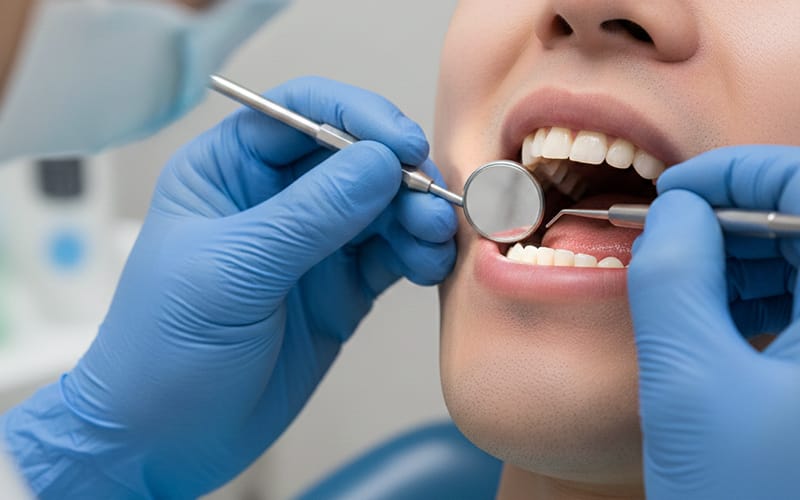
Choosing a treatment requires a comprehensive look at current tooth damage and daily habits. So, when is each method more suitable?
If your tooth surface is healthy and you mainly want to improve color or minor shape, veneers using enamel bonding can be appropriate—because they help preserve natural tooth structure as much as possible.
On the other hand, if decay is extensive or the tooth has already had root canal treatment, a crown may be structurally safer. A weakened tooth may struggle to withstand chewing forces with partial bonding alone. In that case, a crown that protects the tooth 360 degrees can be an option to reduce fracture risk.
✅ Questions to ask your dentist during consultation
- Is there enough enamel remaining to achieve strong bonding?
- Will previous decay-treated areas fall within the veneer coverage?
- Could my clenching habit affect the risk of fracture?
6.Frequently Asked Questions (FAQ)
Q. Do veneers have a shorter lifespan than crowns?
Lifespan depends more on maintenance than on the treatment type itself. Veneers placed under appropriate conditions can maintain good longevity for over 10 years. However, if you grind your teeth or frequently eat hard foods, the risk of fracture may increase.
Q. If my teeth feel sensitive after treatment, does that mean it failed?
Temporary sensitivity right after treatment often improves over time, but you should monitor the intensity and duration. If severe pain persists when exposed to cold or hot water, or if it hurts when chewing, there may be a gap at the bonding interface or nerve inflammation—so an exam is needed.
Q. I have severe bruxism—can I still get veneers?
Bruxism is a major cause of front-tooth restoration fractures. Structurally, a crown that covers the entire tooth may provide stronger resistance. Regardless of the treatment, wearing a night guard (splint) is recommended to protect both teeth and restorations during sleep.
Q. When should I see a dentist after getting front-tooth restorations?
If the gums around the restoration become red, swollen, or bleed; if the margin looks dark; or if you feel a rough gap with your tongue, you should seek consultation promptly. These can be signs of secondary decay or bonding failure, and early action matters.
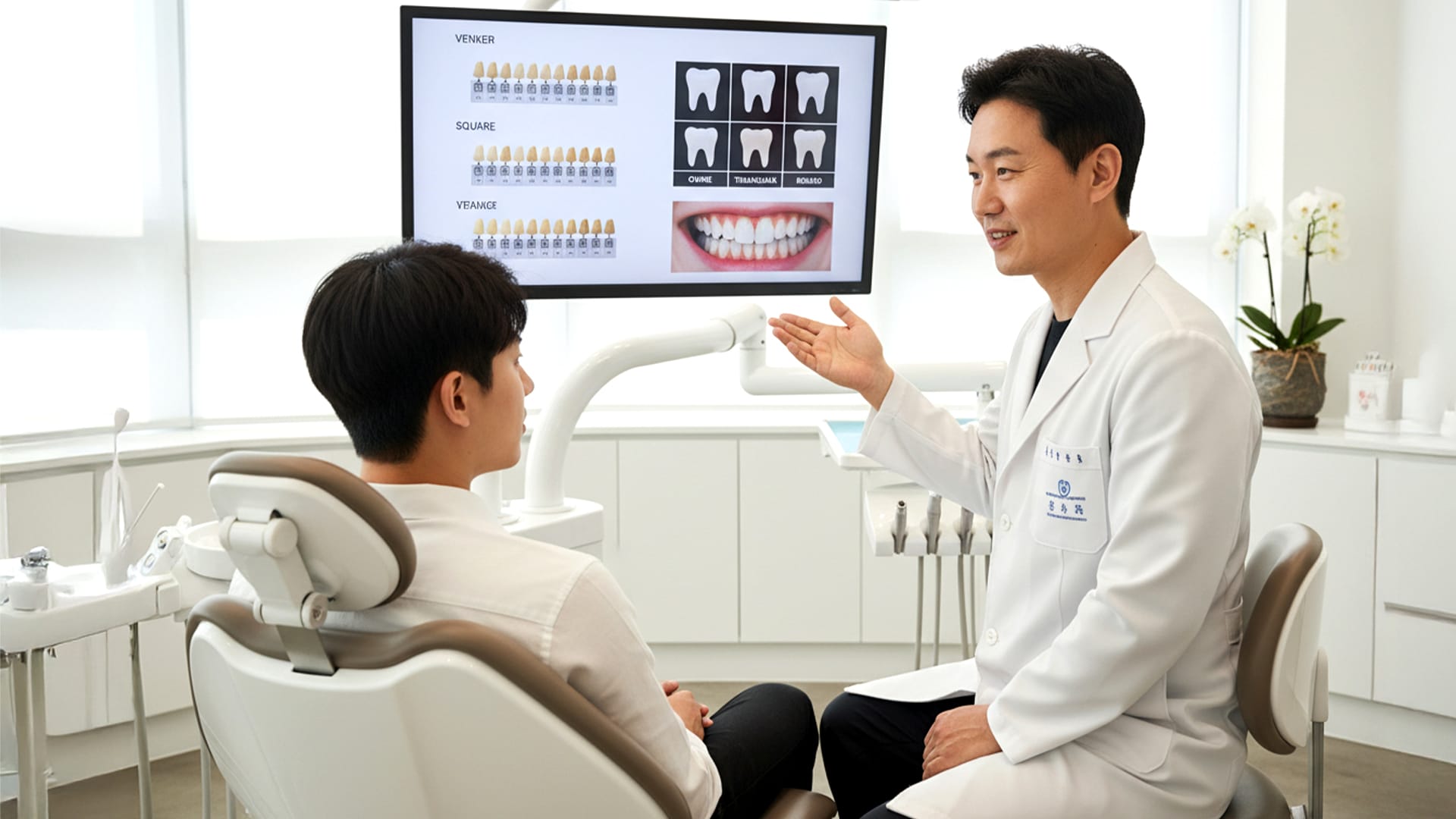
In front-tooth treatment, there is no “one method that works for everyone.” You need to accurately understand your current tooth condition and choose the most appropriate option accordingly.
Rather than deciding based only on other people’s reviews or the amount of reduction, carefully evaluate your tooth’s structural limits and conditions with your clinician, receive an accurate diagnosis, and commit to post-treatment care—this is how you can achieve teeth that are both strong and aesthetically pleasing.
Sources
- Korean Academy of Prosthodontics (KAP), general information and treatment guidance on dental prosthetics.
- Seoul National University Hospital medical information, “Laminates (porcelain veneer).”
- Gurel, G., et al. (2021). Systematic review of the survival rate of porcelain laminate veneers. *International Journal of Periodontics & Restorative Dentistry*.
※ The copyright for all content on this blog belongs to medihi. Unauthorized copying, distribution, or derivative use is strictly prohibited, and violations may result in legal action without prior notice.
Recommended reads
 medihi