

In This Article
Fracture or debonding of veneer restorations is influenced not only by the strength of thin materials, but also by complex occlusal biomechanics. In clinical practice, when planning anterior restorative treatment, the first step is to evaluate the direction and magnitude of forces applied as the jaw moves. This article objectively outlines key factors that affect tooth and restoration damage—such as shear forces, canine guidance, and enamel preservation—and provides practical criteria for pursuing a safer treatment plan.
1. The Principle of Sliding Forces That Increase Fracture Risk: Shear Force
When the jaw moves, teeth are subjected not only to vertical forces from biting, but also to shear forces that push or slide across tooth surfaces during side-to-side (lateral) movements. Thin anterior restorations tend to tolerate vertical loading relatively well, but repeated twisting and sliding forces inevitably strain the bonded interface.
This is similar to forcing a heavy glass sliding door sideways when it has come off its rail—cracks and damage can occur in the glass. In the mouth, a comparable situation happens when teeth fail to glide smoothly during jaw movement and instead “catch” abnormally on a specific tooth; this is called lateral interference.
Therefore, to reduce fracture risk, it is essential to carefully design tooth shape and angulation so that forces can flow smoothly in harmony with jaw movement.
2. A Strong Guide Rail: When Canine Guidance Is Needed
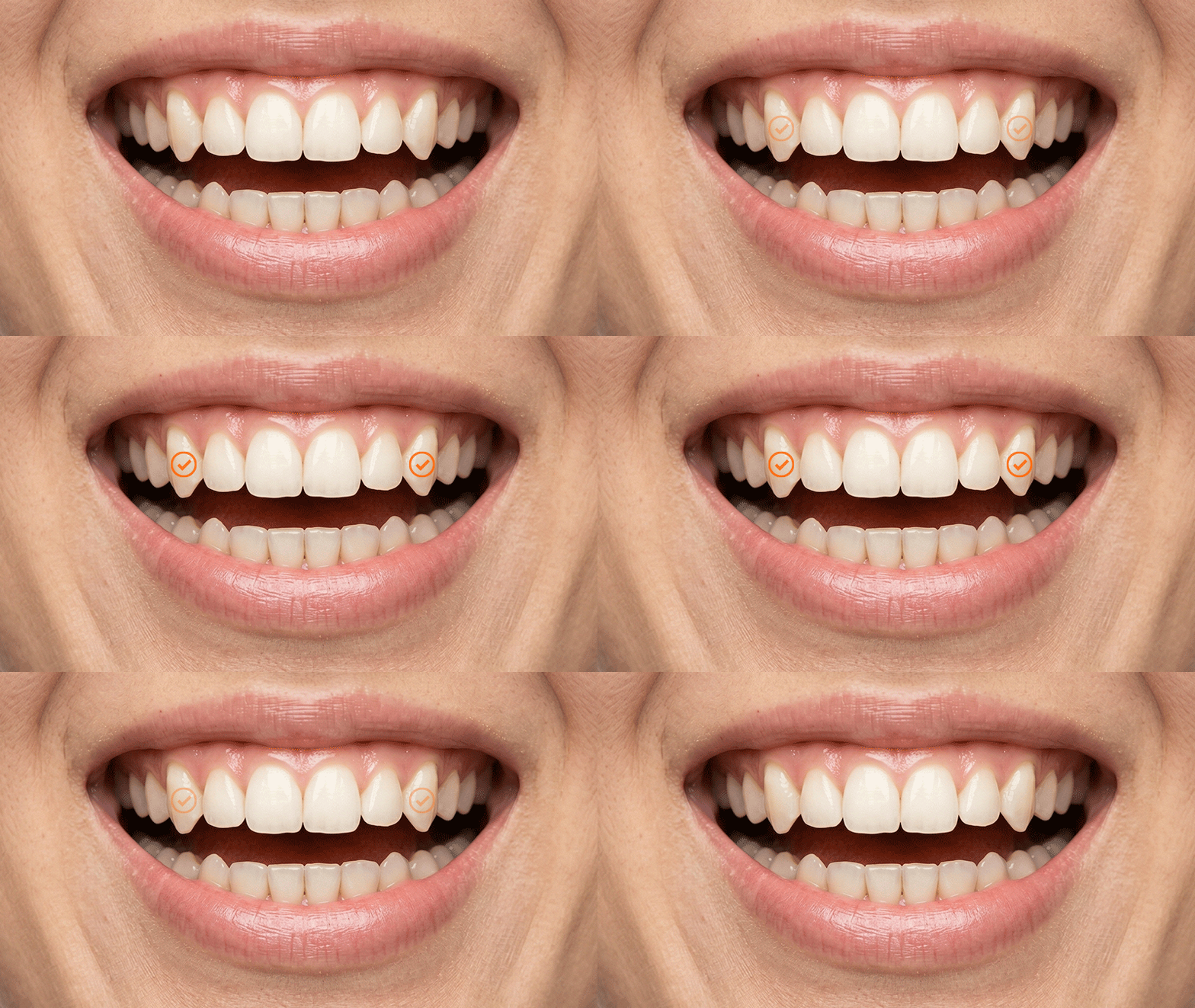
In the mouth, the teeth that act like a strong guide rail to protect the front teeth are the canines. The occlusal pattern in which the upper and lower canines contact first during lateral jaw movement—naturally separating the molars and anterior teeth—is called canine guidance.
Canines have the longest and strongest roots among the teeth, making them structurally well-suited to withstand lateral pushing forces. When they perform their intended role, frictional load on thin anterior teeth can be minimized. Conversely, if the canines are severely worn and flattened, the thin front teeth or molars may end up bearing that heavy load during jaw movement, sharply increasing the risk of fracture.
When guidance function is compromised, a stepwise approach is recommended rather than forcing a single definitive restoration—first confirming function with provisional restorations and working toward occlusal stability.
3. Why Enamel Preservation Determines veneer Longevity
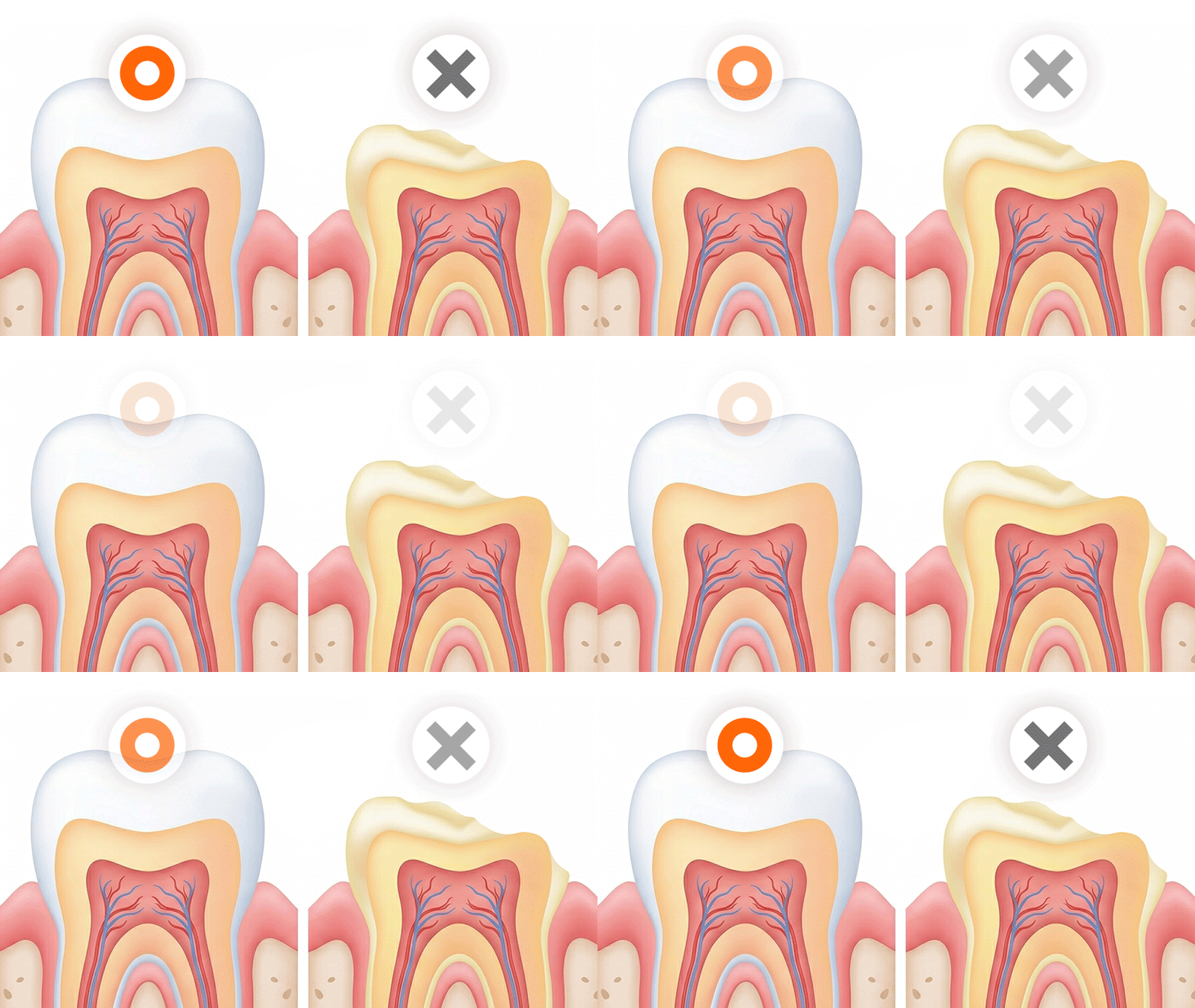
Even if the force pathway is well designed through proper guidance, long-term bonding stability is difficult to expect if the underlying structure for adhesion is weak. In veneer treatment, that foundation is whether the enamel—the outermost layer of the tooth—is preserved.
Tooth structure consists of hard enamel and an inner layer called dentin, which is relatively softer and contains more moisture—like the difference between smooth bathroom tile and not-fully-dried cement. Enamel is mineral-rich, allowing adhesives to bond strongly, whereas dentin has a rougher surface and is a more challenging substrate for durable bonding.
As more tooth reduction exposes a wider area of dentin, the likelihood of bond strength decreasing over time rises, making minimal preparation advantageous. If the tooth is severely fractured and dentin exposure is extensive, considering a full-coverage crown may be a more conservative and safer approach.
4. The Impact of Bruxism Habits and Posterior (Molar) Support
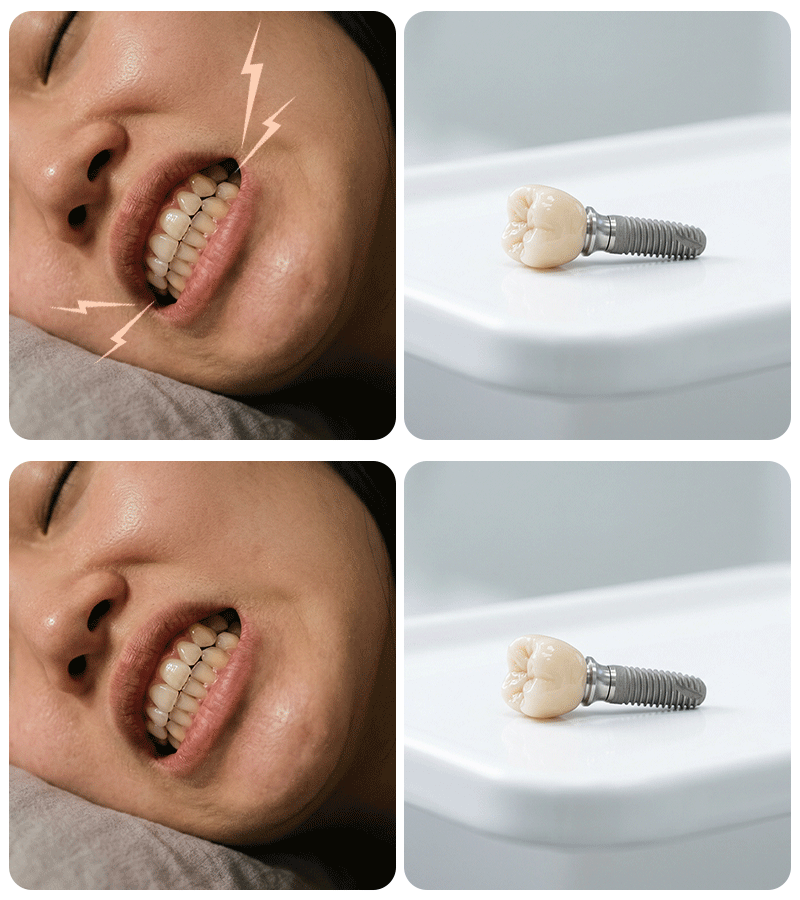
Even with a good bonding substrate and well-planned force distribution, long-term maintenance becomes difficult if the patient’s oral environment and daily habits are overlooked. If there is sleep-related bruxism or clenching, much stronger-than-usual forces can be generated unconsciously, transmitting excessive load to the restoration.
In addition, if posterior support from the molars—meant to bear load like pillars—is lost or severely worn, jaw forces tend to shift forward toward the front teeth. If only the front teeth are restored in this condition, the restoration may ultimately fail under overload, so realistic supportive measures must accompany treatment.
✅Essential measures to address oral conditions before restorative treatment
- Managing oral parafunctional habits: Wearing a night splint (protective appliance) in parallel to protect restorations from excessive nocturnal forces
- Restoring posterior support: If molars are missing, proactively restoring overall occlusal balance and support—such as through implant—beforehand
5. If We Optimize Anterior Occlusal Biomechanics, Will TMD Also Be Resolved?
Guiding the bite so that forces are distributed smoothly may biomechanically allow some reduction in tension of the muscles around the jaw. However, this should not be misunderstood as evidence that anterior restorative treatment can definitively resolve temporomandibular disorders (TMD) all at once.
TMD is a multifactorial condition influenced by many elements beyond occlusion, including sleep quality, psychological stress, and habitual posture. Using irreversible prosthetic treatment that changes tooth shape as a primary solution for TMD requires caution, and a careful approach is also recommended in academic discussions.
If jaw joint pain or limited mouth opening is significant, a multi-pronged and conservative approach—such as reversible physical therapy or appliance therapy—should be prioritized.
6. Frequently Asked Questions (FAQ)
Q. If I don’t have canine guidance, is veneer treatment impossible?
It is not impossible, and many people have a group function occlusion pattern where multiple teeth contact during lateral movement. However, if excessive friction occurs on the front teeth, fracture risk increases—so adjusting tooth form or reinforcing retention through stepwise treatment may be necessary.
Q. I have severe bruxism—can I still get anterior restorations?
Treatment can still be performed even with bruxism, but a protective process is essential to shield thin restorations from strong forces generated during sleep. Based on your clinician’s diagnosis, consistent use of a night-time protective appliance (splint) is recommended.
Q. When should I start wearing a night splint, and for how long?
It depends on bruxism intensity and the extent of restoration, but generally, the first 3 months after treatment are a period of focused wear to confirm occlusal stability. After that, it is safest to reassess tooth wear at regular checkups and adjust frequency and duration with your dentist.
Q. If I’m worried about fracture or debonding, when is the best time to consult?
If your jaw muscles feel stiff upon waking, or if you notice clear flattening wear on the edges of your existing front teeth, it may signal excessive lateral loading. Before deciding on restorative treatment, it is recommended to evaluate the force pathway in advance through diagnostic assessment.
This health content has been reviewed by medical professionals, compiled from authoritative domestic and international sources, and is regularly updated in accordance with the latest clinical guidelines.
Sources
- Journal of the Korean Dental Association (JKDA), Diagnostic and Treatment Guidelines for Temporomandibular Disorders, 2024
- Journal of the Korean Academy of Prosthodontics, Occlusal Guidelines and Considerations for Anterior Restorations, 2023
- J Dent, Clinical survival of ceramic veneers bonded to enamel and dentin: A systematic review, 2020
※ The copyright for all content on this blog belongs to medihi. Unauthorized copying, distribution, or derivative use is strictly prohibited, and violations may result in legal action without prior notice.