

In This Article
Fine hairline cracks seen on the tooth surface may be nothing more than superficial lines, but they can also be an early sign of a crack that requires a precise evaluation. Rather than deciding to shave down the tooth or start treatment simply because a line is visible, it is safer to assess pain patterns, pulp status, and occlusion from multiple angles. In this article, we summarize accurate diagnostic criteria for micro cracks in teeth and appropriate preventive strategies.
1. If you have micro cracks in your teeth, do you need to start treatment right away?
Even if a fine hairline crack is visible, there is not always a need to begin prosthetic treatment immediately. The priority is to comprehensively evaluate whether pain is present and how deep the crack may be. If the crack is limited to the outer enamel and you have no discomfort, the tooth can often be maintained in good condition with periodic checkups and monitoring alone.
However, if you feel a sharp twinge when chewing, or if pain lingers for a long time after cold stimulation, the crack may have progressed into the dentin—so a detailed examination is needed. In other words, it is more reasonable to determine the timing of intervention by combining your symptoms with findings from precise clinical tests, rather than focusing on the visible line alone.
✅ Three warning signs that call for a detailed diagnosis
- Repeated soreness or sharp, twinging pain in a specific area when chewing
- Pain that persists for a long time even after eating cold foods
- A localized change where the gum pocket around the tooth appears deeper than before
2. How are enamel surface lines different from dentin cracks?
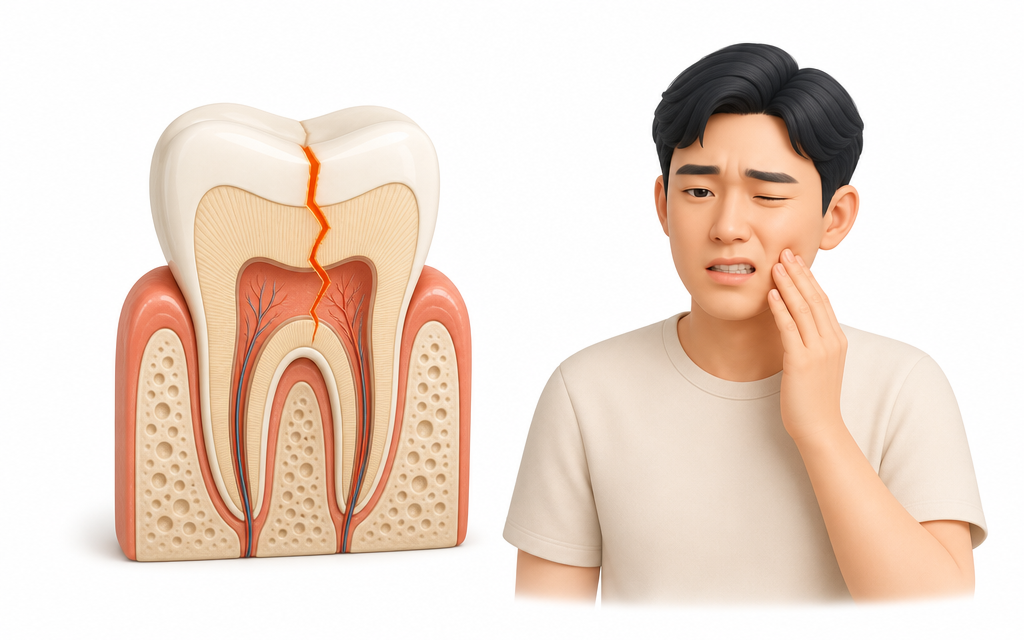
Surface lines that remain only on the outer tooth wall typically do not significantly affect the tooth’s longevity. In contrast, cracks that extend into the dentin—where nerves are densely distributed—require a more cautious approach. A crack limited to enamel is a shallow line on the hard outer shell of the tooth and, in most cases, does not cause sensitivity or chewing pain.
On the other hand, when a crack deepens into the dentin, the tooth can microscopically flex open with each bite, stimulating the internal nerve. This is similar to how a superficial scratch on a water pipe is very different from a fracture that extends inward. If left unaddressed, it may place stress on the internal nerve tissue, so distinguishing between the two accurately is important.
3. How are tooth cracks diagnosed precisely?
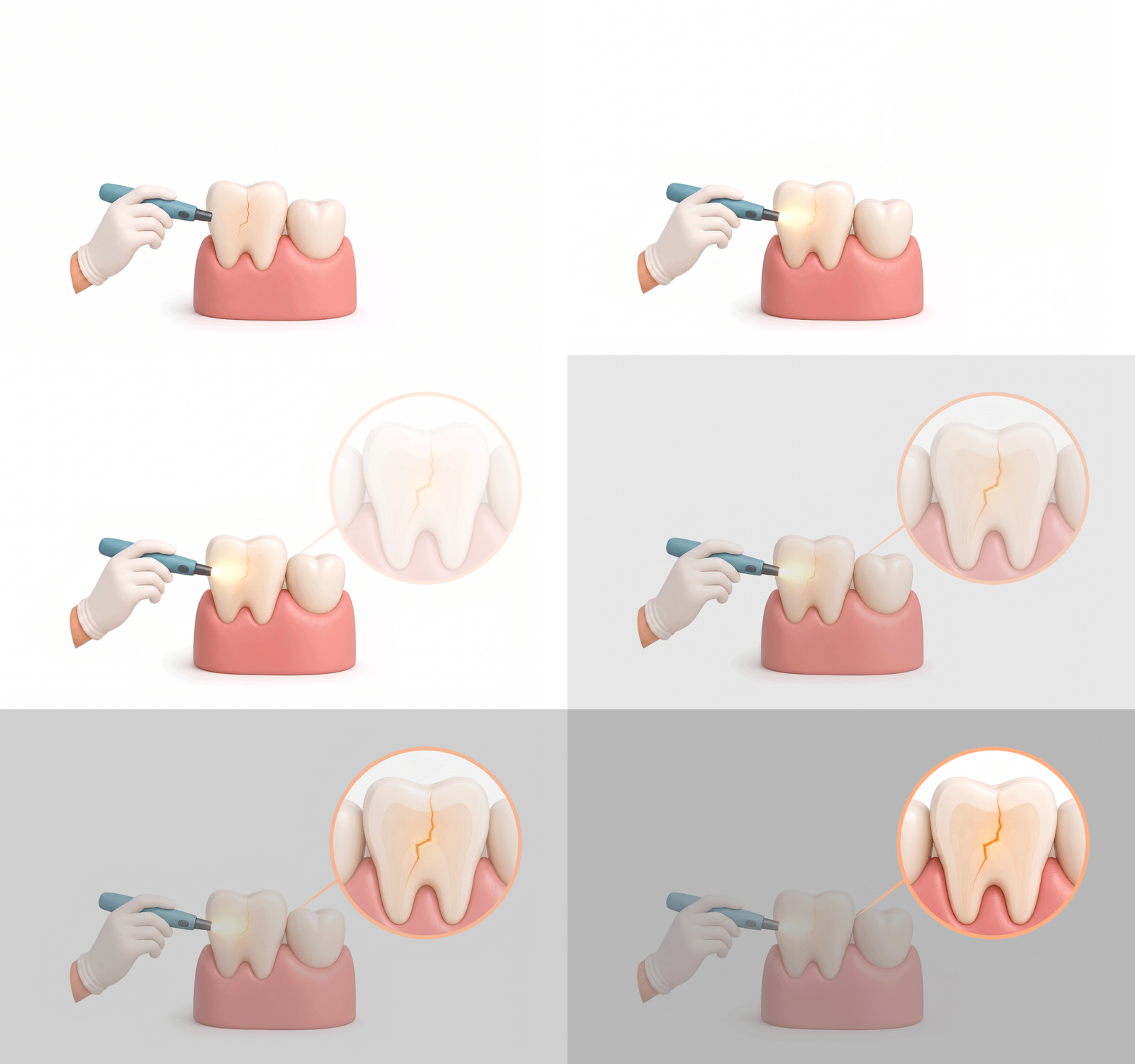
Because micro cracks in teeth are difficult to confirm with the naked eye or standard X-rays alone, they are diagnosed using a multi-test approach that combines clinical examinations with specialized illumination devices. Tools such as transillumination testing or quantitative light-induced fluorescence (QLF) can be very helpful for tracing where a crack line extends and the path it follows.
That said, these optical techniques alone cannot independently determine depth or prognosis. They should be used as supportive methods to expand what can be visualized. For a safer final treatment plan, they should be combined with pulp testing using temperature stimulation, periodontal probing to evaluate gum status, and an occlusal assessment to understand the direction and distribution of biting forces.
4. Is it safe to get veneer treatment over micro cracks in teeth?
If you are considering veneers when micro cracks are present, the key step is confirming whether the remaining outer enamel has sufficient thickness and strength. Unlike a crown that covers the entire tooth, a veneer is an esthetic restorative procedure that trims and bonds to part of the outer surface—so there must be enough smooth, hard tooth structure for reliable bonding.
If the crack has already progressed deeply and the exposed dentin area is extensive, bonding stability can drop significantly. In addition, because a thin restoration may not fully act as a physical restraint that firmly holds both sides of a crack together, veneers should be applied conservatively only when the internal tooth condition is healthy and occlusion is stable.
5. What impact do chewing ice and poor dietary habits have?
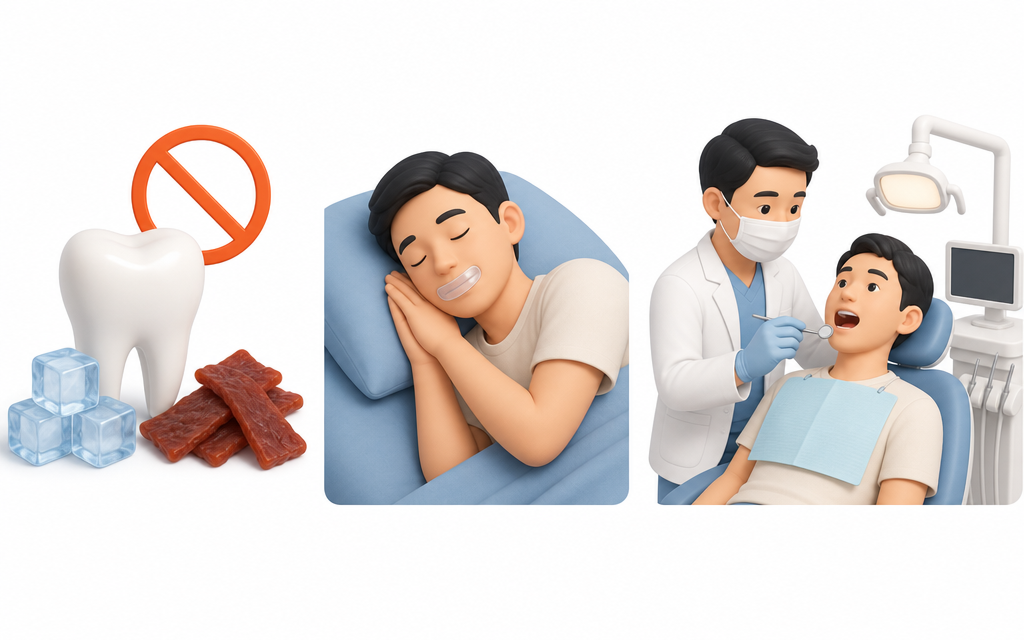
Biting hard objects or clenching habits add excessive load stress to the teeth and are major causes that can turn micro hairline cracks into deeper fractures. For adults in their 30s to 50s—when chewing fatigue can accumulate over time—adjusting everyday chewing habits and bite alignment before prosthetic procedures is important for long-term stability.
✅Rules to prevent crack progression
- Avoid the habit of biting foods with high physical hardness, such as ice or tough jerky.
- If nighttime clenching or grinding is suspected, consider using a tooth-protective stabilization device (night guard).
- Continue to have your occlusion checked after treatment so that excessive load does not concentrate on a specific front-tooth area.
6. Frequently Asked Questions (FAQ)
Q. I can see a crack in my tooth—do I need treatment right away?
If it is a shallow surface line without discomfort such as sensitivity or pain, it is generally acceptable to monitor it with periodic checkups instead of treating it immediately. However, if you notice sharp twinges when chewing or pain that persists after cold stimulation, the crack may be progressing deeper inside, so a detailed examination is recommended.
Q. Can veneers prevent the crack from spreading further?
A veneer is a partial-coverage restoration primarily intended to improve esthetics, and it may not completely suppress tooth flexure/separation or the progression of deep cracks. If the crack has extended deep into the dentin, a treatment plan that covers and protects the entire tooth may be a more stable alternative.
Q. Can transillumination or QLF alone tell the exact depth of a crack?
Light- or fluorescence-based tests are useful supportive tools for identifying the location and path of a crack, but they do not precisely determine the internal depth or extent. For a safer diagnosis, they should be combined with pulp (nerve) response testing and periodontal probing to evaluate gum pocket depth.
Q. Is the habit of chewing hard ice really harmful to micro cracks?
Repeatedly biting very hard substances like ice concentrates excessive load on the tooth and can be a major cause of shallow enamel surface lines developing into deep cracks toward the root. To help prevent restoration debonding and additional fractures after treatment, this dietary habit should be corrected.
This health content has been reviewed by medical professionals, compiled from authoritative domestic and international sources, and is regularly updated in accordance with the latest clinical guidelines.
Sources
- Korea Disease Control and Prevention Agency (KDCA) National Health Information Portal, Guidance on indications and side effects of veneer restorations, 2026
- Son et al., Diagnosis of cracked teeth using quantitative light-induced fluorescence technology, *Scientific Reports*, 2024
- Yang et al., Assessing Endodontic Treatment Feasibility for Cracked Teeth Using QLF, *Journal of Endodontics*, 2025
※ The copyright for all content on this blog belongs to medihi. Unauthorized copying, distribution, or derivative use is strictly prohibited, and violations may result in legal action without prior notice.