
This guide outlines the causes of white spot lesions after orthodontic treatment and the step-by-step criteria for treating them. From remineralization therapy and resin infiltration to post-orthodontic veneers, learn the exact conditions that determine the best treatment option for your smile.
“I got my braces off, but there are white spots left on my teeth—what is this?”

Many people endure the long discomfort of orthodontic appliances and finally have them removed, only to feel startled when they see white spots instead of the clean teeth they expected. You don’t need to blame yourself for “not brushing well enough.” Because orthodontic appliances have complex structures where plaque can easily accumulate, this is a common situation.
At this point, what clinicians check first is not simply the visible “color” of the spot, but whether it is staining or an early stage of weakened enamel—*initial demineralization (with possible early caries)*—and whether it is still progressing (activity).
Advertisements often highlight quick spot removal, but rather than focusing only on speed or cosmetics, it’s important to assess the condition accurately and decide whether caries-risk control should come first. When goals are clearly separated and approached step by step, you can work toward a cleaner smile while minimizing unnecessary tooth damage.
1. White spots after braces: why they may be “demineralization,” not just surface staining
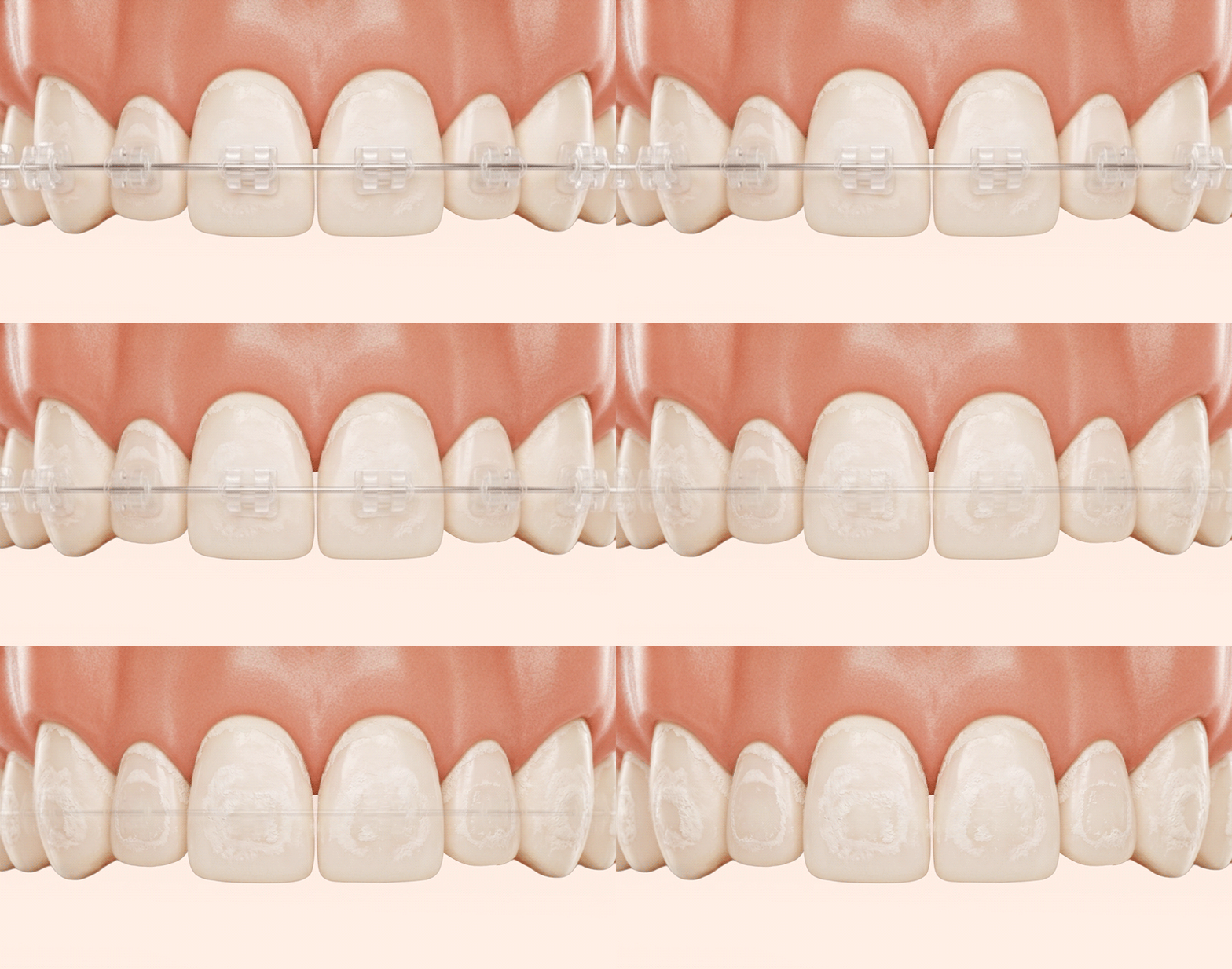
White spots (white spot lesions, WSL) can look like something white is stuck on the tooth surface. In many cases, however, they reflect an early demineralization state where minerals have been lost from enamel—the hardest layer of the tooth. Although it appears as a “stain,” medically it is a non-cavitated lesion just before the surface breaks down. Put simply, it can be understood as an early cavity stage where no visible hole has formed yet.
Healthy enamel is naturally smooth and clear—like a “transparent glass window.” But when acid is produced from microscopic plaque around orthodontic appliances and minerals are pulled out, countless invisible micro-pores form on the surface. It’s like a clear window becoming scratched and damaged, turning into a cloudy “frosted, opaque glass.”
As light enters these pores and scatters, the area looks like an opaque white spot. It can appear even whiter when the tooth is dry, because moisture evaporates and the contrast increases. That’s why it may look worse in photos than when you check in the mirror at home.
2. Are white spots “cavities”? Why differentiation and activity assessment come first
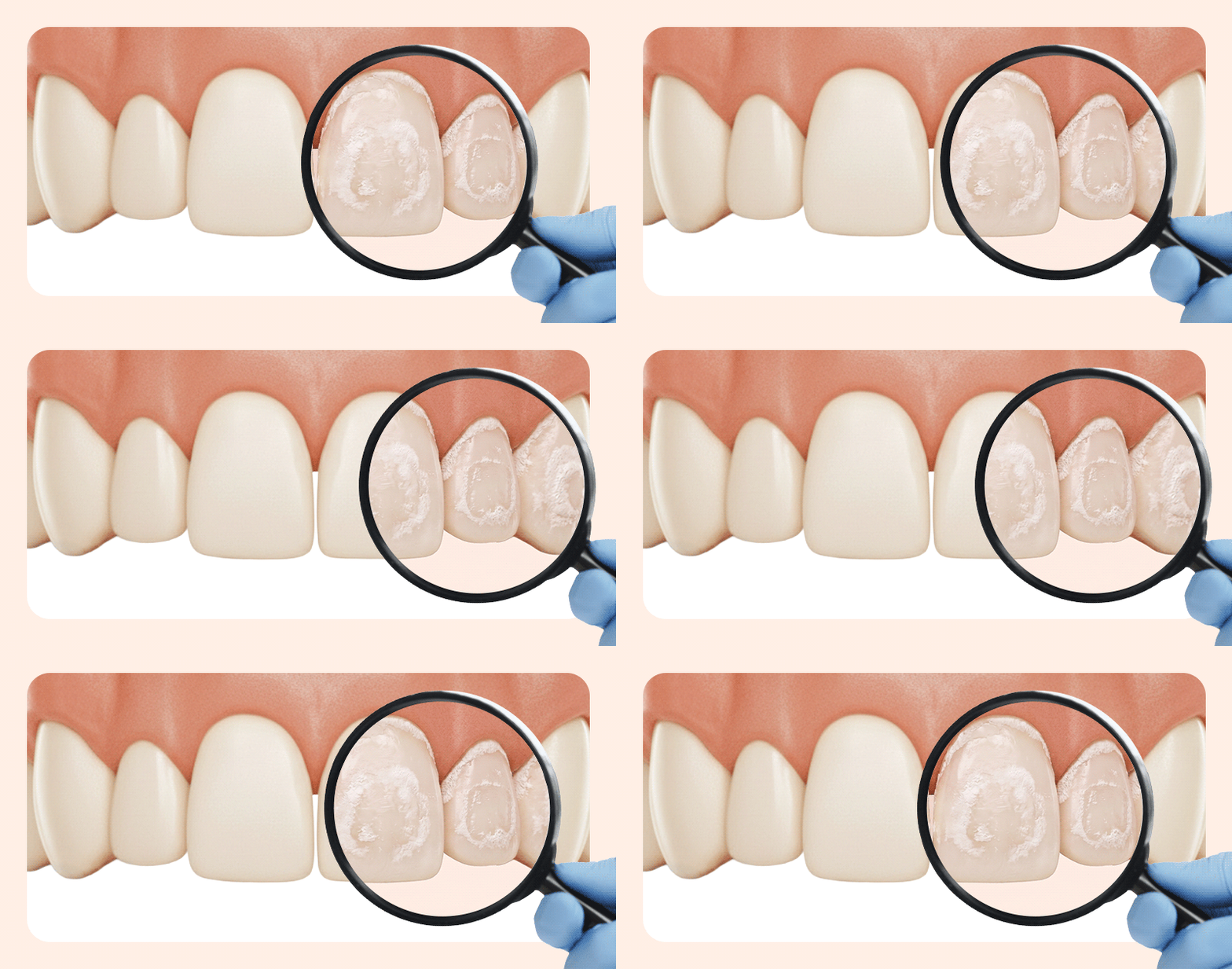
Not all white spots after orthodontic treatment come from the same cause. Before deciding on treatment, dental clinics also differentiate other possibilities—because the marks could be developmental, or related to fluorosis. Even if they look similar, the approach can be completely different depending on the cause.
The most important factor is activity—meaning the “risk of progression.” Even without a visible hole, caries can continue progressing internally. If the risk of progression is high, risk control needs to come before cosmetic masking. In this situation, safety takes priority over aesthetics.
On the other hand, if the condition is stable, you have more options. You can more actively discuss cosmetic treatments to make the spots less noticeable. This is exactly why clinicians don’t judge by color alone and check activity first.
✅ (Checklist) 5 things that help to organize before your first consultation
- Were the spots present during orthodontic treatment, or did you notice them after the appliance was removed?
- Do the spots look whiter when you pull your lips back and the teeth dry out?
- Do you have gum bleeding when brushing, sharp sensitivity, or pain?
- Do you often have dry mouth, or a habit of breathing through your mouth?
- Is your top priority “covering the white spots,” or “preventing cavities”?
3. How much can fluoride/remineralization care achieve? (separating aesthetics vs risk control)
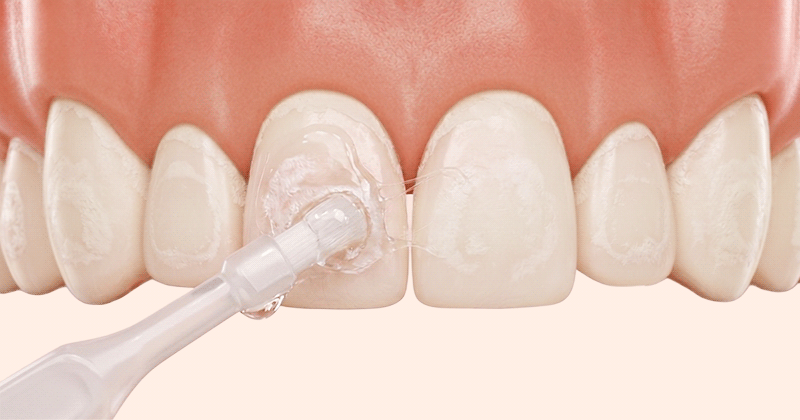
The foundational way to re-harden teeth in an early demineralization state is remineralization care. According to the National Health Information Portal (Korea Disease Control and Prevention Agency), professional fluoride application at 3–6 month intervals may be recommended to prevent caries and suppress progression. This is a conservative approach that does not involve shaving down the tooth.
Many people expect that diligent fluoride care will “erase” the white spots, but it does not fully restore the tooth to a perfectly clear appearance. Fluoride functions more like a protective coating that strengthens the surface of “opaque glass” with micro-pores.
- Risk control (caries suppression): Strengthen tooth structure through fluoride, hygiene management, and dietary adjustments.
- Aesthetics (masking): Improve the already-whitened appearance.
Disease control and cosmetic improvement are different goals. If cosmetic concerns remain even after sufficient risk control, it is most natural to consider the next step of minimally invasive treatment together.
4. Resin infiltration, microabrasion, whitening: when do results differ the most?
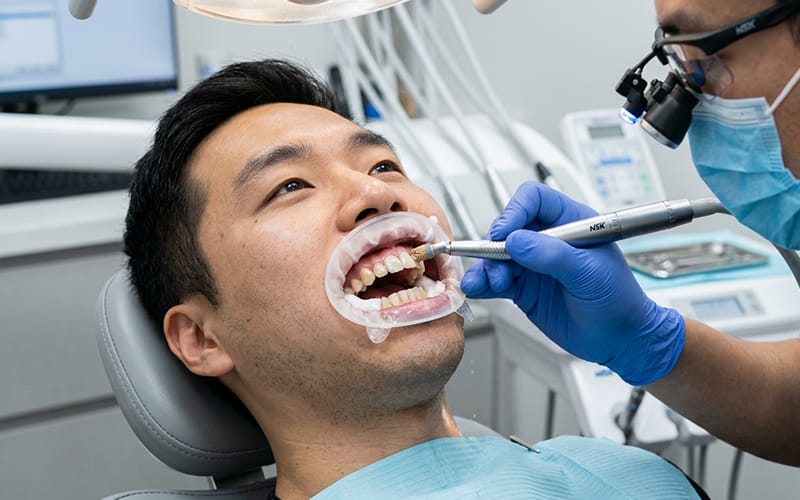
When cosmetic improvement is truly needed, there are several options to consider. Common examples include resin infiltration (RI), which does not shave the tooth; microabrasion, which lightly smooths the surface; and tooth whitening.
Resin infiltration is a minimally invasive treatment in which a low-viscosity liquid resin is allowed to penetrate micro-pores where minerals have been lost. It works like saturating a cloudy, roughened glass surface with a clear coating liquid so that light can pass through more transparently again. In clinical literature, a greater visual masking effect has been reported compared with no treatment or fluoride application alone.
Whitening brightens the overall tooth shade. However, it can increase contrast with white spots and make them stand out more, so the sequence needs careful planning. Microabrasion may be considered in a limited way for shallow, surface-level lesions, and it involves minimal enamel removal.
✅ (Checklist) 5 questions that make cosmetic treatment selection easier
- Are the spots limited to 1–2 front teeth, or spread widely across multiple teeth?
- Do you also want to improve minor surface contours or tooth shape concerns?
- Are your teeth prone to sensitivity or discomfort when drinking cold water?
- Is your main goal “to brighten the overall tooth shade (whitening)”?
- Is your main goal “to reduce only small, localized white spots that look like dots”?
5. Post-orthodontic veneer: when you want to reinforce not only white spots but also the “final look” of alignment
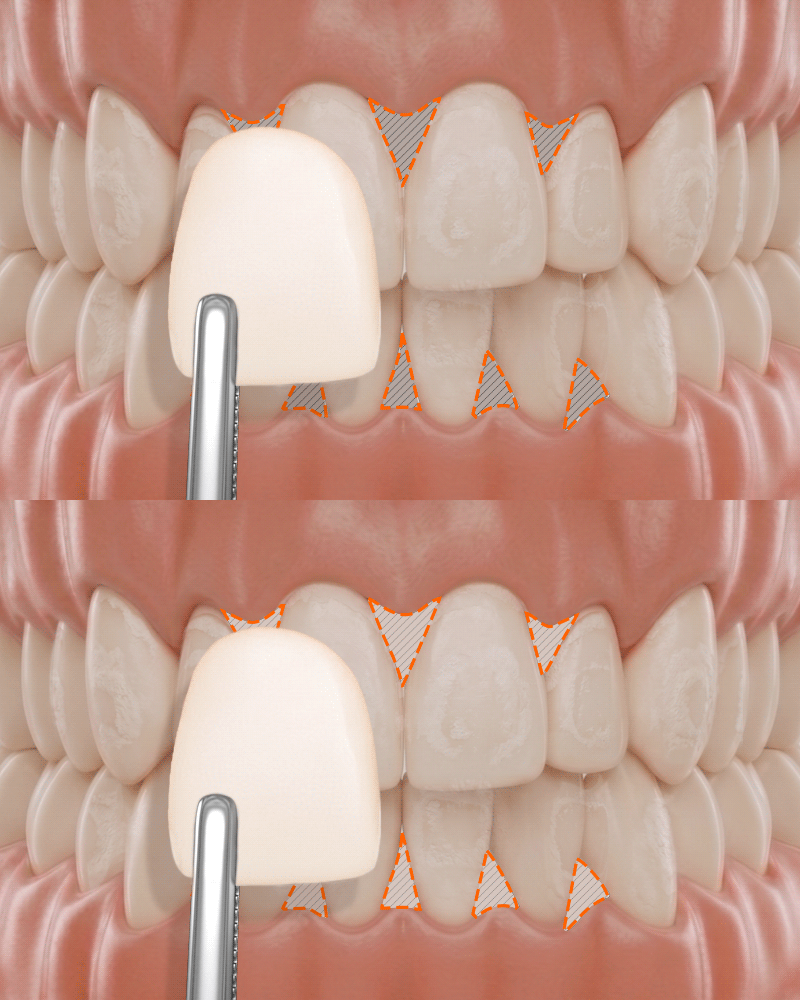
After orthodontic treatment, it’s uncommon for the only disappointment in the mirror to be a single white spot. Some people also notice “black triangles”—dark, triangular gaps between the teeth and gums. When these shape-related concerns are present, simply making the spots less visible may not feel like a complete finish.
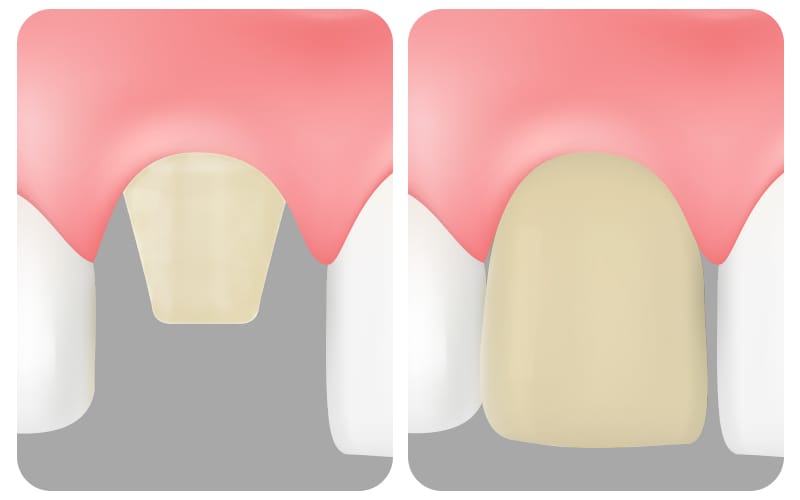
In such cases, post-orthodontic veneer treatment (ceramic veneer) can be an important option. It can be especially useful when white spots are very extensive and deep, or when you need to correct tooth shape or close spaces at the same time.
That said, long-term outcomes with veneers can vary greatly depending on the condition of the existing teeth, so the following criteria should be reviewed carefully:
- Enamel preservation: Whether enough enamel remains to serve as a strong bonding foundation
- Amount of reduction: Whether tooth reduction can be minimized to control the risk of nerve damage
- Bite and habits: Whether there is a risk of fracture due to clenching/grinding or strong bite forces
- Periodontal status: Degree of gum recession and the size of black triangles
To conclude with the window analogy: veneers are “a method of designing an entirely new overall impression by layering a thin, precisely crafted new pane over the front of a window that isn’t in great condition.” If you plan to live abroad after treatment, it’s wise to establish a plan in advance for maintenance and what to do if damage occurs.
6. Frequently Asked Questions (FAQ)
Q. If white spots appear after braces are removed, do they fade naturally over time?
Some reports note that they may fade somewhat over time, but in many cases the borders remain distinct or they do not disappear completely. Brushing and fluoride care play a key role in preventing further worsening of caries. If cosmetic improvement is the final goal, the lesion depth should be evaluated and additional treatment such as infiltration should be considered.
Q. If I have white spots after orthodontic treatment, do I need veneers?
Not necessarily. If the spots are shallow and there are no shape-related concerns, minimally invasive conservative treatment should come first. Veneers may be considered selectively when the discoloration is very deep and extensive, or when combined cosmetic correction is needed—such as improving black triangles or adjusting tooth shape.
Q. If I get resin infiltration, won’t the white spots come back?
Some studies report long-term color stability, but individual variation is significant. Longevity can differ depending on daily oral hygiene, mouth-breathing habits, and dietary patterns (such as frequent intake of strongly pigmented foods). Regular dental checkups are an extension of the treatment.
Q. When is a good time to consult a dentist about white spots or black triangles?
If the white spots are clearly noticeable right after appliance removal or stand out in photos and cause significant stress, it’s advisable to get an early evaluation. If you assume it is simple staining and leave it untreated, initial demineralization may progress to active caries—so checking current activity is the safer approach.

The white spots you see after orthodontic appliances are removed are not necessarily the result of poor self-care. Because they may be an early signal of enamel demineralization, please remember the following points:
First, determine whether the white spots are simple staining or progressing caries by performing differentiation and activity assessment first.
Second, it is safer to separate treatment goals—caries risk control (fluoride-based) versus cosmetic masking (such as resin infiltration)—and approach them step by step.
Third, if you want to go beyond spot improvement and consider black triangle correction and tooth shape refinement at the same time, you may carefully review post-orthodontic veneer options with enamel preservation as the top priority.
With an accurate diagnosis, I hope you can complete a healthy, brighter smile that fits you best.
Sources
- National Health Information Portal (Korea Disease Control and Prevention Agency), guidance on preventing dental caries (cavities) and fluoride application
- Korean Dental Association, oral health information (cavity prevention and management)
- Bourouni et al., Efficacy of resin infiltration to mask post-orthodontic or non-post-orthodontic white spot lesions or fluorosis, 2021
※ The copyright for all content on this blog belongs to medihi. Unauthorized copying, distribution, or derivative use is strictly prohibited, and violations may result in legal action without prior notice.
Recommended reads
 medihi