

In This Article
A veneer is a treatment that improves tooth shape by minimally reshaping the enamel on the tooth surface and bonding a restoration. If you’re worried the result might look unnatural, your consultation should include a preview of the tooth shape in advance, plus checks for your bite (how your teeth meet) and how much enamel can be preserved.
1. Why is an intraoral mock-up necessary?
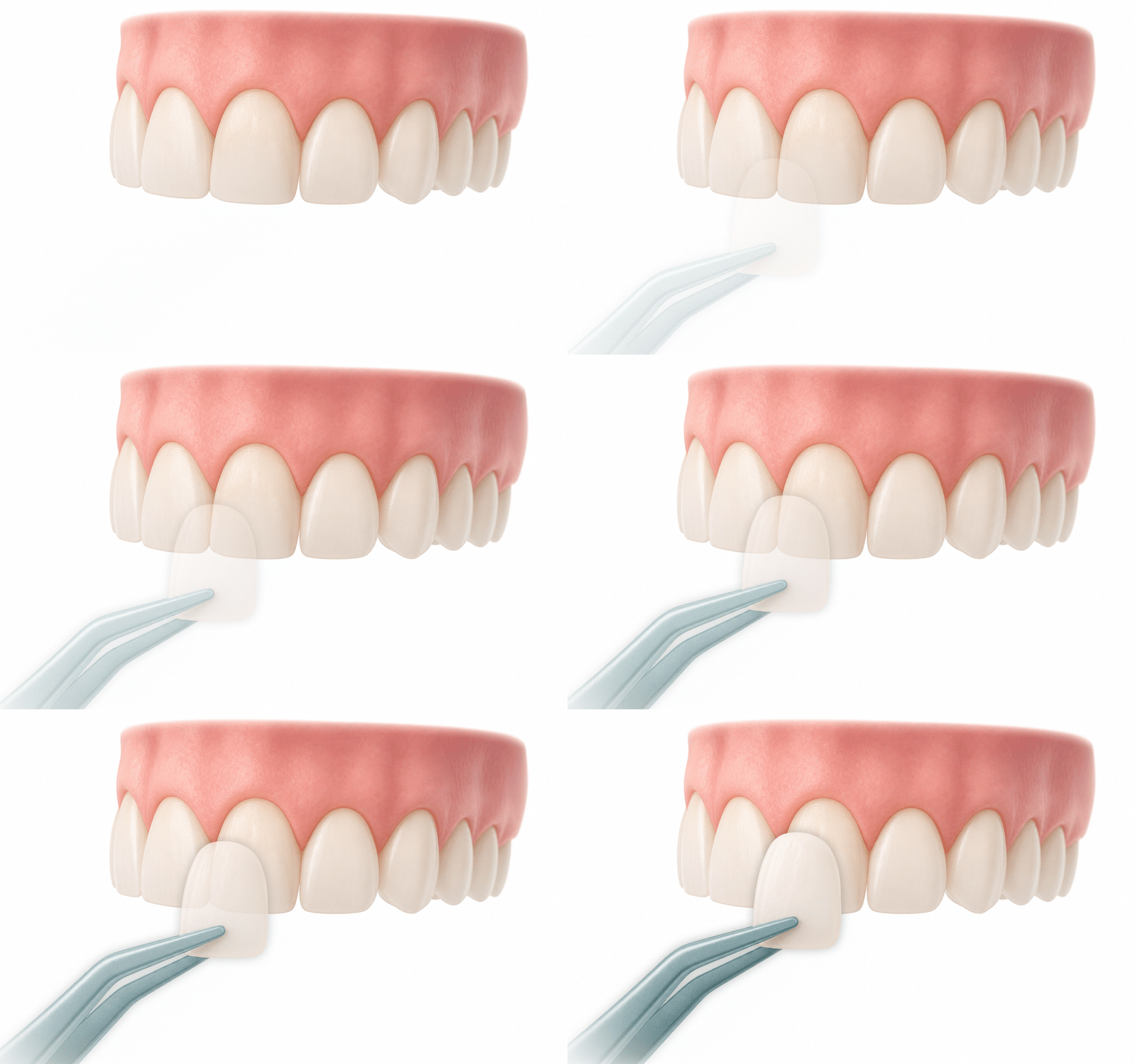
An intraoral mock-up is a step that lets you preview the planned tooth shape directly inside your mouth, helping reduce awkwardness and anxiety. Unlike photos, it allows you to check the tooth’s length, width, how much shows when you speak or smile, and overall thickness in your real oral environment. You can also evaluate whether speech feels comfortable, whether the design suits your lip line, and whether the front teeth collide.
In a study that followed 672 ceramic veneers for 1–15 years, all tooth reduction was performed on top of a mock-up attached in the mouth, using a bur (a depth-marking tool) to guide how much to reduce. In other words, the mock-up is not only for “previewing”—it can also serve as a clinical reference for deciding how much tooth structure will be removed.
Any discomfort identified during the mock-up becomes a concrete reason to adjust the final design. It’s important to align with the clinician while changes are still feasible.
2. How are a wax-up and a mock-up different?
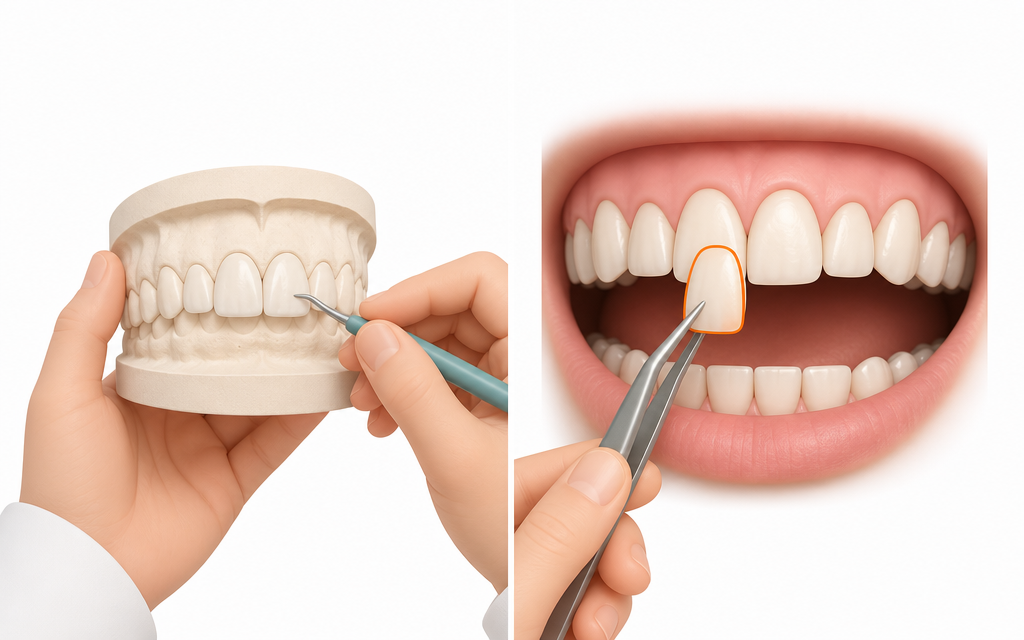
A wax-up is the step where teeth are designed on a model, while a mock-up is the step where that design is applied and checked inside the mouth.
A diagnostic wax-up sculpts the target tooth form on a plaster model. Digital Smile Design (DSD) is a tool that links facial photos with intraoral scan data to review harmony between the planned tooth shape and the face, and to support design discussions.
An intraoral mock-up (APT; Additive Provisional Try-in) is the process of applying a temporary material in the mouth based on a wax-up or DSD so you can confirm it directly. Digital mock-ups can improve the overall treatment experience, but an in-mouth verification tailored to an individual’s bite, speech, and oral condition is still important.
3. How is the “minimal reduction” range determined?
The standard for how much to reduce a tooth is less about “removing as little as possible,” and more about preserving enamel so the restoration can bond reliably. Long-term outcomes can vary depending on whether the bonding surface is mainly enamel or whether a lot of dentin is exposed.
If there isn’t enough space but you insist on no-prep, the restoration may become too thick and place extra burden on the bite. If there is severe wear or discoloration, or if there are existing restorative materials, the reduction range needs to be reassessed.
In middle-aged and older adults, gums often recede and enamel may be thinner, so the tooth shape must be adjusted while still preserving enamel as much as possible.
4. What side effects can occur after the procedure?
After the procedure, possible issues include the restoration chipping or debonding, discoloration at the margin, and temporary sensitivity. Early sensitivity may occur as the tooth nerve adapts to new stimulation, but if it persists, the cause should be evaluated. Bruxism (teeth grinding) or clenching can apply strong forces to the restoration, increasing the risk of chipping or debonding.
In a study of 70 patients who received 323 ceramic veneers, 13 chipping events and 29 debonding events were identified. Among patients with habits such as grinding, there were 8 chipping events and 22 debonding events. The researchers reported that a splint—an appliance that helps stabilize the bite—can reduce the risk of fracture.
If you grind your teeth, the plan typically includes a protective appliance and deciding which teeth will support the bite. There is also a reported case where treatment was planned using DSD and a mock-up for a patient with grinding and wear.
In that case, veneers were placed on the front teeth, and strong zirconia crowns were placed on the canines and first molars to stabilize the bite. No complications were recorded over four years.
To prevent debris from getting trapped in small gaps at the restoration-tooth margin, maintain good hygiene and attend regular checkups.
5. Before veneer treatment: what to confirm during the consultation
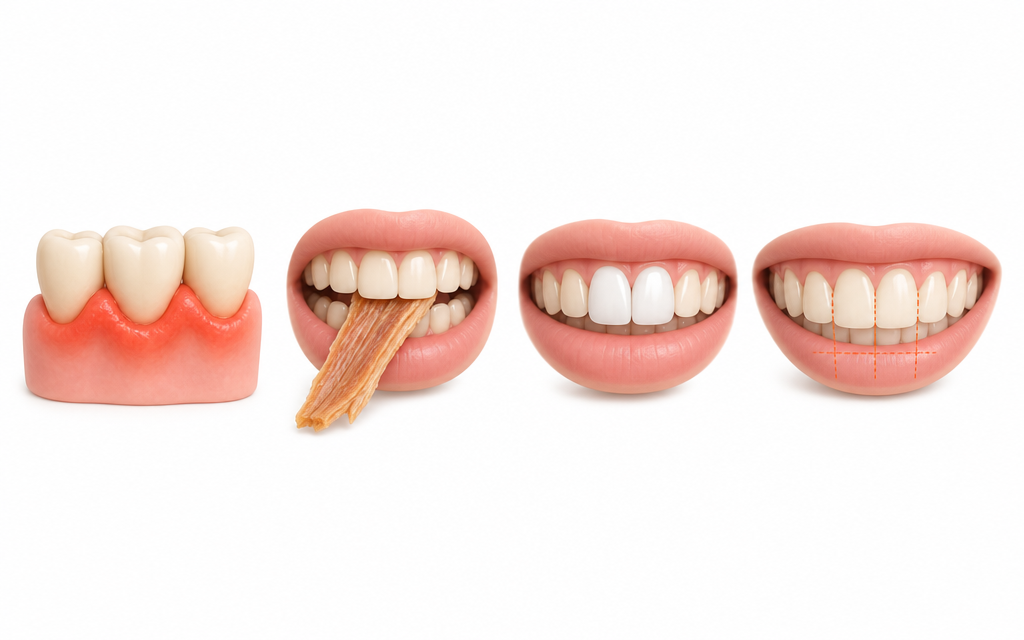
During the consultation, confirm gum condition, oral habits, shade, the range of design adjustments, and how much enamel will remain.
✅5 things to check during consultation
- Gum health: Gum inflammation can negatively affect scan accuracy and bonding, so it should be controlled first.
- Oral habits: If you tear tough foods with your front teeth or show signs of grinding, your bite should be analyzed and protective devices such as a splint should be planned.
- Shade harmony: Natural tooth color can change with age, so rather than making it excessively bright, matching surrounding teeth is the safer approach.
- Design adjustments: Record any awkwardness or discomfort felt during the mock-up in specific terms, and discuss in advance with the clinician which steps are adjustable and how changes will be reflected.
- Remaining enamel: If wear, discoloration, or existing restorative materials could increase the amount of reduction, confirm with the clinician how much enamel will remain on the bonding surface and whether dentin exposure is unavoidable. The amount of remaining enamel affects bonding strength and long-term outcomes.
6. Frequently Asked Questions (FAQ)
Q. During a veneer consultation, how can I confirm whether enamel will be preserved?
Using detailed diagnostic records, you should overlay the tooth alignment with the target design and confirm with the clinician whether reshaping stays within the enamel range.
Q. In the visual mock-up stage, what should I prioritize checking?
First check how much tooth shows when you smile, along with length and width, then evaluate speech comfort and whether the front teeth collide.
Q. What should I do if my teeth feel sensitive after treatment?
Early sensitivity often improves as the nerve adapts. If pain worsens or persists, you should have the bonding status of the restoration and the internal condition of the tooth evaluated.
Q. What aftercare is needed to prevent fracture or debonding?
Avoid biting hard or tough foods with the front teeth. If you grind your teeth, wear a protective appliance and have your bite checked during regular follow-ups.
This health content has been reviewed by medical professionals, compiled from authoritative domestic and international sources, and is regularly updated in accordance with the latest clinical guidelines.
Sources
- J Clin Med, Long-Term Survival and Complication Rates of Porcelain Laminate Veneers in Clinical Studies: A Systematic Review, 2021.
- J Prosthet Dent, Clinical survival and complication rate of ceramic veneers bonded to different substrates: A systematic review and meta-analysis, 2024.
- Int Dent J, Conventional Versus Digital Mock-Ups: Patient Experience And Clinical Performance, 2025.
※ The copyright for all content on this blog belongs to medihi. Unauthorized copying, distribution, or derivative use is strictly prohibited, and violations may result in legal action without prior notice.