

In This Article
The final color of a veneer is influenced not only by the ceramic itself, but also by the underlying tooth (the abutment tooth) and the shade of the bonding cement. This post organizes what to consider when placing veneers on dark teeth: shade analysis, material translucency, thickness planning, and the clinic–lab workflow.
1. Why check the original tooth shade first?
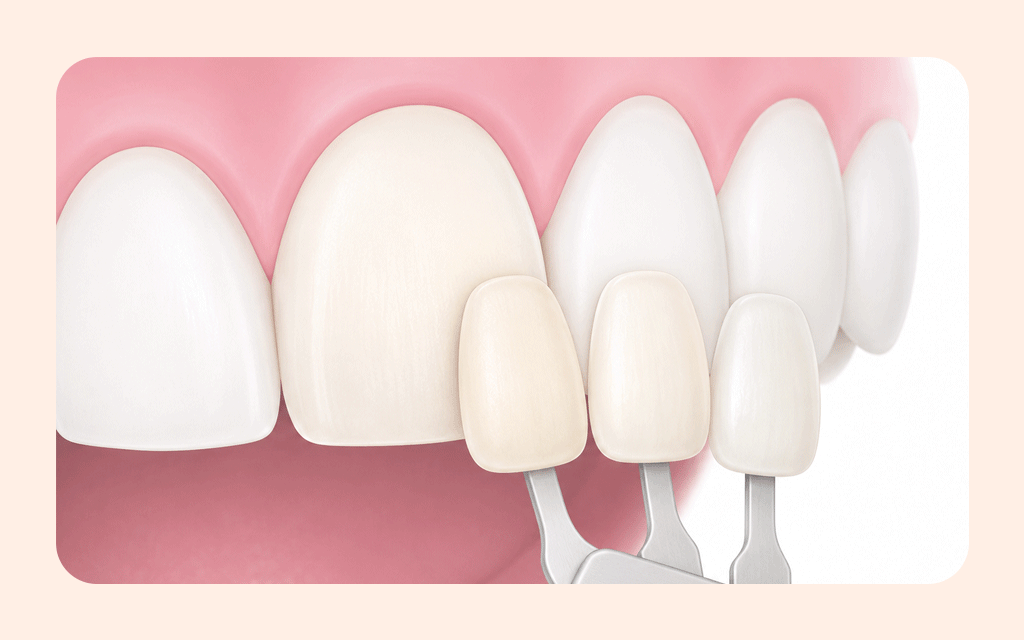
When planning the final shade of a veneer, the first step is to analyze the base shade of the abutment tooth. Even if a bright ceramic is placed on top, a dark underlying tooth can show through and affect the final result.
A 2024 in vitro study reported that the abutment tooth shade contributed about 87.82% to the final restoration shade. Because this was a controlled laboratory result, the exact percentage cannot be applied directly to every clinical case—but it still supports a key clinical point: the abutment shade can strongly influence the final color.
In the clinic, dentists may use an ND shade guide to classify and record the base shade of discolored teeth on a 1–9 scale. With this record, the clinician can estimate how much masking is needed and plan the ceramic material and thickness accordingly.
2. When is highly translucent ceramic a disadvantage?
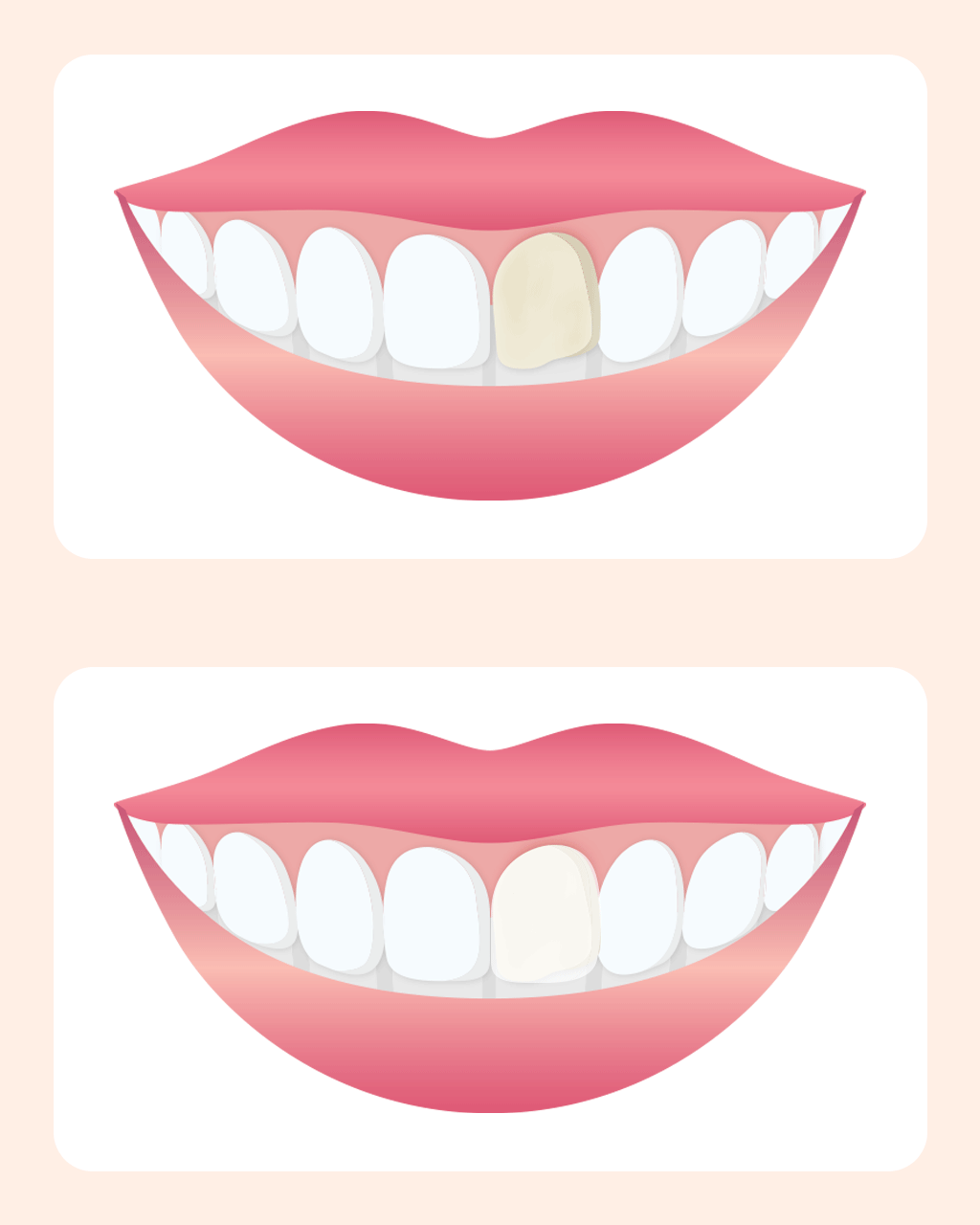
If the original tooth is dark, a highly translucent ceramic (high light transmission) may not mask discoloration sufficiently. Even if the ceramic looks clear and bright on its own, if the deep underlying shade shows through, the restoration can appear grayish or dull overall.
With veneer cases, increasing translucency does not always create a more natural-looking result. The darker the underlying tooth, the more important it is to consider both:
- How much light passes through (translucency)
- How well the material blocks the underlying discoloration (masking ability)
So for dark teeth, it’s not enough to confirm only the target brightness. You also need to evaluate how much of the base shade will be revealed through the ceramic—because overly translucent materials may make it difficult to reach the expected brightness.
3. How can dark teeth be masked?
To mask a dark base shade, using a lower-translucency ceramic and designing an appropriate **thickness* can be advantageous. Lower-translucency materials help reduce show-through of underlying discoloration, but if the restoration becomes too opaque, the tooth can lose its characteristic “clear” look and appear heavy or flat.
To balance masking and natural translucency, a layering technique may be used: firing multiple layers of more translucent porcelain over a more opaque ceramic layer. The goal is:
- Less show-through from underneath
- More natural, tooth-like translucency on the outer surface
If the original tooth discoloration is severe, the available space for material placement becomes especially important. To both mask the color and maintain structural strength, securing about **0.4–0.5 mm** of space may be necessary. Because this can change how much tooth reduction is required, the shade goal and thickness plan should be reviewed together.
4. Can bonding cement alone mask a dark color?
Resin cement used to bond veneers can help fine-tune the final shade, but it has limitations when used alone to mask a dark underlying tooth. Even if a brighter or more opaque cement is selected, it is difficult for cement to override the influence of the base shade and ceramic material.
A related in vitro study reported that the cement’s contribution to changes in final brightness (value) was about 3.03%. This figure reflects study conditions and does not mean the same degree of change will occur in every procedure—but it supports the idea that cement is typically a minor adjustment tool, not the main masking solution.
Before bonding, a try-in paste can be used to preview the shade impression and brightness and to obtain patient consent. The preview shade is generally very similar to the post-bonding result, but it may not be exactly identical. Recording the try-in outcome can help reduce post-placement shade concerns and psychological burden.
5. How do the dental clinic and lab match the shade?
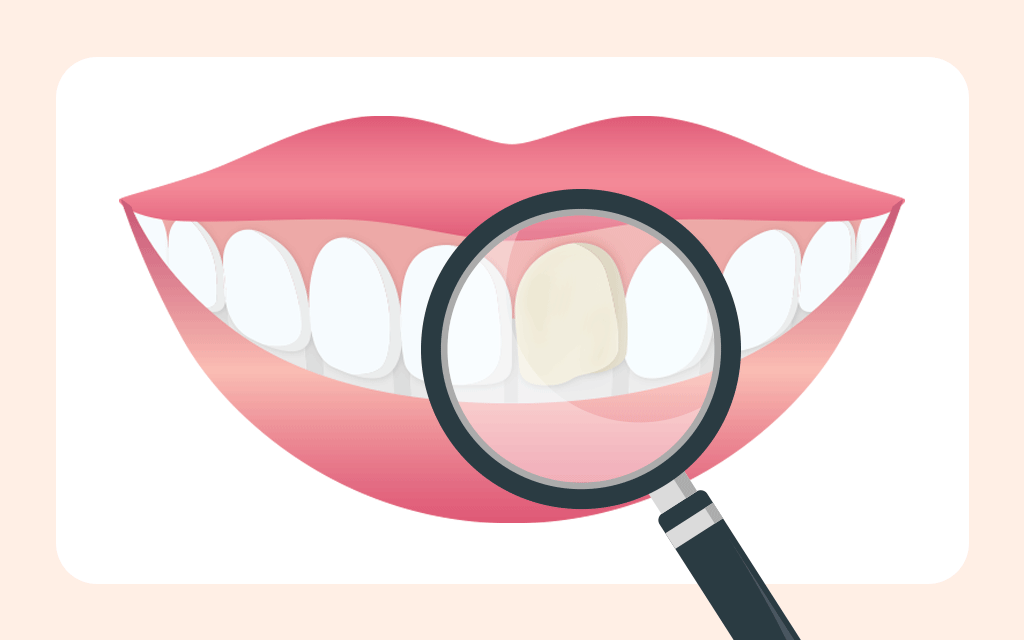
The clinic and the dental lab share key information to reduce shade discrepancies during veneer fabrication, including:
- Abutment tooth shade records (e.g., ND shade)
- Clinical photos
- Planned ceramic thickness and translucency
- Cement strategy
Because shade photos can look different depending on lighting, the photo environment is also considered. Shade photography often uses standard lighting around 5,500K, adjusted as needed for the clinic’s setup. Window daylight or reddish incandescent lighting is avoided, and a shade reference tab is included for comparison.
The ND shade record confirmed after tooth preparation is also essential fabrication information. The lab reviews this record together with the desired ceramic thickness, light transmission level, and cement plan. To reduce shade and shape errors, precise digital communication between the clinic and the lab is essential—and this can also help reduce the likelihood of remakes.
6. Frequently Asked Questions (FAQ)
Q. If my natural teeth are very dark, can I still get bright veneers?
Yes, but thin and highly translucent materials alone have limitations. Using a lower-translucency ceramic and maintaining slightly greater thickness can help prevent gray show-through, and careful coordination with the clinician is needed. In some cases, additional tooth reduction may be required.
Q. Is the color of the try-in paste the same as the color after bonding?
It is not completely identical, but it is usually very similar. It functions as an important safety step—allowing you to preview the final shade impression and tone shift before the actual cement is cured and to confirm your consent.
Q. Can no-prep veneers cover severe discoloration?
If the teeth are severely dark, no-prep veneers are generally not recommended. Thin restorations often lack the space needed to mask the base shade, which can make the result look dull or “added on.”
Q. Can staining or chipping happen even after veneers?
The restoration’s intrinsic color generally remains stable over time, but smoking or coffee can cause staining along the margins. Grinding or clenching can fracture ceramic, so ongoing care—such as wearing a protective appliance—may be needed.
This health content has been reviewed by medical professionals, compiled from authoritative domestic and international sources, and is regularly updated in accordance with the latest clinical guidelines.
Sources
- Alharbi & Alenezi, Masking discolored substrates with lithium disilicate veneers and resin cements: in vitro quantitative analysis, Journal of Prosthetic Dentistry, 2024.
- Kubanek & Stawarczyk, Masking capacity of minimally invasive lithium disilicate restorations on discolored teeth, Operative Dentistry, 2023.
- Morimoto S et al., Main clinical outcomes of feldspathic porcelain and glass-ceramic laminate veneers: systematic review/meta-analysis, International Journal of Prosthodontics, 2016.
※ The copyright for all content on this blog belongs to medihi. Unauthorized copying, distribution, or derivative use is strictly prohibited, and violations may result in legal action without prior notice.