

In This Article
In clinical practice, prediabetes is viewed as an important preventive window for metabolic health—an opportunity to slow down or potentially prevent progression to diabetes. Rather than prescribing medication immediately, this article objectively summarizes practical criteria for building a personalized management plan by interpreting your blood glucose markers together with coexisting risk factors.
1. How to verify prediabetes numbers and perform a comprehensive assessment
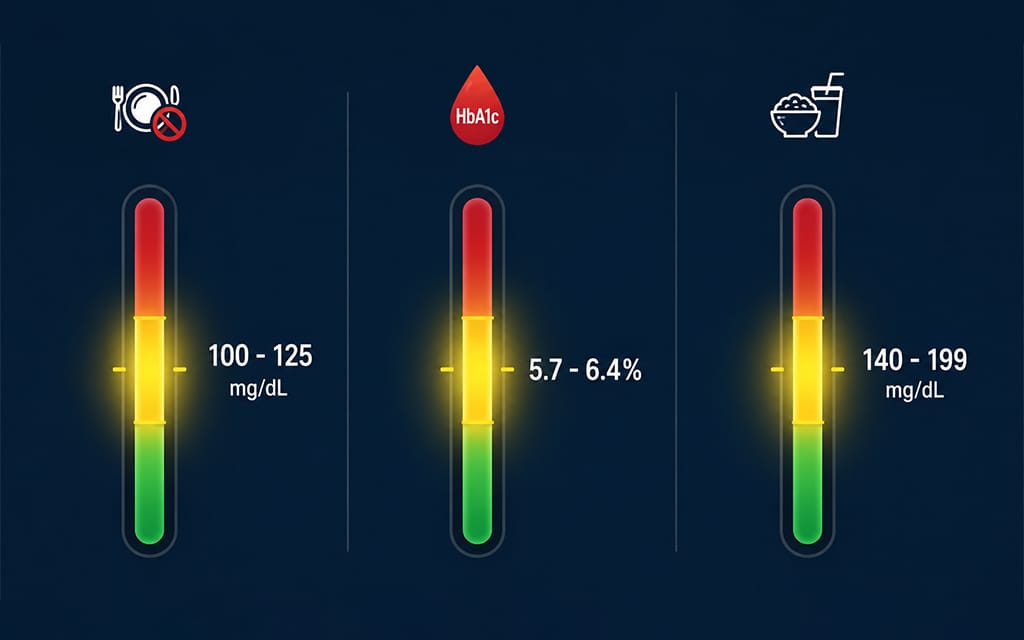
To identify prediabetes accurately, you should not rely on a single test result. In clinical care, blood glucose regulation is typically assessed across three main axes, and if you fall into even one of the relevant ranges, you may be classified as having prediabetes. This stage is like a yellow engine warning light on a car dashboard: the engine does not stop right away, but it signals that internal problems may be starting.
If you ignore the warning light and leave it unmanaged, the likelihood of progressing to diabetes increases. Multiple studies report that among people in the prediabetes range, a few percent up to around 10% per year may progress to diabetes. That is why the first priority is to confirm exactly which criteria your numbers meet and to evaluate them in combination—not in isolation.
| Test Type | Normal Criteria | Prediabetes Criteria | Diabetes Diagnosis Criteria |
|---|---|---|---|
| Fasting Blood Sugar (8-hour fast) |
Less than 100 mg/dL | 100 ~ 125 mg/dL | 126 mg/dL or higher |
| Glycated Hemoglobin (HbA1c) | Less than 5.7% | 5.7 ~ 6.4% | 6.5% or higher |
| 2-Hour Postprandial Blood Sugar (OGTT) | Less than 140 mg/dL | 140 ~ 199 mg/dL | 200 mg/dL or higher |
2. Post-meal glucose impairment that’s easy to miss if you only trust fasting glucose

Even if your fasting glucose from a routine health screening comes back close to normal, you may still miss a problem where blood sugar spikes sharply after meals. In particular, Asians are observed to have a relatively higher proportion of post-meal glucose impairment—where fasting glucose is normal or borderline, but post-meal glucose alone is abnormally high.
If your fasting glucose seems acceptable but your HbA1c is elevated, it may suggest that post-meal glucose rises are occurring. Extra caution is warranted if you have a first-degree relative with diabetes or central (abdominal) obesity, especially if you frequently experience marked fatigue or drowsiness after meals. In such cases, an oral glucose tolerance test (OGTT) may be additionally considered under medical guidance to evaluate your post-meal metabolic capacity.
3. Realistic and safe weight management and lifestyle goals
The first pillar of prediabetes management is intensive lifestyle modification. Major studies have shown favorable outcomes in groups that achieved early weight loss, including a meaningful reduction in the risk of progression to diabetes. Rather than extreme fasting, Korean Diabetes Association guidelines recommend gradually losing at least 5% of your current body weight and maintaining it long-term. Setting goals with concrete numbers—rather than vague determination—makes consistent follow-through more achievable.
✅ Three key lifestyle goals for prediabetes
- Weight management: Gradually lose at least 5% of your current body weight and maintain it long-term
- Aerobic activity: Do at least 150 minutes per week of moderate-intensity exercise (e.g., brisk walking), spread out over the week
- Strength training: Add lower-body–focused resistance training twice per week, considering joint safety
4. When medication may be selectively considered in prediabetes
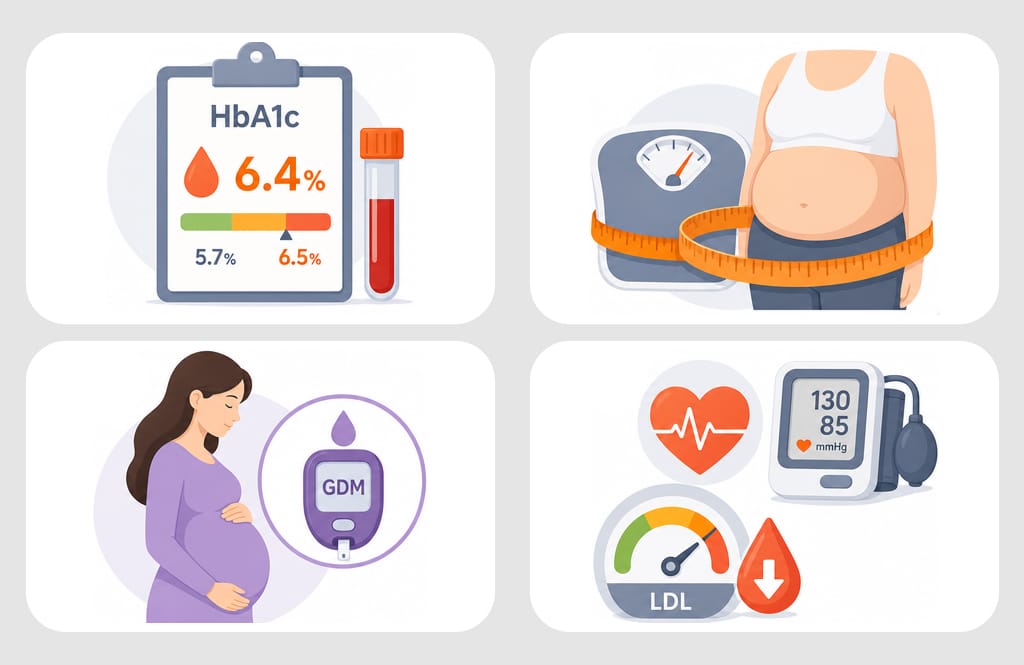
In prediabetes, medications such as metformin are not automatically applied to every patient across the board. The core strategy is lifestyle modification, and medication is an adjunct option that may be selectively considered for certain higher-risk groups. If your coexisting risk factors are not significant, it is often reasonable to prioritize lifestyle goals first and then confirm your response through follow-up testing.
However, if you are in a situation with inherently higher risk as below, you can discuss a strategy that may include medication with your clinician.
✅ High-risk conditions where medication may be considered
- HbA1c is 6.0% or higher, very close to the diabetes diagnostic threshold (6.5%)
- Severe obesity by BMI criteria or clearly significant central (abdominal) obesity
- A history of being diagnosed with or treated for gestational diabetes during pregnancy
- Coexisting cardiovascular risk factors such as high blood pressure or lipid (cholesterol) abnormalities
5. Why reducing refined carbohydrates matters more than going zero-carb
Extreme zero-carbohydrate diets that completely cut out rice and bread may lower blood sugar temporarily, but they are very difficult to maintain long-term. If carbohydrate intake becomes excessively low, the body’s energy supply can be depleted, leading to loss of muscle mass and a resulting risk of reduced insulin sensitivity.
When improving your diet, it is best to start by reducing carbohydrates that rapidly raise blood sugar, such as sugar-sweetened beverages and refined flour products. Instead, choose fiber-rich whole grains and vegetables that help blunt post-meal glucose spikes, along with high-quality protein. Rather than trying to make your diet perfect from day one, it is more practical to begin with realistic actions—such as cutting out sweetened instant mix coffee drinks or switching from white rice to mixed grains.
6. Frequently Asked Questions (FAQ)
Q. I was told I’m in the prediabetes range on a health screening. How often should I repeat blood sugar tests?
Based on Korean Diabetes Association guidelines, regular fasting glucose and HbA1c testing at least once per year is recommended. However, depending on your individual risk level and whether you have obesity, follow-up testing every 3–6 months may be needed, so it’s best to discuss timing with your primary physician.
Q. If my HbA1c is 5.9%, should I start medication?
Since 5.7–6.4% falls within the prediabetes range, medication is not applied uniformly; intensive lifestyle modification is tried as the first-line strategy. However, if higher-risk factors overlap—such as severe obesity or a history of gestational diabetes—medication may be considered on an exceptional basis based on clinical judgment.
Q. Can I be diagnosed with prediabetes even if my fasting glucose is normal?
Yes. Even if insulin secretion in the fasting state is normal, impaired glucose tolerance can coexist, meaning there is a problem processing sugar after meals. If fasting glucose is normal but HbA1c is 5.7% or higher, or if post-meal glucose is elevated, it can still fall into the prediabetes range and requires a comprehensive assessment.
Q. I have no symptoms at all—are there criteria for when I still need a detailed internal medicine evaluation?
Prediabetes usually has little to no noticeable symptoms, so if there are abnormal glucose findings, it is safer not to delay and to set a retesting plan. In particular, if you are 35 or older and also have central obesity, high blood pressure, dyslipidemia, or other metabolic risk factors, an internal medicine consultation is recommended.
This health content has been reviewed by medical professionals, compiled from authoritative domestic and international sources, and is regularly updated in accordance with the latest clinical guidelines.
Sources
- Korean Diabetes Association (KDA), Clinical Practice Guidelines for Diabetes, 2022 and 2025 CPG.
- Analyses/results related to the Korean Diabetes Prevention Study (KDPS): *Diabetes & Metabolism Journal*, 2024.
- Diabetes Prevention Program Research Group, "Reduction in the Incidence of Type 2 Diabetes with Lifestyle Intervention or Metformin", New England Journal of Medicine, 2002.
※ The copyright for all content on this blog belongs to medihi. Unauthorized copying, distribution, or derivative use is strictly prohibited, and violations may result in legal action without prior notice.