

Is a higher number of implants always better for full-mouth restoration? We explain the criteria for determining the optimal number of implants based on jawbone density and chewing force, alongside a clear comparison of digital full-arch methods like All-on-4 and All-on-6.
"I need full-mouth implants, but exactly how many should I get?"
"Is it always better to plant as many implants as possible?"
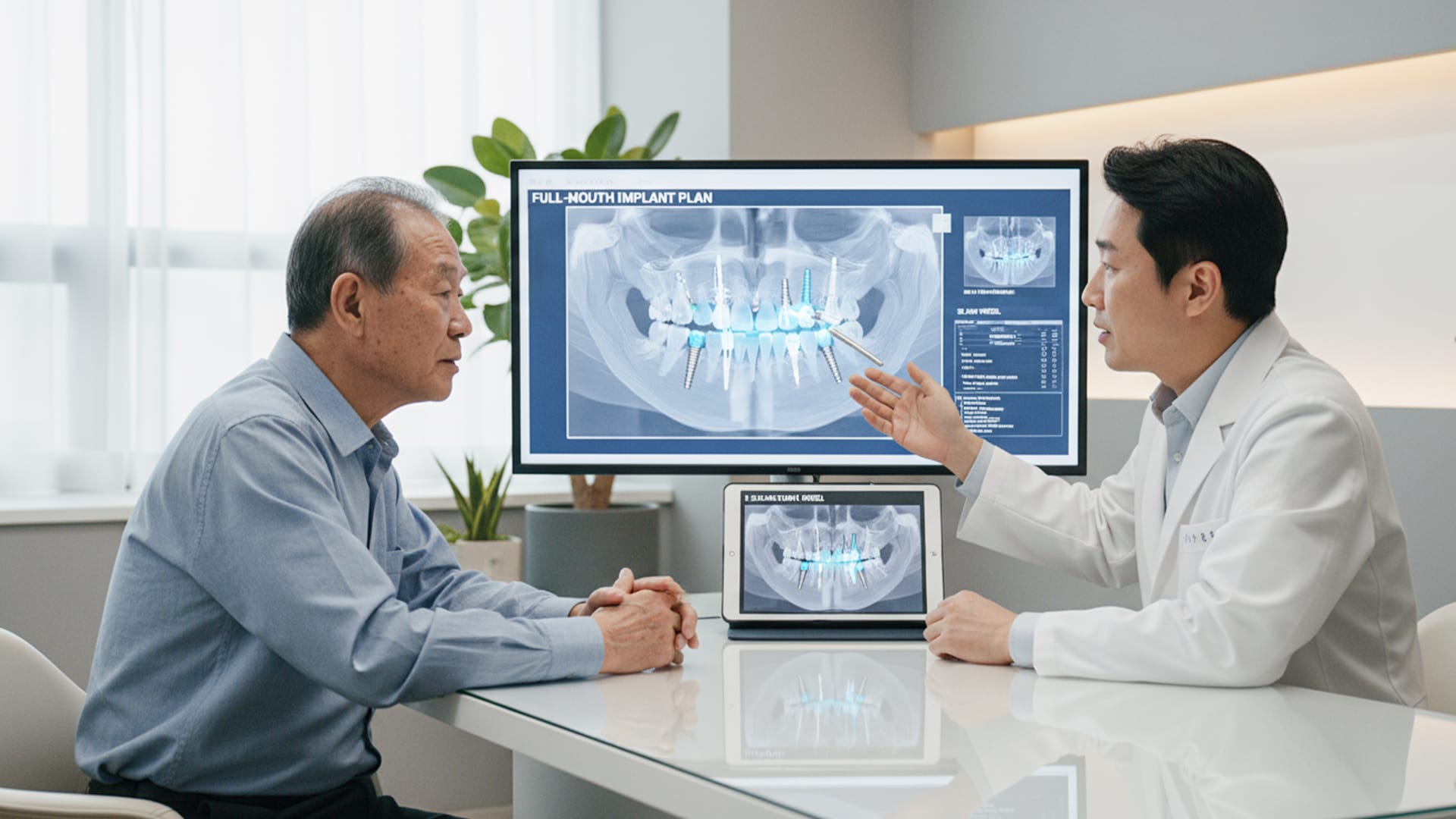
Many patients visit the clinic with vague anxieties and questions about full-arch restoration. Confusion often arises because the recommended "number of implants" can vary from one clinic to another.
In reality, the core of determining the implant count is "securing maximum stability with the minimum necessary number." Rather than blindly increasing the count, it is far more important to have a strategic placement plan tailored to your jawbone condition and facial structure.
This guide covers the essential criteria for deciding the number of implants and explores various surgical methods—including the Digital Full-Arch approach—that reduce both cost and treatment time. Our goal is to clear up any confusion and help you make a well-informed, rational decision.
1. How is the Right Number of Implants Determined for You?
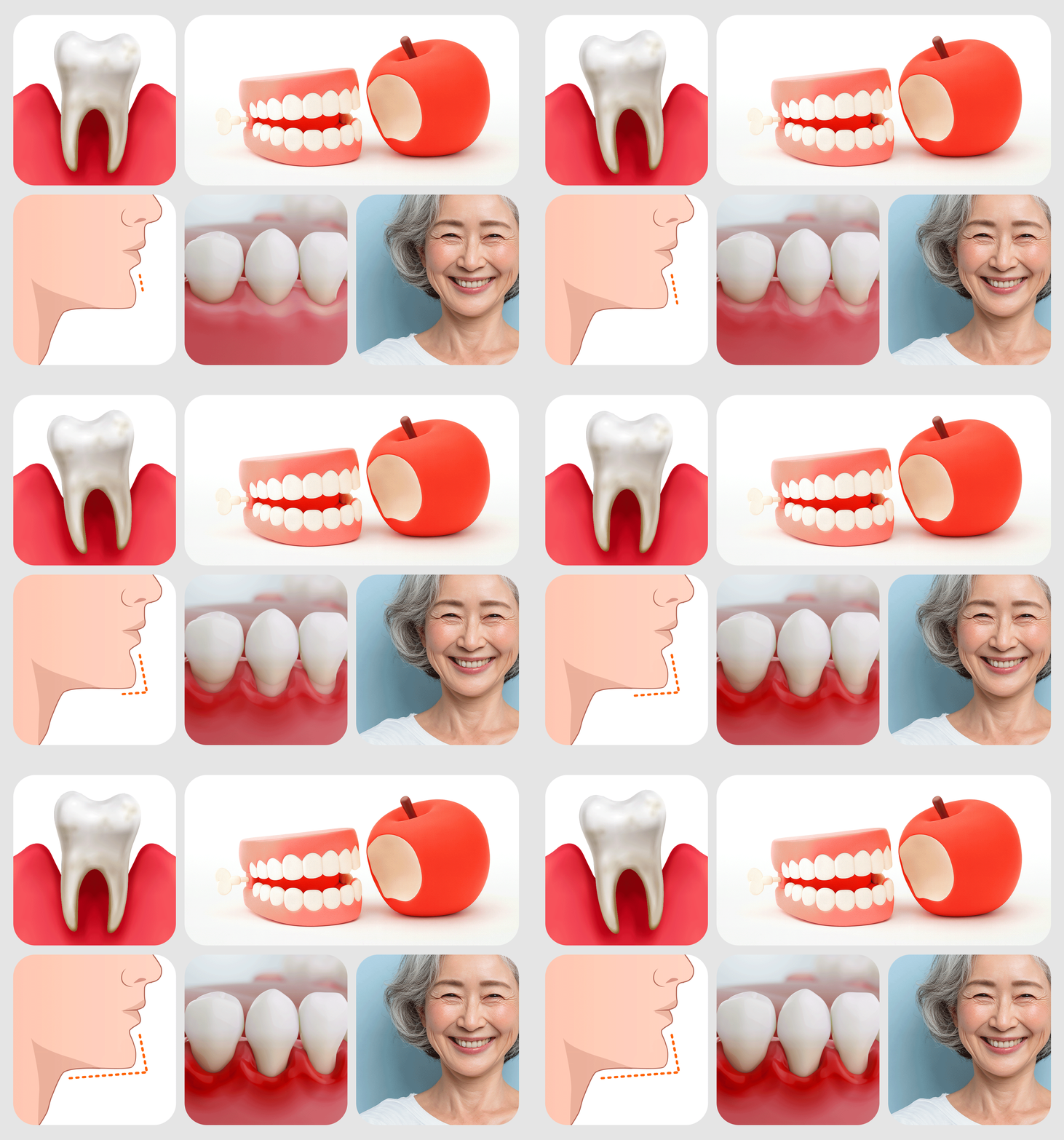
You might wonder, "Someone I know got 8 implants, so why am I being told I need 12?" The truth is that full-mouth implants are a highly individualized treatment. The decision is based on a combination of the following clinical factors:
- Bone Quantity and Quality: Sufficient bone is essential for stable placement. If bone is sparse or weak, you may need a bone graft, or the number and position of implants may be adjusted to distribute force more effectively.
- Chewing Force (Masticatory Force): The structure must be designed to withstand your daily biting pressure. Patients with strong jaw muscles require a sturdier setup and potentially more implants to handle the load.
- Jawbone Structure: The shape, size, and density of the jaw directly affect support. Factors such as gender (males often have larger, denser jawbones) and age (bone density and volume often decrease after middle age) require precise, customized planning.
- Note: If bone is insufficient above the inferior alveolar nerve in the lower jaw or if a sinus lift is not feasible in the upper jaw, standard placement may be restricted.
- Oral Health Status: The health of remaining gums and teeth influences the success rate and longevity. Unmanaged gum disease can negatively impact the final outcome.
- Overall Treatment Goal: Whether you choose a fixed full-arch bridge, an implant-supported overdenture, or an implant-retained denture will change the required count.
2. Traditional vs. Digital Full-Arch: Why the Counts Differ
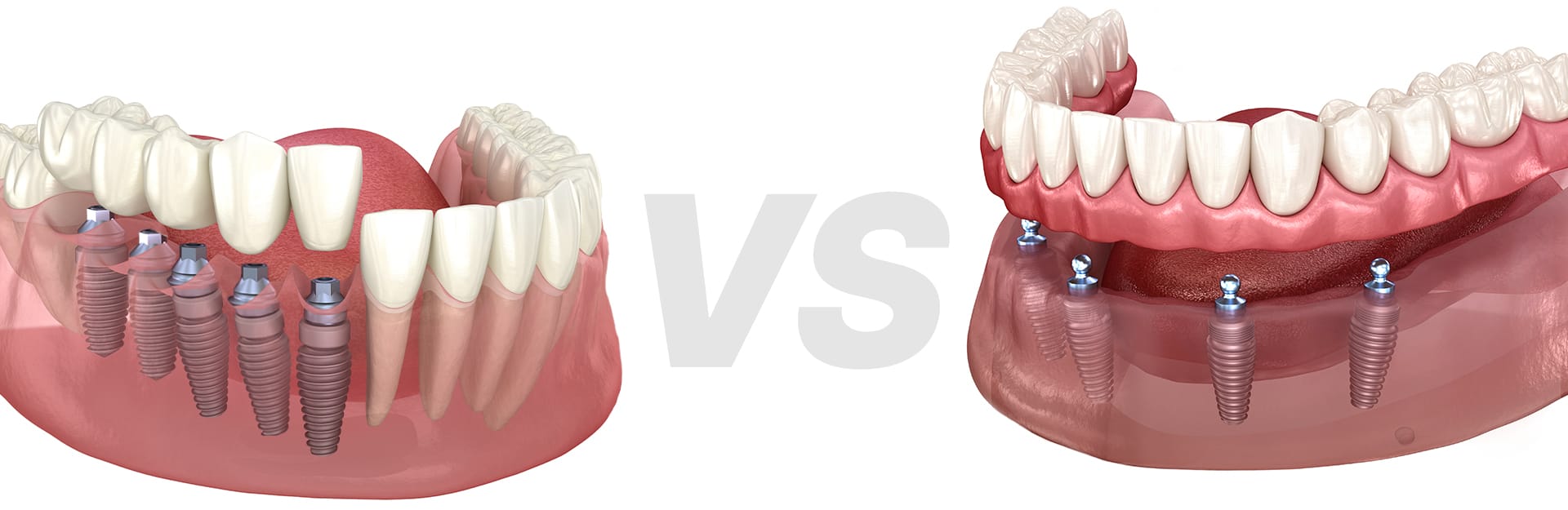
As mentioned, the surgical method you choose is the key to success. Full-mouth restoration strategies generally fall into two categories:
| Category | Traditional Method (Multiple) | Digital Full-Arch (Minimum) |
|---|---|---|
| Implant Count | Upper: 8–10 / Lower: 6–8 (Total 14–20) | Upper/Lower: 4–6 each (Total 8–12) |
| Principle | Individual support for each tooth | Distributes weight across the entire arch using minimal "pillars" (Bridge Principle) |
In the past, the traditional method of replacing almost every missing tooth with an individual implant was the standard. However, this often required extensive bone grafting, leading to longer surgery times, extended recovery, and higher costs.
The Digital Full-Arch (All-on-4/All-on-6) method was developed to overcome these limitations. By strategically placing a minimum number of implants in areas where the bone is strongest, we can restore full functionality efficiently. The difference isn't just a number; it is a shift from "individual restoration" to "strategic integrated restoration."
3. Who is Best Suited for Digital Full-Arch?
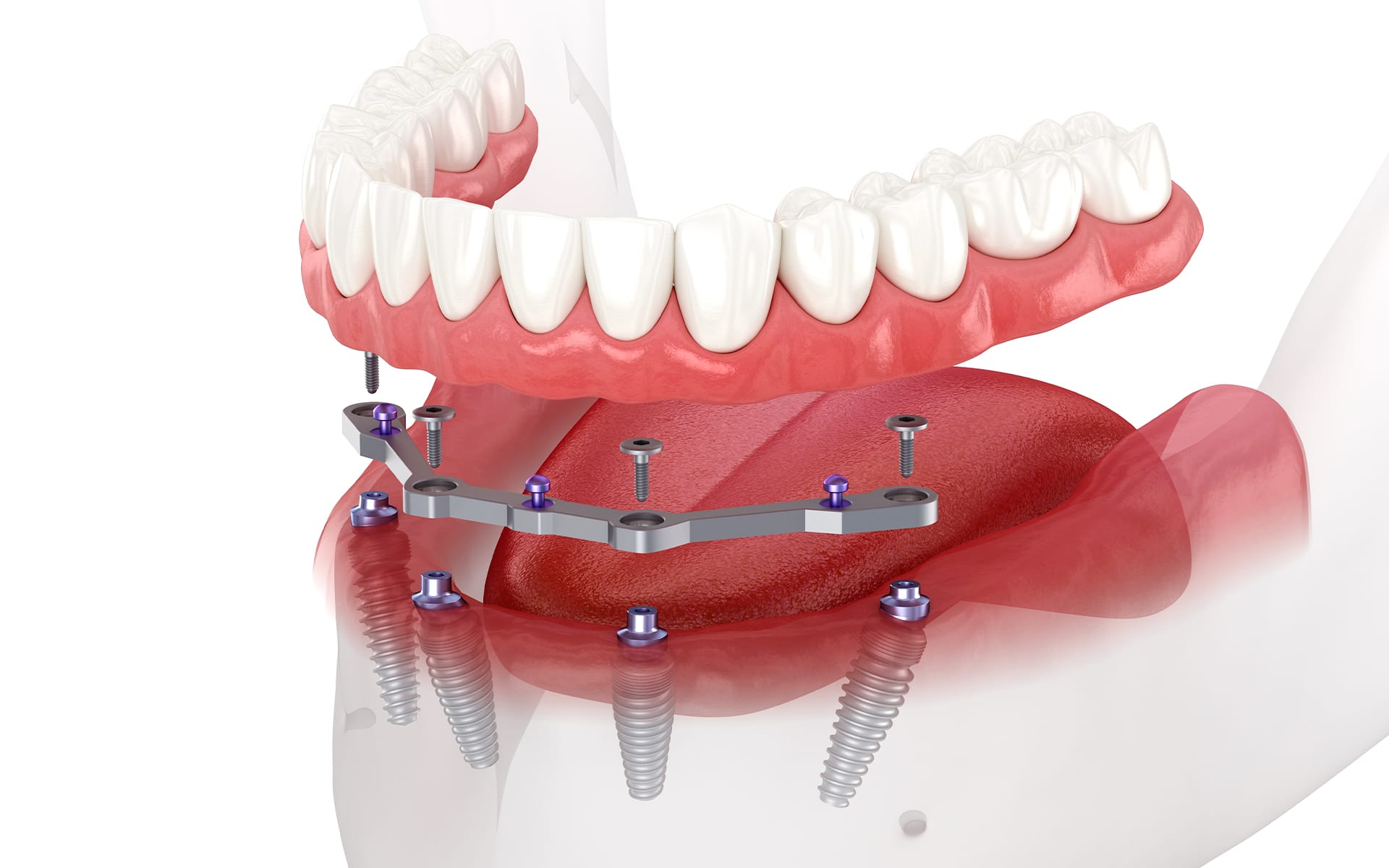
When patients hear they only need 4 or 6 implants for an entire arch, they often ask, "Is it really strong enough?" The secret lies in strategic placement and digital technology.
The All-on-4 (4 implants) and All-on-6 (6 implants) methods are excellent alternatives for those hesitant about extensive bone grafting due to poor bone condition, or those wishing to reduce the overall duration and cost of full-mouth treatment.
- All-on-4: Two implants are placed vertically in the front, and two are tilted in the back to utilize the best available bone.
- All-on-6: Adds two more implants to the All-on-4 design for enhanced support and stability.
4. All-on-4 vs. All-on-6: Which Should You Choose?
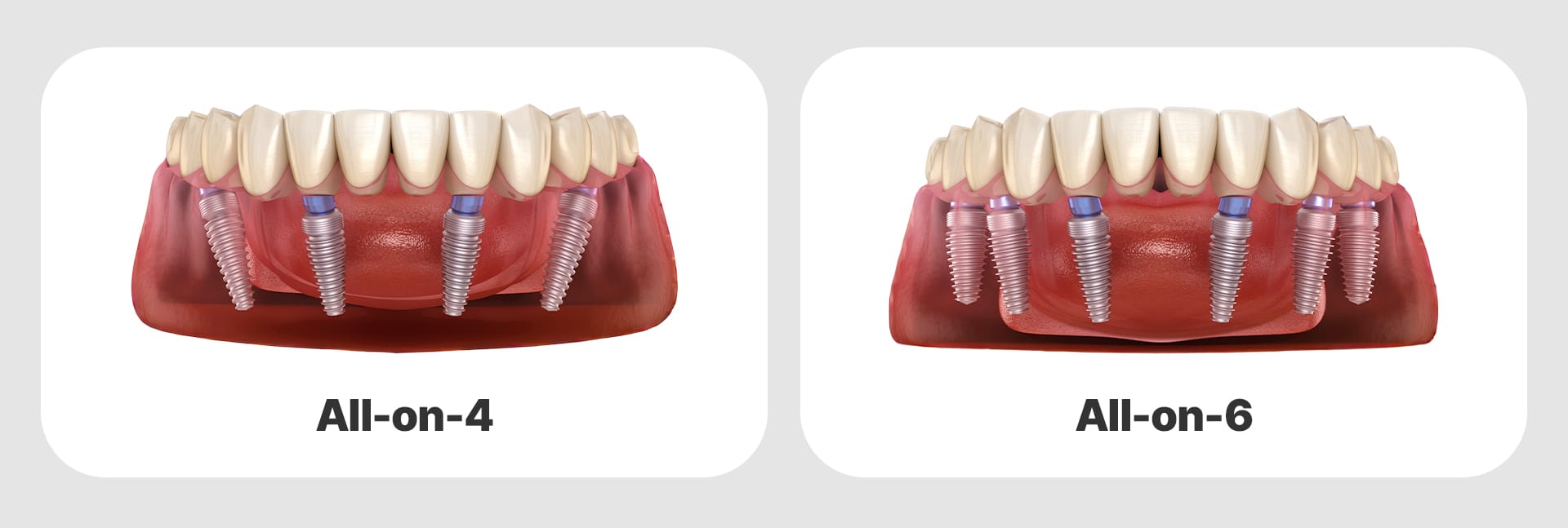
The choice depends on your unique oral environment, lifestyle, and long-term goals.
1) Choosing All-on-4 (Maximum Efficiency)
- Severe Bone Atrophy: Ideal for patients whose jawbone depth and width are so depleted that extensive grafting is difficult. It utilizes the denser bone in the front and tilts the back implants to maximize surface contact.
- Fast Recovery and Lower Cost: Smaller surgical scope means shorter surgery time, faster recovery, and the most affordable price point.
- Lower Jaw (Mandible) Surgery: Highly successful in the lower jaw, where the bone is generally denser than the upper jaw.
2) Choosing All-on-6 (Maximum Stability)
- Strong Chewing Force: For patients who enjoy tough or crunchy foods, the two additional implants help distribute force more effectively for long-term stability.
- Prioritizing Longevity and Durability: By distributing the load across six pillars, you reduce the risk of prosthetic breakage and extend the lifespan of the restoration.
- Favorable Bone Condition: If there is enough residual bone to support six implants with minimal grafting, All-on-6 is often the safer, more robust choice.
5. Frequently Asked Questions (FAQ)
Q. Do I have to pull all my remaining teeth for full-mouth implants?
Not necessarily. Our principle is to save healthy, functional teeth whenever possible. A precise diagnosis determines which teeth can be saved to serve as additional support for the final prosthetic.
Q. What exactly is the difference between All-on-4 and All-on-6?
Both are digital full-arch methods. All-on-4 uses 4 implants per arch, while All-on-6 uses 6. The choice depends on your bone density, oral structure, and biting force.
Q. Can only 4 implants really last a long time?
Yes. When supported by precise digital diagnosis and a skilled medical team, the strategic angles used in the All-on-4 method provide sufficient strength for long-term, comfortable use.
Q. What should I look for when choosing a clinic?
Since full-mouth restoration is complex, ensure the clinic has extensive clinical experience, uses advanced diagnostic tools like 3D CT, and offers a customized plan tailored to your specific bone condition.

The goal of dental implants is not to "plant a lot," but to plant the "right amount strategically." Depending on your bone health and goals, efficient alternatives like Digital Full-Arch (All-on-4/All-on-6) can provide maximum stability with a minimum number of implants. Treatment results, duration, and experiences may vary depending on the individual's condition. Decisions must be made through a consultation with a qualified dentist.
Sources
- Korean Academy of Prosthodontics. (2020). Digital Implant Prosthetic Guidelines.
- Korean Academy of Oral and Maxillofacial Surgery. (2021). Jaw Evaluation and Surgical Principles for Full-Mouth Implants.
- Maló, P., et al. (2015). The All-on-4 concept: a clinical report of an 18-year follow-up period. Journal of Prosthetic Dentistry.
※ The copyright for all content on this blog belongs to Medihi. Unauthorized copying, distribution, or derivative use is strictly prohibited, and violations may result in legal action without prior notice.
Recommended reads
 medihi