

This guide addresses parental concerns regarding the cost and timing of orthodontic treatment for children. It breaks down the step-by-step cost structure and provides key information needed for rational decision-making.
"Isn't it too expensive? Can't we just wait until they are adults?"
"The cost estimates are all over the place. It's confusing."
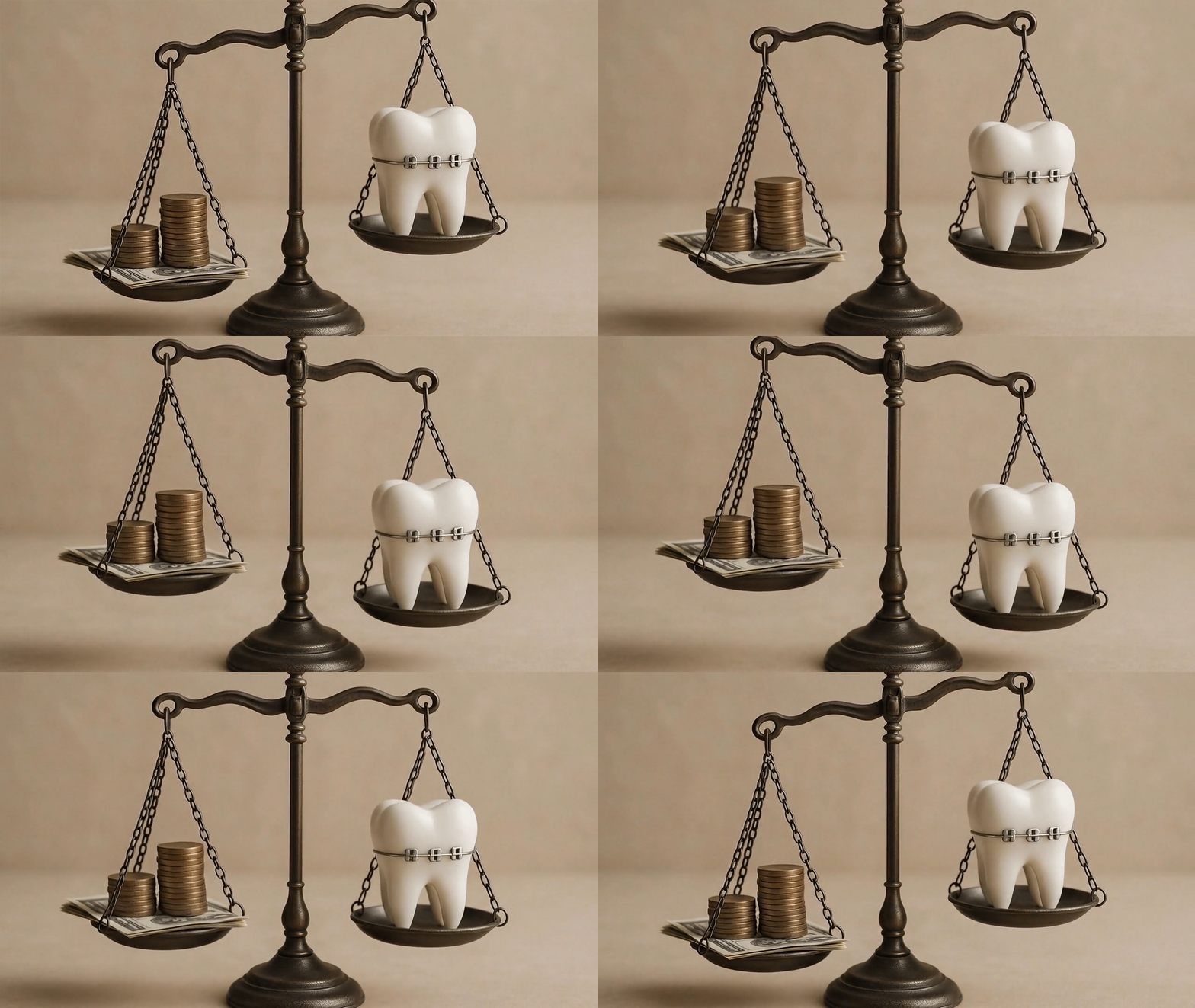
For parents worried about their child's teeth or jaw alignment, "Cost" and "Timing" are the biggest concerns. You might wonder if waiting will lead to higher costs later, or if starting now is a hasty decision.
This article organizes the cost structure of pediatric orthodontics by stage, insurance coverage realities, and essential points parents must know to make an informed choice.
1.Why Does My Child Need Braces Now?

The dilemma over "timing and cost" starts with the fundamental question: Is this treatment really necessary?
A child's jaw and facial bones change actively during growth. Issues like an underbite, protruding mouth, or severe malocclusion are not just cosmetic problems. Severe misalignment can make chewing difficult, affect pronunciation, and strain the jaw joints, leading to headaches or TMJ pain.
The Korean Association of Orthodontists (KAO) recommends age 7 to 12 as the optimal time for early evaluation. Growth modification treatment uses this window to guide jaw growth in the right direction. This is often called the "Golden Time" because it utilizes growth potential—a mechanism impossible once adulthood is reached.
Two Main Goals of Early Treatment:
- Correcting skeletal imbalances between the upper and lower jaws.
- Securing space for permanent teeth to erupt properly.
This early intervention can prevent the need for complex surgeries (like double jaw surgery) or extraction-based treatments in adulthood.
[Symptom Checklist: Does My Child Need Evaluation?]
- Mouth breathing or loud snoring.
- Lower jaw protrudes further than the upper jaw (Underbite).
- Front teeth are growing in very crooked.
- Excessive gaps between teeth, or top and bottom teeth don't meet.
- Thumb sucking or tongue thrusting habits.
2.Is Early Treatment More Expensive Than Adult Braces?

Adult orthodontics focuses only on aligning teeth on a fully grown jaw. In contrast, pediatric orthodontics may include Phase 1 (Growth Modification) to correct jaw discrepancies. This extra step can improve the bite significantly or make Phase 2 simpler.
Pediatric treatment is divided into Diagnosis, Phase 1, Phase 2, and Retention. Each step incurs separate costs.
- Diagnosis: Approx. $200–$400
- Phase 1: Approx. $1,000–$3,000
- Phase 2: Approx. $3,000–$8,000 (varies by appliance)
- Retainers: Approx. $300–$800
While the treatment duration may be longer due to the staged approach, it is not necessarily "more expensive" in the long run. Solving jaw issues in Phase 1 reduces the complexity of Phase 2 and can prevent costly surgical corrections in adulthood.
Therefore, when comparing costs, consider the treatment goals and long-term prevention, not just the total price tag.
[Cost Structure by Stage]
| Stage | Key Objective | Avg. Cost (Est.) | Appliance Options | Check Point |
| Precision Diagnosis | Analysis & Planning | $200 ~ $400 | X-rays, 3D Scans | Included in total fee? |
| Phase 1 | Jaw Growth & Space | $1,000 ~ $3,000 | Expanders, Headgear | Monthly fees included? |
| Phase 2 | Alignment & Bite | $3,000 ~ $8,000 | Metal, Ceramic, Clear Aligners | Extra fees for screws/extractions? |
| Retention | Prevent Relapse | $300 ~ $800 | Fixed/Removable Retainers | Replacement costs? |
3.Is it Covered by Insurance?

The realistic answer to "Is growth-phase orthodontics covered by insurance?" is that general orthodontic treatment is usually not covered by standard health insurance because it is classified as cosmetic.
However, there are exceptions. In cases of severe congenital deformities (like cleft lip and palate) or medically necessary skeletal corrections, some insurance plans may offer partial coverage.
Private dental insurance plans vary widely. While some may cover a portion of diagnostic fees, many exclude orthodontic treatment entirely. It is best to plan for out-of-pocket expenses while checking your specific policy details.
4.Hidden Costs & What to Ask
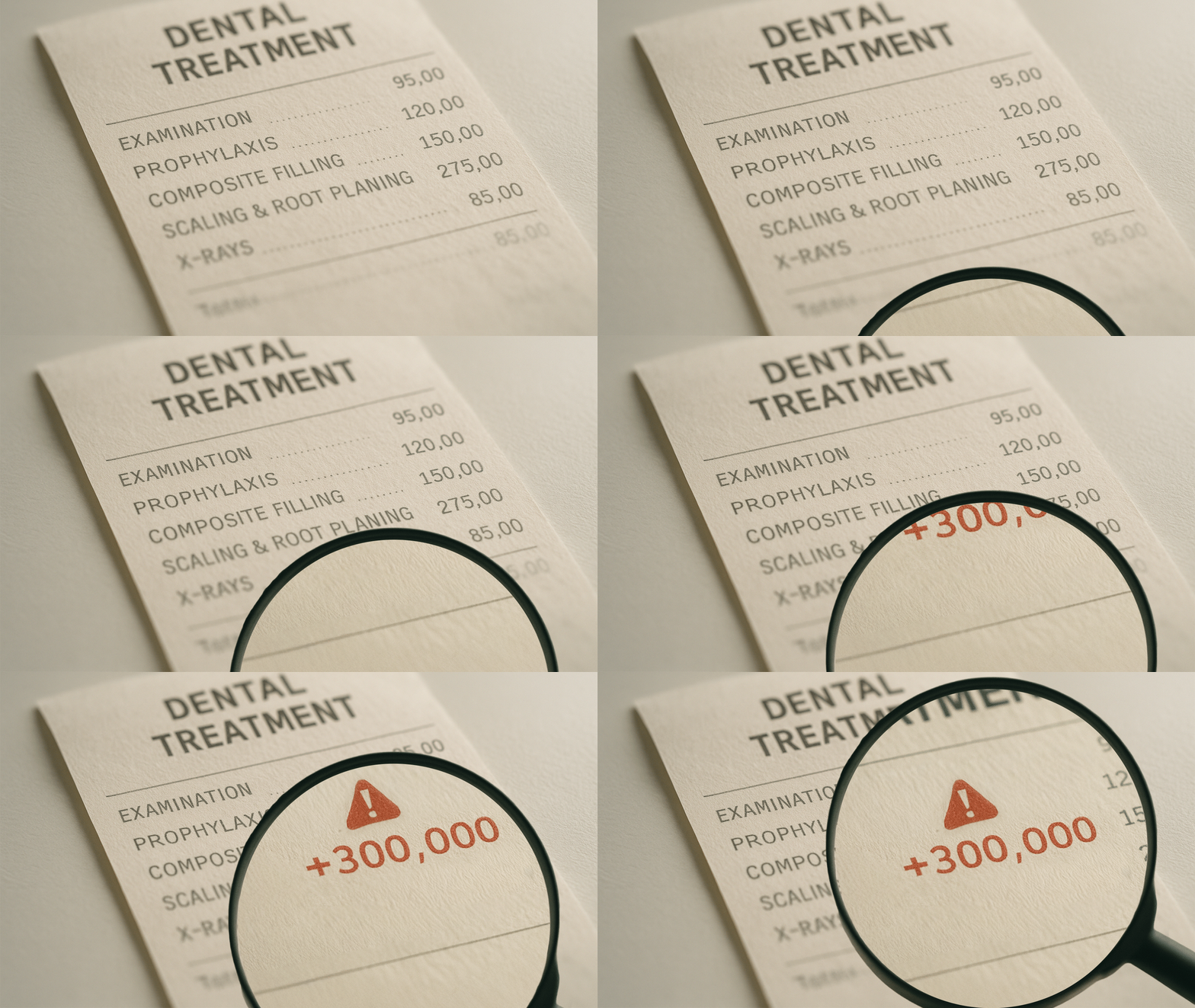
When consulting, signing a contract based only on the "total fee" can lead to surprise bills later. Prepare these questions to avoid unexpected expenses.
- "Are retainers included?" Retainers are essential to prevent relapse. Ask if the cost of the first set (fixed or removable) is included and what the policy is for lost or broken retainers.
- "Are there extra fees for miniscrews or extractions?" If your child needs tooth extractions or temporary anchorage devices (miniscrews), these are often billed separately.
- "Is the monthly adjustment fee separate?" Check if the clinic charges a "bundled fee" (all-inclusive) or if you must pay a "visit fee" every month.
[5 Questions for Your Consultation]
- Does the total quote include monthly fees, extractions, and retainers?
- What is the estimated treatment time, and are there extra charges if it extends longer?
- Is there a possibility that Phase 1 treatment alone will be sufficient?
- Which appliance is best for my child, and what are the pros/cons of each?
- What are the costs for emergency visits or broken appliances?
[What to Bring]
- School dental check-up results
- Recent panoramic X-rays (if available)
- Notes on sleep/breathing habits
- Family history of jaw issues (Genetics)
5.Frequently Asked Questions (FAQ)
Q. At what age should we start?
Generally, age 6 to 12, when baby teeth are replaced by permanent teeth, is ideal. Phase 1 treatment for jaw discrepancies is best started in early elementary school when significant growth remains. However, since development varies, a specialist consultation is the safest way to decide.
Q. How much is the price difference compared to adult braces?
If both Phase 1 and Phase 2 are needed, the total may be similar to or slightly higher than adult treatment. However, correcting skeletal issues early can prevent the need for expensive surgery or high-difficulty treatments later, saving money and physical burden in the long run.
Q. What is the cost structure? (Diagnosis, Phase 1, Phase 2)
It typically breaks down into Diagnosis ($200-$400), Phase 1 ($1,000-$3,000), Phase 2 ($3,000-$8,000), and Retainers ($300-$800). Each stage has separate costs, and billing policies (bundled vs. separate) vary by clinic. Always ask for a detailed breakdown.
Q. If we delay, will it cost more later?
Yes, it is highly likely. Specifically for skeletal issues like underbites, missing the growth window may necessitate orthognathic (jaw) surgery in adulthood. This involves risks and costs several times higher than orthodontic treatment alone. If you are worried, consulting a specialist now is the safest bet.

Orthodontic treatment for your child brings both financial burden and worry. However, the most important factor is making a wise choice for your child's health and future. We hope you don't miss the "Golden Time" due to cost concerns alone. By understanding the stage-by-step costs and asking the right questions, you can make a rational decision. A consultation is a small step that leads to a bright, healthy future for your child.
Sources
- Ministry of Health and Welfare. (2024). Guide to Dental Care and Non-Reimbursable Status.
- Korean Association of Orthodontists (KAO). (2023). Guidelines for Growth-Phase Orthodontics.
- Proffit, W. R., Fields, H. W., Larson, B., & Sarver, D. M. (2018). Contemporary Orthodontics (6th ed.). Mosby.
※ The copyright for all content on this blog belongs to Medihi. Unauthorized copying, distribution, or derivative use is strictly prohibited, and violations may result in legal action without prior notice.
Recommended reads
 medihi