

In This Article
Many people preparing for implant surgery struggle to choose a dental clinic amid countless advertisements. For implant treatment, rather than focusing on credential titles, temporary pricing, or equipment marketing, it’s important to confirm comprehensive criteria that improve safety and treatment quality. Below is a checklist covering the clinician’s clinical experience and diagnostic ability, surgical proficiency, prosthetic understanding, sterilization protocols, and post-treatment follow-up system.
1. How can you find a dentist who is good at implants?
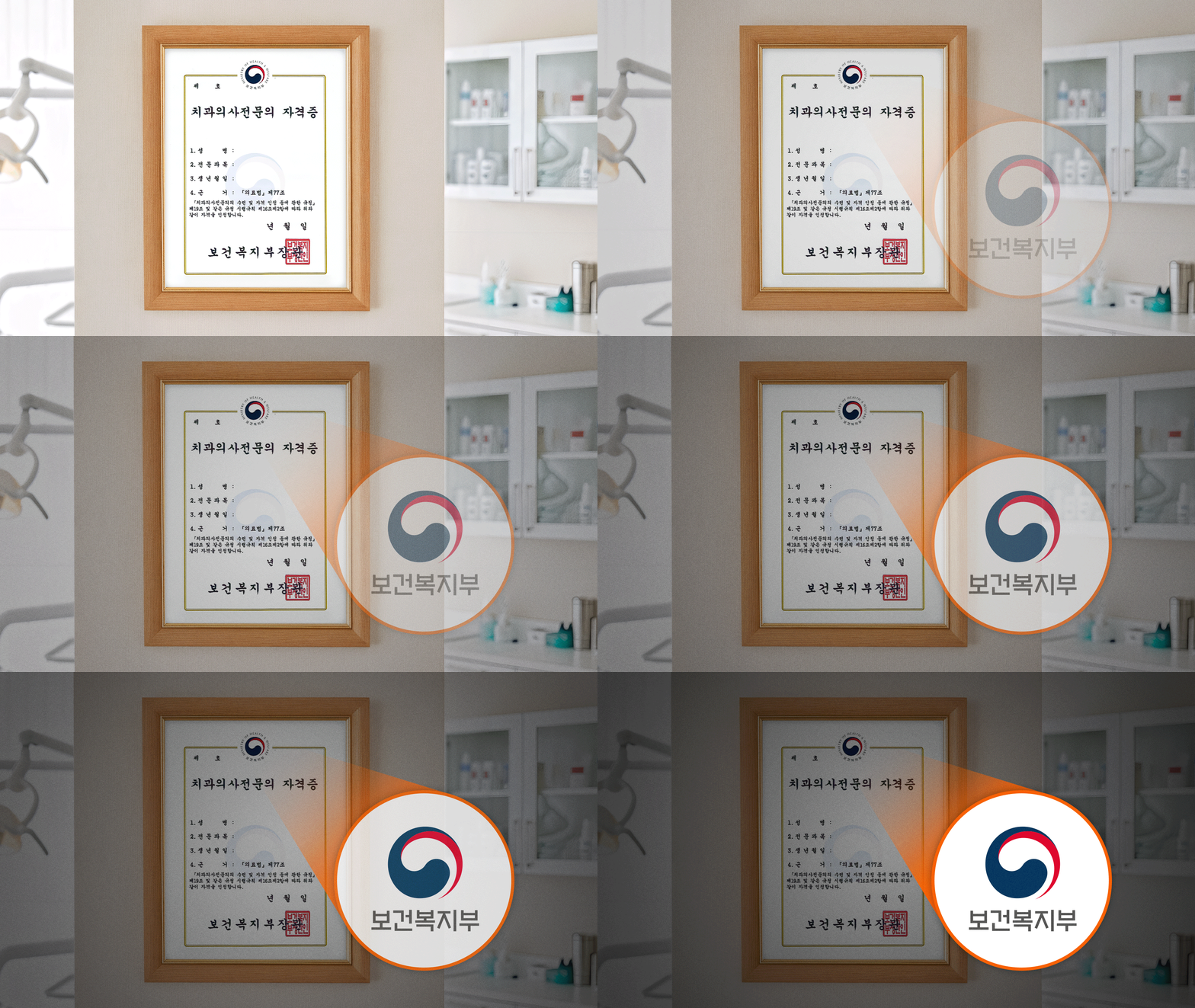
Because an implant is a high-difficulty procedure that requires detailed analysis of gum bone and nerve locations, the operator’s overall diagnostic ability and clinical experience can significantly affect prognosis.
Subspecialties such as oral and maxillofacial surgery, periodontics, and prosthodontics can help in treatment; however, real treatment capability should be assessed comprehensively—not only by whether someone is a board-certified specialist, but also by diagnostic competence, surgical experience, and the post-treatment follow-up system.
Even if a clinic advertises that “all doctors are specialists,” in some cases the credential may be a private society’s certification or a course completion certificate rather than an official qualification recognized by the Ministry of Health and Welfare, so verification is necessary. Specialist status can be one reference indicator, but it is preferable to also confirm the clinician’s actual surgical experience and follow-up care framework.
2. Why do clinical experience and surgical proficiency matter?
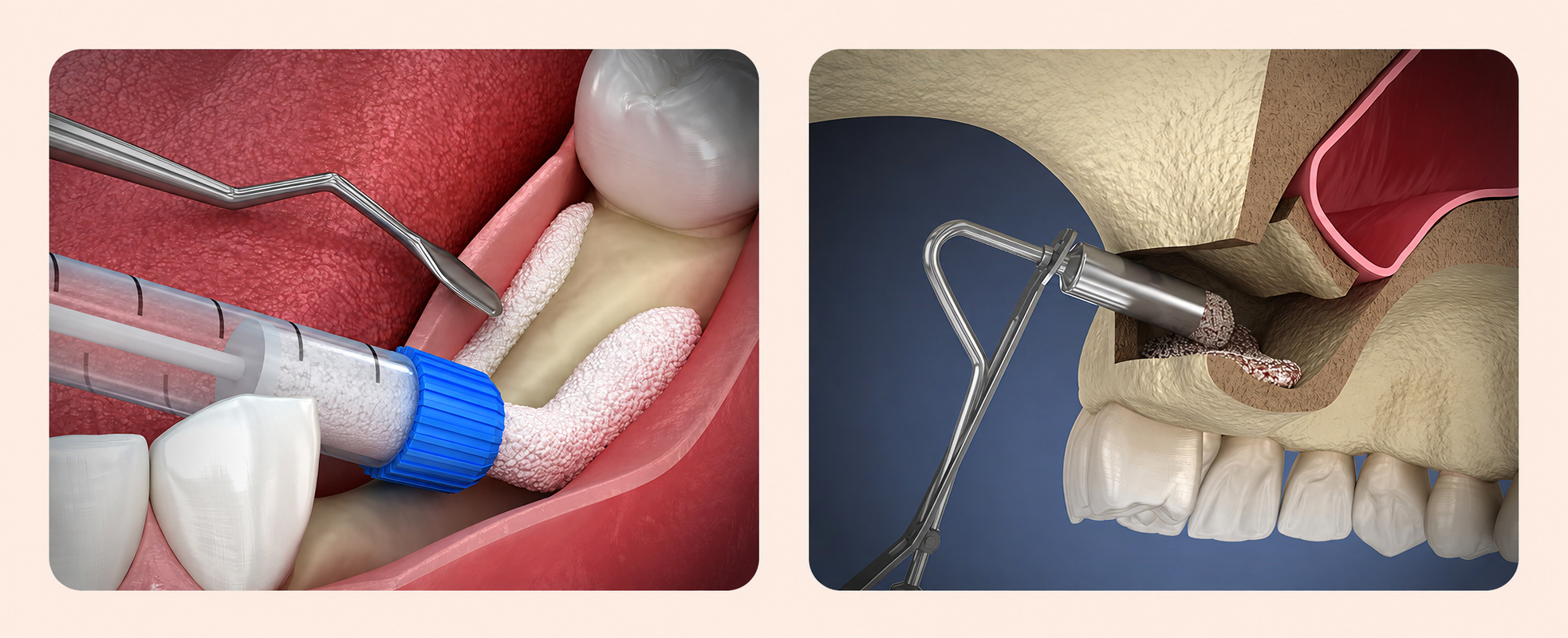
Extensive clinical experience helps secure the placement position and reduce surgery time in situations with many variables, such as gum bone grafting or sinus lift procedures.
For patients with systemic conditions such as diabetes or hypertension, clinical proficiency built from handling many cases can influence prognosis.
✅Three indicators to gauge clinical capability
- Experience with complex cases: a history of bone-grafting procedures similar to your gum-bone condition
- Understanding of prosthetic structure: the ability to design prosthetics that distribute chewing forces after placement
- Use of genuine materials: precision accumulated through long-term handling of specific materials
Equipment is only a supportive tool; the key factor that determines outcomes is the clinician’s experience. During consultation, you should check whether they have handled cases similar to yours.
3. How should you assess a clinic’s facilities and equipment level?
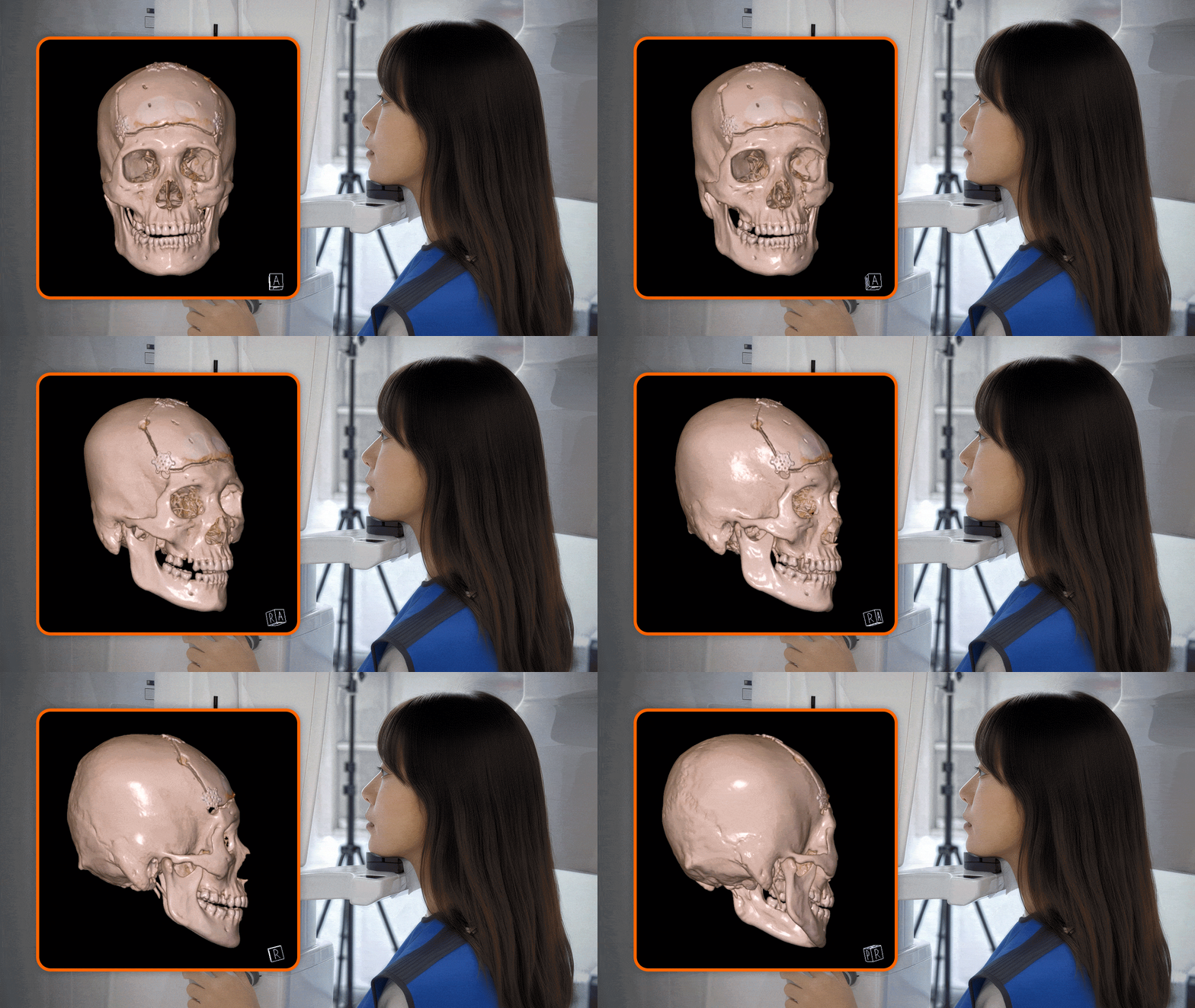
You should confirm whether the clinic has thorough sterilization and disinfection protocols and precise diagnostic equipment to block infection, one of the major causes of surgical failure.
Check whether they can use 3D CT diagnostic equipment and a guided surgery system to identify internal gum structures and the nerve canal. Also confirm whether surgical instruments are sterilized with an autoclave (high-pressure steam sterilizer) and managed in sterile packaging.
For emergencies, verify whether an automated external defibrillator (AED) and emergency medications are available, and whether the staff completes regular emergency training.
If you are looking for a safe implant dental clinic that fits your needs, it can be helpful to search in advance for nearby medical institutions equipped with these sterilization systems and precision devices.
4. What are the characteristics of trustworthy patient reviews?
Reviews written on map services or third-party platforms can serve as objective indicators for understanding the clinic atmosphere and the post-treatment follow-up system.
Promotional reviews may highlight only advantages, so they should not be used as an absolute standard. You should refer to posts that continuously document progress after surgery.
✅Specific characteristics of highly reliable reviews
- Follow-up documentation: mentions of prosthetic status several months after surgery
- Post-treatment follow-up system: whether detailed checkups and regular visit guidance are provided after surgery
- Responsiveness and communication: whether appointment times are respected and how clinicians explain things
Even if there are dissatisfied reviews, looking at how the clinic responded can be useful for judging the clinic’s honesty and willingness to communicate.
5. What steps should you take before making the final clinic choice?
Before deciding on the final surgery, you should visit at least 2–3 dental clinics and compare the clinician’s communication style and the proposed treatment plan.
If you choose a lower-cost option, check what items are included in the fee, whether additional costs may occur, and the scope of post-prosthetic follow-up coverage. Rather than simply comparing prices, it is preferable to judge whether the treatment cost has been set reasonably.
Because it is difficult to determine proficiency based only on how long a clinic has been operating, you should check whether they propose a diagnostic direction tailored to your condition. Choosing a place where you can build trust with the clinician is important for supporting long-term oral health.
6. Frequently Asked Questions (FAQ)
Q. When choosing an implant dental clinic, do I need to verify specialist credentials?
Specialist credentials are only a reference point, not an absolute evaluation standard. Surgical safety and outcomes depend on practical clinical experience, the ability to establish a precise treatment plan, prosthetic understanding, and the post-treatment follow-up system—so you should compare these factors comprehensively.
Q. When searching reviews, is it okay to choose a clinic with an unusually low price?
If a clinic offers a low price, you should confirm the prosthetic materials, any additional bone-grafting costs, and whether follow-up care is included. Rather than relying only on price, you should determine whether the cost is reasonable for the level of precise diagnosis and treatment proficiency.
Q. How can I tell whether a clinic has extensive clinical experience?
The number of years a clinic has operated does not, by itself, prove experience. You should discuss whether they have handled complex cases such as bone grafting or surgery for patients with systemic conditions, and whether they can explain cases similar to your oral condition and present alternatives.
Q. What is the last step before deciding on implant surgery?
It is recommended to visit at least 2–3 clinics and compare their diagnostic process and treatment plan. Review whether sterilization equipment is in place, the scope of follow-up care, and the communication process with the attending dentist, then make your final choice based on trust.
This health content has been reviewed by medical professionals, compiled from authoritative domestic and international sources, and is regularly updated in accordance with the latest clinical guidelines.
Sources
- Korean Academy of Implant Dentistry, Implant Treatment Guidelines (3rd Edition), 2023
- Ministry of Health and Welfare, Regulations on the Training and Recognition of Qualifications for Dental Specialists, 2024
- Renvert, S., & Persson, G. R., Supportive periodontal therapy and control of chronic periodontitis and peri-implantitis, Periodontology 2000, 2009
※ The copyright for all content on this blog belongs to medihi. Unauthorized copying, distribution, or derivative use is strictly prohibited, and violations may result in legal action without prior notice.