

In This Article
If you’re in your 40s to 60s and an MRI shows a meniscal tear, it’s natural to wonder whether surgery is necessary. However, if there is no true mechanical locking—where the knee becomes physically stuck—Korean and international guidelines generally recommend starting with conservative treatment focused on exercise and rehabilitation. This article summarizes practical criteria for deciding on surgery by considering not only MRI findings, but also real-world pain and function.
1. If the MRI shows a tear, do I need surgery right away?
A tear seen on MRI does not automatically mean you need surgery. In people in their 40s to 60s, meniscal tears are often degenerative wear that progresses gradually with age, frequently without a clear traumatic injury. That’s why it’s important to look beyond imaging alone and also assess pain patterns and functional limitations.
When deciding on surgery, clinicians evaluate impact on daily activities, physical exam findings, the tear’s pattern and location, and whether osteoarthritis is also present. A common principle is to combine medication and physical therapy, monitor the response, and discuss the next step only if pain persists despite adequate conservative care.
2. What does knee “locking” mean?
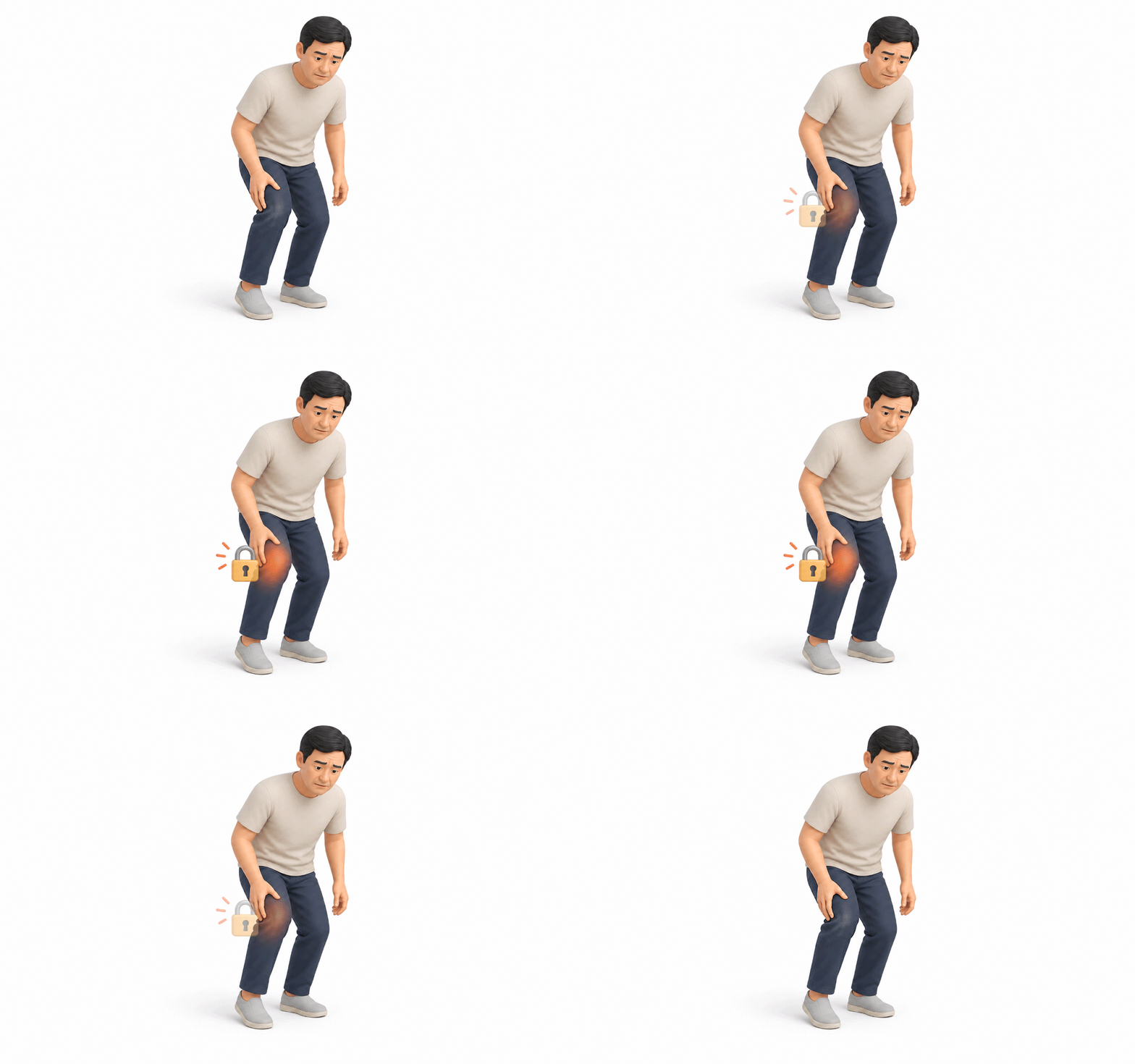
A typical situation where surgery is considered earlier is when a torn meniscal fragment gets caught between joint surfaces, causing true locking—meaning the knee cannot fully straighten or bend. Clicking sounds when going up or down stairs, or a mild catching sensation, should be distinguished from true locking.
True locking is when the knee gets stuck at a specific angle and you cannot move it further using your own strength. If a displaced tear causes the fragment to move out of place and continuously irritate normal cartilage, wear may accelerate. If swelling and motion restriction are clearly present right after trauma, it’s advisable to get an early surgical evaluation, often via arthroscopy.
3. Why is conservative treatment recommended first for degenerative tears?
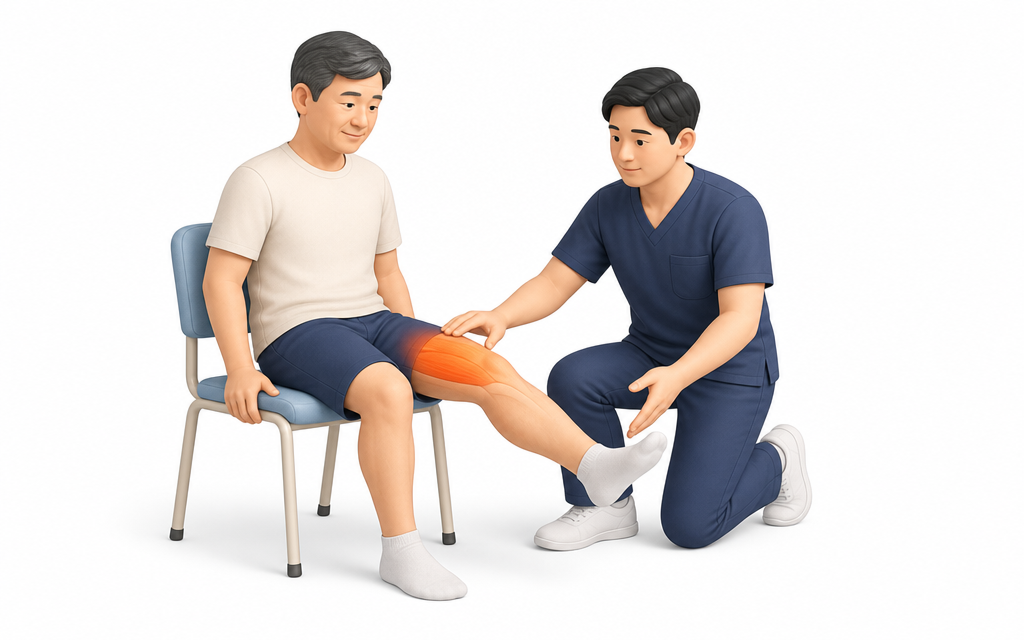
For degenerative tears in people aged 40–60 without mechanical locking or instability, starting with exercise- and rehab-centered conservative treatment aligns with Korean and international evidence. Large randomized controlled trials found that in patients without locking, conservative treatment and arthroscopic partial meniscectomy (APM) did not show a clear difference in long-term functional improvement at 5 years.
With degenerative tears, strengthening the quadriceps (front thigh) to distribute load across the knee can be more beneficial long term than immediately removing meniscal tissue. The goal of conservative care is not to “reattach” the meniscus, but to reduce pain and extend joint longevity by improving surrounding strength. Following clinical guidance, continuing rehabilitation for around 3 months and monitoring progress is recommended.
4. How are meniscectomy and meniscal repair different?
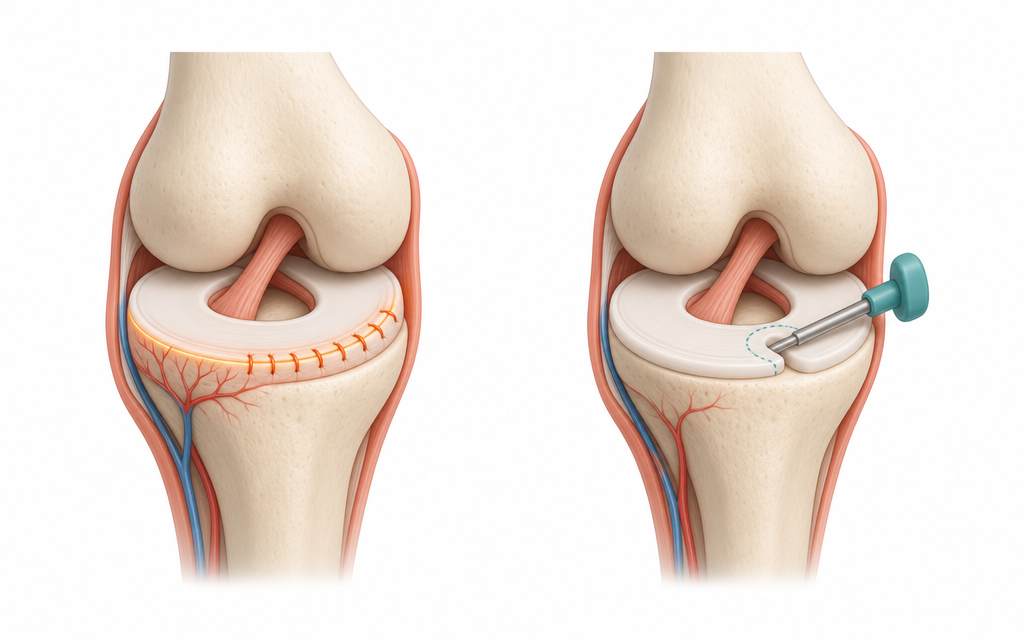
Even when surgery is needed, arthroscopic partial meniscectomy and meniscal repair differ in purpose and indications. Recent treatment principles prioritize preserving the meniscus when possible to protect the joint long term—considering repair first when feasible, and removing only the necessary portion when repair is difficult.
The surgical approach depends on blood supply to the tear location.
✅ Surgical approach based on blood supply
- Meniscal repair: Typically attempted for tears in the outer, well-vascularized “red zone,” where healing potential is higher, or for fresh traumatic tears with clean tear edges.
- Arthroscopic partial meniscectomy: Performed to reduce pain sources when the tear is in the inner, avascular “white zone,” or in broad, worn chronic degenerative tears.
As the amount of meniscus removed increases, pressure on the knee joint can rise, potentially increasing the risk of osteoarthritis progression later. A conservative surgical plan tailored to the cartilage condition is therefore important.
5. How does the stage of osteoarthritis affect the decision for surgery?
If osteoarthritis is significantly advanced, it becomes important to determine whether the main pain driver is the meniscal tear or overall cartilage wear. In severe degenerative osteoarthritis with narrowed joint space (KL grade 4), removing only part of the torn meniscus may not reduce pain as much as expected.
Korea’s Health Insurance Review & Assessment Service (HIRA) reimbursement criteria also apply strict standards for coverage of arthroscopic surgery for simple meniscal tears accompanied by severe osteoarthritis. When osteoarthritis is advanced, it’s important not to focus only on meniscus surgery, but also to check leg alignment and review conservative strategies to manage osteoarthritis itself. Treatment should be selected step-by-step based on age and the degree of joint wear.
6. Frequently Asked Questions (FAQ)
Q. How long should I try conservative treatment before discussing surgery?
For degenerative tears without mechanical locking, response is typically evaluated after continuing rehab exercises and conservative care for around 3 months. If pain and functional limitation do not improve, or daily life is significantly restricted, discuss whether to transition to surgery with your clinician.
Q. If my knee makes clicking sounds, do I need surgery?
Intermittent clicking or mild friction sensations are not direct criteria for deciding on surgery. Locking used as a surgical criterion refers to the knee becoming physically stuck at a certain angle and unable to straighten.
Q. How is rehabilitation different between partial meniscectomy and repair?
With partial meniscectomy, the damaged area is trimmed, so returning to normal walking is often possible relatively early—around 2 weeks after surgery. With repair, the tissue must be protected until it heals firmly, so depending on the case, a brace and crutches may be needed for about 6–8 weeks.
Q. If osteoarthritis is severe, will meniscus-only surgery eliminate the pain?
In advanced osteoarthritis with substantial cartilage loss, pain improvement from meniscectomy alone may be limited. The pain may be more likely due to osteoarthritis itself, and excessive removal can increase load and potentially accelerate osteoarthritis progression—so a cautious approach is needed.
This health content has been reviewed by medical professionals, compiled from authoritative domestic and international sources, and is regularly updated in accordance with the latest clinical guidelines.
Sources
- Korea Disease Control and Prevention Agency (KDCA), National Health Information Portal: Health information on meniscal tears (2021)
- Korean Orthopaedic Association, Guideline for knee meniscus injuries (2022)
- JAMA Network Open, ESCAPE Trial 5-year follow-up report (2022)
※ The copyright for all content on this blog belongs to medihi. Unauthorized copying, distribution, or derivative use is strictly prohibited, and violations may result in legal action without prior notice.