

In This Article
In chronic low back pain management, what matters is not just the structure of bones, discs, or joints, but understanding changes in the nervous system that perceives and regulates pain. A lack of visible damage does not mean a patient’s suffering is “fake.” This post explains why pain can persist even when tests show no clear abnormalities, and summarizes practical medical criteria clinicians use to evaluate the situation and choose the right next steps.
1. Why does pain persist even when the MRI looks normal?
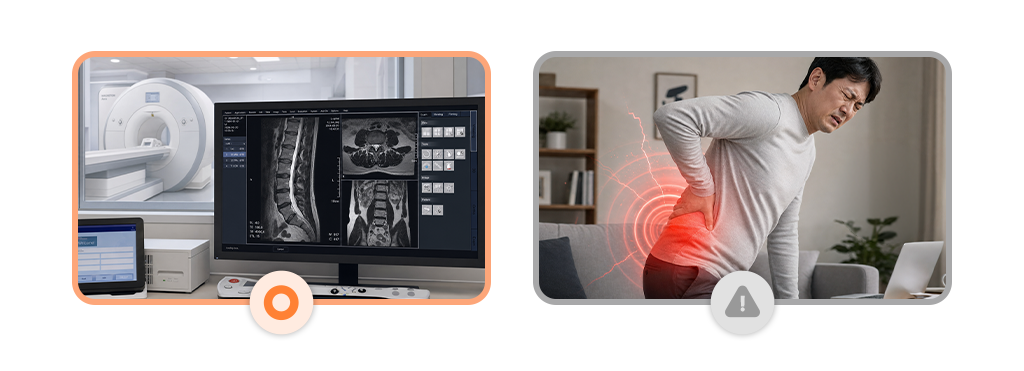
To understand pain, it helps to compare the nervous system to a fire alarm. If you strain your back or develop inflammation, the alarm sounding is a normal response to tissue injury. But if the situation continues for more than three months, the “fire” in the tissues may already be out—yet the alarm can keep blaring because the system has become overly sensitive.
Medically, this is called central sensitization: the spinal cord and brain become more sensitive in how they process pain signals. An MRI is like a photo of a building’s framework—it can show bones and discs, but it cannot show how sensitive the nervous system has become or whether the “alarm system” is misfiring. That’s why chronic pain driven by nervous system hypersensitivity can remain active even when imaging does not reveal a clear structural cause.
2. How do pain patterns affect evaluation and treatment priorities?
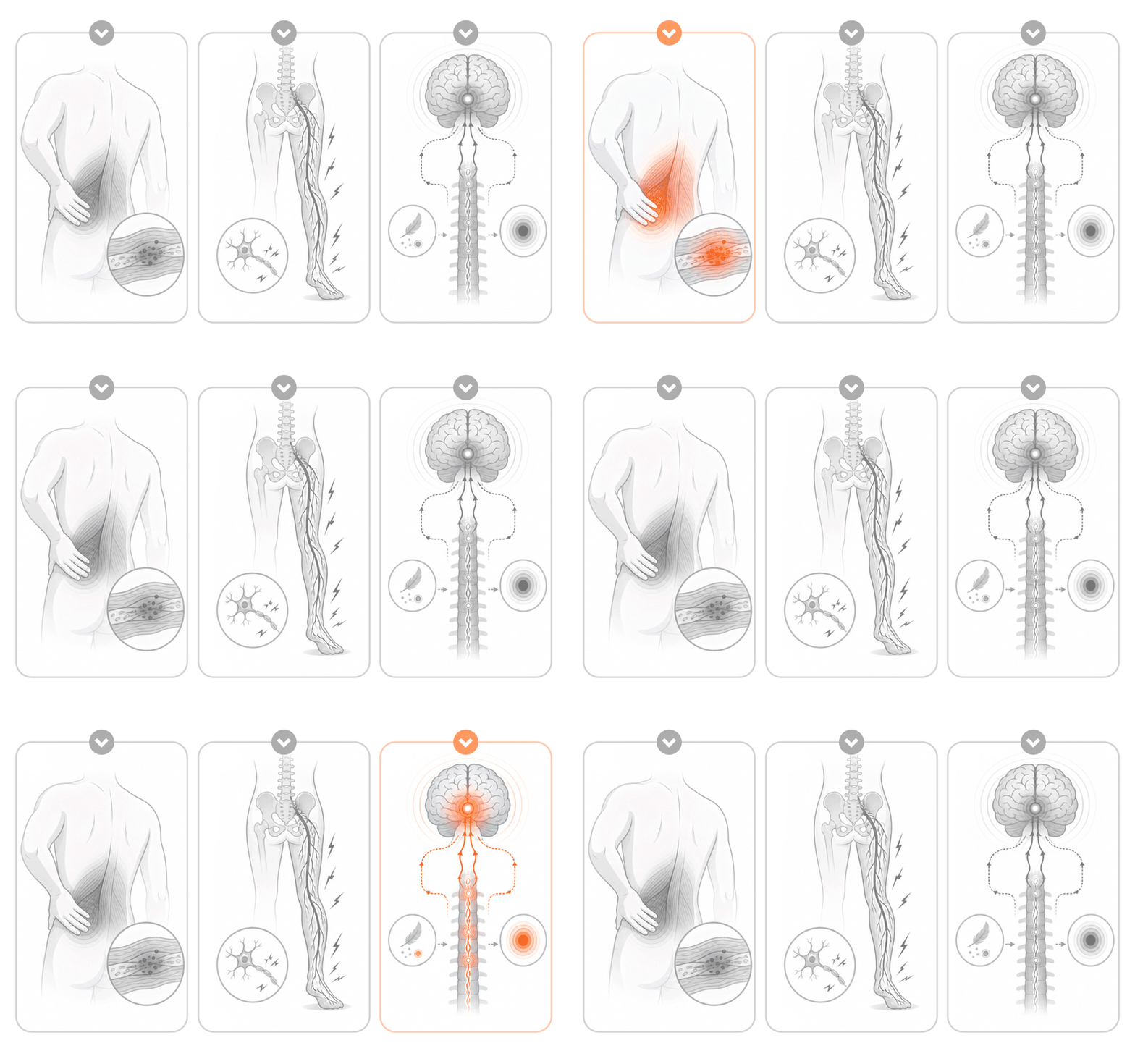
Chronic low back pain management depends on which mechanisms are driving the pain. In many people, multiple mechanisms overlap rather than one single isolated cause.
✅Key pain mechanisms
- Tissue-driven (nociceptive pain): Pain related to peripheral tissue irritation or injury, such as inflammation.
- Nerve-driven (neuropathic pain): Pain caused by nerve involvement, often described as radiating pain down the leg, numbness, tingling, or burning sensations.
- Over-sensitized pain regulation (nociplastic pain): A state where the nervous system becomes more reactive and amplifies pain even without clear tissue damage.
If radiating leg pain or noticeable (especially progressive) muscle weakness is present, a neuropathic component may be involved. In that case, a neurological examination is important, and selective additional testing may be considered based on findings. On the other hand, if there is no clear sign of nerve compression but the entire lower back feels diffusely sore, stiff, or achy, a nociplastic component may also be contributing.
In these situations, repeatedly relying on injections into bones or joints is unlikely to serve as a durable long-term plan. Rather than self-diagnosing, it is preferable to undergo a careful clinical evaluation and follow a strategy centered on functional recovery—maintaining gradual, structured activity as tolerated.
3. Why is avoiding physical activity due to pain disadvantageous?
In the early acute phase, some rest can help. But once pain becomes chronic, excessive bed rest can delay recovery. Avoiding even everyday activities out of fear of pain is known as a fear-avoidance response.
When you stop moving, the strength and flexibility of the muscles that support the lumbar spine can decline significantly. As the back becomes deconditioned, even light daily movements can feel more demanding, which increases strain and can trigger more pain—creating a vicious cycle.
If serious red flags have been ruled out, gradually maintaining walking or structured exercise within a tolerable range is a key strategy for breaking prolonged pain and rebuilding function.
4. When should you avoid rushing into injections, procedures, or surgery?

If there are clear red flags—such as suspected infection, tumor, fracture, or bowel/bladder dysfunction—prompt invasive evaluation and surgical treatment may be necessary. However, outside of these exceptional and clear indications, surgery or repeated procedures are not typically the first-line choice for non-specific chronic low back pain.
When pain lasts a long time, it’s understandable to want a strong physical intervention to suppress symptoms quickly, but such approaches are often temporary measures if the underlying pain-processing sensitivity and functional decline are not addressed.
Medications are generally safer when used short-term, mainly to support participation in rehabilitation and daily activity. Instead of focusing on a single method to erase pain all at once, it is usually more effective to focus on a step-by-step process of restoring daily function.
5. How do psychological factors amplify low back pain?
Physical pain and psychological state are not separate. Psychosocial factors are deeply connected to chronic pain mechanisms and can strongly influence pain modulation.
When severe pain continues for a long time, sleep quality often declines, and depression or anxiety can increase. These negative emotional states can weaken the brain circuits that normally suppress and filter pain signals. As a result, even mild stimuli that would typically be ignored can feel much more painful, placing extra load on the brain’s pain regulation system.
For this reason, relying only on physical therapy may be insufficient for some patients. Combining rehabilitation with psychological interventions—especially those addressing sleep, fear of movement, and emotional distress—can be an important part of comprehensive care.
6. Frequently Asked Questions (FAQ)
Q. My MRI is said to be close to normal—why does the pain keep going?
Imaging tests mainly show structures like bones and discs. But chronic low back pain can involve nervous system hypersensitivity that amplifies pain signals. So even if MRI findings look normal, pain can still persist due to changes in how the nervous system processes pain.
Q. What should I do if radiating pain or leg tingling is present?
If low back pain is accompanied by tingling that radiates down the leg or progressive muscle weakness, a neurological exam should be prioritized. If red flags such as bowel/bladder control problems or fever are present, selective advanced testing should be considered promptly.
Q. Walking or exercising makes the pain flare up—should I still continue?
If serious causes have been ruled out by a clinician, excessive bed rest can weaken supporting muscles and delay recovery. Continuing activity within a tolerable range—without overexertion—tends to be more favorable for long-term functional recovery.
Q. How can cognitive behavioral therapy (CBT) help with low back pain?
CBT can help reduce fear of pain and avoidance behaviors, improving confidence and self-efficacy around movement. When structured rehabilitation exercise is combined with psychological intervention, pain sensitivity may decrease and return to daily life may become faster.
This health content has been reviewed by medical professionals, compiled from authoritative domestic and international sources, and is regularly updated in accordance with the latest clinical guidelines.
Sources
- Korea Disease Control and Prevention Agency (KDCA) National Health Information Portal, health information on low back pain
- Annals of Rehabilitation Medicine, 만성 요통의 재활·운동 중재 관련 문헌
- World Health Organization (WHO), Guideline for non-surgical management of chronic primary low back pain in adults in primary and community care settings, 2023.
※ The copyright for all content on this blog belongs to medihi. Unauthorized copying, distribution, or derivative use is strictly prohibited, and violations may result in legal action without prior notice.