

In This Article
When low back pain starts, it’s easy to wonder whether you should get an expensive MRI right away. However, the timing of imaging isn’t determined by pain intensity alone—it should be decided by considering red-flag symptoms and how you respond to treatment. Below is a practical guide to when to consider a lumbar spine MRI and how to check whether it may be covered by Korea’s National Health Insurance.
1. If You Have Low Back Pain, Should You Get an MRI First?
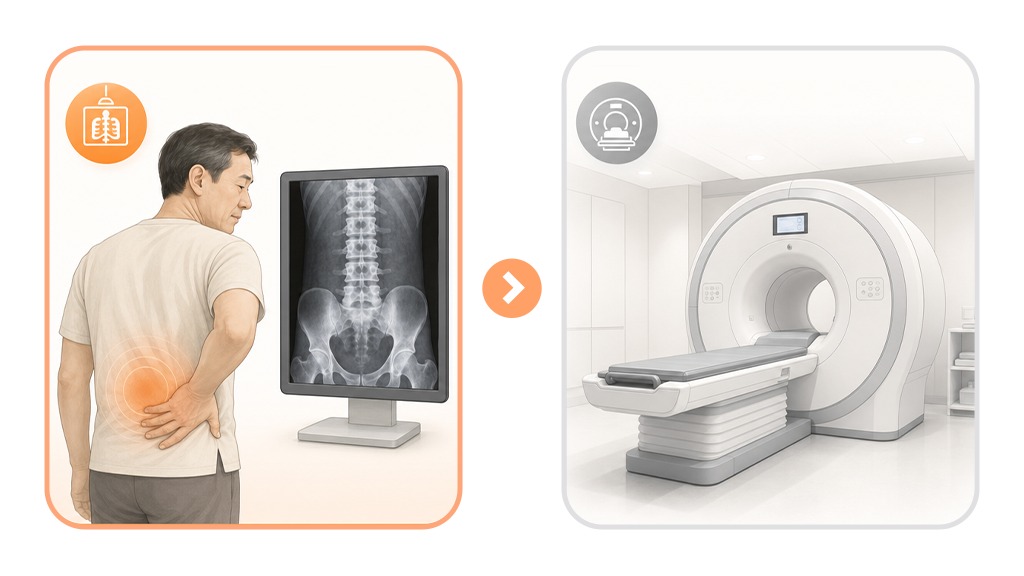
If you have acute low back pain without a clear injury (trauma) or severe neurologic deficits, it may be reasonable to start with a basic clinical evaluation and simple imaging rather than getting an MRI immediately. When there are no red flags, a common approach is to begin conservative treatment and monitor how symptoms evolve.
X-rays help assess the overall alignment and bony structure of the spine, while MRI provides a more detailed view of nerves and surrounding soft tissues. If a fracture or a clear structural abnormality is not suspected, you can continue treatments such as medication or physical therapy and observe symptom changes for about 4–6 weeks.
During this period, it’s important to track not only pain severity but also changes in daily function. If movement becomes easier and pain is trending down, continued observation may be appropriate. On the other hand, if pain worsens even with rest or walking becomes difficult, the need for imaging can be reassessed.
2. What Signs Suggest You Should Consider an MRI Earlier?
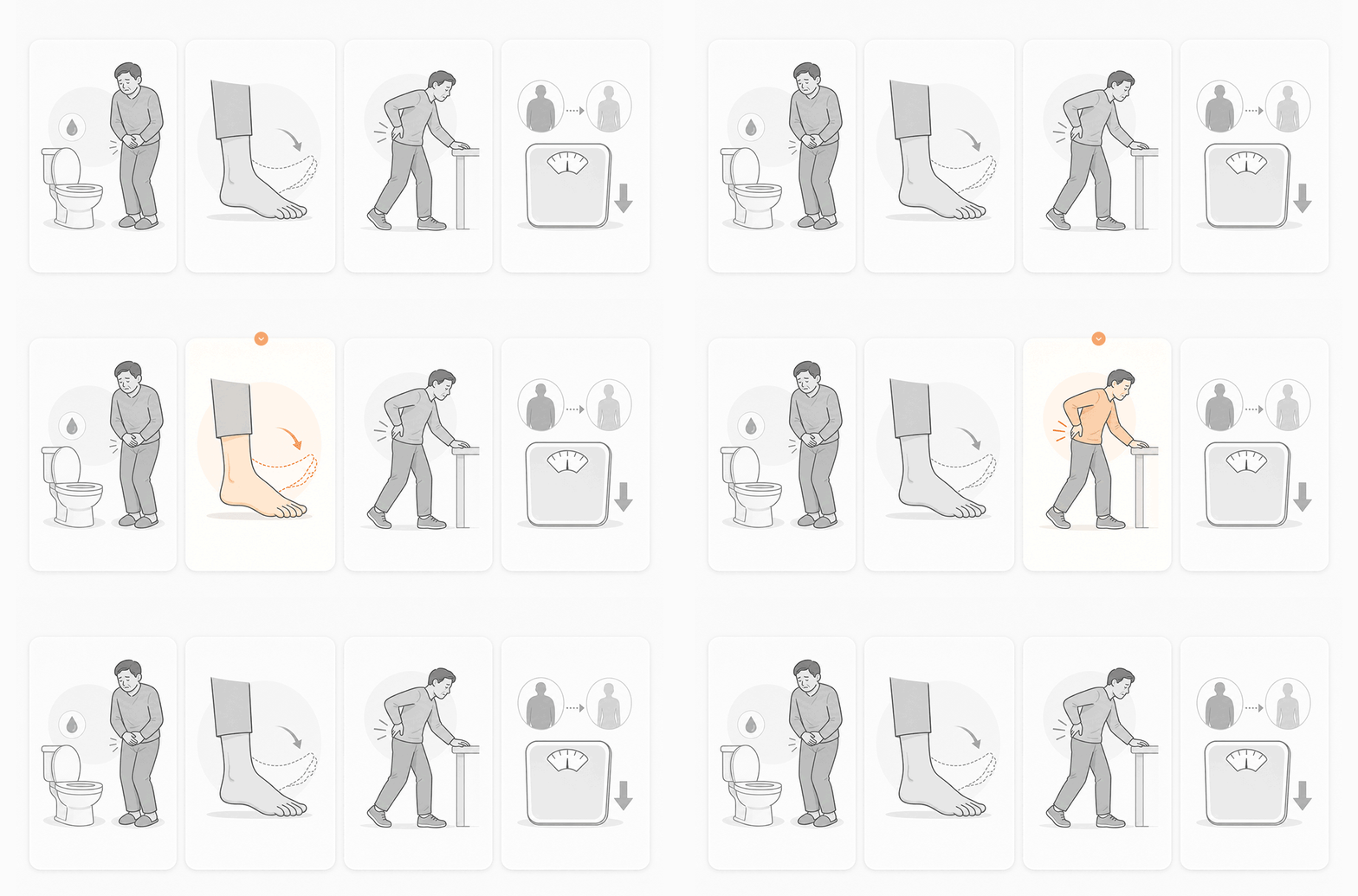
An MRI may be considered relatively early when red-flag signs appear—signals that raise concern for nerve involvement or problems within the spine. Rather than focusing only on “how severe the pain is,” clinicians also look for neurologic changes and systemic symptoms.
✅Signs that may warrant prompt, more detailed evaluation
- Sudden difficulty controlling urination or bowel movements, or clearly reduced sensation around the buttocks/saddle area
- Leg weakness, difficulty lifting the ankle/foot, or a noticeable change or deterioration in walking pattern
- Radiating leg pain accompanied by weakness or gait disturbance that is rapidly worsening
- Significant unexplained weight loss, or worsening back pain along with fever
If these symptoms are suspected, a clinical exam and neurologic assessment should come first. Depending on the findings, imaging—including MRI—may be arranged relatively quickly. If none of these signs are present, you may continue conservative treatment for about 4–6 weeks while monitoring changes.
3. Is an Earlier MRI More Accurate?
MRI shows internal structures in detail, but changes seen on imaging do not always match the true cause of your current pain. Even adults without back pain may show age-related structural changes in the spine on imaging.
It can be difficult to conclude that an unfamiliar term on the report is the definite cause of your symptoms. Imaging findings should be interpreted together with your pain pattern, whether there is weakness, and how well you can walk and function. Overemphasizing imaging findings that don’t match symptoms can increase anxiety or lead to interventions that may not be necessary.
Rather than focusing on getting the test as early as possible, it’s more important to consider whether the result is needed to guide your current treatment plan. If symptoms and daily function are improving with treatment, the need for an immediate MRI may be lower. If symptoms worsen or neurologic changes appear, advanced imaging can be useful for decision-making.
4. Is a Lumbar Spine MRI Covered by Health Insurance?
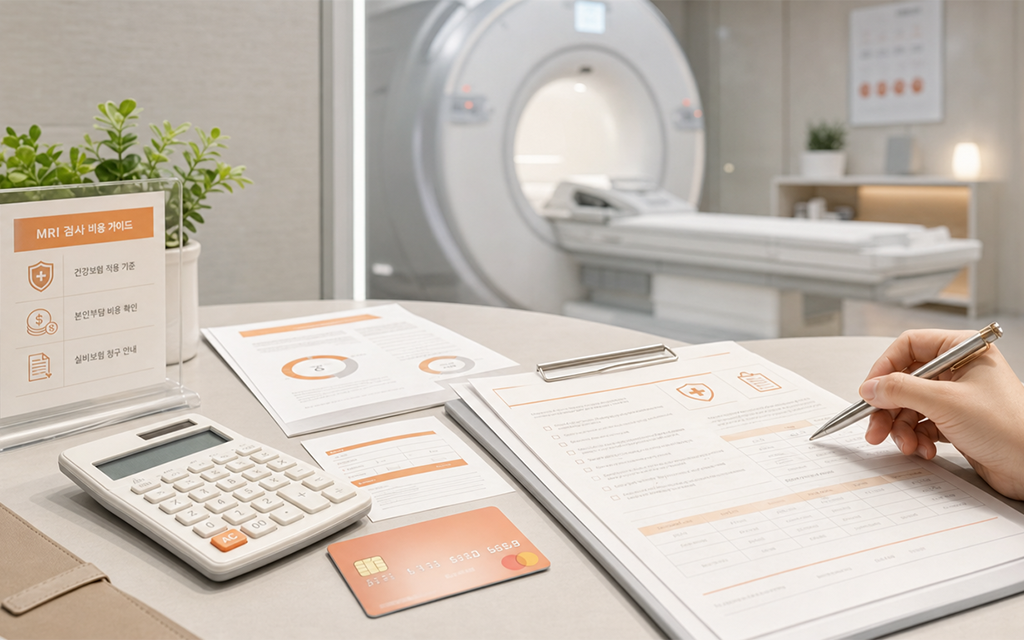
A lumbar spine MRI is not automatically covered by National Health Insurance simply because your back hurts. Coverage can vary depending on your condition—for example, whether objective neurologic abnormalities are documented on exam, or whether cancer, infection, or fracture is suspected.
If objective neurologic abnormalities are confirmed, or if cancer, infection, or fracture is strongly suspected, the MRI may be covered. In contrast, degenerative spine disease without clear objective findings, or low back pain with an unclear cause, may be processed as selective coverage (partial coverage) or non-covered (out-of-pocket).
Because coverage criteria and documentation requirements can change, it’s a good idea to confirm eligibility before the scan.
✅What to check when estimating costs
- Whether National Health Insurance coverage is likely to apply
- Whether contrast will be used
- The scan range and whether the radiology interpretation (reading) fee is included
Medical necessity and insurance coverage are separate issues. During your visit, it helps to explain specifically when the pain started, how it has changed, and whether you have symptoms such as leg weakness.
5. How Should You Decide the Timing of an MRI?
One practical standard is whether the MRI result is likely to change your current treatment plan. Rather than deciding based on price alone, it’s more appropriate to consider symptom trends and response to treatment.
If pain is decreasing and daily function is improving with medication or physical therapy, you may be able to continue observation. If you’ve had about 4–6 weeks of treatment but pain does not improve or worsens, and there are changes in walking or strength, you can discuss the need for a more detailed evaluation with your clinician.
An MRI is not a test that must be done immediately whenever your back hurts. The key is to consider red flags, your response to conservative treatment, and whether imaging results will affect the treatment plan.
6. Frequently Asked Questions (FAQ)
Q. If low back pain lasts for more than a few weeks, when can I consider an MRI?
If there are no red flags, you can usually continue conservative treatment for about 4–6 weeks while monitoring progress. If you don’t improve after that period or symptoms worsen, you can discuss whether a detailed evaluation is needed.
Q. Why can lumbar spine MRI costs differ by hospital?
Costs can vary depending on whether insurance coverage applies, whether contrast is used, the scan range, and whether the interpretation fee is included. If the scan is non-covered, prices may also differ by facility.
Q. If I have leg tingling, is it automatically covered by insurance?
It’s difficult to determine coverage based on tingling alone. Clinicians also consider whether objective neurologic abnormalities—such as weakness or sensory changes—are confirmed on exam.
Q. What symptoms mean I should seek care sooner?
If you have difficulty controlling urination or bowel movements, reduced sensation around the buttocks/saddle area, progressive weakness, or gait disturbance, it’s best to seek evaluation promptly. Unexplained weight loss or fever along with worsening low back pain also warrants assessment.
This health content has been reviewed by medical professionals, compiled from authoritative domestic and international sources, and is regularly updated in accordance with the latest clinical guidelines.
Sources
- Korean Society of Radiology and related research organizations, *Guidelines for the Justification of Imaging Examinations*, 2019
- Health Insurance Review & Assessment Service (HIRA), Coverage criteria for spine MRI
- The association between early MRI and length of disability in acute lower back pain, BMC Musculoskeletal Disorders, 2021
※ The copyright for all content on this blog belongs to medihi. Unauthorized copying, distribution, or derivative use is strictly prohibited, and violations may result in legal action without prior notice.