

In This Article
The most important factor in deciding on lumbar spine disc surgery is not the size of the disc on MRI, but how much your nerve is actually being compressed—and whether neurological deficits such as numbness or weakness (paralysis-like symptoms) are appearing. This article summarizes practical criteria for when it’s reasonable to continue treatment and monitor progress, and which warning signs mean you should seriously consider surgery.
1. Are the criteria for lumbar disc surgery based on MRI results?
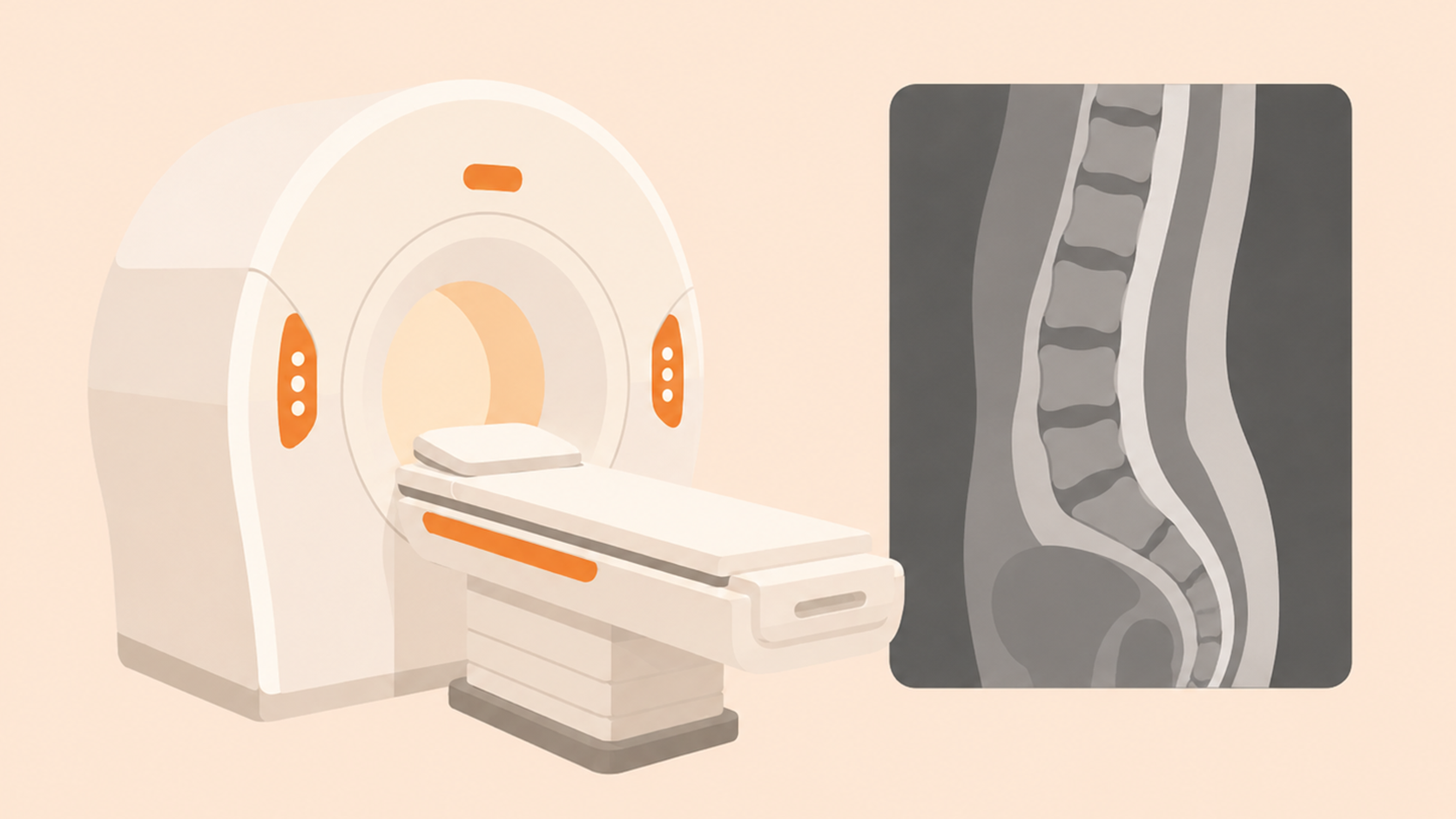
Whether you need lumbar disc surgery depends far more on real-world leg weakness/numbness and the presence of neurological deficits than on the disc’s size on MRI. Even if imaging shows a large herniation, non-surgical treatment is generally the first-line approach if there is no sensory loss or loss of strength.
✅Three neurological criteria used to decide on surgery
- Muscle weakness: Check for signs of nerve paralysis such as inability to push with the toes or difficulty lifting the ankle upward (foot dorsiflexion).
- Match between MRI level and pain distribution: Confirm that the compressed level seen on imaging aligns with the actual nerve pathway where the patient feels radiating pain or tingling in the leg.
- Reflex testing: Along with reduced sensation, assess whether reflexes (such as knee-jerk or ankle reflex) appear normally when tested.
2. What symptoms should be treated as an emergency?
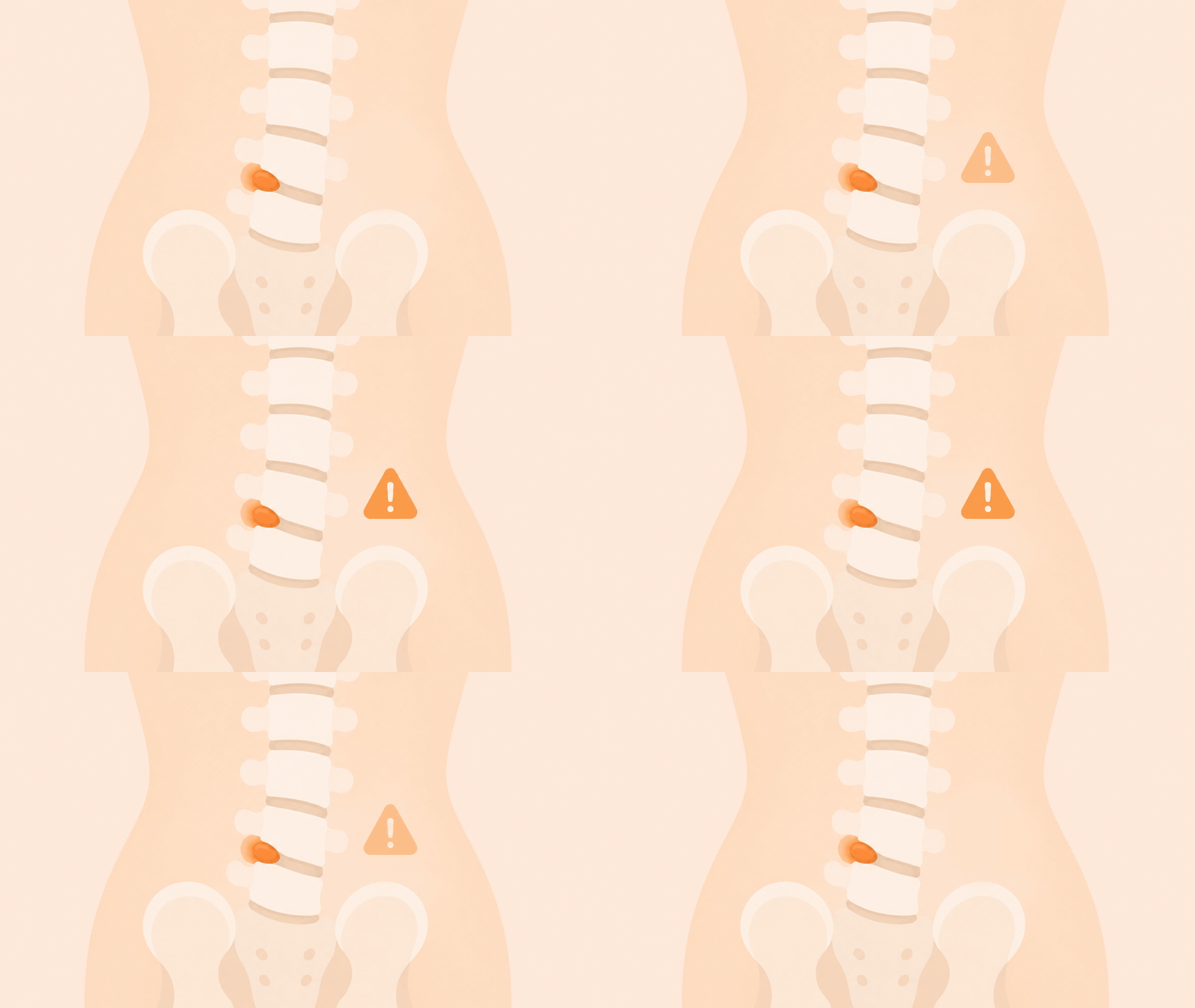
If leg paralysis is progressively worsening, or if sudden bladder/bowel dysfunction occurs, this may be an emergency that requires immediate evaluation and action. In particular, it may indicate cauda equina syndrome, where the bundle of nerves at the lower end of the spine is strongly compressed all at once—generally considered beyond the limits of non-surgical conservative care.
Rather than deciding on emergency surgery based only on severe back pain, the key is whether actual nerve function is declining. Typical warning signs include difficulty urinating, involuntary leakage (bladder/bowel dysfunction), reduced sensation in the perineal area and inner thighs, and worsening motor weakness such as the ankle “dropping” and frequent tripping while walking.
3. How long should conservative treatment be continued?
If there are no emergency red flags such as severe paralysis or bladder/bowel dysfunction, a safer approach is to start with 4–6 weeks of non-surgical conservative treatment and then reassess. Depending on the patient’s condition, the possibility of natural improvement over 2–3 months may also be considered—so rather than simply enduring pain, it’s important to track symptoms and observe changes.
Anti-inflammatory medications or nerve block injections may be used to control inflammation and pain around the nerve, alongside light physical therapy, manual therapy, and lifestyle adjustments. Record changes such as how long you can walk, whether you can stand on your toes, and how far the tingling travels down the leg, and bring these notes to your appointment. If leg strength suddenly worsens during treatment or symptoms deteriorate to the point that daily life becomes difficult, you should be re-evaluated.
4. Endoscopic vs. microscopic surgery—what’s the difference?
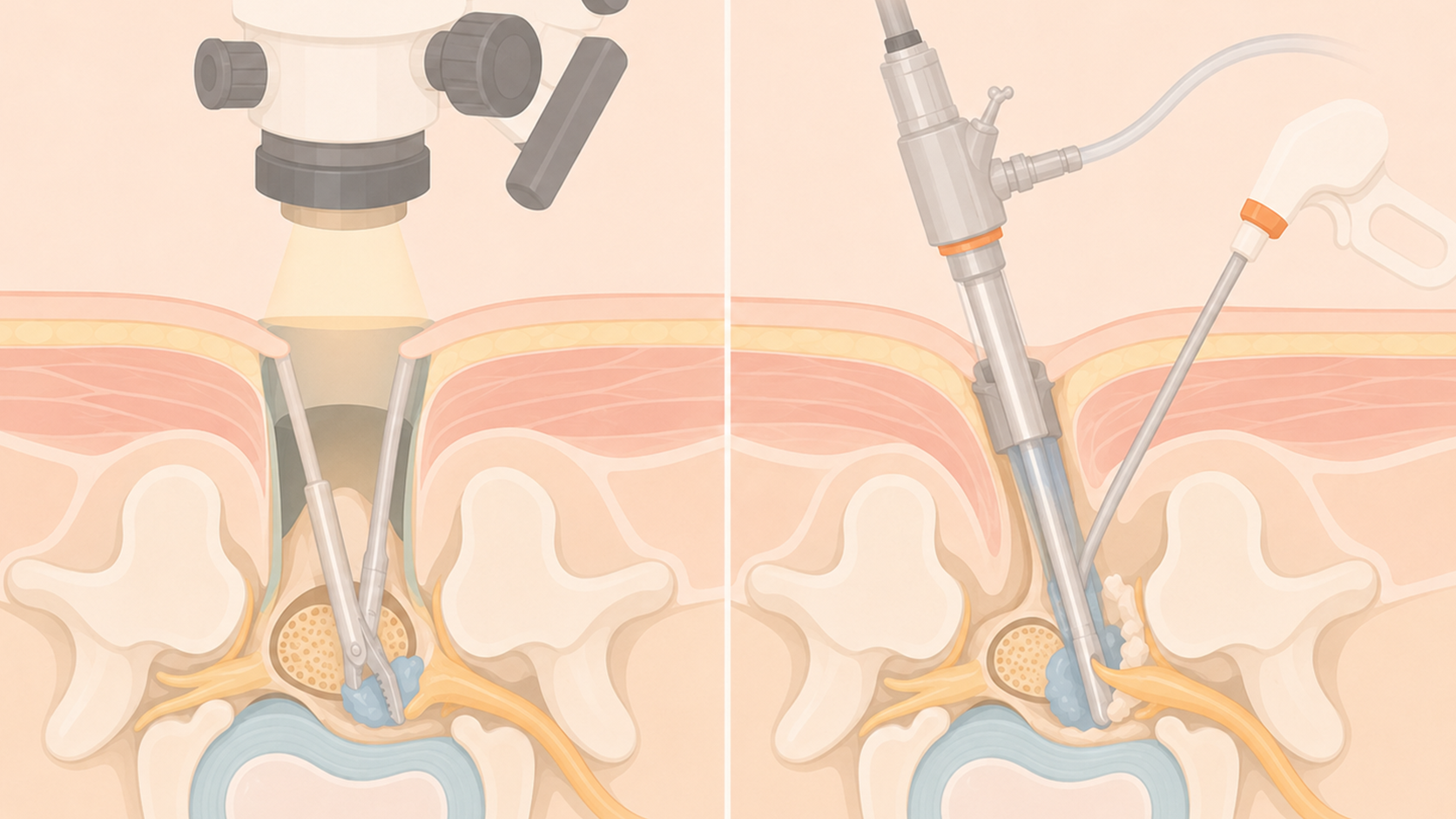
Endoscopic decompression and microscopic disc removal differ mainly in the surgical approach through the skin, but both are incisional surgeries, and overall clinical outcomes are generally reported to be similar. In both methods, the shared goal is to selectively remove the herniated disc fragment to reduce nerve compression.
Microscopic discectomy is a standard technique that magnifies the surgical field and can be applied to many disc types. Endoscopic nerve decompression approaches through a very small opening and may reduce muscle damage and postoperative pain, but it can be more challenging for very hard lesions or unusually located pathology. Rather than focusing only on “success rates,” the most suitable method depends on factors such as the direction of herniation, age-related spinal changes, potential complications, and the surgeon’s experience.
5. When is spinal fusion necessary?
Spinal fusion is not a standard surgical option for typical lumbar disc patients; it is considered only under limited conditions, such as significant segmental instability.
A simple discectomy removes only the protruding fragment compressing the nerve, whereas fusion removes the disc between vertebrae and stabilizes the segment with screws and a cage—making the surgical extent and recovery burden much greater. Even under Korea’s national health insurance coverage criteria, fusion is applied only exceptionally after strict evaluation when severe vertebral slippage or deformity is present.
6. Frequently Asked Questions (FAQ)
Q. How can I tell whether my condition is an emergency that requires immediate surgery?
If you do not have symptoms such as bladder/bowel leakage, numbness around the groin area, or weakness that reduces your ability to move your toes, it is generally not an immediate emergency. Even if pain is severe, if walking function is intact, it is often reasonable to try medication and injection-based treatment first for 4–6 weeks.
Q. My pain is unbearable—do I have to just endure four weeks no matter what?
No. The core of conservative treatment is controlling pain with nerve injections or medications while giving your body time to naturally resorb the herniated disc material.
Q. If I have surgery to remove the disc, is there no risk of recurrence?
Even after surgery, the remaining disc can re-herniate at the same level, with reported rates of roughly 5–15%. After surgery, it’s still important to correct habits such as bending or twisting the lower back and to pay attention to weight management.
Q. What should I make sure to ask my doctor during a visit?
Confirm whether the level of disc herniation on MRI matches the area of leg pain you actually feel. If you start with non-surgical treatment, it’s also helpful to set clear criteria in advance for when surgery should be reconsidered.
This health content has been reviewed by medical professionals, compiled from authoritative domestic and international sources, and is regularly updated in accordance with the latest clinical guidelines.
Sources
- Korean Spinal Neurosurgery Society, Prognostic analysis of revision surgery (Kyu-Yeol Lee et al.), Journal of Korean Spinal Neurosurgery Society, 2007
- Korean Neurosurgical Society, Recurrent lumbar disc herniation risk factors (Kim et al.), Journal of Korean Neurosurgical Society, 2025
- Liu et al., Surgical vs non-surgical management for sciatica, BMJ, 2023
※ The copyright for all content on this blog belongs to medihi. Unauthorized copying, distribution, or derivative use is strictly prohibited, and violations may result in legal action without prior notice.