

In This Article
When your face suddenly feels flushed and your heart starts racing, it’s easy to feel anxious—unsure whether it’s a menopause symptom or a different health issue. Heat sensations and palpitations are common changes during menopause, but palpitations in particular should be approached more safely by also checking internal-medicine causes such as heart rhythm issues or the thyroid. Let’s walk through what menopause acupuncture can realistically help with, and review the evidence step by step.
1. Menopausal palpitations: the first step toward safe management
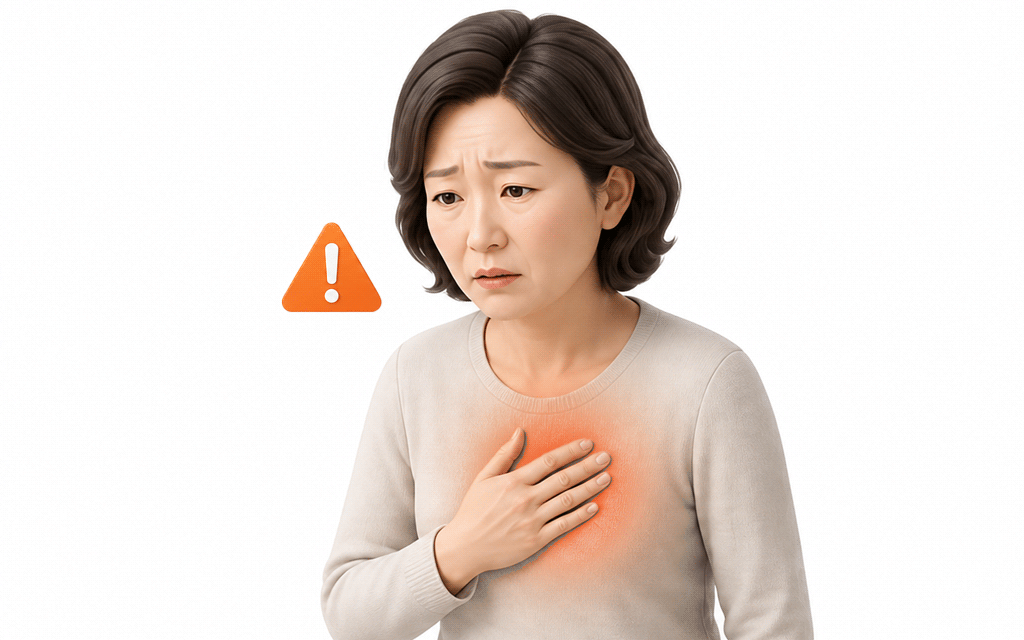
Chest palpitations often occur due to hormonal imbalance during menopause, but there is also a possibility that internal-medicine factors—such as arrhythmia or hyperthyroidism—may be contributing. If you first confirm whether there is an underlying condition through tests like an ECG or thyroid function testing, you can begin Korean medicine treatment with greater peace of mind.
In particular, if palpitations are accompanied by chest pain, shortness of breath, or dizziness, prompt evaluation by an internal-medicine clinician should come first. After confirming there is no physical abnormality, the most ideal sequence to protect both body and mind is to manage triggers such as caffeine and stress while combining them with personalized acupuncture.
2. The value of acupuncture as reflected in domestic and international guidelines
Acupuncture for vasomotor symptoms such as hot flashes is being used in various ways tailored to each patient’s situation. The Korean Medicine Clinical Practice Guideline (2021) actively presents acupuncture as one of the safe and useful adjunctive therapies for relieving menopausal hot flashes.
Some overseas society guidelines, including those from The North American Menopause Society (NAMS), may take a cautious stance by applying strict clinical data standards depending on study conditions—but this does not completely deny the potential of treatment. For those who have difficulty using hormone therapy or are concerned about side effects, acupuncture can be a helpful nonhormonal option to consider.
3. Practical changes shown in acupuncture research
According to multiple clinical studies, compared with groups that only practiced general lifestyle management, groups that consistently combined acupuncture tended to show greater improvements in hot-flash indices and quality of life.
Of course, in sham-acupuncture controlled studies designed to account for placebo effects, differences depending on setting have also been reported. Still, in real-world clinical practice, the overall improvement in condition and the relief of itching and heat sensations that acupuncture can provide offers meaningful comfort for many patients. Rather than aiming for complete symptom disappearance, satisfaction tends to be higher when acupuncture is used as a gentle, symptom-relief approach that helps restore balance and minimize disruption to daily life.
4. Proper use of standard acupuncture and pharmacopuncture
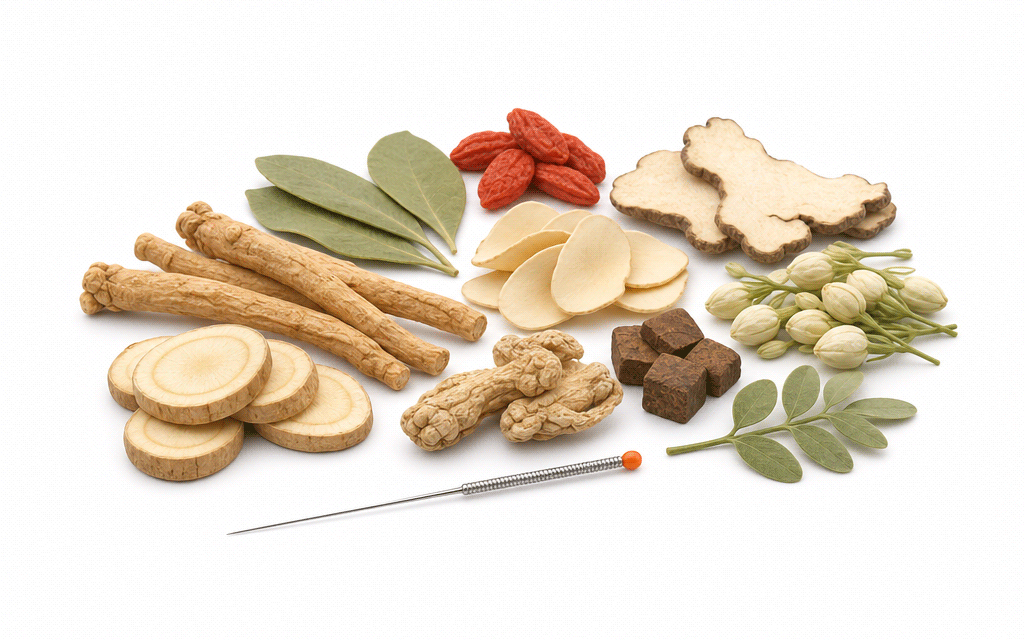
Pharmacopuncture, which involves injecting herbal extracts into acupuncture points, is a procedure that adds the benefits of herbal medicine to traditional acupuncture. However, in the area of menopausal hot flashes, the latest clinical research (2022) on products such as Jaha-geo (Hominis Placenta) pharmacopuncture is still in the accumulation phase, and more data are needed compared with standard acupuncture.
Therefore, rather than viewing it as “automatically a stronger treatment,” it is more reasonable to use standard acupuncture—supported by a broader and more established evidence base—as the foundation, and then consider adding pharmacopuncture after consultation with a Korean medicine doctor based on individual constitution and symptoms.
✅What to check before pharmacopuncture
- Product quality management system: Confirm whether the source, storage, and sterile manufacturing process of the herbal extract are safely managed.
- Constitution and allergy screening: Inform the medical staff of any prior adverse reactions to injections or any unusual sensitivities.
- Disclosure of bleeding-related medications: If you have factors that affect clotting—such as taking anticoagulants—undergo a pre-procedure consultation.
5. “Heat above, cold below” and Korean medicine pattern identification
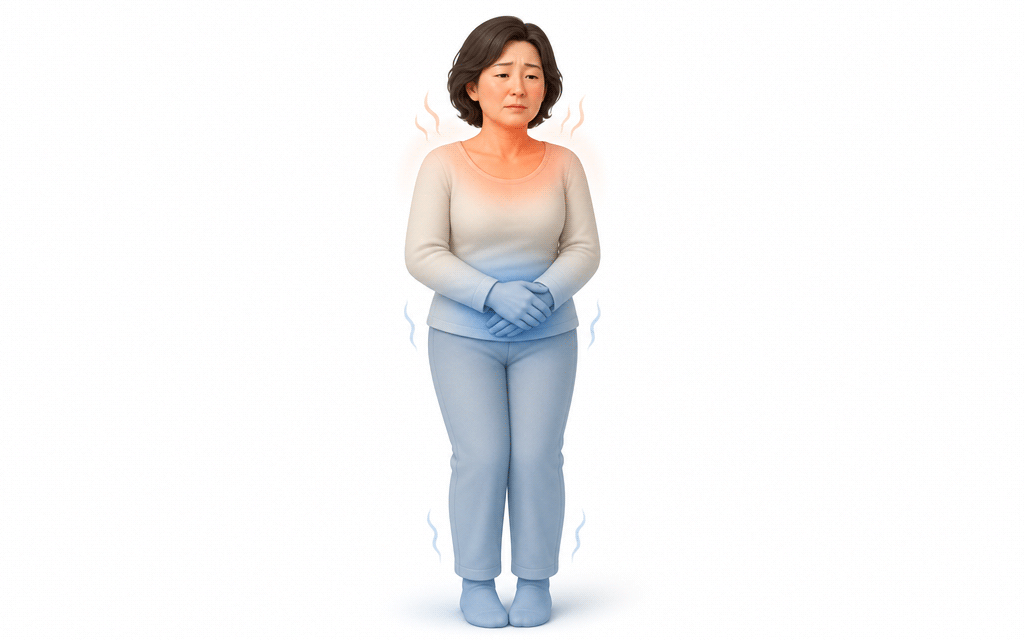
“Heat above, cold below,” where heat rises to the upper body while the lower abdomen or hands and feet feel cold, is a key pattern-identification concept in Korean medicine used to explain menopausal imbalance. It intuitively reflects that the body’s overall circulation of qi and blood and autonomic nervous system regulation have become disrupted, serving as an excellent guide for personalized acupuncture.
If modern medicine confirms structural issues through an ECG or thyroid testing, and Korean medicine addresses subtle autonomic imbalance through “heat above, cold below” pattern identification and heart rate variability (HRV) analysis, a more complete integrative management approach becomes possible. When both approaches are combined in a balanced way, menopausal health can be supported from multiple angles.
6. Frequently Asked Questions (FAQ)
Q. How strong is the evidence for acupuncture for menopausal hot flashes?
The Korean Medicine Clinical Practice Guideline suggests that acupuncture may be considered for menopausal hot flashes. However, some overseas guidelines provide limited recommendations, and because effect sizes are not consistent in sham-controlled studies, it is preferable to approach acupuncture as an adjunctive symptom-relief option rather than with excessive expectations.
Q. If I have palpitations, can I start acupuncture first?
No. If palpitations are recurrent or intensifying, you must first rule out internal-medicine underlying conditions such as arrhythmia through tests like an ECG or thyroid function testing. Only after detailed testing confirms there is no dangerous abnormality should acupuncture be planned as an adjunctive therapy for symptom management.
Q. Is it okay to combine acupuncture while on hormone therapy?
After first discussing it with the clinician who prescribed menopausal hormone therapy, you can consider whether to combine treatments—and you must not stop medication on your own. Before treatment, you should also accurately inform the Korean medicine doctor of all current medications and medical history so the plan can be closely coordinated.
Q. Does pharmacopuncture work faster and more strongly for relieving menopausal symptoms?
Not necessarily. Pharmacopuncture may help some people with symptoms such as upper-body heat sensations, palpitations, insomnia, and anxiety, but the evidence base for menopausal hot flashes is still developing compared with standard acupuncture. If you are considering pharmacopuncture, it is important to discuss expected benefits, safety controls (sterile preparation and quality management), and your medical history (including allergies and bleeding-related medications) with a qualified Korean medicine doctor.
This health content has been reviewed by medical professionals, compiled from authoritative domestic and international sources, and is regularly updated in accordance with the latest clinical guidelines.
Sources
- Korea Institute of Oriental Medicine, *Korean Medicine Clinical Practice Guideline for Menopausal Disorders and Postmenopausal Syndrome*, 2021.
- Choi Su-ji et al., “A clinical study on Jaha-geo pharmacopuncture for hot-flash relief,” *Integrative Medicine Research*, 2022.
- The North American Menopause Society (NAMS), The 2023 nonhormone therapy position statement of The North American Menopause Society, *Menopause*, 2023.
※ The copyright for all content on this blog belongs to medihi. Unauthorized copying, distribution, or derivative use is strictly prohibited, and violations may result in legal action without prior notice.