

In This Article
During menopause, multiple discomforts—such as hot flashes, insomnia, and lethargy—can appear together, so it’s important to consider both symptom patterns and your usual health condition. Even within the same menopausal transition, the main source of discomfort can differ from person to person, so Korean medicine clinics set individualized treatment goals through consultation and examination. This article summarizes Korean medicine approaches based on pattern identification–based treatment (辨證論治) and key standards for continuing treatment safely.
1. Why do menopausal symptoms differ from person to person?
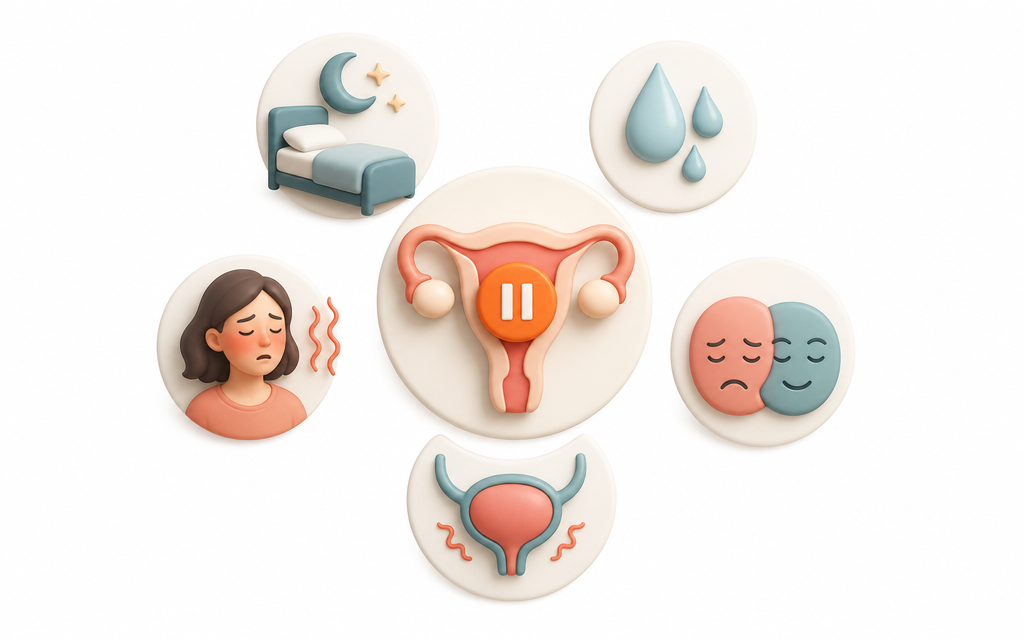
Even though declining female hormones are a shared change, symptoms can vary depending on stamina, stress levels, and sleep status. For some, hot flashes and sweating are the main issues; for others, insomnia, mood changes, or genitourinary discomfort may feel more significant.
In Korean medicine, these differences are assessed through consultation and examination using pattern identification–based treatment (辨證論治) to set individualized treatment goals. For example, someone who tends to have weak digestion and feels cold easily may complain more about indigestion or chills than heat sensations. That’s why, rather than taking the same herbal medicine that worked for someone else, it’s important to receive a prescription tailored to your own symptoms and overall condition.
2. How are Kidney Yin deficiency and Kidney Yang deficiency viewed differently?
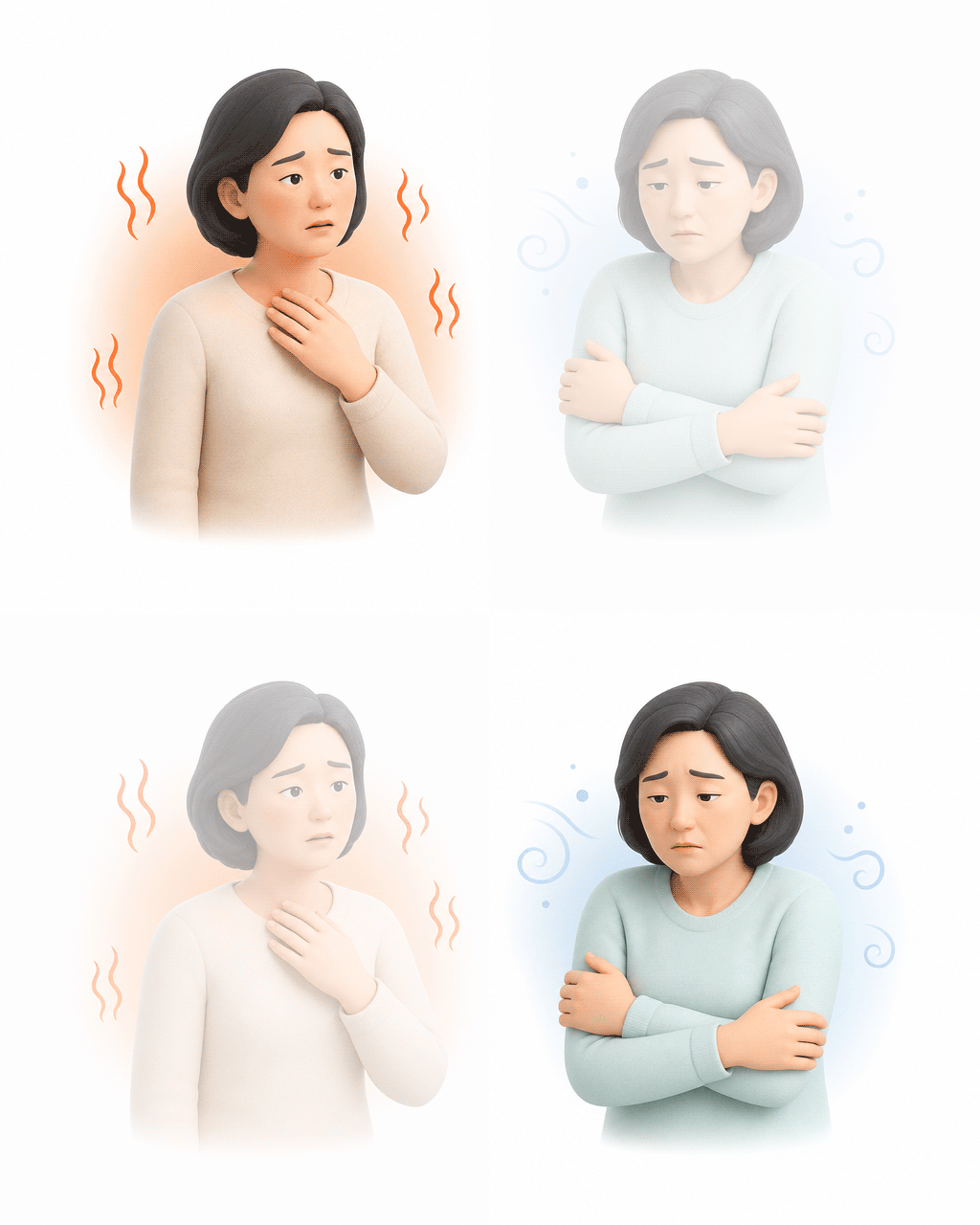
Kidney Yin deficiency and Kidney Yang deficiency are Korean medicine concepts used to describe which side of the body’s heat–energy balance is relatively lacking.
Kidney Yin deficiency is explained as a state where the body’s “moistening” (cooling and nourishing) capacity is insufficient. Heat sensations, dry mouth, and light sleep may appear together—similar to a car that overheats easily because it’s low on engine oil.
Kidney Yang deficiency refers to reduced warming capacity. Cold hands and feet, low energy, or chills can stand out—like a home that gets cold easily because the boiler flame is weak.
In Korean medicine treatment, clinicians adjust the herbal formula composition and overall treatment direction based on these symptom differences.
Acupuncture can also be used as a supportive option. Some studies have reported symptom improvement compared with no treatment, while studies comparing acupuncture with sham acupuncture have shown more limited differences. Because responses can vary, it can be helpful to monitor individual changes and adjust the treatment plan accordingly.
3. What standards are used to adjust herbal medicine prescriptions?
Korean standard clinical practice guidelines for Korean medicine in Korea present herbal medicine and acupuncture/moxibustion as options for managing menopausal symptoms. Formulas such as **Gamisoyo-san** and **Dangguiyukhuang-tang** may be considered, but they are applied after reviewing an individual’s symptom pattern, digestion, stamina, and any medications currently being taken.
Systematic reviews have reported the potential for herbal medicine and acupuncture to improve menopausal symptoms. However, because studies differ in size and methodology, it’s difficult to define one single effect size for everyone. This does not mean Korean medicine treatment should be dismissed; rather, it suggests responses may vary by individual, so it’s important to confirm changes before and after treatment and tailor the approach over time.
Herbal medicine can be adjusted by adding or removing herbs and modifying combinations and ratios based on individual response. Checking for digestive discomfort or other adverse reactions during use can also help you continue treatment more safely.
4. How is Korean medicine treatment for menopause planned?
Korean medicine treatment for menopause is best planned by first identifying the most troublesome symptom and then continuously tracking changes.
If hot flashes are the main issue, you can compare frequency and intensity before and after treatment.
If insomnia is the main issue, you can compare time to fall asleep, nighttime awakenings, and next-day fatigue.
When there are multiple symptoms, setting priorities and checking treatment response step by step can be helpful. Rather than keeping the same prescription indefinitely, the herbal composition or treatment interval can be adjusted depending on lifestyle changes and symptom response.
If you have chronic conditions or take multiple medications, you should inform the clinician about your current medications and health status. Based on this information, the plan can be made while also considering potential interactions and individual safety.
5. What should you prepare before visiting a Korean medicine clinic?
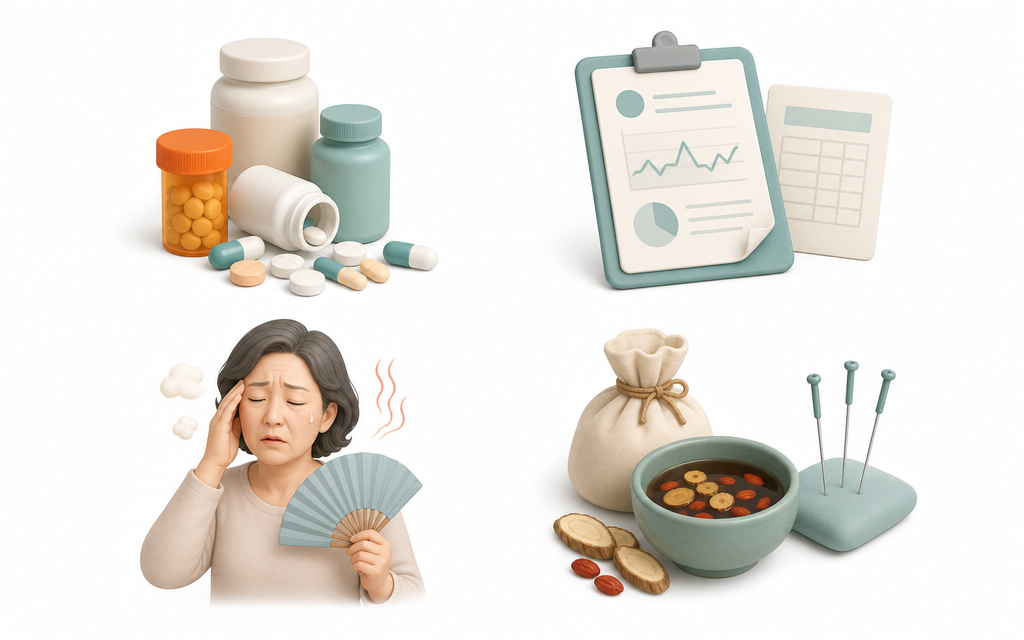
Before visiting a Korean medicine clinic, you don’t need to record every symptom in detail every day. However, organizing your current most bothersome symptom, your usual health status, and the medications you take can be helpful for the consultation.
✅Information that’s helpful to prepare before your visit
- Medications and health supplements you are currently taking, such as antihypertensives, **diabetes** medications, sleeping pills, and nutritional supplements
- Existing conditions and results from a comprehensive checkup within the past 6 months, or blood test findings
- Your current most bothersome symptom
- Details of any previous herbal medicine or acupuncture treatments
During the visit, the clinician will confirm what’s needed through consultation and examination, so you don’t need to record every symptom or analyze things on your own. In particular, if you have chronic conditions or take multiple medications, it’s important to share accurate medication information.
6. Frequently Asked Questions (FAQ)
Q. How long do people usually take herbal medicine for menopause?
The duration varies depending on symptom severity and individual response, so it’s difficult to set a single standard. In many cases, changes in sleep, fatigue, and discomfort are reviewed at intervals of about 2–4 weeks early on, and the dosing schedule is adjusted accordingly.
Q. Does the herbal prescription change depending on symptoms?
Yes. If the main symptoms differ—such as hot flashes, insomnia, chills, or digestive discomfort—the Korean medicine assessment and treatment goals may also differ. The clinician checks your current status through consultation and examination and adjusts the composition and emphasis of the herbs based on your response.
Q. Can I take herbal medicine together with medications for hypertension or diabetes?
If you take medications for chronic conditions, it’s necessary to review potential interactions between your medications and herbal medicine before prescribing. Tell the clinician about all medications and health supplements you’re currently taking, and consider additional tests if needed.
Q. If insomnia is worse than hot flashes, does treatment change?
If insomnia is the main concern, treatment goals and evaluation criteria can be set with sleep as the focus. Some studies have reported the potential for herbal medicine to improve menopause accompanied by insomnia; if you are taking sleeping pills or antidepressants, you should share this information so the treatment plan can be adjusted.
This health content has been reviewed by medical professionals, compiled from authoritative domestic and international sources, and is regularly updated in accordance with the latest clinical guidelines.
Sources
- The Society of Korean Medicine Obstetrics and Gynecology · National Development Institute of Korean Medicine, “Korean Medicine Standard Clinical Practice Guidelines for Menopausal Disorders and Postmenopausal Syndrome,” 2021.
- Zhu et al., Chinese herbal medicine for menopausal symptoms, Cochrane Database of Systematic Reviews, 2016.
- Dodin et al., Acupuncture for menopausal hot flushes, Cochrane Database of Systematic Reviews, 2013.
※ The copyright for all content on this blog belongs to medihi. Unauthorized copying, distribution, or derivative use is strictly prohibited, and violations may result in legal action without prior notice.