

Are you feeling anxious about irregular periods and sudden heat sensations? Before concluding that the physical changes you’re experiencing in your early 40s are “early menopause,” this post outlines a Korean medicine–based approach to checking your body’s balance and managing symptoms safely.
“I'm 42, and for the past few months my period has been infrequent, and I’ve been having heat sensations.”
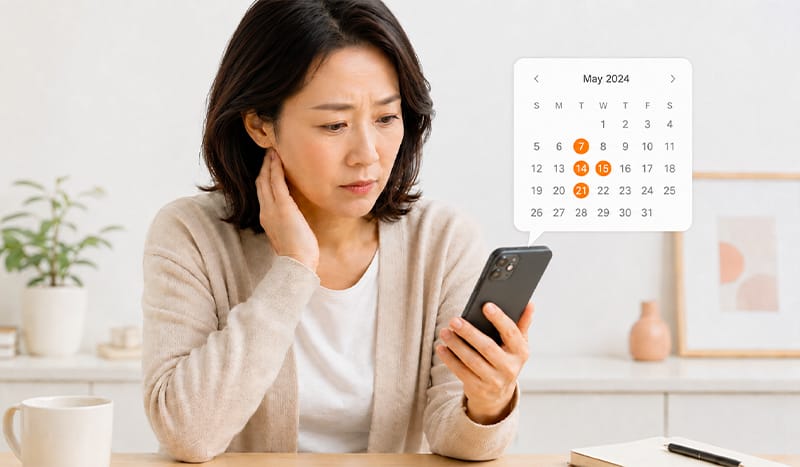
Many people feel worried when sudden changes happen in the body at this stage of life. What matters most is this: it is not because you “failed” at taking care of yourself, and there is no need to blame yourself. Irregular menstruation and heat sensations in the early 40s are difficult to define as a single sign of “early menopause.” Understanding the process—correcting an imbalance in the body and connecting that to long-term health management—is the first step toward easing anxiety.
In Korean medicine, menopause is not viewed simply as a “hormone deficiency disorder.” It is understood as a natural process in which yin-blood (陰血) gradually becomes insufficient with age, and internal heat (火) tends to rise. Rather than focusing on artificial hormone replacement or strong stimulation, the priority is to first screen for risk signals and then calmly strengthen the body’s overall self-recovery capacity. Instead of jumping to conclusions, start by checking your condition in the right order.
1. Menstrual changes in the early 40s: What should you confirm before concluding menopause?
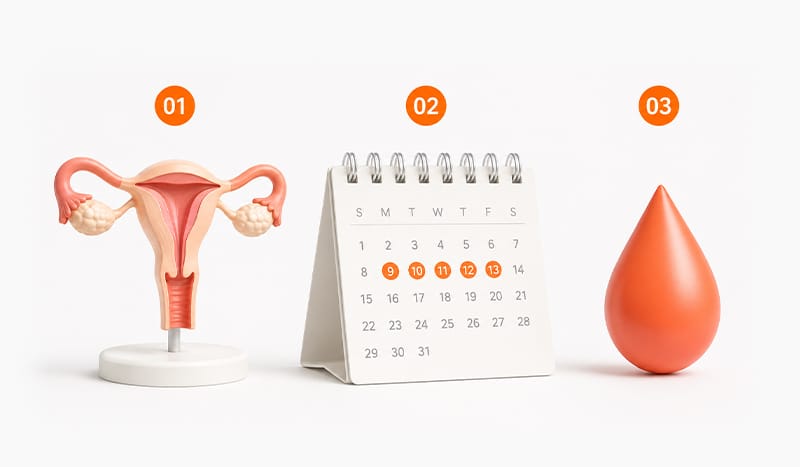
Irregular periods and heat sensations in the early 40s are like a yellow warning light on a car’s dashboard. Just as you wouldn’t assume the engine has completely failed the moment a warning light turns on, menstrual changes at this stage are also hard to attribute to one single cause. In general, menopause is discussed only after 12 consecutive months without menstruation. So in the early 40s, “a period that’s been delayed for a few days” (or even a cycle that has become noticeably irregular) is less a confirmation and more a signal that your qi and blood (氣血) status should be differentiated and assessed.
In particular, it is premature to conclude menopause simply because your period is
infrequent and you feel heat sensations. At this stage, pregnancy should be ruled out first. It’s also important to consider whether rapid weight changes, severe stress, or sleep deprivation may have temporarily disrupted qi-blood circulation to the uterus and ovaries.
Newly started medications or changes in lifestyle habits can also be major factors that shake hormonal balance and uterine immune balance.
✅Self-checklist based on changes in the last 3 months
- Have you checked and ruled out the possibility of pregnancy first?
- Have you experienced rapid weight changes or intense day-to-day stress recently?
- Have you started taking any new medications that could affect hormones?
- Has sleep deprivation or chronic fatigue worsened sharply?
If you identify clear lifestyle changes or stressors, the priority is to address those factors and help the body regain balance. If symptoms persist even after checking all of the above, it becomes reasonable to consider the menopausal transition and support bodily function from a long-term perspective.
2. Why it’s difficult to conclude your condition from a single hormone (FSH) result
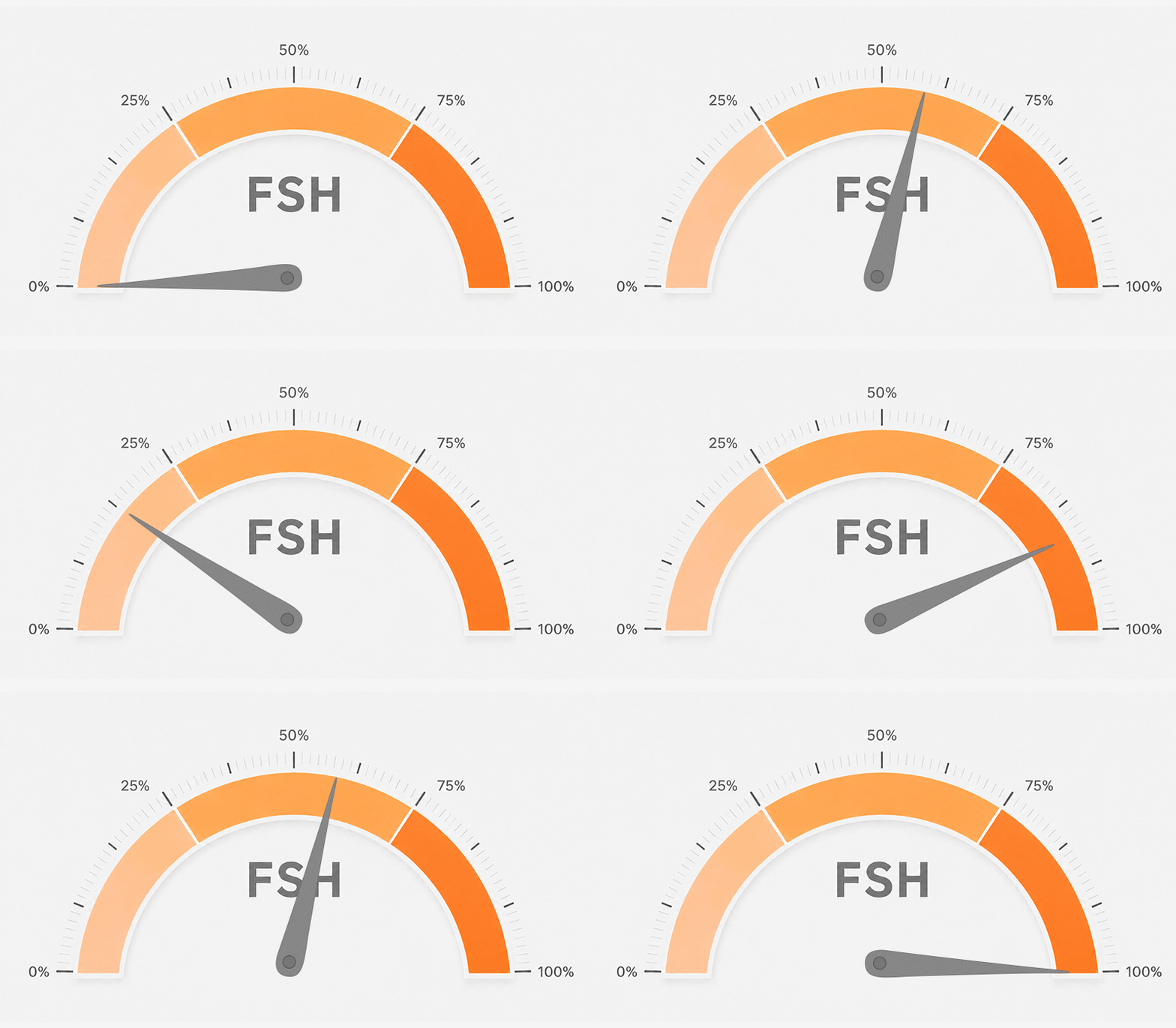
Many people expect that a blood test confirming hormone levels will provide a definitive answer. Of course, a follicle-stimulating hormone (FSH) test can be a reference tool for understanding ovarian function. However, hormone secretion in the human body is not a fixed number—it is a dynamic process that constantly fluctuates like waves. Depending on your condition at the time of testing, stress level, and medications you are taking, results can vary. Interpreting a single elevated result as meaning ovarian function has permanently stopped is a misunderstanding.
Just as a car’s warning light may turn on due to a temporary voltage drop or a sensor error, hormone levels can also spike due to short-term physical and mental overexertion or qi-blood deficiency. Rather than reacting strongly to one number, it is wiser to consider age, symptom patterns, and menstrual patterns together, and to check the overall trend over time at regular intervals.
✅Notes that can help to prepare before a clinic visit
- A record of period start dates and cycle changes over the last 3–6 months
- A list of all medications and supplements you are currently taking
- Recent sleep quality, digestion status, and stress level
3. Why an “ovarian age test” (AMH) cannot be a stand-alone decision tool
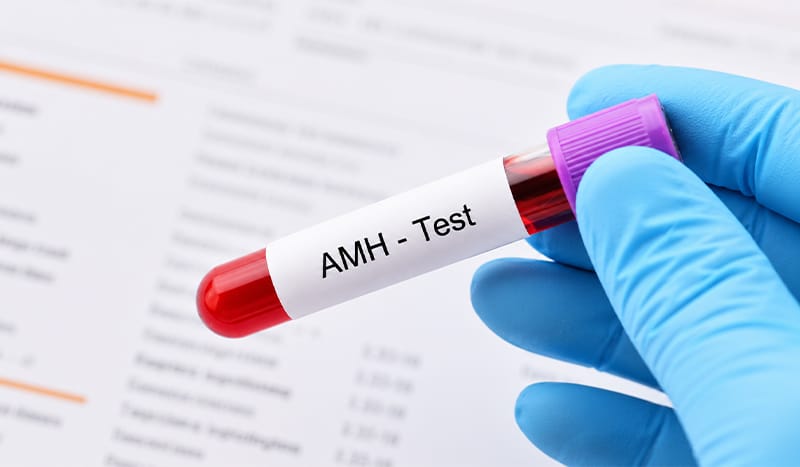
After a health screening, many people receive AMH (anti-Müllerian hormone) results—often called an “ovarian age test”—and find themselves deeply concerned. AMH is used as an indicator to evaluate ovarian reserve (the remaining follicle pool), but it is difficult to treat it as an absolute timer that precisely predicts when menopause will occur.
Even if the value is relatively low, it does not mean that all hormonal function has been lost immediately or that the body’s functions have come to a stop. From a Korean medicine perspective, even when ovarian reserve has decreased, improving pelvic blood circulation around the uterus and ovaries and strengthening the body’s self-recovery capacity may help maintain remaining function in a healthier way for longer. Use test results only as supportive hints to understand your current condition—there is no need to become pessimistic through self-diagnosis or to rush unnecessarily.
4. Why you should assess the balance of “bones and the whole body,” not just delayed periods
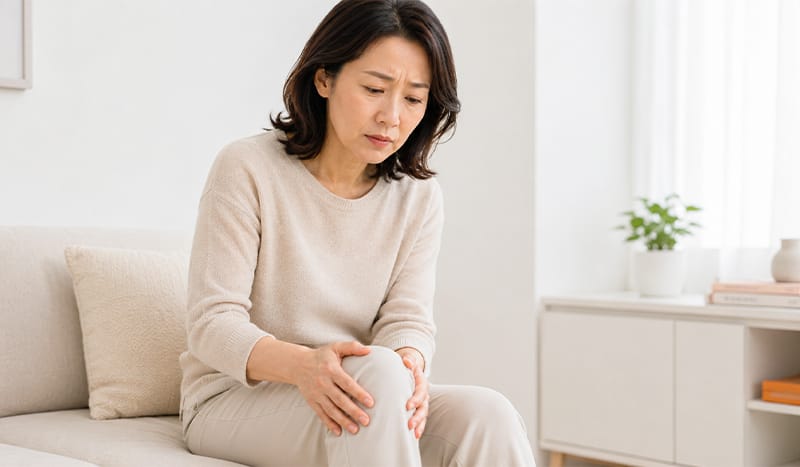
A yellow warning light in a car doesn’t only point to a surface-level issue—it can also mean the entire underlying structure needs inspection and maintenance. In a woman’s body, uterine and ovarian function is not only for pregnancy and menstruation. It also plays a strong protective role in supporting bone strength, protecting blood vessels, and regulating metabolism throughout the body.
In Korean medicine, decreases in bone density or metabolic slowdown around menopause are approached through the lens of kidney yin deficiency (腎陰虛)—a state in which kidney function and the body’s nourishing fluids become insufficient. If early signs appear in the early 40s, it can be an important reference point indicating that long-term preventive care should begin so that the body’s deeper “fluids” supporting bones and cardiovascular health do not become depleted.
If you have a family history of osteoporosis or your daily activity level is significantly low, it is advisable not to delay—check bone density and metabolic risk factors together and manage long-term outlook proactively.
5. When do you need a “safe, non-hormonal Korean medicine approach” instead of artificial hormone therapy?

When symptoms appear, one of the most common options people consider is hormone replacement therapy (HRT), which introduces external estrogen and related hormones. However, using hormone medications requires careful consideration based on personal medical history and risk factors.
In particular, if there is a family history or personal history of hormone-dependent tumors such as breast cancer or endometrial cancer, if there is abnormal vaginal bleeding, or if there is a history of thromboembolism or liver disease, hormone therapy is strictly limited. People who notice a breast lump, or those who are more sensitive to female hormones due to conditions such as uterine fibroids or endometriosis, also need to be cautious when considering HRT. Many people also feel concerned about side effects or feel burdened by the idea of giving the body artificial stimulation. When you want a safer and more sustainable option without disrupting the body’s natural flow, a “non-hormonal Korean medicine treatment” can be a strong alternative.
In practice, non-hormonal Korean medicine approaches have accumulated long-standing clinical data supporting safety and effectiveness. In neighboring Japan as well, physicians within the mainstream medical system actively prescribe and recommend herbal formulations for patients who are not suitable candidates for hormone therapy or who are concerned about side effects. In Korean medicine, individualized herbal prescriptions (such as decoctions and pill forms) and acupuncture are used to replenish depleted nourishing fluids, calm upward heat sensations, and support the uterus and ovaries in restoring their self-recovery capacity—without the same concerns about side effects associated with hormone therapy or certain nervous-system medications.
6. Frequently Asked Questions (FAQ)
Q. If my period has been irregular for a few months, what kind of treatment would I receive at a Korean medicine clinic?
Before declaring menopause, the clinician looks at what balance in the body has been disrupted. They assess qi-blood circulation, stress level, and whether there is coldness in the lower abdomen. Treatment may include a personalized herbal prescription, acupuncture, and moxibustion to improve blood flow around the uterus and ovaries and help restore hormonal balance naturally.
Q. My hormone test (FSH) came back high once—does that mean my ovarian function is over?
Not at all. Hormones fluctuate continuously depending on condition and stress. Rather than concluding ovarian shutdown from a single value, it is much safer to relieve fatigue and replenish qi and blood through Korean medicine care, then re-check the trend at appropriate intervals.
Q. If my period is coming only occasionally, could I still be able to get pregnant?
In the early 40s, when periods begin to delay, ovarian function can recover intermittently and irregularly. Because unexpected ovulation cannot be completely ruled out, you should be careful with contraception if you are not planning a pregnancy.
Q. At what point should I seek care sooner rather than later?
If your cycle skips for more than three months, or if heat sensations and night sweats noticeably disrupt daily life (including sleep), it can be a sign that your body’s balance has significantly shifted—so it’s advisable to seek care promptly. In particular, if abnormal vaginal bleeding is present, evaluating the cause should be the top priority.
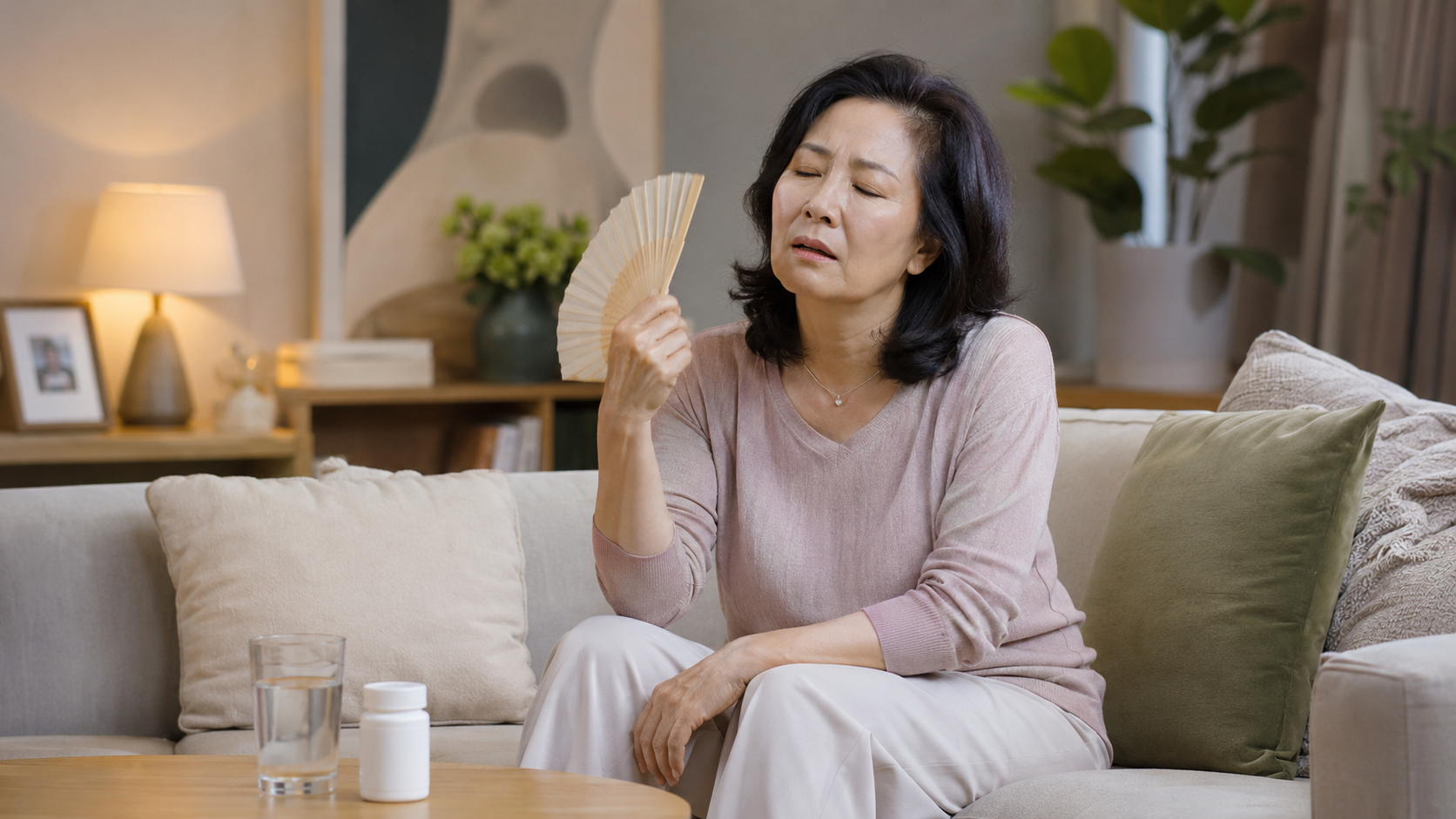
Physical changes at this stage are like a yellow warning light on a car’s dashboard. It is not a declaration that the system has completely stopped—rather, it is a signal to carefully examine and maintain the body’s underlying structure that you cannot see at a glance.
Instead of relying on artificial hormone therapy or nervous-system medications that may burden the body, consider navigating the menopausal transition calmly and healthfully through safe, sustainable Korean medicine care that supports your body in finding balance on its own.
Sources
- The Society of Korean Medicine Obstetrics and Gynecology. Korean Medicine Clinical Practice Guideline for Menopausal Disorders and Postmenopausal Syndrome. 2021.
- Choi Suji, Kim Dongil. A Survey on Korean Medicine Doctors’ Perceptions and Treatments for Developing Korean Medicine Clinical Practice Guidelines for Menopausal Disorders and Postmenopausal Syndrome. Journal of Korean Medicine Obstetrics and Gynecology.
- Lee et al. Prescription patterns of herbal medicine for menopausal disorders in major Korean medicine hospitals: a multicenter retrospective study. Integrative Medicine Research.
※ The copyright for all content on this blog belongs to medihi. Unauthorized copying, distribution, or derivative use is strictly prohibited, and violations may result in legal action without prior notice.