

We’ll explain why an old bridge can cause gum problems, what symptoms to watch for, and when it may be time to replace it. Learn whether an implant could be an alternative and how proper care can help you regain a healthier mouth.
“I keep chewing on only one side when I eat…”
“My old bridge feels loose, and food keeps getting stuck.”

This is a common concern among people in their 50s to 70s. In particular, once a bridge reaches the end of its lifespan, gum inflammation and discomfort can recur.
In this post, we’ll discuss why a bridge you’ve had for a long time may start causing gum problems, how long worn and aging prosthetics typically last, and which symptoms suggest you should consider replacement.
1. The lifespan of a bridge prosthesis—so it isn’t permanent?
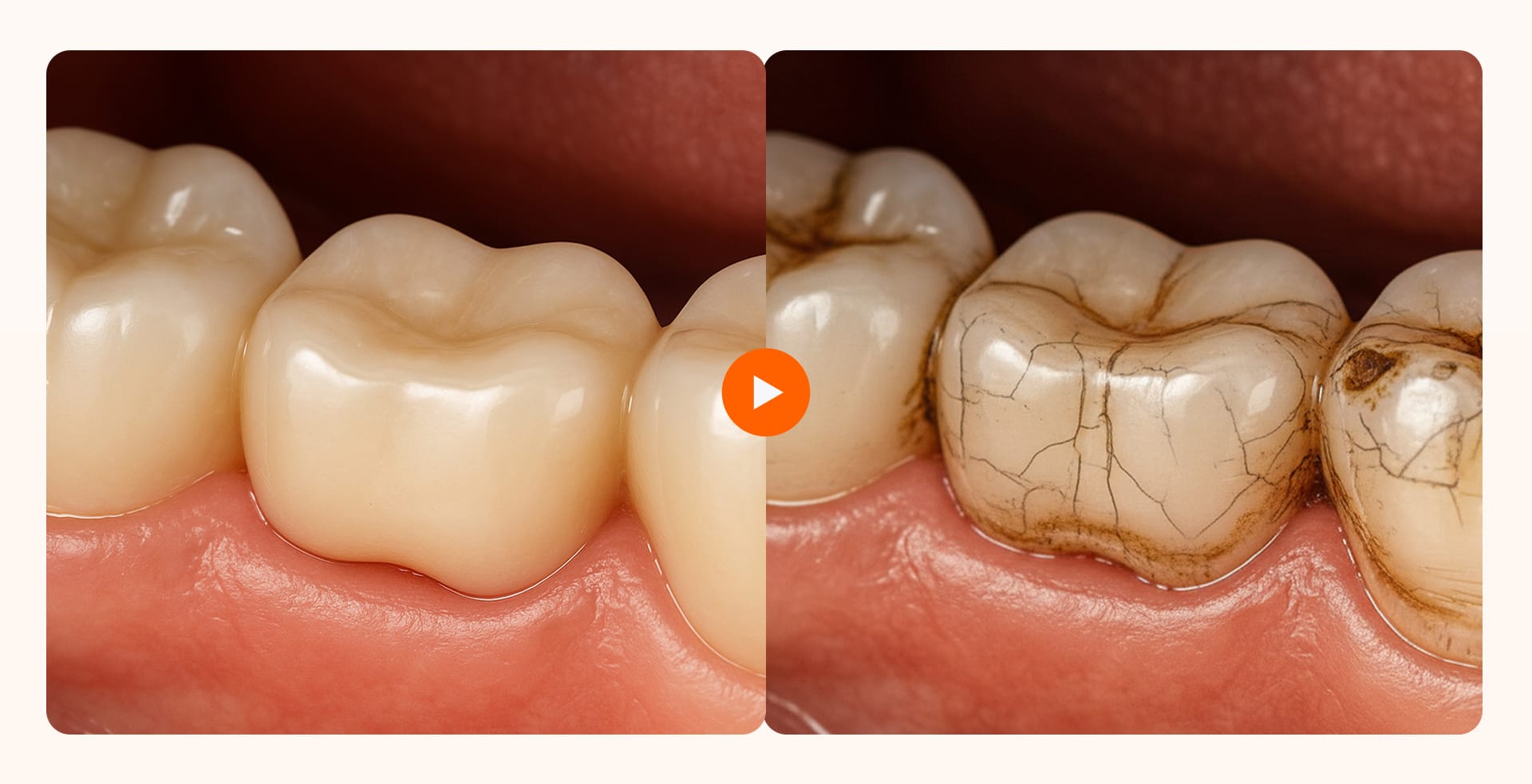
A bridge that replaced missing teeth in your younger years can feel sturdy and long-lasting. Unfortunately, the lifespan of a bridge prosthesis is not permanent. Like car tires, it’s closer to a consumable item that naturally wears down and ages over time.
In general, dental specialists consider the average lifespan of a bridge to be around 10–15 years. Of course, depending on how well it’s maintained, dietary habits, and oral hygiene routines, it may last longer—or problems may appear sooner.
After many years of use, chewing forces can wear down the bridge itself or create tiny cracks. Problems often begin when small gaps form at the junction between the bridge and the supporting teeth (abutment teeth). Through these tiny gaps, food debris and bacteria can enter, leading to cavities or irritating the gums and causing inflammation.
That’s why checking the lifespan and condition of a prosthesis is important even if it looks fine on the outside. Because a bridge affects multiple connected teeth, an issue in one area can threaten overall oral health.
2. Why does an old bridge cause gum inflammation?
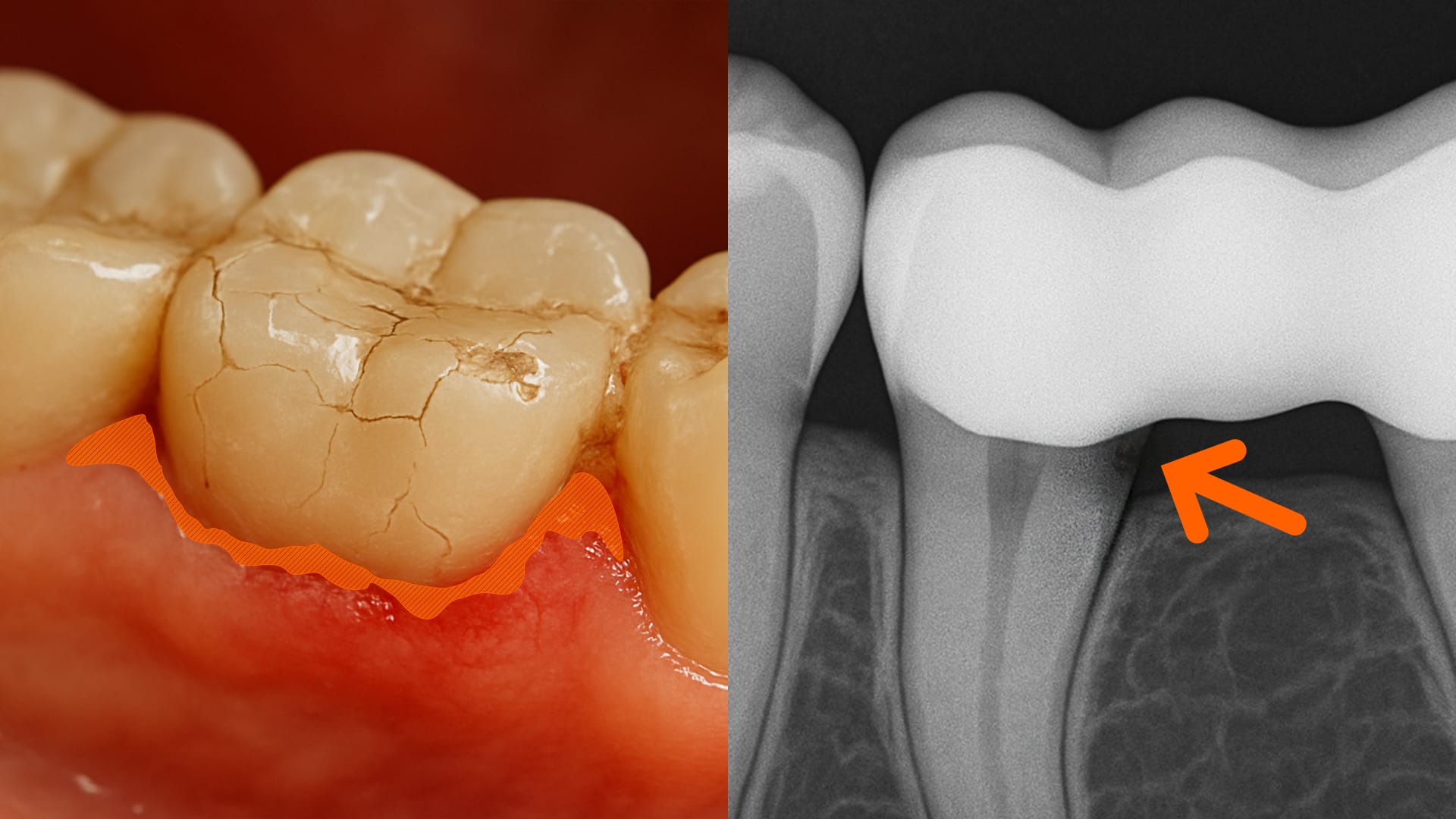
“My gums keep swelling and bleeding for some reason. I brush thoroughly, but it still happens.”
Many people struggle with gum pain like this without knowing the cause. One possible cause is an old bridge. Healthy gums are light pink and firmly attached to the teeth, but when gum inflammation occurs, they can become red and swollen and may bleed during brushing.
The main reasons an old bridge can lead to gum inflammation can be grouped into three:
- Gaps between the bridge and the gums
- Over time, the teeth supporting the bridge (abutment teeth) may loosen, or the gums may recede.
- During this process, tiny gaps can form between the prosthesis and the gums.
- These gaps become pathways where bacteria and food debris accumulate, creating “blind spots” that are difficult to clean even with brushing.
- Reduced precision (fit) of the bridge over time
- When first made, it is fabricated to fit the gum line precisely.
- Over time, the margins can wear down or deform.
- This can continuously irritate the gums and lead to chronic inflammation.
- Gum irritation or discoloration depending on certain materials
- In the past, metal-based bridges were commonly used.
- In some patients, metal components may trigger allergic reactions or gum discoloration.
- Issues that cause gum discoloration can also occur.
So, if you repeatedly experience gum swelling or a dull, aching sensitivity, it’s better not to treat it as “just gum inflammation.” Consider discussing with a dentist whether bridge replacement should be evaluated as well.
3.When and how should you decide to replace a bridge?
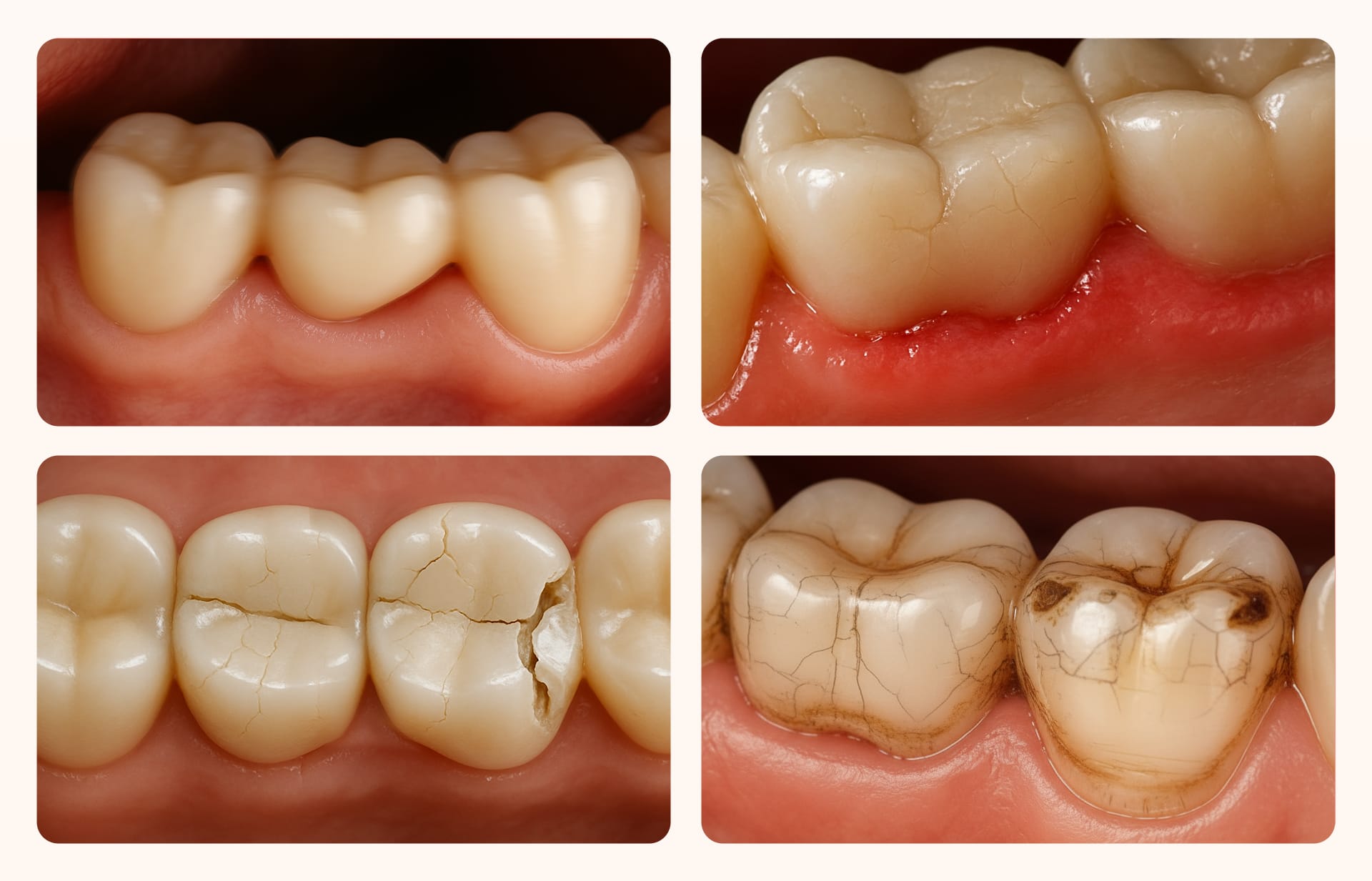
The most important signal for deciding on replacement is pain. If you feel sharp, shooting pain in the teeth supporting the bridge (abutment teeth), or if a pus pocket forms on the gums, you should visit a dental clinic promptly.
| Replacement Signs | Description |
|---|---|
| Loosening | Sensation that the bridge is moving or coming off |
| Gum Pain | Discomfort when chewing, often accompanied by swollen gums |
| Damage | Cracks or partial chipping on the bridge |
| Aesthetic Issues | Cosmetic concerns due to discoloration or altered shape |
Also, if the gap between the bridge and the gums becomes wide enough to see, or if the bridge feels like it’s moving, it may be time to consider replacement.
In particular, even without visible breakage, a bridge may need replacement if the condition of the underlying teeth has worsened. If gum inflammation persists, it can damage even the roots of the teeth supporting the bridge—so rather than simply replacing the bridge, the teeth and gum condition should be evaluated comprehensively.
4.If a bridge cracks or breaks, does it always need to be replaced?
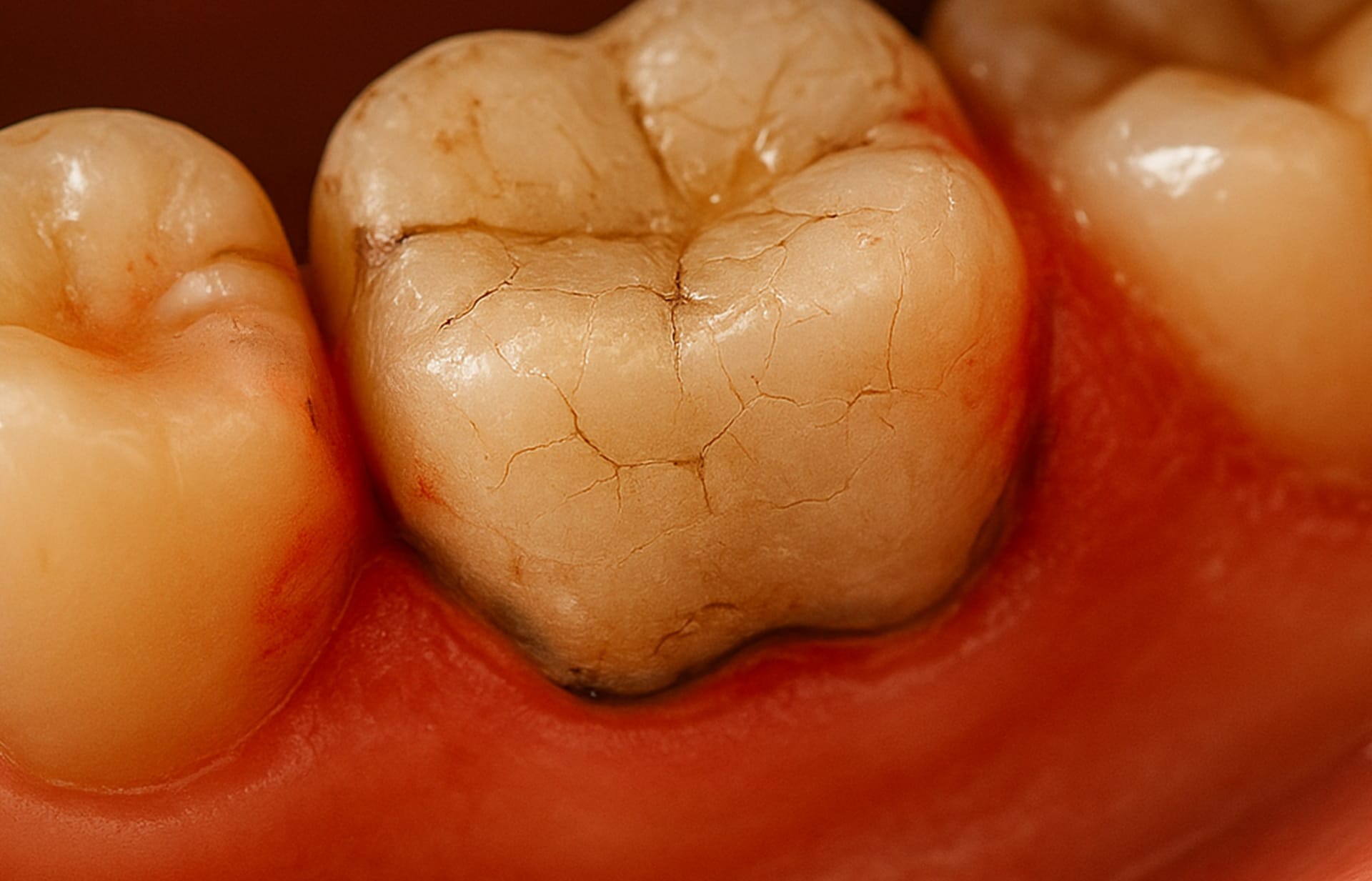
“I bit something hard and one side of my bridge chipped a little. Can’t it just be reattached?” This is a question many people ask. When a bridge is damaged, it’s natural to wonder whether it must be replaced with a new one.
To get to the point: in most cases, when a bridge cracks or breaks, replacement is needed. In some situations, partial repair may be possible, but depending on the extent of damage and the bite (occlusion), there may be a risk of re-fracture—so it’s best to decide after a dental evaluation.
[Why bridge replacement may be necessary]
1.It’s difficult to restore the original strength
- A bridge prosthesis is fabricated with precise bonding and fit during production.
- Once it cracks or is damaged, it’s difficult to restore its original strength.
- In particular, if the broken area is sharp, it may injure the tongue or cheek.
2.Problems that can develop in the underlying teeth
- Bacteria can penetrate through the damaged gap.
- This can cause cavities in the tooth beneath the prosthesis, or worsen decay that is already progressing.
- In severe cases, inflammation can develop at the tooth root, and root canal treatment may be needed.
So it’s not only about “looking bad.” To prevent larger oral health problems, it’s advisable to visit a dental clinic as soon as damage is identified. The decision to replace should be made by considering both the bridge damage and the condition of the underlying teeth.
5. Is it better to replace a bridge with an implant instead?
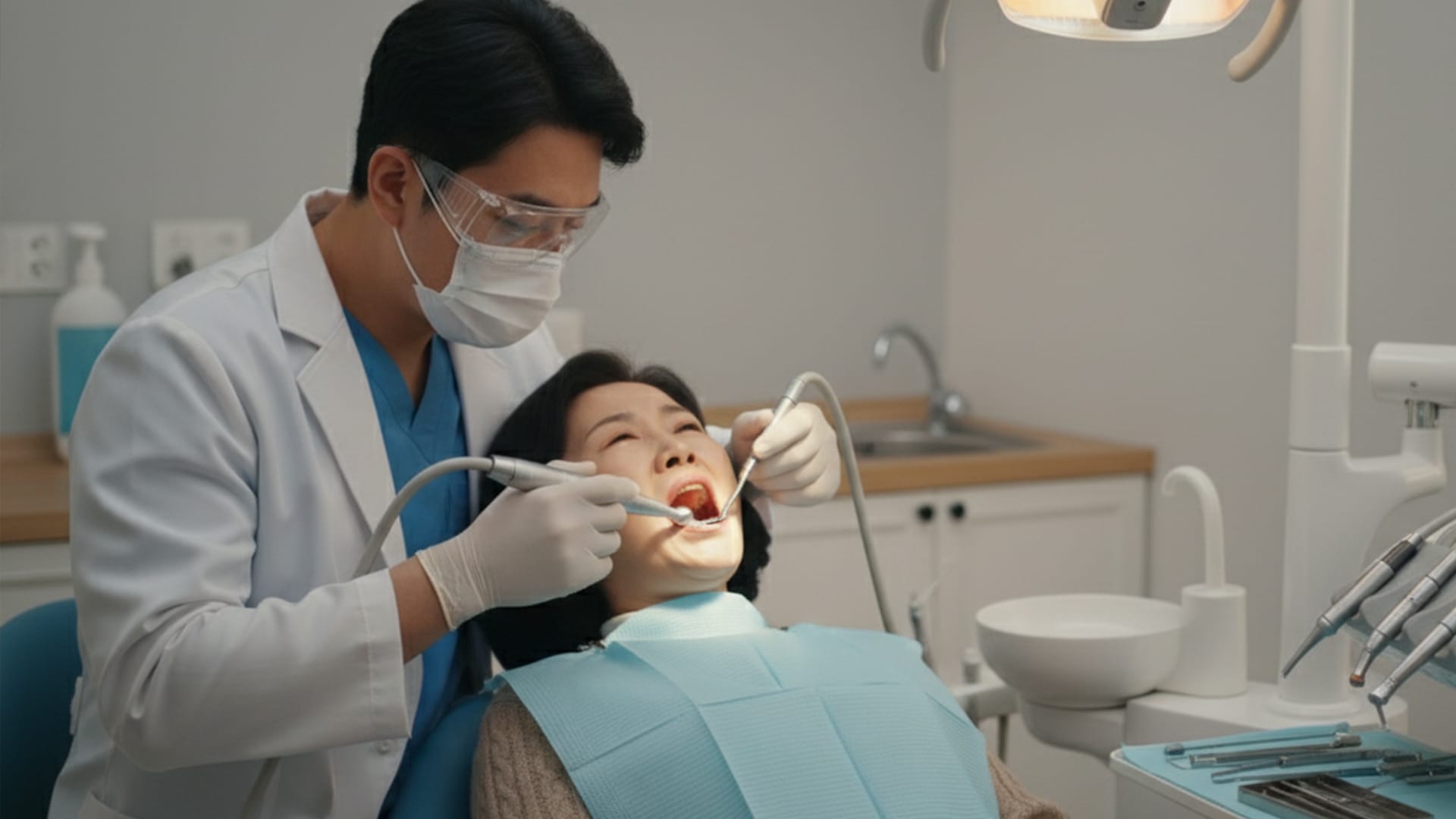
When it’s time to replace a bridge you’ve used for a long time, many people think, “Should I get an implant this time?” An implant and a bridge are both prosthetic treatments that replace missing teeth, but the methods and pros/cons differ.
| Category | Dental Bridge | Dental Implant |
|---|---|---|
| Procedure | Trimming adjacent healthy teeth to connect them like a bridge | Placing an artificial tooth root into the jawbone and mounting a prosthesis |
| Impact on Adjacent Teeth | Supporting teeth (abutments) may be damaged or weakened | No damage as adjacent teeth are not trimmed |
| Jawbone Changes | Chewing force is not transmitted to the bone, which may lead to bone resorption over time | Helps maintain the alveolar bone in the missing tooth area |
| Durability & Risks | Risk of decay or weakening in abutment teeth | Risk of osseointegration failure or post-operative inflammation |
| Treatment Duration | Short (usually completed within a few weeks) | Relatively long (may take several months or more) |
| Cost | Relatively affordable | Relatively expensive |
| Suitability | Suitable when jawbone density is insufficient or rapid treatment is required | Suitable when bone condition and overall health permit |
When replacing an old bridge, rather than automatically choosing implant replacement treatment, it’s best to have a thorough consultation with a dental specialist—taking into account your teeth and gum condition, overall health, and financial considerations.
6.Frequently Asked Questions (FAQ)
Q. What happens if a tooth under a bridge gets a cavity?
It’s not uncommon for a tooth under a bridge to develop decay. If a cavity forms under the bridge, the bridge must be removed and the decay treated. If the decay is deep and has reached the nerve, root canal treatment is typically performed first, followed by fabrication and placement of a new bridge.
Q. How much does it cost to replace a bridge?
The cost of bridge replacement varies depending on the material (gold, zirconia, etc.), the number of teeth involved, and differences between dental clinics—so it’s difficult to quote an exact amount. Costs may also increase if gum treatment or root canal treatment is needed before replacement. It’s a good idea to consult multiple clinics and establish a treatment plan that fits you.
Q. Can I just get gum treatment without replacing the bridge?
If the cause of gum inflammation is an old bridge, gum treatment alone is unlikely to solve the root problem. Because bacteria can continue to enter through gaps under the bridge, inflammation is more likely to recur even after treatment. If the cause is poor bridge fit or internal decay, bridge replacement may be necessary to remove the underlying cause.
Q. Do I really need regular dental checkups?
Yes. Gum inflammation or prosthesis damage can be hard to notice early on. Even if everything looks fine on the outside, decay may be progressing under the bridge, or gum inflammation may be deepening. Regular dental visits help detect issues before they become severe, and preventive care is one of the most effective ways to protect long-term dental health.

Even if your gums hurt and feel uncomfortable, don’t dismiss it as “just aging.” Small signals from the body can sometimes be warning signs of bigger problems. If you feel discomfort, don’t hesitate—visit a dental clinic and get a professional opinion.
Sources
- Korean Academy of Prosthodontics. (2020). Textbook of Prosthodontics.
- Lee, Geun-woo, & Kim, Seong-gyun. (2018). Latest Insights in Clinical Prosthodontics.
- American Dental Association (ADA). (2021). The longevity of dental restorations.
※ The copyright for all content on this blog belongs to medihi. Unauthorized copying, distribution, or derivative use is strictly prohibited, and violations may result in legal action without prior notice.
Recommended reads
 medihi