

"My child's mouth is so dry after waking up... it's probably just because the room is dry."
"I used to ignore drool marks on the pillow, thinking it was just a sleeping habit."
When you enter a room to wake your child in the morning and see them sleeping soundly with their mouth slightly open, it is adorable yet brings a flicker of worry. The child's lips are parched, and there are inevitably drool marks on one side of the pillow. It is easy to dismiss this, thinking, "They might just be tired," or "The room is dry because it's winter," especially since it happens almost every day.
While sleeping with an open mouth alone cannot lead to a definitive conclusion, the points to consider change depending on what other signals accompany it. Instead of complex medical explanations, let’s calmly summarize the 'observation criteria' emphasized by both domestic public health agencies and international guides.
1.Fact Check: Is Sleeping with Your Mouth Open Only a "Habit"?
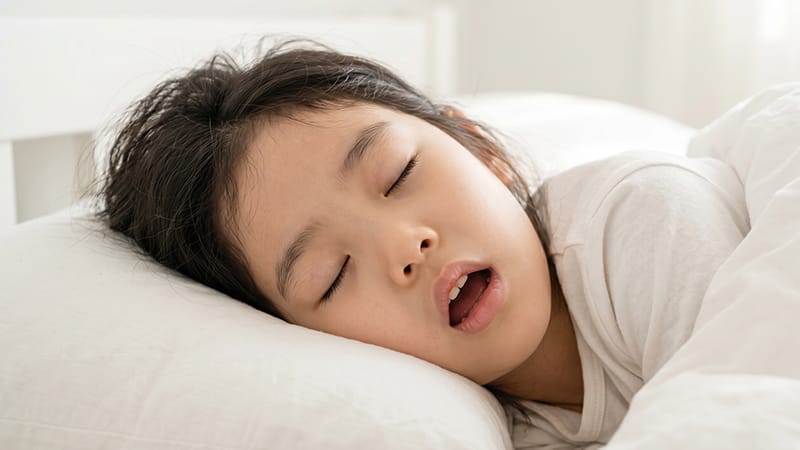
Sleeping with an open mouth is frequently observed in children. Because of this, it is even easier to dismiss it as "just a habit." The Korea Disease Control and Prevention Agency (KDCA) National Health Information Portal notes that snoring, breathing difficulties during sleep, and changes in daytime behavior or concentration can occur in children, and in such cases, an evaluation may be necessary. In other words, the key is not the 'open mouth' itself, but whether companion signals are recurring.
International guides provide similar directions. When examining pediatric sleep-related issues, they suggest looking at observable signals such as loud snoring, mouth breathing while asleep, morning dry mouth, frequent arousal, and attention problems.
In summary, before dismissing it as "just the way they are," you can consider the following in daily life:
- Is the mouth opening occasional or frequent/recurring?
- Is it accompanied by snoring, gasping, moments where breathing seems to stop briefly, or frequent waking?
- Does morning dry mouth or halitosis (bad breath) persist?
- Are daytime fatigue, decreased concentration, or behavioral changes visible?
Accumulating these observations can help you objectively gauge whether a check-up is necessary before anxiety grows.
2.Hidden Changes: Traces Left by Habitual Nightly Mouth Breathing
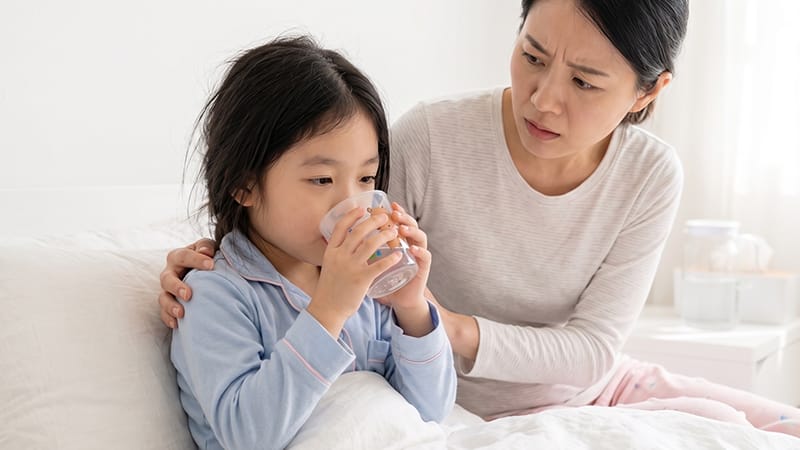
When a child repeatedly sleeps with their mouth open, the first thing parents often notice is morning dryness. The child may seek water immediately upon waking, their mouth may look sticky, or their voice may sound hoarse when speaking. According to KDCA information on dry mouth and halitosis, it is helpful to check oral health when saliva production decreases or the mouth is persistently dry. This is because saliva secretion naturally decreases during sleep, and if a pattern of mouth breathing is layered on top of this, the sensation of dryness can become more pronounced.
Another factor is the change in appearance around the mouth. Sleeping with an open mouth for a day or two does not cause immediate, distinct changes. However, synthesizing various authoritative guides suggests that when the habit of having an open mouth continues long-term during growth stages, the following changes may also be observed (results vary by individual):
- A sensation that the width of the upper jaw is relatively narrow.
- The appearance of a high-arched palate.
- A feeling that the front teeth do not meet properly (open bite).
- The appearance of misalignment between the upper and lower tooth widths.
This is why international orthodontic guidelines recommend a first orthodontic evaluation around age 7. The purpose is not necessarily to jump into treatment, but rather to check the 'direction' of growth during the developmental stage.
Ultimately, if 'sleeping with the mouth open' continues, it can lead to morning dry signals (dry mouth, halitosis) and minor misalignments in dental occlusion during growth (subject to individual variation). Rather than feeling vague fear, it is important to set a timing for a check-up based on your observations.
3.Self-Check: 3 Checkpoints to Verify Right Now
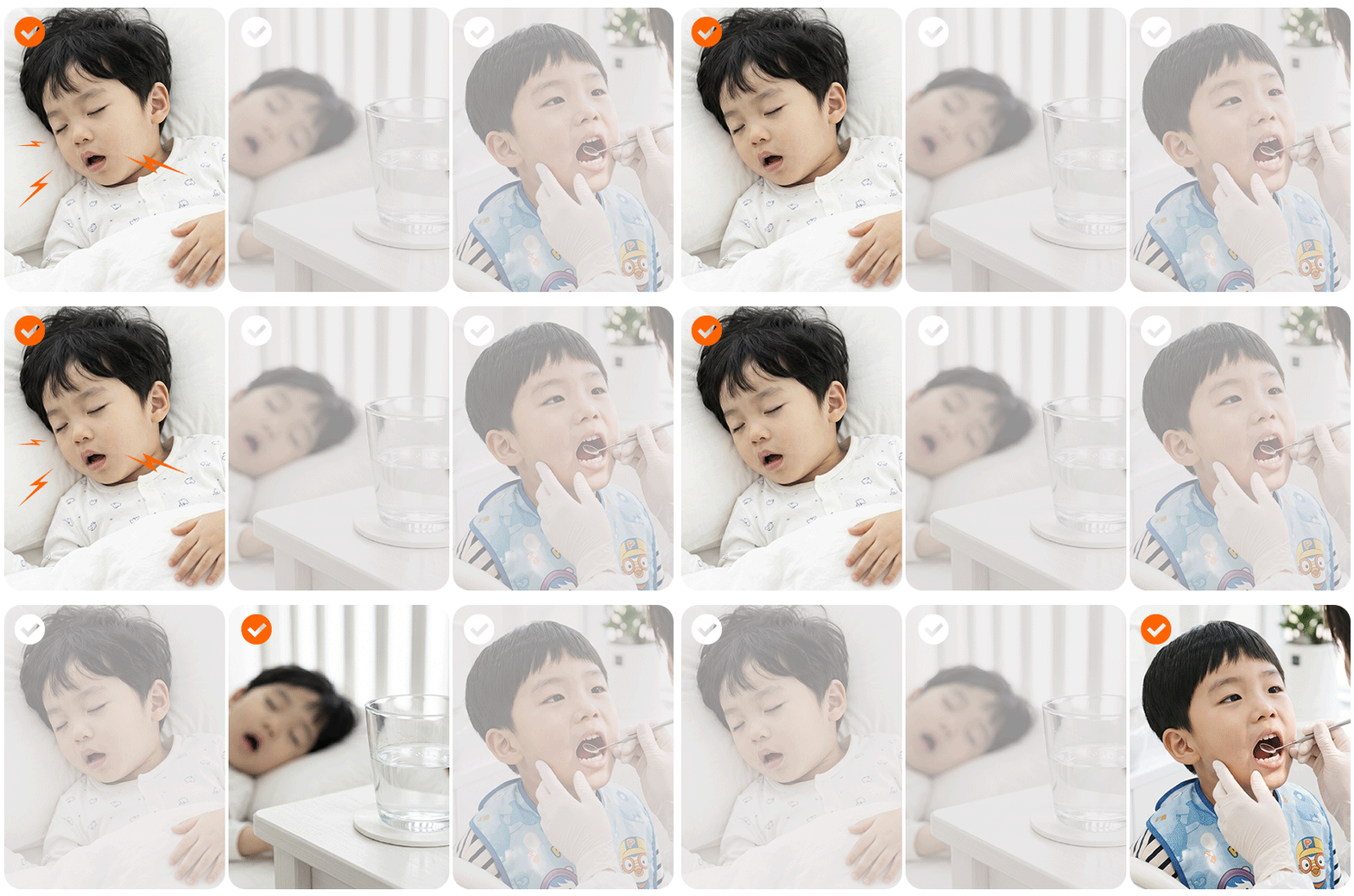
What you can do at home right now is not 'diagnosis,' but 'recording and screening.' The following three points are a checklist of common messages from the KDCA and international guides, translated into everyday language. Checking these calmly for about two weeks can make your judgment much easier.
(1) Are there companion signals?
Check if sleeping with an open mouth is accompanied by loud snoring, gasping, moments where breathing seems to stop, or frequent tossing and turning/waking. Whether multiple signals appear together can be a key criterion.
(2) Is morning dry mouth 'recurring'?
If symptoms like a parched mouth upon waking, concerning bad breath, or frequently seeking water occur often, it may be difficult to explain solely by a "dry room." This can be a reason to check oral health (cavities, gums, hygiene habits).
(3) If the child is around age 7, is it time for an 'evaluation' rather than 'treatment'?
If your child is in the early years of elementary school (usually around age 7) and has a mix of baby teeth and permanent teeth, it is helpful for future planning to check aspects such as dental occlusion, the width of the dental arch, and whether the mouth closes comfortably. The necessity of treatment is usually discussed after such an evaluation.
Sources
- Korea Disease Control and Prevention Agency (KDCA) National Health Information Portal. Sleep Apnea (including pediatric) / Dry Mouth / Halitosis.
- American Academy of Pediatric Dentistry (AAPD). Policy on Obstructive Sleep Apnea.
- American Association of Orthodontists (AAO). Age 7 Orthodontic Check-Up.
※ This content is for general informational purposes only and is not a substitute for professional medical advice, diagnosis, or treatment based on individual conditions. We recommend visiting a dentist for an accurate assessment of your condition.