

“Maybe my jaw just looks different because I gained weight or because of the photo angle?”
“It won’t be too late to check after all the permanent teeth come in—or once it feels a bit more uncomfortable, right?”
As you scroll through the photos piling up on your smartphone, you may notice moments where your mouth area looks oddly tense or your chin seems clenched. You might compare them with older photos “just in case,” but it’s easy to dismiss it as a common angle difference or assume it will resolve over time. Especially when there’s no major discomfort right now, many people don’t feel an urgent need to look into it.
However, small changes that show up repeatedly in photos can sometimes be a quiet signal of everyday functional discomfort. In other words, what you see on the outside may not be the whole story. In this article, based on guidance from global organizations, we’ll review common misconceptions and the objective criteria worth observing to support a more comfortable daily life.
1.Fact Check: Is it really not too late to start after puberty—or even in adulthood?

One of the most common misconceptions about tooth alignment and bite is the belief that “it will straighten out as they grow,” or that “it’s fine to wait until all permanent teeth come in.” But the American Association of Orthodontists (AAO) says otherwise. Their guidance recommends considering a child’s first orthodontic evaluation no later than age 7. Even if a child is younger than that, if a caregiver repeatedly notices signs such as lips that don’t close comfortably at rest or a jaw that seems to shift to one side, it may be better to get a check-up rather than simply waiting.
For adults as well, the American Dental Association (ADA) notes that aligning teeth is not merely a cosmetic choice to improve appearance. It is closely connected to maintaining everyday functions such as chewing and speaking by supporting a healthy bite relationship. The World Health Organization (WHO) also explains that oral health affects eating, speaking, and overall social life, adding that many people worldwide experience daily discomfort due to oral problems. So rather than treating changes in the jawline or mouth area seen in selfies (including side-profile shots) as mere curiosity, it’s worth considering whether they could be early signs of functional discomfort.
2.Hidden Changes: Everyday discomfort that can build up if you leave it as-is

If you overlook the signals your mouth area and jaw are sending for a long time, the issue may go beyond “not looking good in photos.” Physical and functional fatigue can gradually build up across daily life. The first place you may notice it is during meals. If the upper and lower teeth don’t meet evenly, you may feel unusually tired when chewing harder foods, or even find the act of biting food with the front teeth difficult. You might start biting your cheek or tongue more often without realizing it, and you may feel that your pronunciation has changed compared to before.
According to the ADA, leaving an uneven bite for a long time may contribute to abnormal wear on the tooth surfaces or discomfort when using the jaw. If your lips don’t close comfortably at rest, you may force your mouth shut—leading to a tense, chin-clenched expression that shows up in photos. In front-facing shots or side-profile selfies, your facial balance may gradually look more uneven, or your front teeth may appear more protrusive over time. These changes tend to accumulate slowly rather than appearing overnight, potentially increasing day-to-day fatigue.
3.Self-Check: 3 checklists worth confirming now
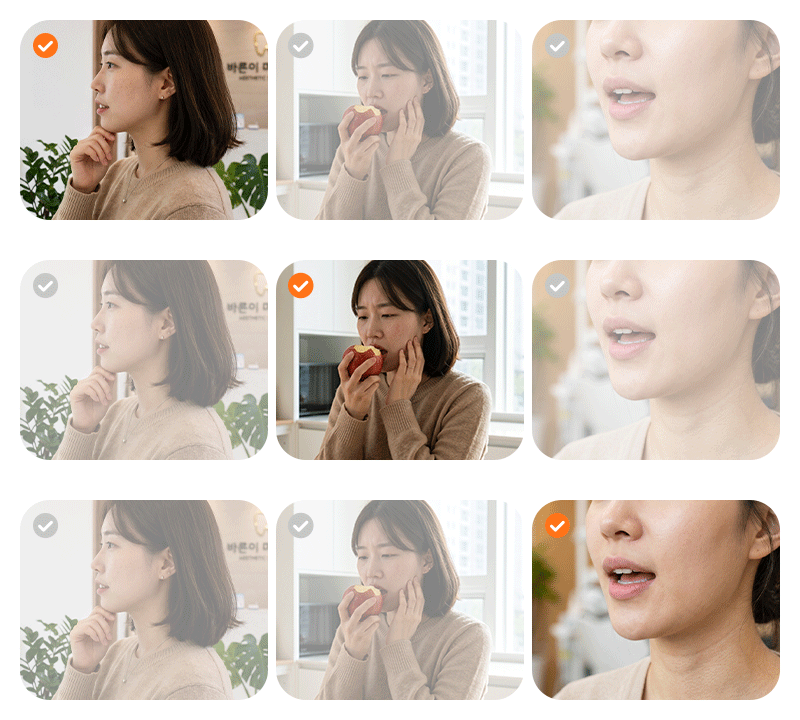
So how can you tell whether it’s time for closer observation and evaluation for you or your child? Based on clear criteria recommended by related associations and institutions, here are three self-check items you can easily review in daily life. If any of the items below are observed repeatedly, it may be worth considering a professional evaluation.
- Observe lips and the mouth area: In front-facing photos or side-profile selfies, check whether your lips don’t close comfortably even when you’re relaxed, or whether a chin-clenching expression repeatedly appears when you close your mouth.
- Bite contact and use of the front teeth: If you often find it difficult to bite through food with your front teeth during meals, or if you repeatedly feel discomfort when chewing certain foods because the upper and lower teeth don’t meet evenly, it’s worth checking your condition.
- Watch for jaw-use signals: This includes hearing a “click” or “grinding” sound when opening and closing your mouth, feeling that the jaw shifts to one side as it closes, or experiencing pain. According to the National Institute of Dental and Craniofacial Research (NIDCR), discomfort when using the jaw can have various causes, so it’s important to identify the cause clearly rather than assuming it is an orthodontic issue. If you notice these signals, it may be better to start observing sooner rather than waiting.
Sources
- World Health Organization (WHO), Oral health, 2022–2025
- American Association of Orthodontists (AAO), Why Age 7 is the Best Age for an Orthodontic Evaluation, 2025–2026
- Korea Disease Control and Prevention Agency (KDCA) National Health Information Portal. "Temporomandibular Disorders (TMD)." 2023.
※ This content is intended for general health information and does not replace professional diagnosis or treatment based on an individual’s condition. For an accurate assessment, a dental visit is recommended.