

In This Article
When a child’s eye contact feels awkward or they seem to squint more than usual, parents naturally become concerned. Because pediatric vision develops gradually within a limited developmental window, it is advantageous to have an appropriate evaluation early in pediatric ophthalmology. This article explains why early care matters for building lifelong visual function, and what to do when amblyopia is suspected.
1. Until what age does vision develop?
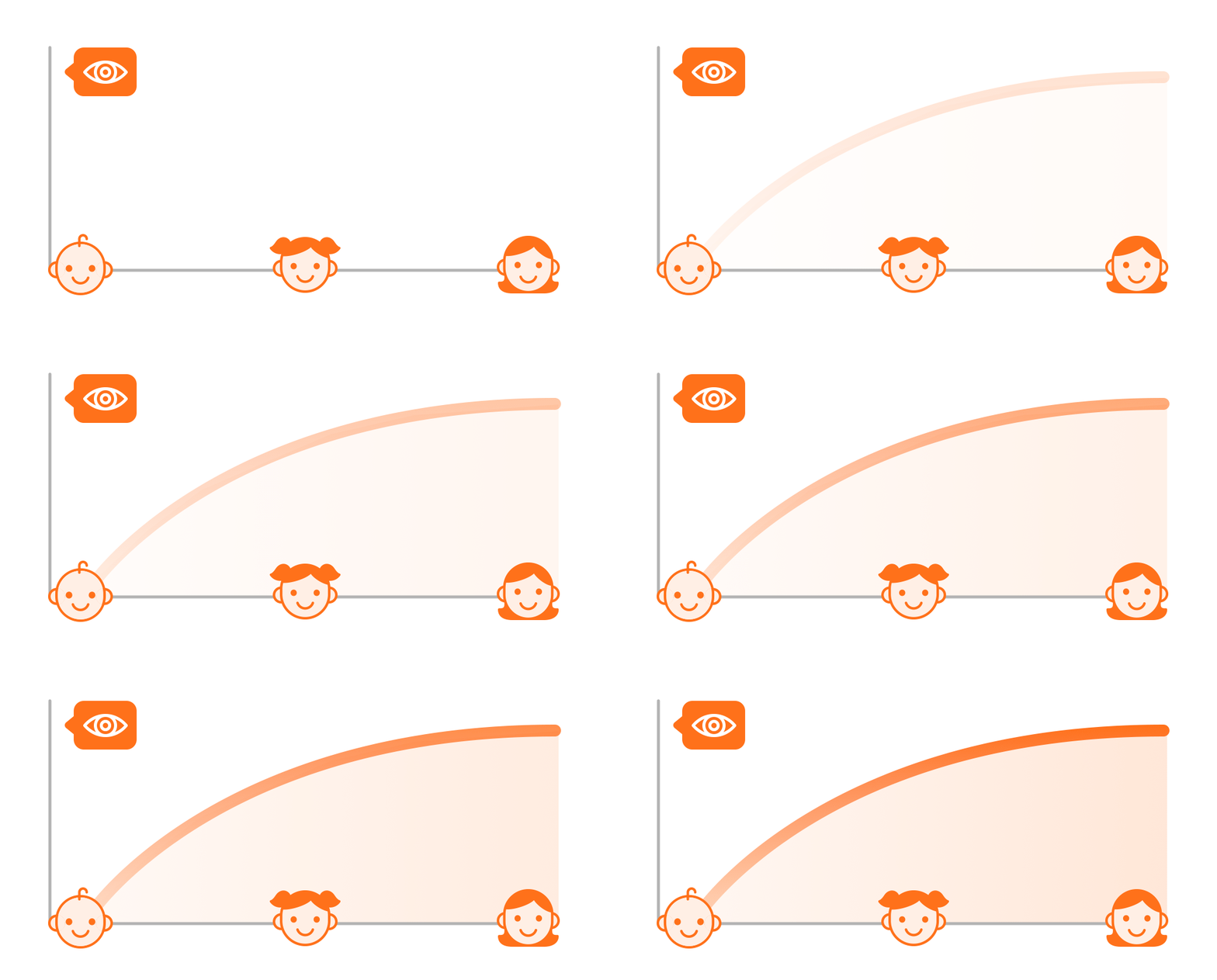
Pediatric vision continues to develop after birth and generally completes its growth around ages 7–8. If there are suspicious signs, it is beneficial to undergo an eye evaluation without delay. Vision is not only about the eye’s physical function; it is also the brain’s ability to clearly recognize and fuse visual information coming from both eyes.
Ophthalmology refers to this period—when clear visual input “activates” brain cells and builds visual function—as the *window of visual development*. Once visual function becomes established, even if the same treatment is attempted later, the speed of improvement and overall prognosis tend to become more gradual. For this reason, early diagnosis and intervention—ideally while the developmental window is still open—are very important.
2. Why is pediatric amblyopia often found late?
Pediatric amblyopia is a condition in which, even without an obvious structural eye disease, best-corrected vision does not improve sufficiently with glasses. Because there are few outwardly visible warning signs, it is often detected late. In particular, when only one eye has reduced vision due to anisometropia (a significant difference in prescription between the two eyes)—sometimes described as a “strong-eye/weak-eye” situation—the child tends to rely on the better eye from birth and may feel little to no visual discomfort.
Therefore, to detect pediatric amblyopia early, it is important for caregivers to closely observe changes in a child’s behavior in daily life.
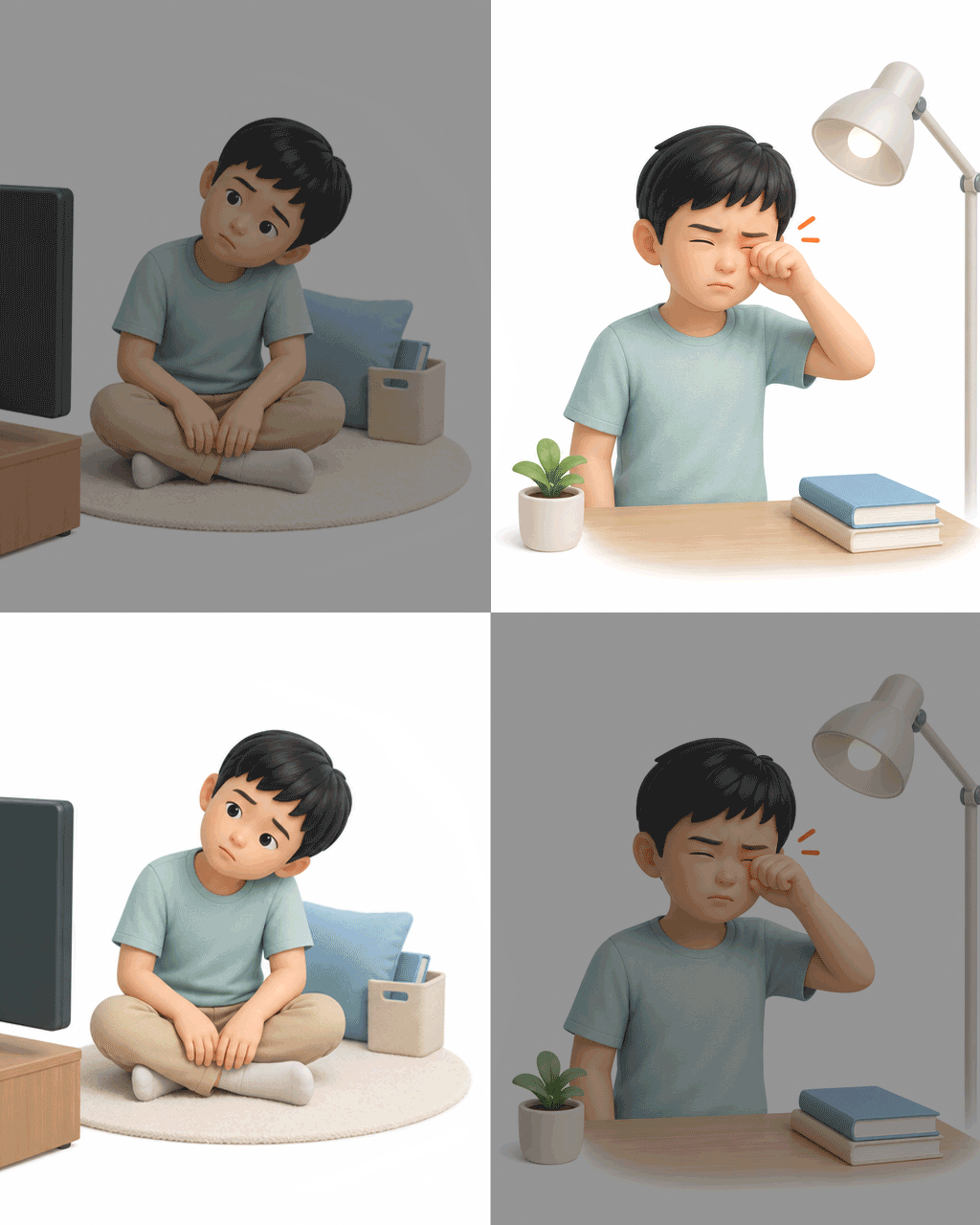
✅Key signs to watch for at home
- The child becomes unusually upset and resists strongly when one eye is covered.
- When watching TV or reading, the child repeatedly tilts their head to one side.
- In bright light, the child repeatedly squints hard with one eye or rubs it.
3. Is the national infant and toddler health screening enough?
The national infant and toddler health screening program is operated as a *screening* system to detect early signs of visual abnormalities. It is not structured to confirm all subtle refractive errors or small-angle strabismus in a single visit the way a comprehensive ophthalmology exam can.
Even if a child is judged to be within the normal range on the questionnaire and age-scheduled vision checks, it is much safer to pursue a detailed exam if signs such as repeated squinting or unusual eye contact persist in daily life. Rather than relying only on screening results, if caregivers notice something concerning, visiting an ophthalmologist without delay for specific evaluations—such as cycloplegic refraction—is a practical way to protect visual function.
4. In what order is pediatric amblyopia treated?
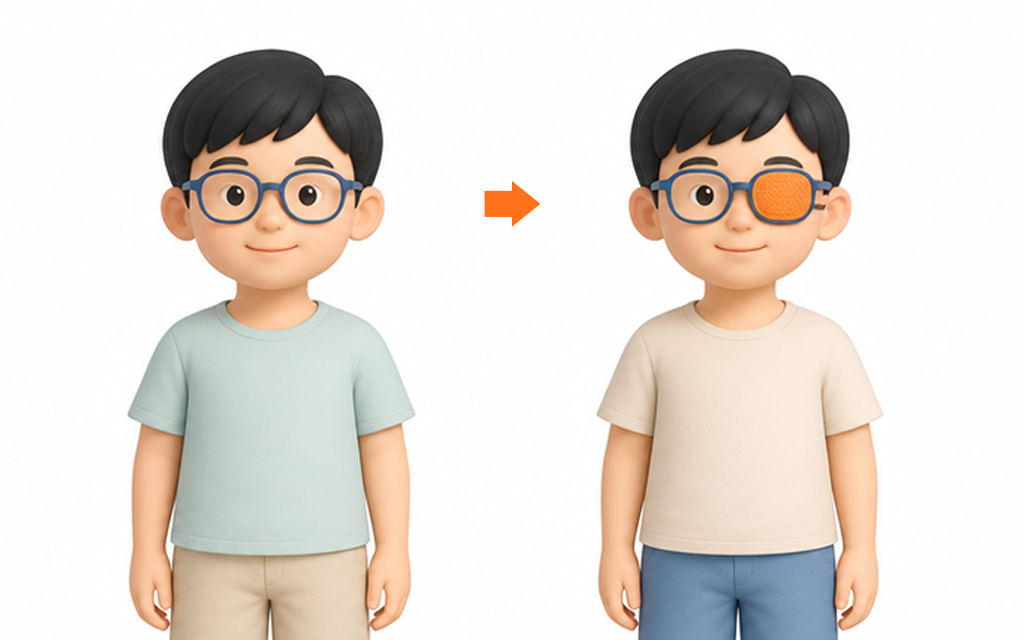
Amblyopia treatment typically begins by correcting blurred visual input with glasses. Then, based on the difference in visual development between the two eyes, additional step-by-step treatments are used to encourage more active use of the weaker eye. Properly correcting refractive errors such as myopia, hyperopia, and astigmatism—so that a clear image consistently forms on the retina—is the foundation of pediatric ophthalmology care.
✅ Step-by-step treatment to support amblyopia development
- Wearing prescription glasses: Provides clear visual stimulation to the brain and retina smoothly and continuously.
- Occlusion and/or eye-drop therapy: Limits use of the relatively stronger eye to promote independent development of the amblyopic eye.
Wearing an occlusion patch for long periods can irritate a child’s skin, so it helps to use low-irritation or hypoallergenic tape appropriately. In addition, following the occlusion schedule prescribed by the specialist—and coordinating with daycare, preschool, or school to manage daily routines—can help improve treatment success rates. Avoid extending patching time on your own without medical guidance.
5. How is strabismus treatment decided?
Strabismus treatment is decided not only to improve the cosmetic appearance of eye alignment, but also by comprehensively evaluating the potential for restoring binocular function—such as both eyes looking at the same target and depth perception (stereopsis). Even within Korean insurance coverage criteria, strabismus surgery performed solely for cosmetic purposes without expectation of functional recovery is categorized as non-covered, highlighting how closely treatment decisions are tied to binocular visual function.
The timing of surgery is determined individually by a specialist based on the type of strabismus, when it was detected, and the child’s current binocular coordination. Even when early surgery may be advantageous, families should be informed in advance that changes in eye structure during growth can make reoperation necessary. Maintaining long-term, regular follow-up after surgery is an important way to preserve eye status.
6. Frequently Asked Questions (FAQ)
Q. The screening says everything is normal, but my child keeps closing one eye. Do we need a clinic visit?
It may be necessary. Because infant/toddler screenings are designed as screening tests, repeatedly closing one eye can be a sign of refractive error or subtle strabismus, so an ophthalmology evaluation is recommended.
Q. If my child wears glasses early, will their eyes get worse?
No. Appropriate glasses use in infancy and early childhood is a basic and safe treatment that helps form a clear image on the retina and helps prevent visual function from becoming permanently stalled due to amblyopia.
Q. How many hours a day should we do occlusion therapy? How long does it last?
The daily duration and overall period vary depending on the cause of amblyopia and the child’s visual status, so you should follow the specialist’s prescription and avoid extending it arbitrarily.
Q. After strabismus surgery, are there cases where reoperation is needed?
As a child grows, muscle balance can change dynamically. Under certain conditions, a risk of reoperation exists, so long-term follow-up after surgery is important.
This health content has been reviewed by medical professionals, compiled from authoritative domestic and international sources, and is regularly updated in accordance with the latest clinical guidelines.
Sources
- National Health Insurance Service (NHIS) · Ministry of Health and Welfare, Visual screening guidance materials for the National Infant and Toddler Health Screening Program, 2023.
- Health Insurance Review & Assessment Service (HIRA), Criteria for recognizing insurance benefits for pediatric strabismus surgery, 2024.
- Choi et al., Factors affecting treatment success in anisometropic amblyopia, Scientific Reports, 2021.
※ The copyright for all content on this blog belongs to medihi. Unauthorized copying, distribution, or derivative use is strictly prohibited, and violations may result in legal action without prior notice.