

In This Article
Frozen shoulder can involve both pain and stiffness, which may make rehabilitation exercises difficult. When pain is severe, it’s important to follow the right sequence—rather than forcing movement, treatments such as injection therapy or hydrodilatation may be considered first, then followed by rehabilitation.
1. When your shoulder hurts, what treatment should you consider first?

If the pain is severe enough to make exercise difficult, treatment can be considered based on the degree of pain and stiffness. Frozen shoulder is adhesive capsulitis, a condition in which the shoulder joint capsule becomes stiff. Inflammation and adhesions can develop in the capsule, leading to pain and restricted movement.
When night pain is intense, or when everyday tasks like brushing your hair or getting dressed become difficult, strong exercise can be hard to do. Forcing movement may worsen pain. In such cases, injection therapy—injecting medication into the joint to reduce inflammation and pain—may be considered.
If stiffness of the joint capsule is pronounced, hydrodilatation can help by expanding the tightened capsule to support recovery of range of motion. Once pain decreases and movement becomes possible, continuing rehabilitation exercises is important.
2. Why you need to continue rehab exercises after treatment

Injection therapy or hydrodilatation does not replace rehabilitation; rather, these treatments help create the conditions needed to begin rehab. This is because forcing your arm to move while enduring pain can cause additional damage to tissues around the joint.
If pain is the main issue, injection therapy may be considered. If stiffness and range-of-motion limitation are more prominent, hydrodilatation may be considered. After treatment, clinicians typically check whether pain has decreased by nearly half and whether night pain has improved.
When pain decreases and the shoulder starts moving again, rehabilitation should continue. From that point, rehab is the process of maintaining the movement you’ve regained and gradually expanding it.
3. If pain is severe, how intense should exercise be?
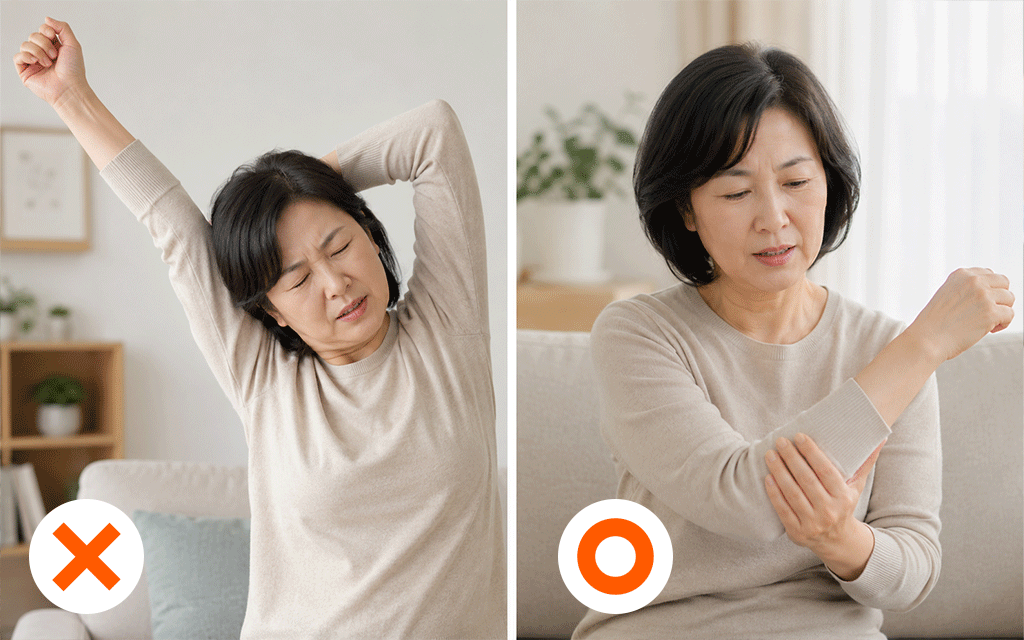
When pain is severe, it is safer to move gently within a pain-free range rather than doing aggressive stretching. If you try to “loosen” a stiff shoulder quickly by forcefully bending or pushing the arm, inflammation may worsen—so sudden, intense stretching of stiff tissue should be avoided.
When pain is extreme, reduce exercise intensity and do light movements for about 1–2 minutes, divided into multiple sessions throughout the day. Keep discomfort mild—around 3–4 out of 10 on a subjective pain scale.
If pain becomes worse after exercise and continues into the next day, you should reduce the range of motion or stop the movement. Paying attention to how your shoulder responds while continuing rehab is important.
4. If you have diabetes, what should you check?
If you have diabetes, you should carefully monitor blood glucose changes before and after frozen shoulder injection therapy. People with diabetes have a relatively higher likelihood of developing frozen shoulder, and fibrosis inside the joint may progress more quickly, which can deepen adhesions in the joint capsule.
Steroid medications reduce inflammation but can temporarily raise blood glucose. According to guidance from the Korea Disease Control and Prevention Agency (KDCA), blood glucose may remain elevated for about one week after an injection. Inform your clinician about diabetes before treatment, and confirm a plan to record fasting and post-meal blood glucose for one week after the injection.
If blood glucose rises, do not manage it on your own—consult your primary physician. If needed, medication dosage or the number of injections can be adjusted more conservatively. Monitoring may also be necessary when metabolic stability is affected, such as with thyroid conditions.
5. How do you choose between injections and procedures?
Frozen shoulder treatment is decided step-by-step by considering pain and stiffness, range of motion, duration of symptoms, and coexisting conditions together. In the early stage, when pain is very severe and exercise is difficult, an intra-articular steroid injection may be considered.
If the joint is significantly stiff with clear range-of-motion limitation, hydrodilatation may be considered. If severe stiffness persists despite hydrodilatation and rehabilitation therapy, manipulation under anesthesia (MUA; brisement) may be considered. If functional limitation still continues, arthroscopic capsular release may be considered.
✅Frozen shoulder injections & procedures at a glance
| Treatment Option | Primary Indications | Key Objective (Realistic) |
|---|---|---|
| Intra-articular Steroid Injection | Severe initial pain preventing arm movement | Rapidly reduces inflammation and pain to facilitate the start of rehabilitation |
| Hydrodilatation (Capsular Distension) | Prominent joint stiffness and restricted range of motion | Expands the stiff capsule to attempt improving range of motion |
| Manipulation Under Anesthesia (MUA) | Persistent severe stiffness despite sufficient conservative treatment | Releases contracture of the stiffened capsule under anesthesia to restore range of motion |
| Arthroscopic Capsular Release | Persistent severe stiffness and functional limitation despite other treatments | Directly releases the adhered capsule via arthroscopy to recover range of motion |
Treatment options are determined by integrating pain and stiffness, range of motion, duration of symptoms, and coexisting conditions.
6. Frequently Asked Questions (FAQ)
Q. Can I start stretching right after getting an injection?
On the day of the procedure, it’s best to avoid strenuous movements and rest. Afterward, you can begin rehabilitation by moving lightly within a tolerable pain range. If pain increases after exercise or becomes severe enough to wake you at night, reduce intensity and consult your clinician.
Q. How many injections can I receive?
The number of injections and the interval between them cannot be applied the same way to every patient. Clinicians decide based on pain level, response to prior treatment, coexisting conditions, the medication used, and the risk of side effects. If pain or stiffness persists despite repeated injections, it’s important to reassess whether other treatments are needed.
Q. My pain is severe—won’t exercise make it worse?
Aggressive stretching while enduring severe pain can be a factor that worsens symptoms. Instead, a safer approach is to continue short, light movements gradually within the range your pain allows.
Q. When should I seek a clinic visit sooner?
If night pain repeatedly disrupts sleep, or if daily activities are clearly limited and it’s difficult to begin exercise, consultation is needed. Rather than enduring it, it’s better to work with clinicians to plan the order of conservative treatment and exercise.
This health content has been reviewed by medical professionals, compiled from authoritative domestic and international sources, and is regularly updated in accordance with the latest clinical guidelines.
Sources
- Korean Shoulder and Elbow Society, Clinical Practice Guidelines for Primary Frozen Shoulder (Adhesive Capsulitis).
- KDCA National Health Information Portal, Patient Information Guide for Adhesive Capsulitis (Frozen Shoulder).
- Health Insurance Review & Assessment Service (HIRA), Coverage Criteria for Intra-articular Steroid Injections.
※ The copyright for all content on this blog belongs to medihi. Unauthorized copying, distribution, or derivative use is strictly prohibited, and violations may result in legal action without prior notice.