

In This Article
An implant is a treatment intended for long-term use, so when choosing a clinic, you should consider not only cost but also your overall health status, appointment availability, and the ability to respond to emergencies. This article compares the care systems and cost structures of university hospitals and private dental clinics, and summarizes selection criteria based on gum bone condition and systemic health.
1. Differences in Care Between University Hospitals and Private Dental Clinics
University hospitals are characterized by multidisciplinary collaboration, while private dental clinics are known for convenience and faster communication. These differences exist because the two types of institutions have different roles and operational goals.
University hospitals combine education and research with clinical care, and multiple departments may participate in treatment. They are equipped to handle patients with systemic diseases or complex surgeries, but the process can be complicated and waiting times tend to be longer.
In many private dental clinics, one lead dentist oversees everything from diagnosis to surgery and prosthetics. Communication with the care team is often quicker and more flexible. Rather than deciding which is “better,” it’s important to evaluate what matters most in your situation.
2. What Drives Cost Differences
Cost differences between university hospitals and private dental clinics come from what is included in the fee and how each facility operates. Even if you see guidance suggesting a more than fivefold difference—such as 4,000,000 KRW at a university hospital versus 700,000 KRW at a private clinic—it can be difficult to judge based on price alone.
University hospital fees may include faculty-level technical fees, emergency systems, research-related costs, and facility maintenance. Private dental clinics may improve efficiency and price competitiveness through bulk purchasing of materials or operating an in-house dental lab.
You can think of implant pricing like a smartphone plan. If the material cost is the “device price,” then add-on procedures like bone grafting and post-treatment follow-up are like data and additional services. In other words, instead of looking only at the device price, you should compare the final total that includes what you actually need.
When a low price is quoted, it’s wise to check the implant materials, what is included, potential add-on charges, whether bone grafting is needed, and the scope of follow-up care.
3. Hospital Size and implant Success Rates
If your systemic health and gum bone condition are good, the hospital’s size may matter less than accurate diagnosis, an appropriate treatment plan, and follow-up care. In patients with strong gum bone and good health, there is little difference in success rates between university hospitals and experienced private dental clinics.
Occasionally, university hospitals show higher failure rates because high-risk patients—who are difficult to treat in private clinics—tend to be referred there. This statistical difference arises because university hospitals take on more complex surgeries, not because the clinicians are less skilled.
It is difficult to assume you can use an implant for life simply because the surgery is expensive or the hospital is large. If your gum condition is not poor, it’s recommended to consult thoroughly with an experienced clinician and confirm the treatment plan and follow-up system.
4. Treatment Considerations for Older Adults and Patients With Chronic Conditions

If diabetes or hypertension is well controlled, implant surgery can be performed at a private dental clinic as well. For diabetes, a key consideration is whether HbA1c levels are stable; for hypertension, whether blood pressure is well controlled while taking medication.
However, special attention is needed regarding bleeding and infection risks. If you have long-term use of blood thinners such as aspirin or warfarin due to heart disease, or if you have used osteoporosis medications for an extended period, bleeding may be harder to control or jawbone recovery may be slower.
In such cases, care at a university hospital—with internal medicine co-management and emergency inpatient capability—is recommended.
5. Selection Criteria Based on Health Status and Lifestyle
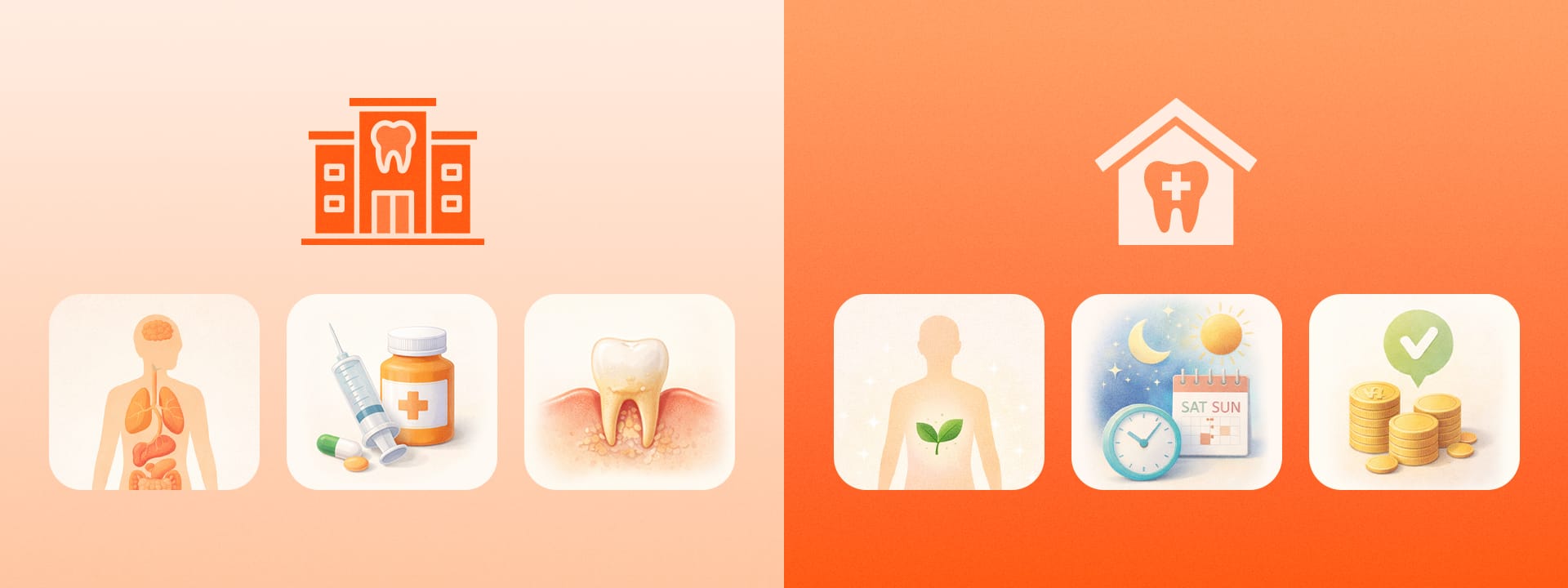
When choosing a facility, consider systemic conditions, medications, and gum bone status, as well as appointment hours and the convenience of follow-up care.
✅When university hospital care may be recommended
- When systemic health is poor due to severe diabetes, heart disease, kidney dialysis, etc.
- When you have taken osteoporosis medication for 3+ years or are receiving injections
- When there is almost no gum bone remaining due to implant failure
- When you prioritize safety in unexpected situations over cost and time
✅When you may consider consulting a private dental clinic
- When you have no underlying conditions, or they are well controlled with medication
- When weekday daytime visits are difficult due to work and you need evening/weekend appointments
- When you want verified materials at a reasonable cost
- When you want sterilization and follow-up care close to home
6. Frequently Asked Questions (FAQ)
Q. Do I need a referral letter for university hospital care?
To receive National Health Insurance benefits at a tertiary general hospital, you need a “medical care referral letter” issued by a clinic or hospital. Without it, you may have to pay the full cost yourself, so it’s important to prepare it.
Q. If an implant is relatively inexpensive, what should I check?
It’s best to thoroughly confirm the implant materials, what is included, potential additional costs, and the scope of follow-up care. More than the price, it’s recommended to first check the clinician’s experience and whether the diagnosis is honest and appropriate.
Q. How long after surgery can I chew food?
Typically, the lower jaw needs about 3 months, and the upper jaw about 4–6 months for the bone to integrate with the implant. If bone condition is good, a temporary tooth may be placed on the day of surgery, but waiting until the bone has sufficiently stabilized is important for long-term use.
Q. When should I take my parents in for an implant consultation?
If teeth are loose and chewing is difficult, or if dentures keep slipping out and meals are being skipped, it’s a good time to seek consultation. If missing teeth are left untreated for a long time, gum bone can gradually decrease, which may make later surgery more difficult or more expensive.
This health content has been reviewed by medical professionals, compiled from authoritative domestic and international sources, and is regularly updated in accordance with the latest clinical guidelines.
Sources
- Health Insurance Review & Assessment Service (HIRA), Dental implant Costs and National Health Insurance Coverage Criteria, 2024.
- Korean Academy of Periodontology, Clinical Guidelines for the Diagnosis and Treatment of Peri-implant Diseases, 2025.
- Lázaro-Abdulkarim et al., Failure of Dental Implants and Associated Risk Factors in a University Setting, International Journal of Oral & Maxillofacial Implants, 2022.
※ The copyright for all content on this blog belongs to medihi. Unauthorized copying, distribution, or derivative use is strictly prohibited, and violations may result in legal action without prior notice.