

The biggest concern for those considering veneers is, 'Will I regret shaving down my teeth too much later?'
A successful procedure depends not on 'unconditionally avoiding reduction,' but rather on how well the outer surface of the tooth is preserved before bonding, how precisely the restoration is crafted, and whether the bite is considered.
Rather than relying solely on flashy advertisements or photo reviews, making a safe choice requires checking 5 genuinely important criteria: the quality of the dental lab, the experience of the medical staff, and sterilization management.
'The review photos on Instagram are very pretty, but I am scared that shaving down my teeth a lot might cause problems later.'

This is a story heard very often in the consultation room. It is completely natural to hesitate between the desire to look better and the desire to protect your precious teeth.
Such concerns are not an overreaction, but a wise attitude of caring for your body. Once veneers are bonded, it is difficult to revert them to their original state.
Therefore, where and how you get them done makes a significant difference. From now on, we will guide you through five criteria you must check when choosing a dental clinic for veneers.
1. Treatment Suitability | Is it the right treatment for my teeth?
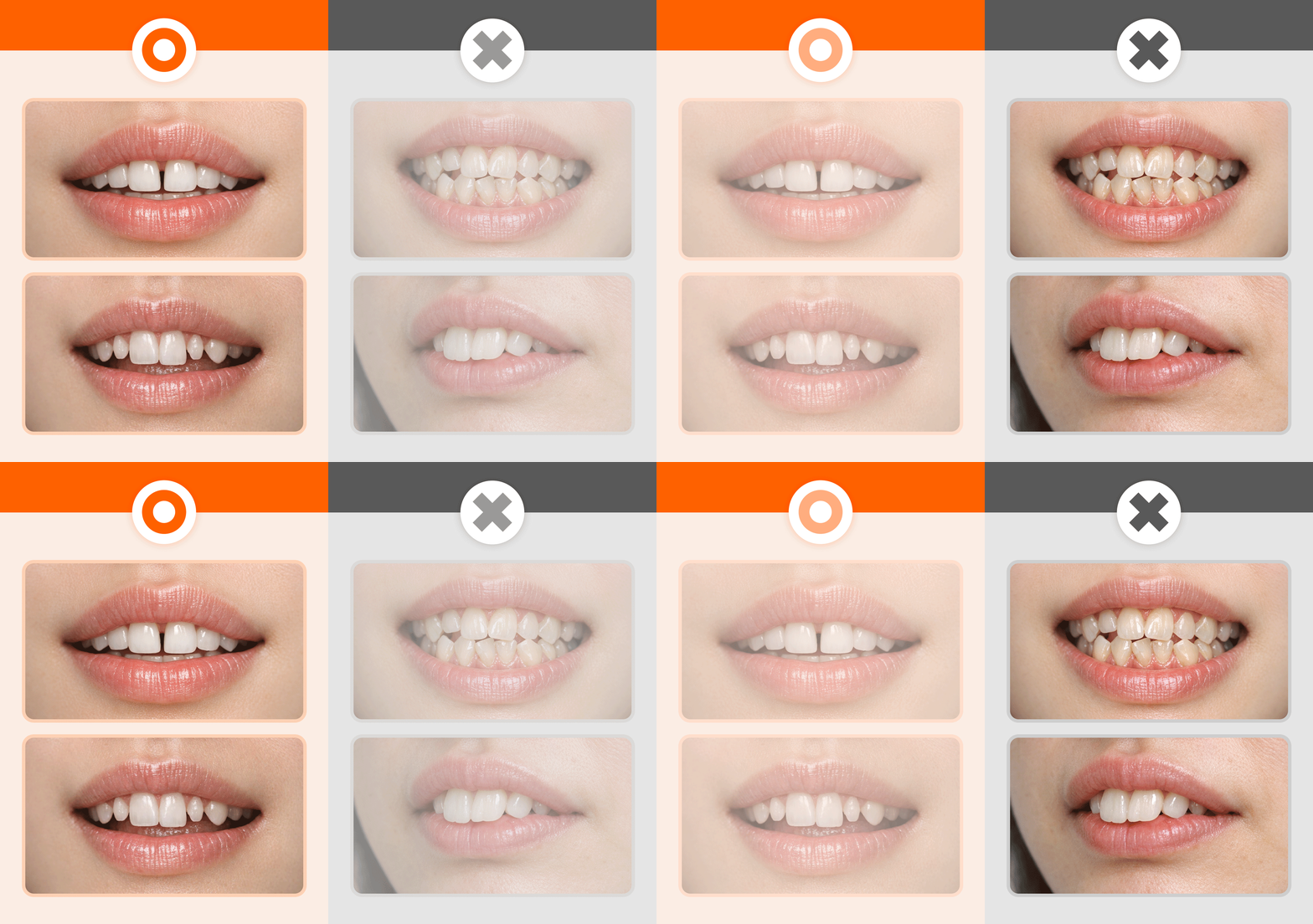
Whenever you look in the mirror, the color or shape of your front teeth might bother you, leading you to think, "I want to change them quickly with veneers."
However, veneers are not the answer to every concern. Veneers yield the most favorable results when the tooth alignment structure is relatively healthy, such as when the front teeth are slightly dark, slightly gapped, small, or chipped at the edges. In these cases, you can achieve a natural look without reshaping the teeth much.
Conversely, if your teeth are severely misaligned or the occlusion (how the upper and lower teeth meet) is poor, the situation may differ. Forcing veneers in such cases might require removing a larger amount of the tooth structure than in a normal alignment state. Depending on the diagnosis, it is advisable to combine the treatment with orthodontics if necessary.
A reliable clinic is one that explains 'why this method considers the lifespan of your teeth' rather than just saying 'it is possible' during the consultation.
2. Amount of Reduction | 'Preserving enamel' is key, rather than 'unconditionally no-prep'
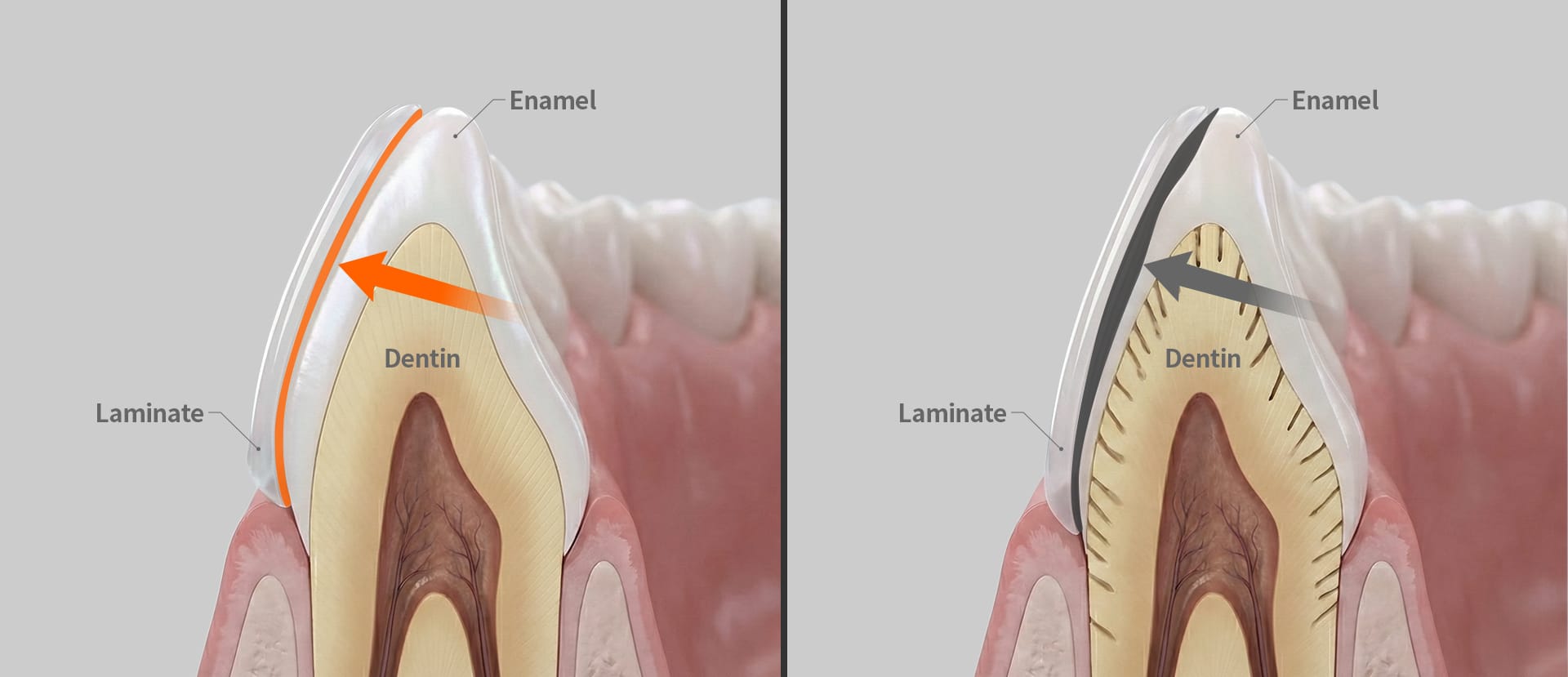
We often receive the question, 'I heard that no-prep veneers, which don't shave down the teeth, are optimal.' There is a core point you must understand here.
For veneers to last long, creating a stable structure and ensuring perfect adhesion is more important than 'not shaving at all'. The outer surface of the tooth is where bonding works most effectively, so the more this part remains, the lower the risk of the restoration falling off. Conversely, if shaved too deeply and much dentin is exposed, the bonding strength can weaken.
Therefore, a good dental clinic does not say 'we unconditionally do not shave.' They evaluate the thickness, protrusion, color, and bite of your teeth, and plan to reshape only as much as absolutely necessary.
Furthermore, they show you this plan before the procedure through drawings, photos, or models, allowing you to align on the expected outcome. A clinic that meticulously goes through this process is one that conducts proper veneer consultations.
To use an analogy, applying veneers is not like pasting wallpaper on an uneven wall, but rather like applying a tinting film perfectly onto a smooth glass window. Just as the film will lift if the glass is ground down too much, restorations will have a hard time holding up for long if the teeth are excessively shaved.
3. Lab Quality | Precision without a 0.1mm error creates longevity
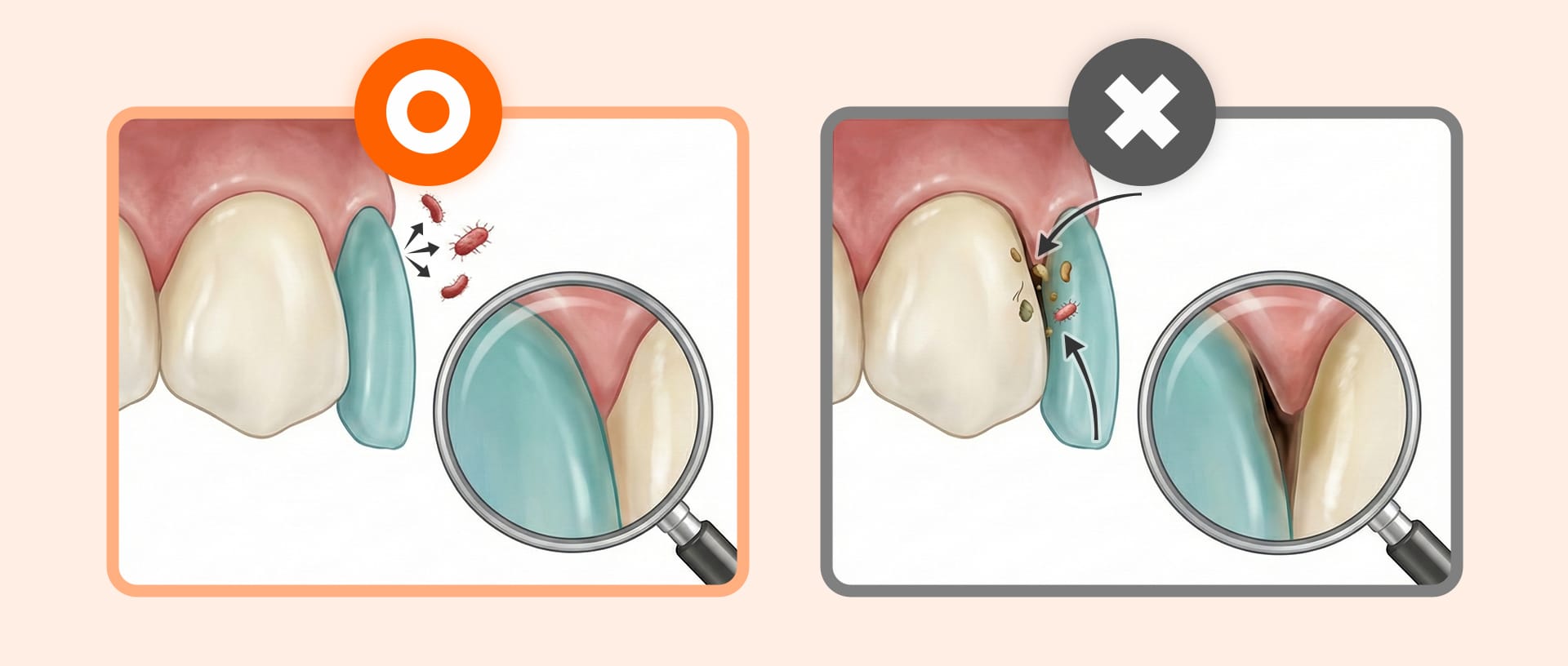
Veneers are not a treatment completed solely by a dentist. It involves the role of a dental technician who crafts the restoration to be bonded onto the tooth. Even if the doctor carefully shapes the teeth, problems will arise over time if the restoration is not precise. Because veneers are very thin, the boundary between the tooth and the restoration must match accurately to reduce food impaction and lower the risk of margin discoloration or cavities.
This precision stems from the dental lab's skill and manufacturing methods. The outcome can vary depending on whether there is a dedicated technician, whether digital equipment is used to minimize errors, and how often they communicate with the medical staff during the fabrication process. During your consultation, ensure they clearly explain 'where the restorations are made and what materials are used.'
If the lab work is subpar, it may look fine initially, but the gum margins may darken over time, or bacteria may enter through microscopic gaps, accelerating the need for retreatment. Thus, lab quality is directly linked to 'how long it lasts' rather than just 'how pretty it looks.'
4. Occlusal Design | Prioritizing 'chewing force' over just a pretty shape
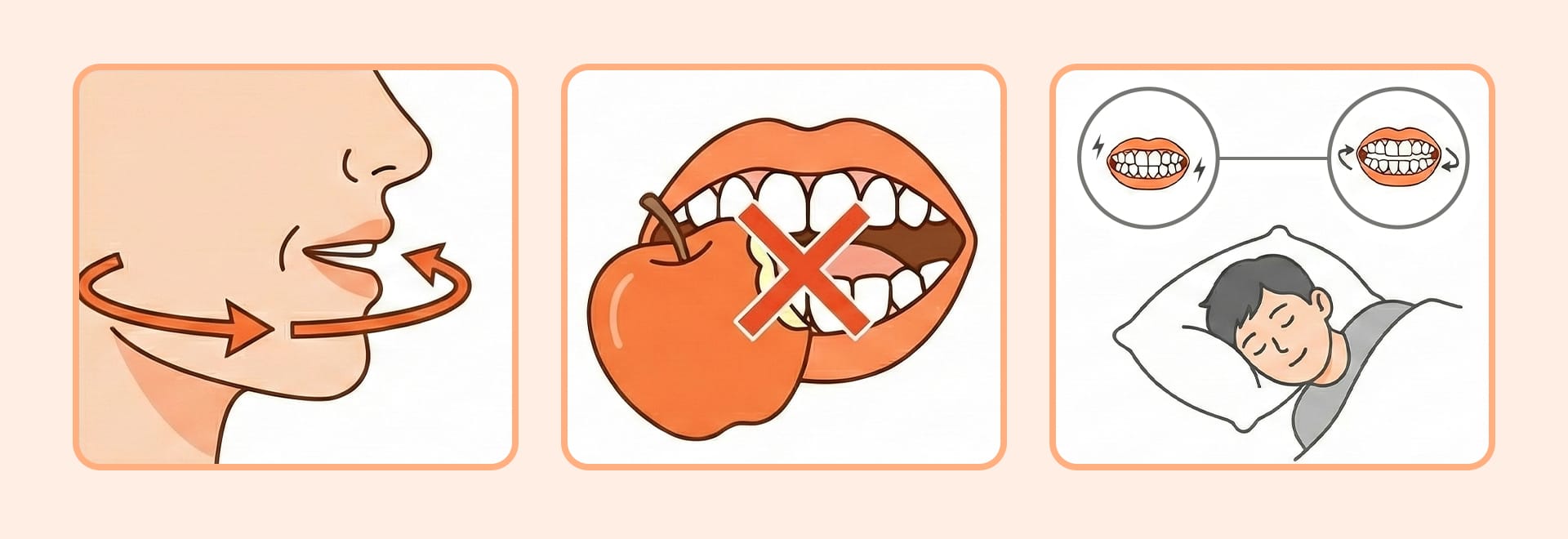
There are cases where veneers chip or fall off, requiring retreatment. This happens more frequently because the forces exerted when teeth meet are not properly evaluated, rather than because the material is weak.
Experienced medical staff do not stop at merely making the front teeth look pretty. They also consider the direction of jaw movement when speaking or chewing, any habits of teeth grinding at night, and whether excessive force is concentrated on the front teeth. During the consultation, check if they perform an occlusal examination and discuss how to reduce excessive force on specific teeth. If there is a grinding habit, they often recommend using a protective device (night guard) alongside the treatment. If these explanations come up naturally, it signifies a wealth of clinical experience.
If treatment focuses only on aesthetics without considering function, it is difficult to maintain over the long term, even if the outward appearance is good.
5. Safety Management | Check the invisible sterilization and authentic reviews
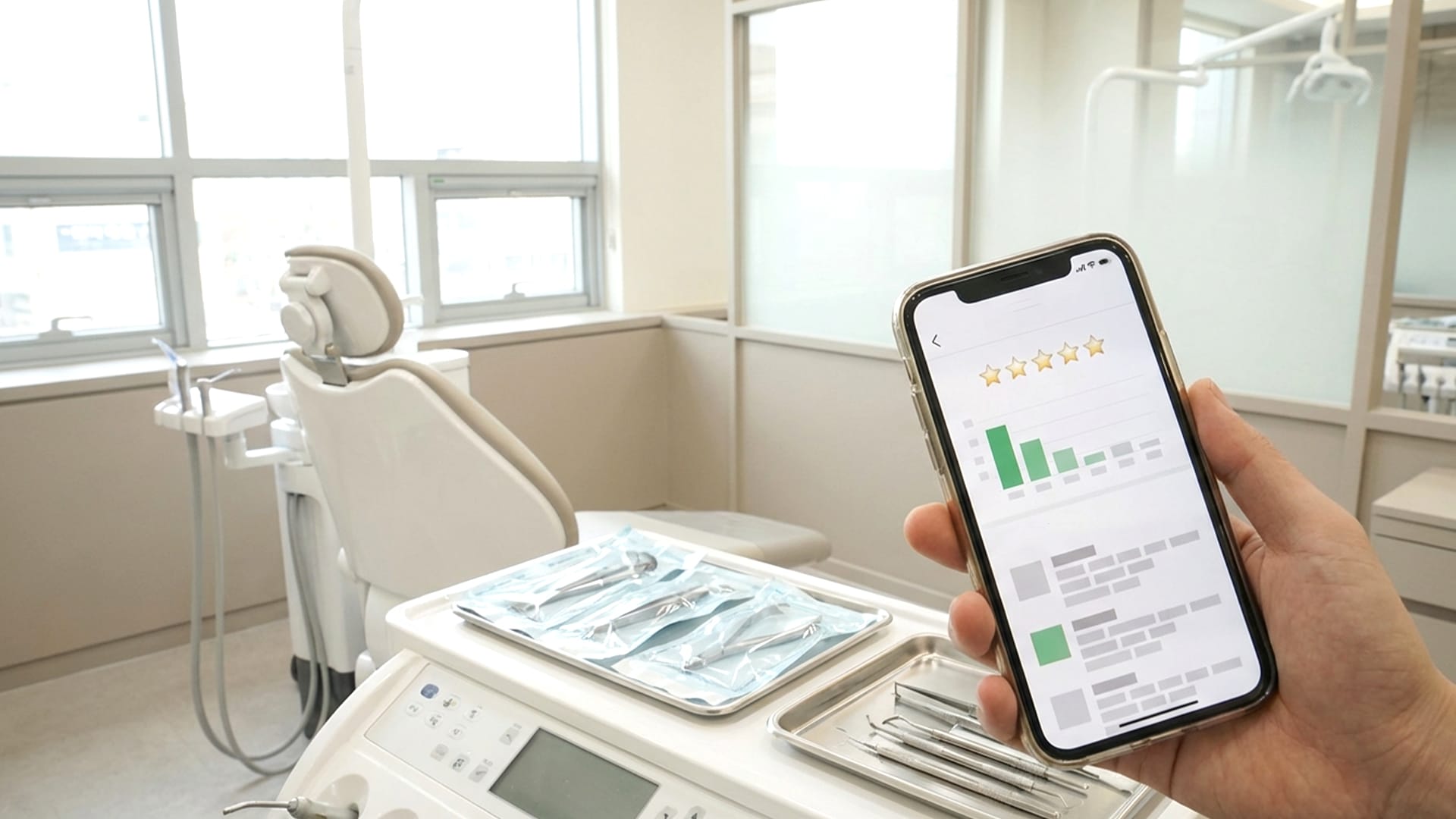
The bonding process is crucial for veneers. The restoration can only be securely bonded if the instruments are thoroughly sterilized and the clinical environment is organized.
How instruments are sterilized, whether sterilization is consistently checked, and whether infection control in the clinic is well-managed are fundamental conditions of a 'good dental clinic.'
When looking at reviews, it is advisable not to judge solely based on before-and-after photos. Public reviews may have limitations, and it's hard to tell how long the results will last just from the immediate post-procedure appearance. Instead, reviews mentioning post-treatment care and function—such as 'my gums are comfortable even as time passes,' 'they explained the maintenance methods in detail,' or 'they rechecked my bite'—are more helpful.
Ultimately, use reviews as reference materials, but ensure you also verify whether their content aligns with the actual treatment process and management system.
6. Frequently Asked Questions (FAQ)
Q.What kind of teeth can have no-prep veneers?
A. It may be possible if the front teeth have a slight gap or are on the smaller side, and if the teeth do not protrude much. However, if the teeth are misaligned or protruding, applying veneers without reduction can make the teeth look thick or cause discomfort at the gum margin. In such cases, reshaping minimally through a proper diagnosis might be a better approach.
Q.Can there be tooth sensitivity after getting veneers?
A. There might be a temporary sensitive feeling immediately after the procedure. This often subsides over time, but if the teeth were shaved deeply and much dentin was exposed, the sensitivity could linger. This is why a plan that well-preserves the outer surface of the tooth from the beginning is important.
Q.What should I do if a veneer chips or falls off?
A. Chipping or detachment can occur if the bite force is strong, if there is a teeth-grinding habit, or if the margins do not fit well. Minor fractures can sometimes be polished and used, but larger ones might require remaking the veneer. If it repeatedly falls off, the process of re-evaluating and adjusting the bite is necessary.
Q.In what cases should I hurry to visit a dental clinic or get a consultation?
A. You need medical attention if the gaps between your front teeth widen and food frequently gets stuck, if the gums around the restoration swell and bleed, or if the edges of your teeth are chipped, causing continuous sensitivity.
Additionally, if you experience significant stress in your daily life due to alignment or color, it is advisable to get a consultation to find a method suitable for your teeth.

Although veneers involve bonding thin restorations, it is an intricate treatment where minor differences affect the outcome and maintenance. Instead of the phrase "we unconditionally do not shave," prioritize checking how much they preserve the outer surface of your teeth, how precisely the restorations are crafted, and whether they also examine your bite. Consistent hygiene management and regular check-ups after treatment will help you use the veneers more comfortably for a long time. A careful choice tailored to your teeth and steady maintenance ultimately make the biggest difference.
Sources
- Korean Academy of Esthetic Dentistry (KAED). (2023).
- Guidelines for Esthetic Dental Treatment. Korea Disease Control and Prevention Agency (KDCA) National Health Information Portal. (2023).
- Indications and Precautions for Laminate Treatment. Alghazzawi, T. F. (2024). Clinical survival rate and laboratory failure of dental veneers: A narrative literature review. Journal of Functional Biomaterials, 15(5).
※ The copyright for all content on this blog belongs to medihi. Unauthorized copying, distribution, or derivative use is strictly prohibited, and violations may result in legal action without prior notice.
Recommended reads
 medihi