

In Korean orthodontics, a digital setup is not an "auto-complete" result but an initial blueprint (simulation) established by the medical team. It serves as a starting point that must be finalized through continuous verification and adjustment.
"The screen shows my teeth becoming perfectly aligned; why does it take longer in reality?"
"Why do results vary between clinics even when they use the same brand of aligners?"
Diligent patients researching clear aligners often ask these questions first. The sophisticated 3D simulation videos shown during consultations look like a window into the future, naturally raising expectations. However, it is crucial to understand that an Orthodontic Digital Setup is not a fixed answer but rather an 'initial blueprint' or a 'hypothesis' created by the medical team.
Think of it like modern navigation: even if the GPS guides the way, it is the driver's responsibility to handle road conditions or unexpected situations encountered during the trip. In clear aligner therapy, the medical team is the pilot using the appliance as a tool. The process can change significantly depending on how the doctor interprets and responds to your unique biological reactions. Today, we will explore the professional considerations hidden behind the screen and the safety criteria international patients should check.
1. Will the Treatment Match the Orthodontic Digital Setup Exactly?
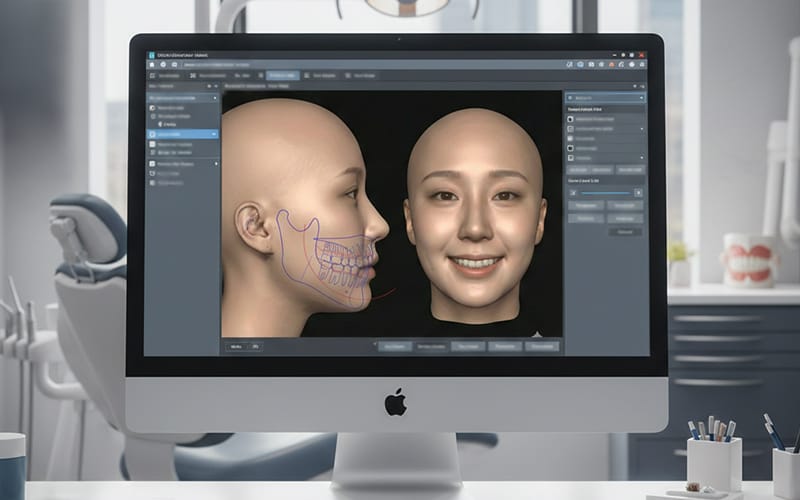
The 3D images displayed on the monitor during consultations are results calculated based on mathematical algorithms. In clinical practice, however, subtle differences can occur between this simulation and actual tooth movement. This is usually due to biological characteristics and physical variables of the human body rather than software errors.
First, there is biological diversity. While computer programs perceive teeth as simple objects, real teeth are embedded in living tissue—the jawbone (alveolar bone) and periodontal ligaments.
- High bone density or long tooth roots: Teeth may react more slowly than the simulation even when the same force is applied.
- Weak periodontal status: The risk of teeth moving faster than expected or tilting in unintended directions must be considered.
Second, there is the tracking variable. The setup stage assumes the appliance wraps around the teeth perfectly. In reality, the aligner may slightly lift or "lose track" depending on wearing habits or the surface condition of the teeth.
If these deviations are not detected and adjusted early, the gap between the plan and the actual position will widen. Therefore, rather than believing the result will be identical to the screen, it is much more important to verify how the medical team validates and adjusts for these variables.
2. Why Are the Number of Stages and Treatment Duration Different?
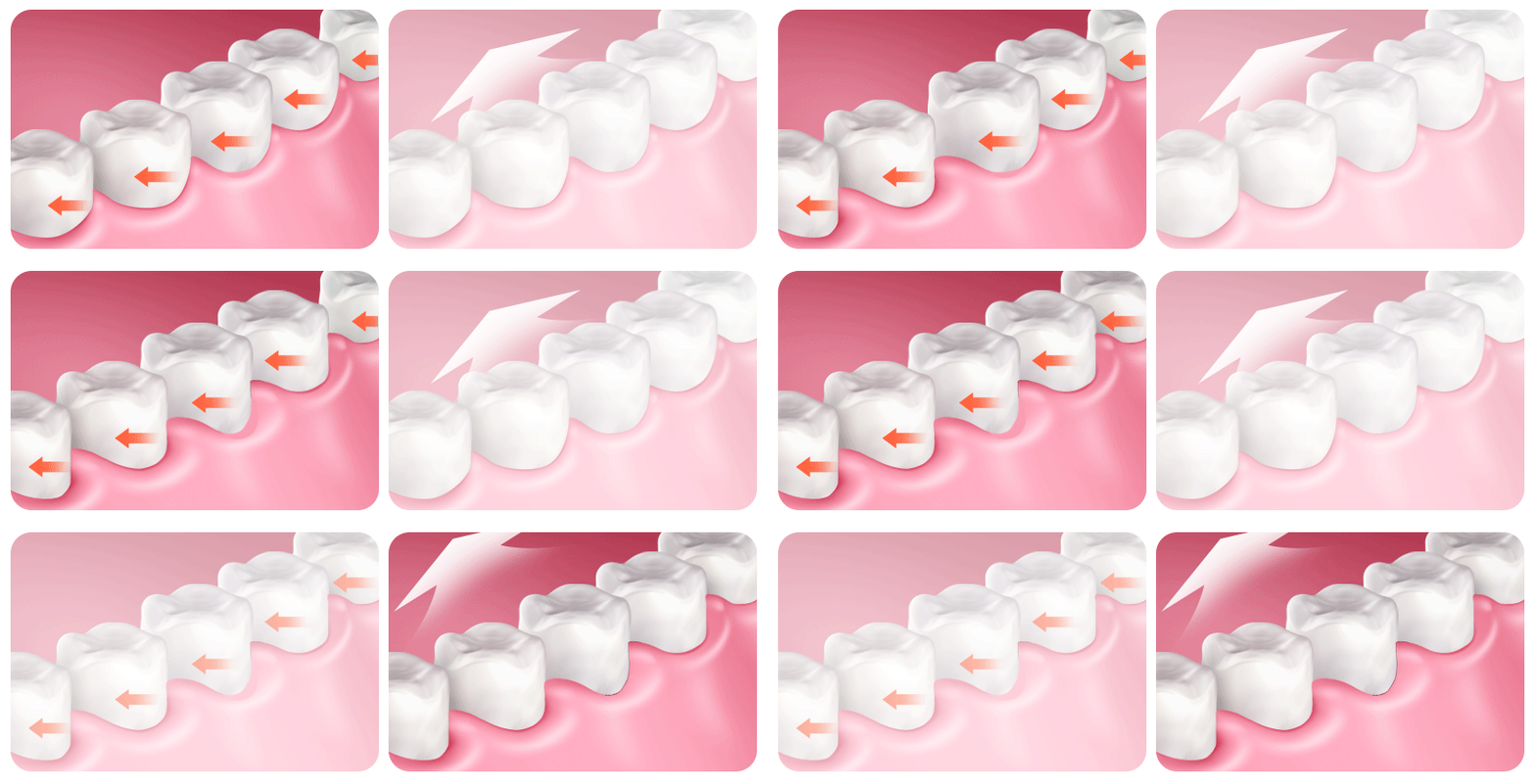
When receiving consultations at different clinics, you might be confused because the total number of aligners (stages) or the estimated duration varies even for the same brand. This happens because every medical team has different Staging strategies and risk management standards. A lower number of stages does not necessarily mean superior technology, nor does a higher number imply over-treatment.
Staging is the blueprint that determines the sequence and amount of tooth movement.
- Sequential Movement Strategy: This involves moving teeth one by one, starting from the molars, to create space before aligning the front teeth. While this increases the number of stages and duration, it is advantageous for reducing stress on tooth roots and increasing movement stability.
- Simultaneous Movement Strategy: This moves multiple teeth at once to reduce the number of stages. This is only feasible if the gum health is excellent and the medical team closely monitors and controls potential unwanted counter-reactions.
Additionally, the number of stages varies based on how frequently Refinement (mid-course correction) intervals are scheduled. To minimize tracking errors, some doctors set very conservative movement amounts per stage, which increases the total count. Ultimately, what matters more than "finishing quickly" is whether the medical team can explain if the plan was designed at a speed that is safe for your dental health.
3. How Can You Judge Medical Expertise During a Consultation?
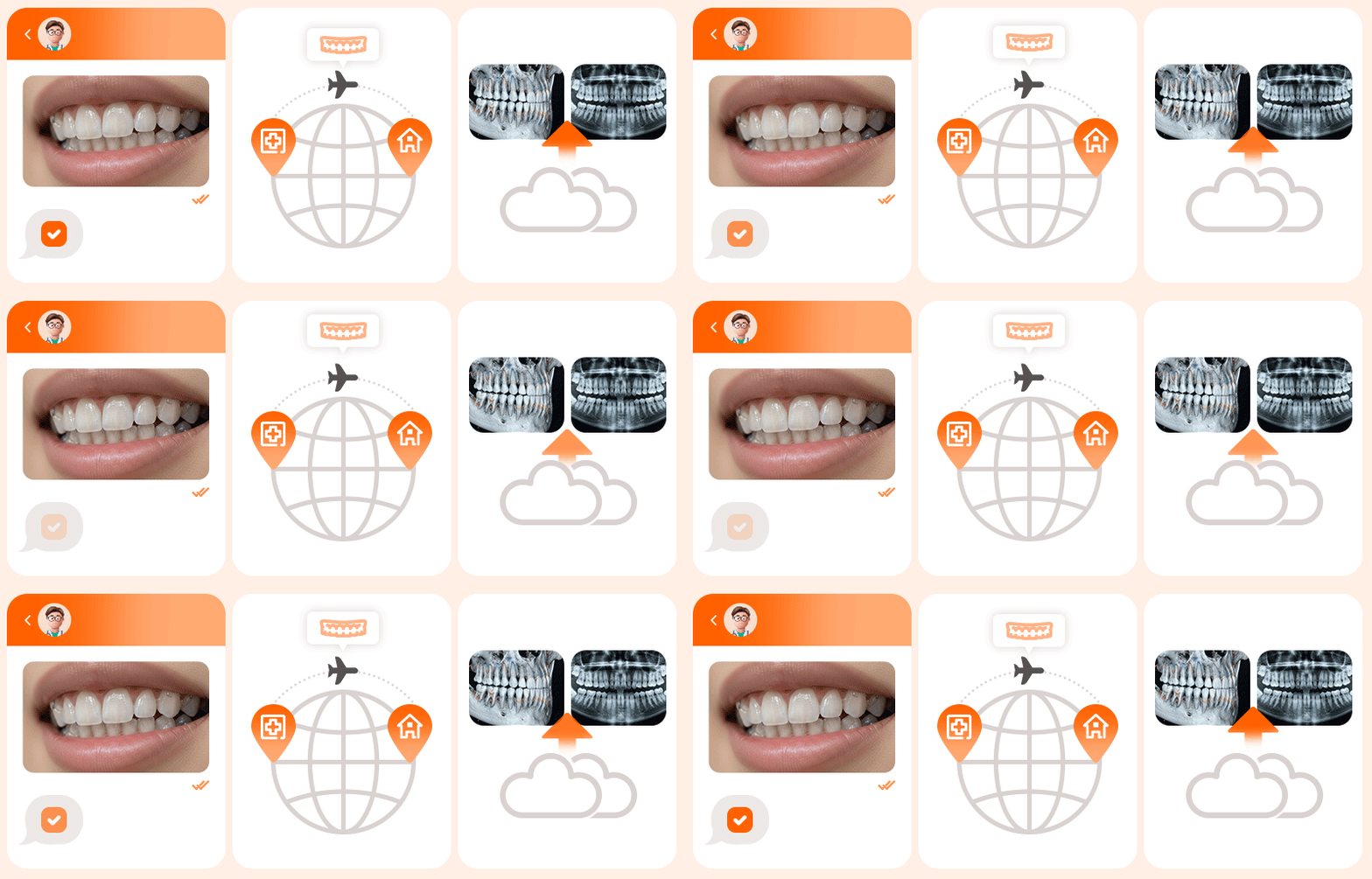
For those living abroad or with limited stay schedules in Korea, 'flexibility in the treatment process' and 'preparation for contingencies' are just as important as the precision of the digital setup. Check the plan based on these three pillars: Visits, Stay, and Aftercare.
1) Visits (Essential In-Person Planning)
Clear aligner therapy is not a treatment where you simply receive aligners by mail. There are essential in-person check-points.
- Long intervals between visits: If you cannot visit for 3–6 months, check if there is a communication channel for remote tracking of the aligner fit.
- Tracking issues: Ask for clear guidelines on whether you should visit immediately or move to the next stage if an aligner does not fit perfectly.
2) Stay (Possibility of Re-designing)
As mentioned, discrepancies can occur in actual movement, requiring a 'Refinement' process where the plan is modified and new aligners are manufactured.
- Short stay duration: If a refinement is needed, you must confirm in advance whether re-scanning and receiving new aligners is possible within your Korean itinerary.
- Tight schedules: It is safer to choose a clinic that offers alternatives—such as international shipping of aligners—rather than one that simply claims "it will definitely be finished."
3) Aftercare (Management After Returning Home)
Teeth have a strong tendency to return to their original positions after treatment ends.
- Retention Plan: It is wise to confirm if the clinic can provide medical referral letters or digital data so you can handle broken or lost retainers locally after returning home.
- Periodic Check-ups: Look for a long-term roadmap where you can be checked during future visits to Korea in 1–2 years.

In clear aligner therapy, the brand is merely a sophisticated tool; the medical team using that tool is who completes your smile. Sophisticated 3D simulations are just the starting point, and the process of making that plan a reality requires constant observation and correction by a doctor.
First, remember that the digital setup is an initial simulation, not a final result.
Second, the number of stages and duration vary based on staging strategies and risk management.
Third, international patients must verify if the roadmap for visits, stay, and aftercare is specific and feasible.
Rather than simply asking "Which brand do you use?", try asking "How do you predict variables for my teeth, and what alternatives exist if the plan deviates?" Finding a medical team that meticulously navigates unexpected situations will lead to a safer and more satisfying outcome.
Sources
- Korean Dental Association (KDA), Guidelines for Dental Medical Advertising, Year unknown (Cited within SSOT).
- Korean Association of Orthodontists (KAO), Guidelines for Orthodontic Patients, Year unknown (Cited within SSOT).
- Scientific Reports (Nature), Predictors of refinement in clear aligner therapy: A retrospective study, Year unknown (Cited within SSOT).
※ The copyright for all content on this blog belongs to medihi. Unauthorized copying, distribution, or derivative use is strictly prohibited, and violations may result in legal action without prior notice.
Recommended reads
 medihi