

Do not panic if you experience issues with your orthodontic appliances while in a foreign country. We provide a clear guide to assessing your condition across three stages and the appropriate steps to take for each.
“A wire is poking my cheek and it’s bleeding—am I at risk for tetanus?”
“My bracket fell off, and I think I swallowed it.”
Unexpected problems in an unfamiliar place where you don't speak the language fluently can be overwhelming. Often, the fear stems from not knowing the priority of actions rather than the physical discomfort itself. However, there is no need for excessive worry. Most orthodontic issues are not life-threatening emergencies but rather urgent situations requiring minor intervention to reduce discomfort.
Here is how to categorize your status using a "Traffic Light" system: Red (Danger), Yellow (Caution), and Green (Observation).
1. Red Light: Airway Risks, Infection, and Bleeding
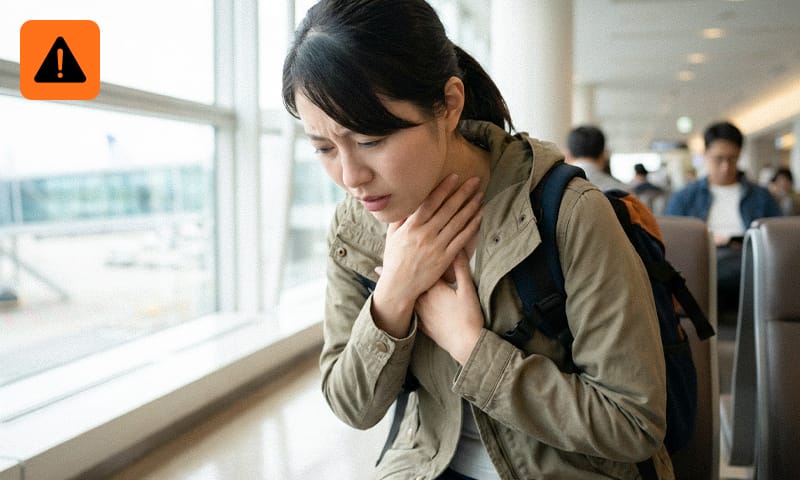
When a problem occurs, you must first evaluate your body's systemic reaction rather than the extent of the appliance damage. While many patients worry about their treatment plan being delayed, the medical priority is always airway maintenance and infection control.
In an overseas medical environment, it is crucial to distinguish between an 'Emergency' and an 'Urgent' matter. If you experience the following 'Red Light' symptoms, it may require general medical intervention rather than a dental fix, and evaluation by a local emergency medical system is the priority.
- Airway and Breathing Risks: If you suspect you have swallowed a component or that it has entered your airway (aspiration). If you have difficulty breathing or a persistent cough, a radiological evaluation (X-ray) is more urgent than a dental consultation.
- Signs of Severe Infection: If there is noticeable swelling around the face or jaw accompanied by a high fever and difficulty opening your mouth, the condition may have progressed beyond simple gum irritation.
- Uncontrollable Bleeding: If bleeding does not stop even after applying firm pressure with gauze, or if you feel dizzy, immediate hemostatic treatment is required.
If you are not experiencing these symptoms, you can breathe a sigh of relief. Most bracket detachments or wire pokes are not life-threatening. You can calmly move to the 'Yellow Light' stage: protecting your soft tissues.
2. Yellow Light: Bracket Detachment and Wire Poking
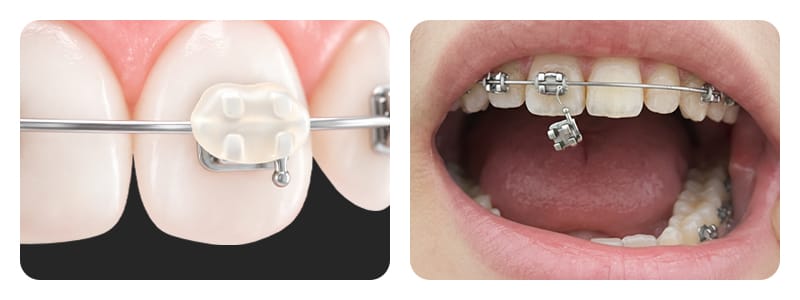
If you are not in the Red Light category, you need to address mechanical issues that cause discomfort, such as a wire poking your cheek or a bracket that has fallen off. The core principle here is: “Prioritize protecting the soft tissue (oral mucosa) over repairing the appliance.”
1) How to Handle Wire Poking
- Protection First: As teeth move during treatment, the end of the wire may protrude. Do not attempt to cut it with nail clippers, as this poses a risk of infection or accidental swallowing of fragments. The safest method is to take a pea-sized amount of orthodontic wax and cover the sharp area.
- When to Visit a Local Clinic: If the wax does not provide relief or if deep ulcers and persistent pain continue, consider visiting a local dentist. Remember, the goal is not a 'perfect repair' but minimal intervention, such as clipping the sharp end.
2) How to Handle a Bracket Falling Off
- Save the Part: Do not throw away the detached bracket; keep it in a safe place.
- Do Not Attempt Reattachment: Never use superglue or industrial adhesives. This can cause mucosal burns or damage the tooth surface. If the loose bracket is not poking your gums, secure it with wax and wait to consult your orthodontist.
When visiting a local clinic, it is more realistic to say, “Please provide emergency treatment to prevent oral irritation,” rather than asking them to fix it exactly as it was. Since changing the orthodontic design can affect the overall plan, the focus locally should be on pain relief and documentation.
3. Green Light: Lost or Damaged Clear Aligners
Lost aligners are a common occurrence. Many patients assume they can simply move to the next stage, but this requires careful judgment.
Can I move to the next set?
- Case A: Near the end of the current wear cycle It may be possible to move to the next stage after consulting your orthodontist.
- Case B: Only a few days into the current stage The teeth may not have moved sufficiently. Forcing the next aligner on can cause excessive pressure or pain.
The most important factor is minimizing the time spent without wearing any appliance. If the teeth are left without guidance for too long, they tend to relapse toward their original positions. Since you cannot see your primary doctor easily while abroad, use the following template to send an inquiry along with photos. Documentation is key to maintaining treatment continuity.
Record Template for Your Primary Doctor in Korea
- Time of occurrence and details (Lost or Damaged)
- Current symptoms (Location of pain, whether a part was swallowed)
- Intraoral photos (Frontal view and the specific area of discomfort)
- Current stage of treatment (e.g., Day 3 of Stage N)
- Details of local emergency treatment (if any)
To prepare for potential loss, it is safest to travel with your 'Previous Stage + Current Stage + Next Stage' aligners as backups.

When an unexpected orthodontic issue arises abroad, please remember these three criteria:
First, Red Light (Breathing, Infection, Bleeding) check is the absolute priority. If systemic symptoms are present, a local emergency medical evaluation comes before dental concerns.
Second, for Yellow Light (Mechanical Issues), prioritize 'protection' over 'repair.' Use wax to prevent oral wounds and avoid forced self-manipulation of the appliances.
Third, for Green Light (Lost Aligners), maintain 'continuity' through records. Focus on emergency care during local visits, manage variables during your stay, and keep records for your aftercare once you return home.
Orthodontic treatment is a long journey. While an unexpected situation abroad may feel like a major setback, focusing on 'safe management' rather than 'perfect resolution' will help you continue your treatment healthily upon your return.
Sources
- Korea Disease Control and Prevention Agency (KDCA), Oral Diseases and Emergency Care Information, 2023
- Korean Association of Orthodontists (KAO), Emergency Management During Orthodontic Treatment (Public Reference)
- NHS (National Health Service), Orthodontic Emergencies: A guide for patients, 2021
※ The copyright for all content on this blog belongs to medihi. Unauthorized copying, distribution, or derivative use is strictly prohibited, and violations may result in legal action without prior notice.
Recommended reads
 medihi