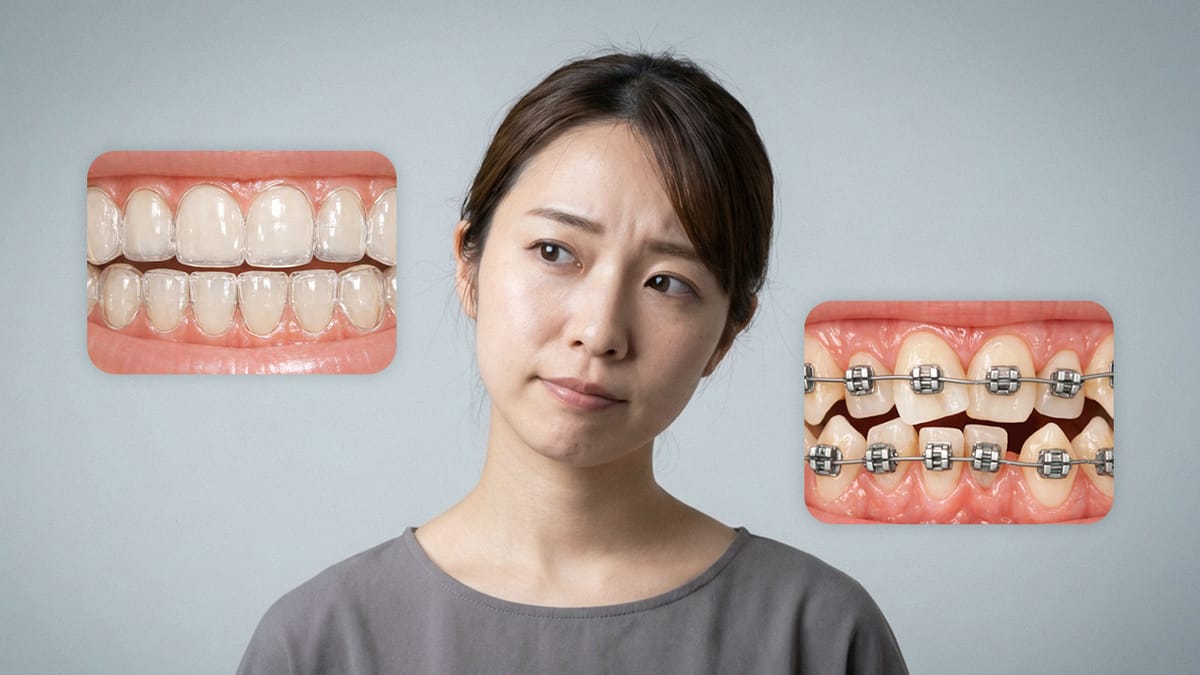

An orthodontic visit cycle is not merely a date interval but a "checkpoint" representing essential evaluation points for each treatment stage. For those with a fixed stay in Korea (12–24 months), we have outlined schedule design methods to reduce the risk of extended treatment time and emergency situations.
"Can I finish my braces during my 18-month stay in Korea?"
"I missed a couple of appointments because I was busy with work. Will my results be affected?"
For those living a busy life abroad for studies or work, a "fixed visit schedule" can feel like a significant burden. Especially for foreign residents with set visa expirations or departure dates, there is often anxiety that a single delay might disrupt the entire plan. Just as a lighthouse guides a ship, orthodontic visits serve as vital reference points to ensure your treatment stays on track.
From a medical perspective, a visit interval is less of an "unbreakable rule" and more of an "operational variable" used to adjust the pace for a safe journey to the destination. Today, we will kindly explain the biological principles behind visit intervals, the realistic risks of delays, and customized schedule management strategies for different stay durations (12, 18, and 24 months).
1. Why is it difficult to specify the visit interval as exactly 'X weeks'?
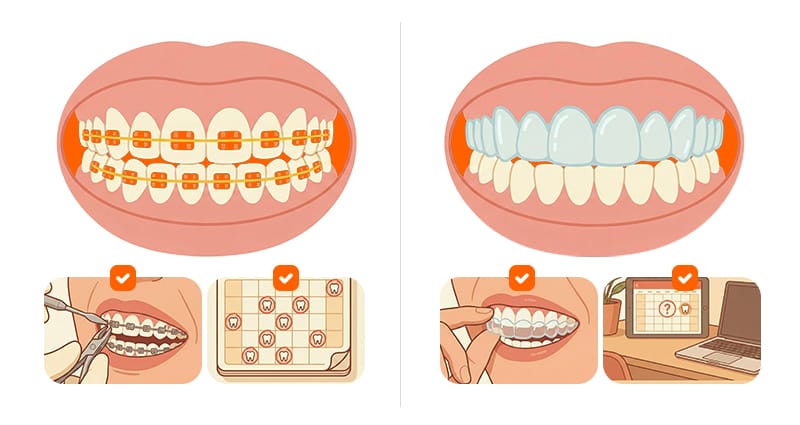
Many people ask, "Do I have to come exactly every 4 weeks?" In principle, orthodontic visit intervals are determined flexibly based on the patient's biological response and the type of appliance. This is due to the biological mechanism of tooth movement.
1) Bone Remodeling: The time required for jawbone regeneration
Orthodontics is not just about pulling teeth with force; it involves a process where the bone surrounding the tooth root is absorbed and then regenerated. Just as a plant needs time to take root after being repotted, our bodies need time to adapt to the pressure of the appliance and recover tissue. When a clinician sets the next appointment, they are considering this "recovery cycle." Applying force too frequently can cause strain, while leaving it too long may cause tooth movement to stall.
2) Fluidity based on appliance and stage
- Fixed Appliances (Brackets, etc.): Regular visits are essential as the clinician must adjust the wires. Visits may be more frequent during the initial alignment or fine-tuning stages, but intervals may become longer during stable stages like space closure.
- Removable Appliances (Clear Aligners, etc.): Since the patient switches the aligners themselves, the primary purpose of the visit is "plan verification" rather than "adjustment."
- Condition A (High compliance and good movement): Visit intervals may be extended.
- Condition B (Poor fit or pain): Immediate visits are required for plan modification.
2. What risks should you prepare for when a visit is delayed?
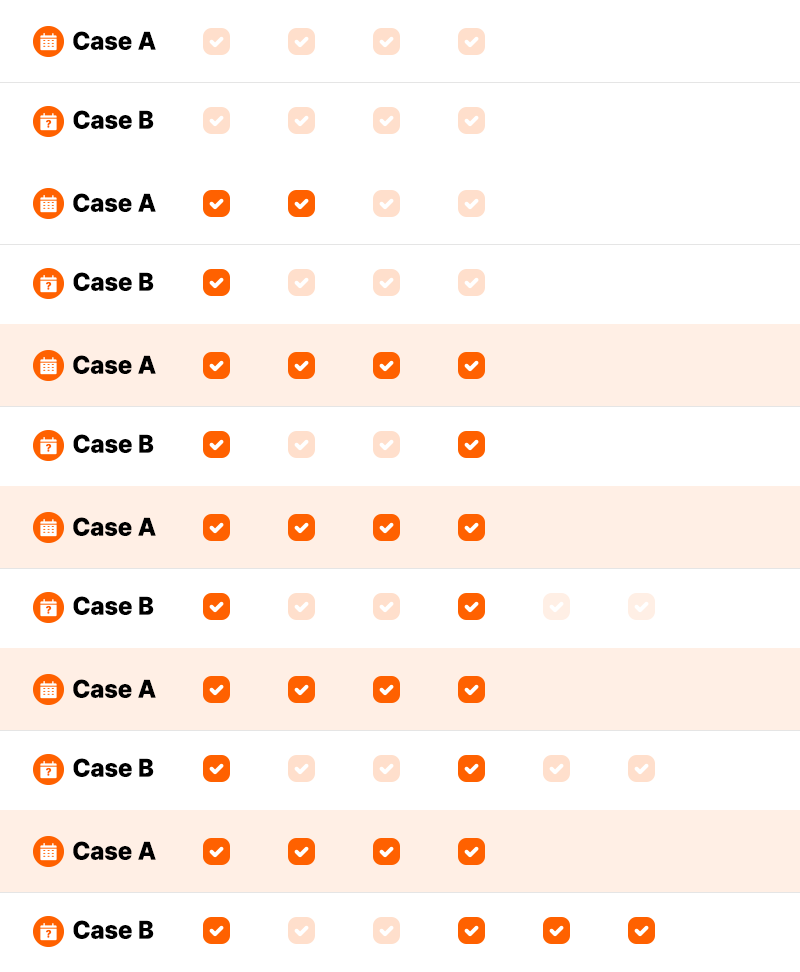
We often hear, "I have a business trip and need to come 2 weeks late. Is that okay?" To conclude, a single delay does not directly lead to treatment failure, so do not be overly anxious. However, there may be impacts regarding "treatment duration" and "operational risks."
1) Treatment duration may increase
A visit is like refueling the force applied to the teeth. Just as missing a gas station delays your arrival, failing to get adjustments at the right time can stall tooth movement or cause force to be applied in unintended directions. Studies indicate that when regular visit intervals are not maintained, the total treatment duration tends to be extended.
2) The risk of a 'management gap' is more important than the duration
Actually, more than a slight increase in duration, you should be concerned about appliance damage or hygiene issues.
- Emergency Situations: If a bracket falls off or a wire pokes you and is not treated immediately, pain may make brushing difficult.
- Hygiene Risks: Missing regular checkups can lead to neglected tartar removal or gum inflammation management. Therefore, if you must postpone a visit, meticulous brushing and self-checks are essential.
3. How to design a schedule for 12, 18, or 24-month stays?
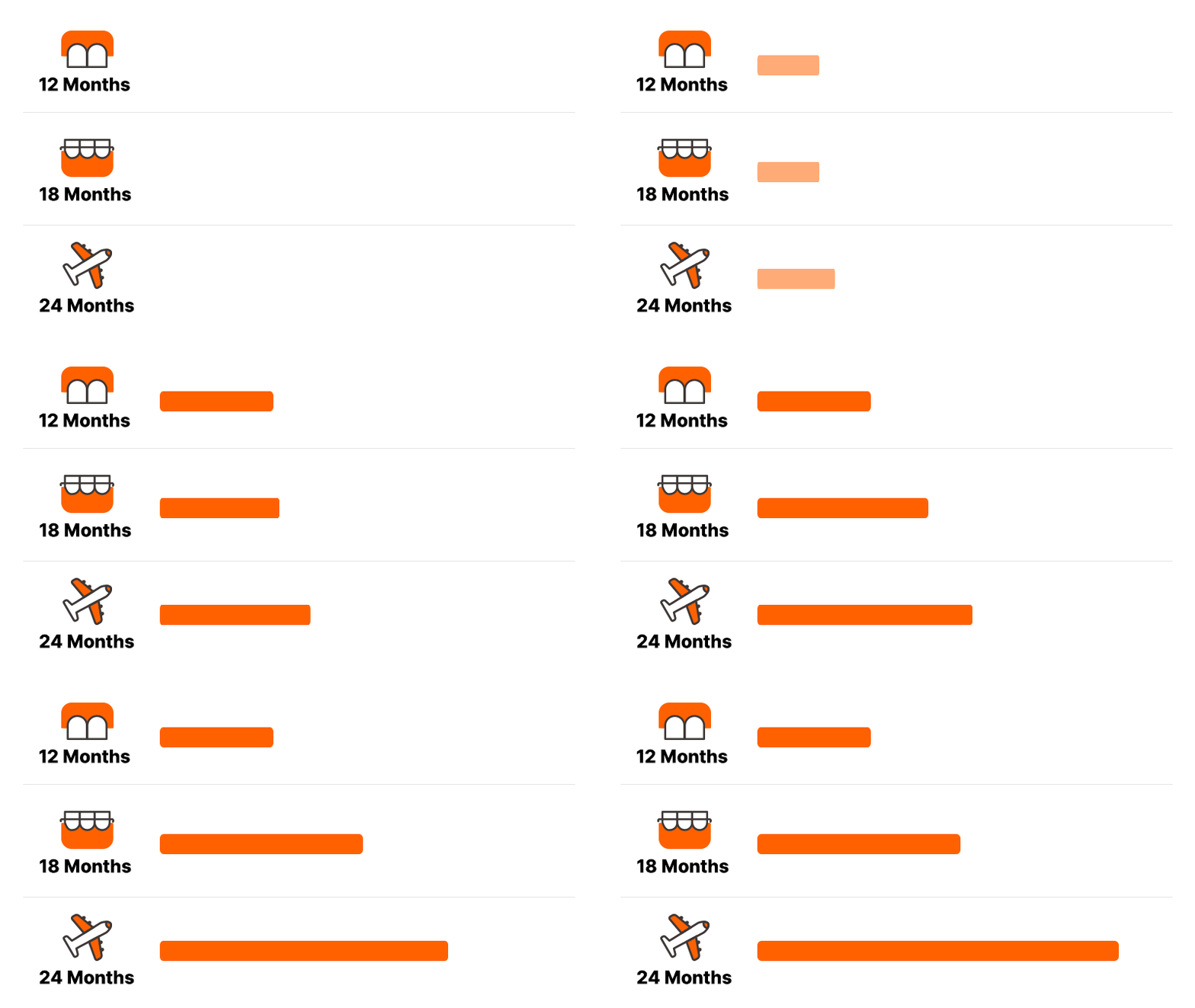
If your stay in Korea is fixed at 12, 18, or 24 months, it is wise to view this time as a "resource" to be used efficiently rather than a "deadline." The focus points differ by duration.
1) The 12-Month Frame: Selection, Focus, and Record Keeping
One year is often too short to comfortably complete full orthodontic treatment. Therefore, a realistic approach is needed.
- Goal Setting: Consider "partial orthodontics" focusing on front teeth alignment or decide to undergo the "initial phase" in Korea before continuing treatment in your home country.
- Checkpoint: Before leaving, ensure you obtain diagnostic data (X-rays, scan data) and progress records so the next clinician can continue treatment seamlessly.
2) The 18-Month Frame: Standard Flow and Variable Management
This duration allows for a standard orthodontic flow, but you must prepare for variables.
- Condition A (Stable schedule): Prioritize regular checkups suggested by the clinician to potentially move up the completion date.
- Condition B (Frequent travel/relocation): Ensure "checkup slots" are secured before and after major travel events, and consult with the clinician in advance on emergency protocols for gaps in care.
3) The 24-Month+ Frame: Designing for Aftercare
A period of two years or more allows for management from treatment through the retention phase after appliance removal.
- Full Roadmap: Do not view the removal of braces as the end. Include the initial stabilization period for retainer fabrication and habit formation in your plan.
- Post-treatment Care: If you have plans to return home or move, check in advance for contingency plans regarding retainer damage or the possibility of making spare retainers.

The orthodontic visit schedule in Korea is a process of coordinating your life in Korea with your treatment goals rather than a set of rigid rules. Instead of asking "How many weeks?" try asking "What are the essential checkpoints I shouldn't miss at this stage?"
For our international residents, here are the three core criteria (Visits/Stay/Aftercare):
Visits: Intervals vary by stage. Mark periods like appliance bonding, removal, or plan changes as "essential checkup zones."
Stay: If your schedule is delayed, pay extra attention to oral hygiene and appliance care during that gap. Management can compensate for some duration extensions.
Aftercare: Treatment doesn't end when the braces come off. Confirm "record transfers" and "retainer management plans" before departure for a true conclusion.
We sincerely support your life abroad ending with a healthy smile.
Sources
- Proffit, W. R., et al. Contemporary Orthodontics, 6th Edition. Elsevier, 2018.
- Tsichlaki, A., et al. "Duration of appointment intervals for patients with fixed orthodontic appliance: A systematic review." ScienceDirect, 2016.
- Al-Moghrabi, D., et al. "Effects of delayed appointments in fixed orthodontic patients due to lockdown during the COVID-19 pandemic." Progress in Orthodontics, 2021.
※ The copyright for all content on this blog belongs to medihi. Unauthorized copying, distribution, or derivative use is strictly prohibited, and violations may result in legal action without prior notice.
Recommended reads
 medihi