

To help international patients reduce anxiety and plan their orthodontic journey with transparency, we have organized essential checkpoints focused on three main pillars: the Scope of costs, Visit schedules, and Aftercare.
"Will there be extra costs if I start orthodontics in Korea?"
"What happens if I need to return to my home country during treatment?"
It is natural to have these concerns when navigating an unfamiliar medical environment. Orthodontic treatment is a dynamic process where plans can shift based on an individual’s oral condition and biological response. It is similar to building a house—beyond the cost of materials, variables such as design changes or construction extensions can occur.
Furthermore, orthodontics is not a one-time purchase but a long-term medical journey consisting of diagnosis, active treatment (regular adjustments), and maintenance (aftercare). Most unexpected cost issues for international patients arise not because the initial quote was wrong, but because the "Scope" of included services was not clearly defined. Therefore, rather than comparing only the total price, it is safer and wiser to confirm "Included, Excluded, and Conditional" items in writing and establish a plan for regular visits and emergency scenarios.
1. Documentation Checklist for International Patients: Included, Excluded, and Conditional Items
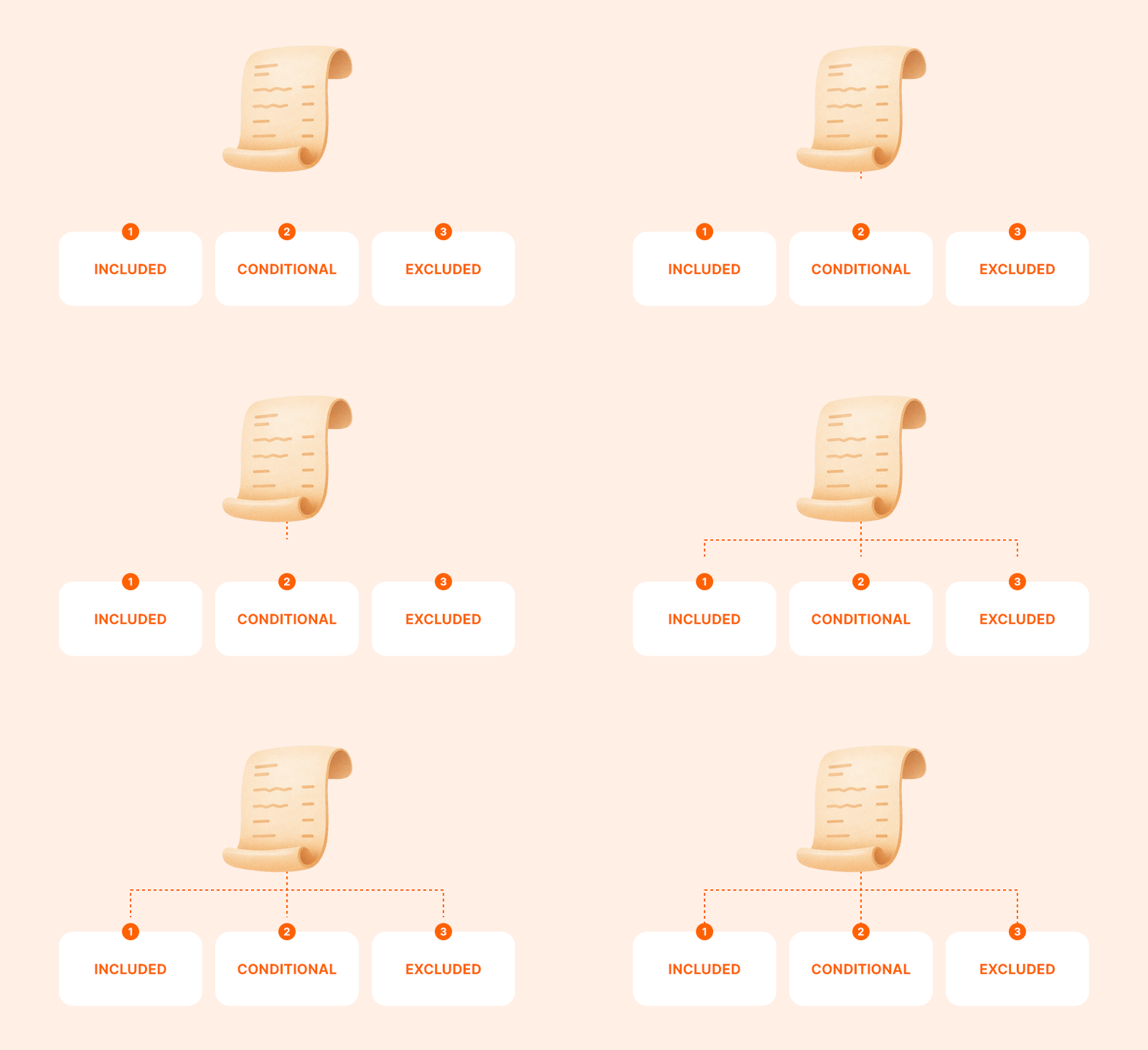
To understand orthodontic costs transparently, asking "Is everything included in this price?" is not enough. This is because each medical institution may define "basic" differently. The most reliable method is to categorize items into three groups: Included, Excluded, and Conditional.
1) Included Items: Confirming Specific Details
Instead of a vague term like "appliance fee," check if diagnostic records (X-rays, scans, etc.), bonding and debonding of the appliances, and regular monthly adjustment visits are included in the base cost. Since some clinics charge separately for precision diagnostics or monthly fees, it is advisable to request a document that lists these items individually.
2) Conditional Items: Promises for "Exceptions"
During treatment, unplanned situations can occur, such as an appliance falling off, the need for additional miniscrews (temporary anchorage devices), or mid-point progress records. You should know in advance whether these variables incur additional fees or are covered under the initial plan. In particular, "rebonding fees for broken appliances" and "emergency treatment fees" are sensitive areas for international patients, so it is safer to agree on these handling standards beforehand.
3) Excluded Items: Treatments Outside of Orthodontics
Extractions, fillings, and gum treatments are generally billed separately from orthodontic fees. Before signing an orthodontic contract, you must clearly understand which treatments must precede or coincide with orthodontics and that their costs are separate. This ensures your budget remains on track.
2. Regular and Exception Visits: Criteria for Planning Your Visits

The answer to "How often should I visit?" is not fixed. The duration and frequency of visits vary based on oral hygiene, patient cooperation, appliance breakage, and the speed of tooth movement. International residents should distinguish between Regular Visits and Exception Visits when planning their schedules.
1) Regular Visits: Maintaining Treatment Rhythm
Typically scheduled at 4 to 8-week intervals, these visits involve planned procedures like wire changes or elastic adjustments. It is important to confirm what specific actions are included in a single regular visit. Check if scaling or hygiene management is performed alongside the adjustment if necessary. If you are a long-term resident, discuss with your medical team whether intervals can be adjusted to fit your academic or work schedule and how to handle missed appointments.
2) Exception Visits: Responding to Unexpected Situations
Detached brackets, poking wires, or sudden pain can occur without warning, and these emergencies can be highly stressful for international patients. Therefore, it is vital to secure a "response route" for exceptions. First, check if same-day emergency care is available without an appointment and if the clinic offers weekend or night support. If you have frequent travel plans or a short-term stay, verify if the clinic can provide English-language medical notes or appliance information so you can receive emergency care at a local clinic in your home country.
3. Post-Treatment Maintenance and Transfers: Preparing for Care After Returning Home

Orthodontics does not end the moment the braces are removed. Teeth have a natural tendency to return to their original positions, making the Aftercare phase critical. International patients must plan for maintenance with their eventual return home in mind.
First, check the policy regarding Retainers. Verify if the cost of making retainers is included in the total treatment fee or billed separately. More importantly, discuss a "plan for breakage or loss after returning home." Inquire about specific scenarios, such as whether the clinic can reproduce a retainer using saved digital scan data and ship it internationally, or if you will need to receive the data to have it made locally in your home country.
Additionally, you should prepare for a "Transfer" situation where you must return home before treatment is finished. Because different orthodontists use different appliances and philosophies, moving to a new clinic may require a new diagnosis and a modified plan.
- Scope of Records: Confirm if you can receive copies of X-rays, photos, and clinical notes in English.
- Settlement and Termination Policy: Ensure that the criteria for settling costs up to the current treatment stage are clearly stated in writing.
Documenting an "exit strategy" from the start—including maintenance and transfer possibilities—allows you to respond flexibly to unexpected schedule changes.

The foremost criterion for international patients choosing orthodontics is not the "lowest cost," but the "most transparent definition of cost scope." To ensure a successful and reasonable experience in Korea, be sure to ask the following questions during your consultation:
"What are the additional costs and procedures for exceptions like broken or detached appliances?"
"What specific clinical actions (check-ups, adjustments, hygiene) are included in a single regular visit?"
"Are the standards for English medical records and cost settlement clearly documented in case of termination or transfer?"
Thorough preparation and clear criteria will be your strongest shield in protecting your beautiful smile.
Sources
- Guidelines for the Disclosure of Non-insured Medical Expenses (Ministry of Health and Welfare Notice No. 2023-288)
- Guidelines for Explaining Dental Procedures and Drafting Consent Forms (Korean Dental Association)
- Consolidated information from international orthodontic guidelines regarding risks and retention protocols.
※ The copyright for all content on this blog belongs to medihi. Unauthorized copying, distribution, or derivative use is strictly prohibited, and violations may result in legal action without prior notice.
Recommended reads
 medihi