

The expectation that orthodontic treatment in Korea is unconditionally faster may be a misconception; treatment duration is determined by biological factors. For overseas patients, it is essential to establish a safe treatment plan centered on the continuity of Visits, Stay, and Aftercare rather than just speed.
If you reside abroad or have a short Stay in Korea, your priority should be "Can my treatment continue safely without interruption?" rather than "Which clinic is faster?"
Just as a tree needs time to take root when transplanted, successful orthodontics requires (1) a realistic timeframe, (2) continuity in regular visits and maintenance, and (3) clear medical criteria for extraction or space acquisition. Today, we will address common misconceptions held by overseas patients considering braces in Korea and organize the criteria for making a safe choice.
1. Will Treatment End Faster if Done in Korea?
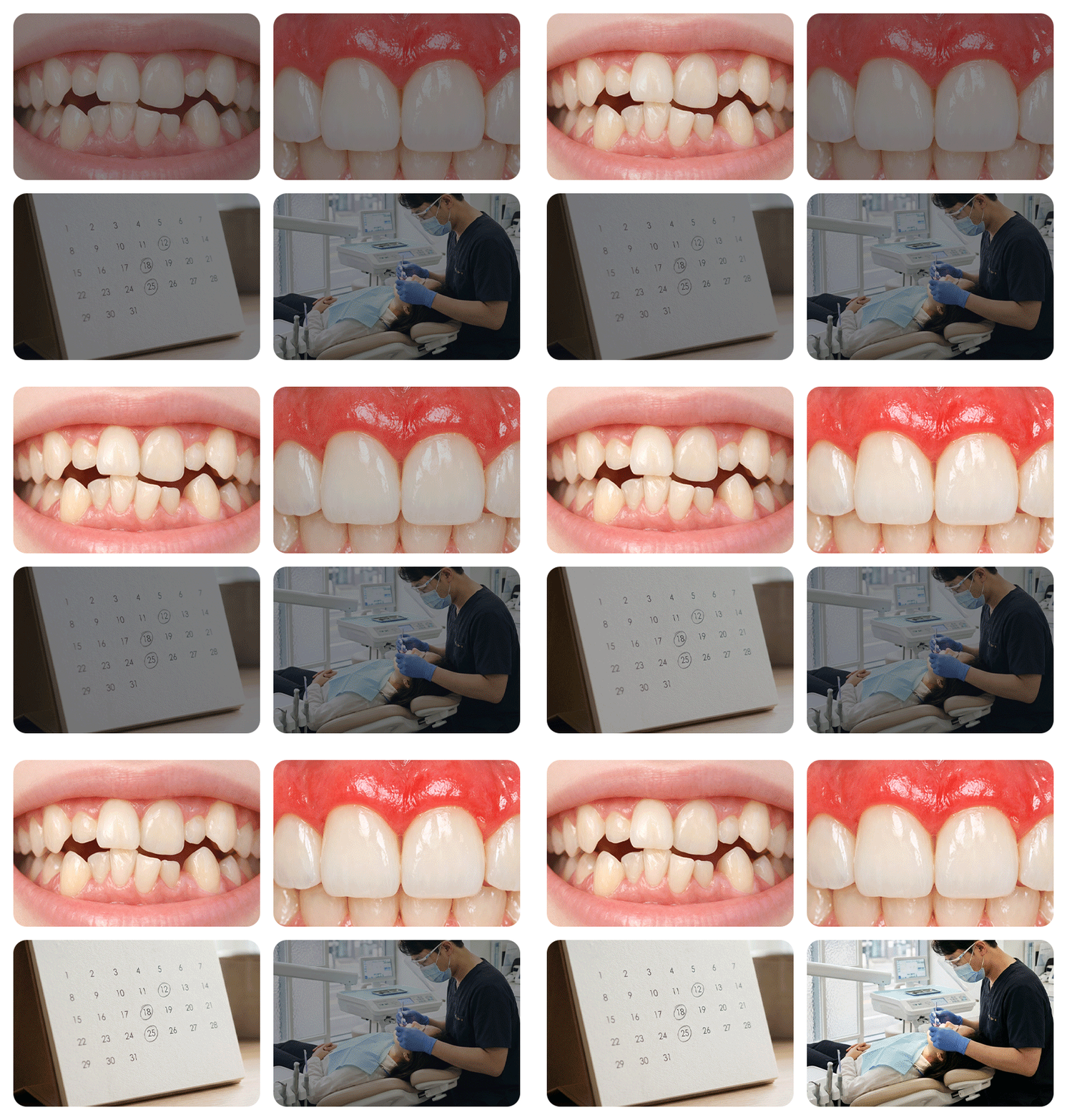
I often hear the question, "Since Korean technology and appliances are advanced, won't the duration be shortened?" To put it simply, treatment duration is determined by the condition of your teeth and gums rather than the country or the specific appliance used. Orthodontics progresses according to the metabolic rate of bone cells; applying excessive force does not make the process healthily faster.
When estimating the period, you must understand that the range varies based on the following variables rather than a single number of months:
- Complexity of Malocclusion: Physical time is required when structural issues or the closing of extraction spaces are involved, compared to simple alignment.
- Periodontal Status (Gum Health): If the jawbone is weak, teeth must be moved slowly with very gentle force to protect them, which can extend the duration.
- Cooperation and Visits: Due to the nature of living abroad, long gaps between visits or neglect in wearing appliances (like rubber bands) increase the likelihood of delays.
- Follow-up Observation: While procedures like lasers or micro-osteoperforations might assist movement, they are not standard shortcuts for everyone and require Aftercare and monitoring for potential side effects.
Therefore, the fact that "same-day appliance bonding" is possible does not mean the "treatment ends quickly." While the procedure may be swift, the biological clock of tooth movement flows equally for everyone.
2. Is It Okay if I Cannot Visit Frequently?
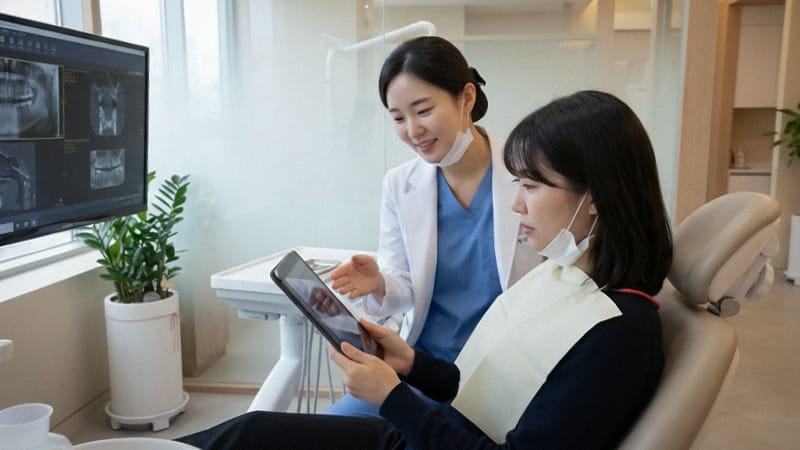
The biggest risk for overseas patients is the "interruption of treatment." Orthodontics requires regular force adjustment and monitoring after the braces are attached to achieve predictable results. If frequent visits are difficult, a meticulous continuity plan is needed before starting.
Consider the following two scenarios for visit gaps or emergencies:
- If your Stay in Korea is short and you must depart: You must identify a local clinic in your home country capable of emergency care (poking wires, detached brackets). Furthermore, if you need to transfer your treatment after returning home, it is essential to verify if your records from Korea (X-rays, treatment plans) and appliance specifications are compatible with local clinics. Transferring may be limited because preferred systems vary by country.
- If regular visits to Korea are possible: You should discuss whether the medical team can adjust the force intensity according to your visit cycle. However, even if visit intervals are extended, leaving braces unmonitored for too long or tightening them "strongly all at once" risks damaging the tooth roots and is not considered a safe general principle.
Ultimately, the core question is: "Is management possible while I am away?" While remote monitoring can serve as a supplementary tool, securing Aftercare and emergency response routes is far more important than shortening the duration.
3. Is Tooth Extraction Absolutely Necessary?
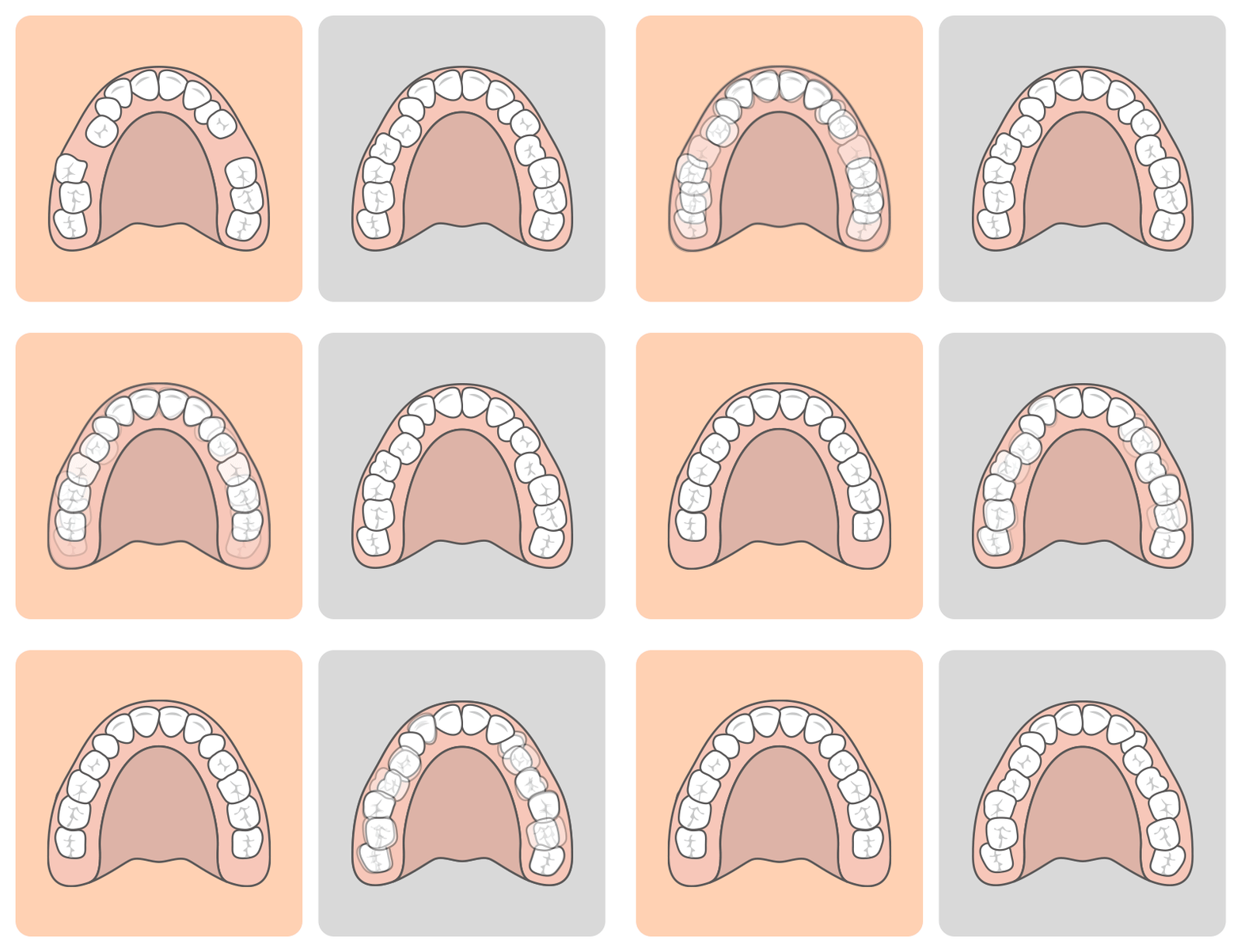
The claims that "extraction should be avoided at all costs" or "extraction makes the mouth recede faster" are only half-truths. Whether to extract is not a matter of good or bad, but a medical judgment for space and safety.
Think of it like a parking lot:
- Lack of Space: If cars (teeth) are double-parked in a narrow lot (jawbone), extra space is needed to park them neatly. If there is no other way to create space, removing one car (extraction) may be necessary.
- Safety Range (Periodontal Support): If you force cars in when there is no space, there is a risk they will be pushed out of the parking lot (outside the jawbone). If the bone is thin, extraction to keep the teeth in a safe position within the bone can be more beneficial for long-term gum health than a forced non-extraction approach.
While auxiliary devices like miniscrews can sometimes allow for non-extraction treatment, this must also be a result of considering the bone condition and the overall facial profile. Therefore, it is better to approach the issue by asking, "Which method is appropriate to safely arrange the teeth within the space of my bone?"
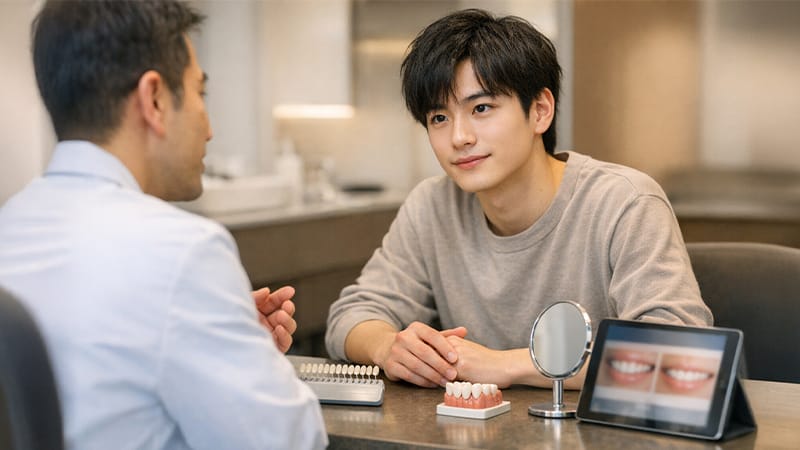
Choosing orthodontic treatment in Korea is a great option to receive high-quality care. However, for those living abroad, a realistic plan must come before vague expectations of speed.
During your consultation, be sure to confirm the following three points:
- What is the realistic expected timeframe given my Stay?
- How should I handle long gaps between visits or emergencies (detached brackets)?
-Is support available for documents needed for Aftercare (retainer management) or Transfer after returning home?
If you start with clear answers to these questions, you will be able to safely achieve a healthy and beautiful smile regardless of distance and time constraints. medihi supports your careful decision.
Sources
- Korean Association of Orthodontists (KAO), Orthodontic Common Sense Guide for the Public, 2023
- Korea Health Industry Development Institute (KHIDI), Global Healthcare Guide for Foreign Patients, 2023
- Tsichlaki et al., "Impact of orthodontic appliances on treatment duration: A systematic review", AJODO, 2016
※ The copyright for all content on this blog belongs to medihi. Unauthorized copying, distribution, or derivative use is strictly prohibited, and violations may result in legal action without prior notice.
Recommended reads
 medihi