

For busy international students and professionals considering orthodontic treatment in Korea, we provide a guide on how to utilize online consultations and prepare essential materials to establish wise judgment criteria, from pre-consultation to post-treatment maintenance.
"If I start consulting only after arriving in Korea, won't the schedule be too tight?"
"Can my condition really be determined just through photos?"
Making a major decision like starting orthodontics in a foreign country can feel overwhelming. Orthodontics is often compared to "choosing a path on a map." The online stage allows you to see the general outline of the map and set a direction, while the actual condition of the path—such as alveolar bone, function, and occlusion—must be confirmed in person to finalize a detailed plan.
Orthodontic treatment in Korea is a long-term project that spans from diagnosis to ongoing maintenance. For international students with limited stays or busy professionals, it is crucial to use online consultations to plan your visit schedule and record management (transfer) as much as the treatment method itself.
1. What Materials Are Needed for a Virtual Pre-consultation in Korea?
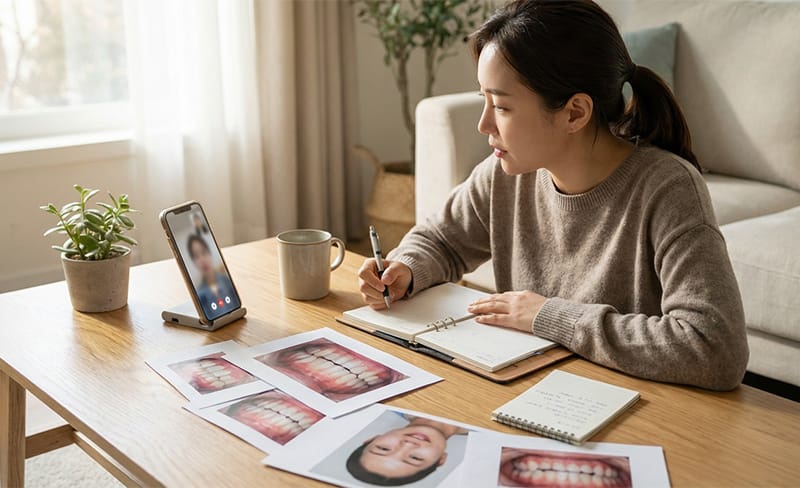
A virtual pre-consultation is not a "final diagnosis" but a preparatory stage to organize materials, schedules, and potential risks before visiting Korea. The more standardized your materials are, the more accurately medical staff can assess your information.
Orthodontic diagnostic materials typically consist of facial/intraoral photos, radiographic images, and models (impressions or oral scans). For international patients, it is especially helpful to organize your medical history and current medications in advance. For example, medications for osteoporosis or conditions like diabetes can affect tooth movement speed and gum healing, so sharing this information with your dentist beforehand is important for your safety.
If you are preparing for an online consultation, please organize the following items:
- Photos (Facial/Intraoral): Taking photos of your front and side profile, as well as your teeth, in a bright area at standard angles is useful for narrowing down the treatment direction.
- Radiographs/Imaging (If available): Whether tooth extraction is necessary or if there are skeletal issues is difficult to judge by photos alone. If you have existing X-rays, it is best to prepare them.
- Medical History/Symptom Notes: Please provide specific details regarding jaw joint discomfort, previous orthodontic experiences, or systemic diseases.
- Scheduling Information (Visits): Sharing your available visit frequency, intended length of stay in Korea, and travel plans during vacations is necessary to establish a realistic plan.
While digital scans and simulations are excellent tools to help explain the process, it is best to view them during the online stage as checkpoints for your in-person visit rather than final results.
2. What Can Be Determined Online, and What Is Decided After Your Visit?

A common question is whether major decisions like extractions or surgery can be made online. It is safest to take a conservative approach: the final treatment plan is strictly decided only after a precision in-person diagnosis (clinical examination + image/record analysis).
Therefore, instead of expecting a definitive conclusion during the online stage, it is more practical to organize questions you want to confirm during your visit.
Through a virtual pre-consultation, you can gain preliminary information on:
- Treatment Category: You can gauge whether improvement is possible through orthodontics alone or if a complex treatment, such as combined surgery, is required.
- Clinical Flow: You can visualize the testing process for your first visit and the overall procedure.
- Awareness of Risk Factors: If there is a possibility of using temporary anchorage devices (miniscrews), it is good to hear about management and precautions in advance.
For instance, while miniscrews assist in tooth movement, clinical literature reports potential adverse events such as root damage or soft tissue inflammation. Being aware of these points during the online stage allows for a deeper understanding when hearing the doctor's explanation in person and helps you prepare for unexpected situations.
The focus of your preparation will change based on your circumstances:
- Case 1: If you have a long stay in Korea and can visit regularly → Focus your plan on the overall in-person clinical schedule and regular check-up cycles.
- Case 2: If gaps are expected due to frequent travel (business trips/vacations) → Inquire about appliance management and emergency protocols for periods when you are away from the clinic.
3. Deciding Between Korea and Your Home Country: What Documentation Should You Check?
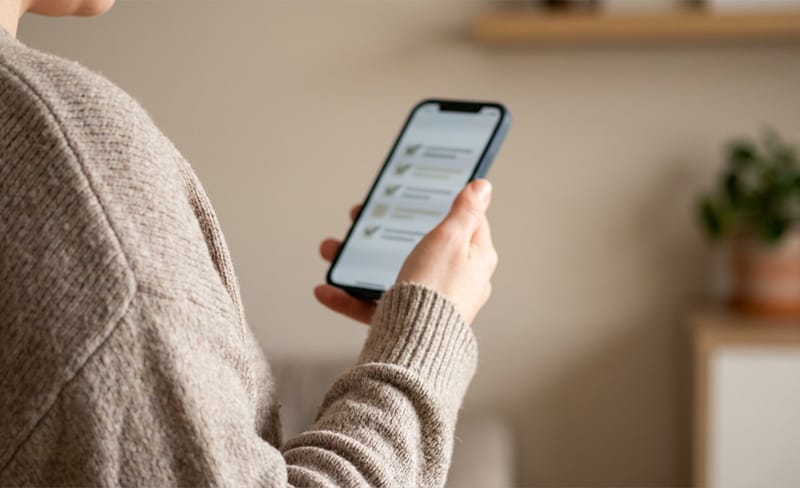
Orthodontics is like a "long-distance marathon" where the finish is more important than the start. For those living abroad, administrative preparation and the continuity of records (Transfer) are key.
Before deciding where to begin, check the following points carefully:
1) If you can complete treatment and maintenance in Korea
- Confirm that the regular visit schedule (Visits) does not conflict with your academic or work schedule.
- It is reassuring to know the clinic's policy regarding schedule changes or emergency situations in advance.
2) If there is a possibility of returning home or moving during treatment
- You must check the scope and format for "Records Transfer." Inquire if X-rays or scan data are provided in international standard formats such as DICOM or STL.
- Keep in mind that even if records are shared, the plan may be modified based on the judgment of the local dentist taking over your case.
Key documentation checkpoints that international patients should not overlook:
- Language Support & Communication: Confirm if you can receive instructions in a language you understand and if translation services or English medical certificates are available.
- Emergency Response Manual (Aftercare): Secure a communication channel for how to handle situations like a detached bracket or severe pain during weekends or nights.
- Cost Structure & Administration: Ask transparent questions about the breakdown of costs beyond the treatment fee, such as additional diagnostic fees or retainer costs, and the refund policy in case of mid-treatment termination.
While digital technologies like remote monitoring can be used as auxiliary tools, they should be understood as a means to bridge the gap between visits rather than a total replacement for in-person care, as their accuracy varies depending on image quality and the system used.
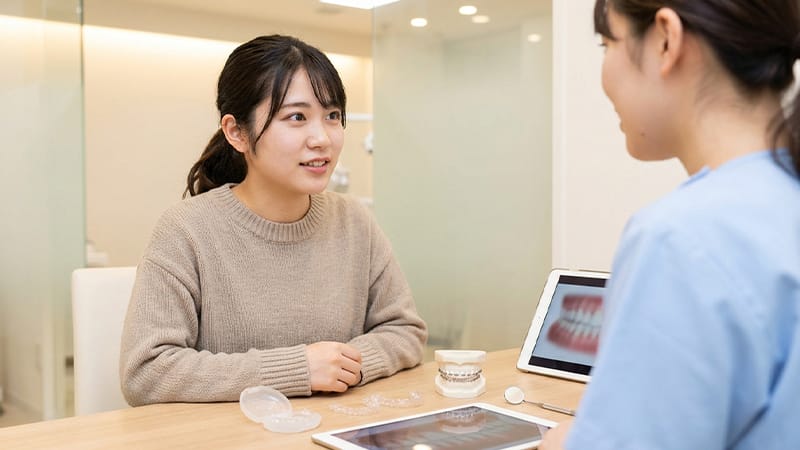
An online pre-consultation is a valuable time to reduce your anxiety before arriving in Korea and to systematically organize your records and schedule. However, please remember that the final plan—including the necessity of extractions or specific treatment duration—is carefully determined through a precision in-person diagnosis.
Before making your final decision, check off three items: your visit schedule (Visits), potential variables during your stay (Stay), and post-travel management (Aftercare). When thorough preparation is backed by professional care, orthodontic treatment in Korea can be a safe and happy journey toward finding your smile.
Sources
- The Korean Journal of Orthodontics, Complications reported with the use of orthodontic miniscrews: A systematic review, 2021
- The Korean Journal of Orthodontics, Part II. What drives Korean adults to seek orthodontic treatment, 2021
- Effects of remote digital monitoring on oral hygiene of orthodontic patients: a prospective study, 2020
※ The copyright for all content on this blog belongs to medihi. Unauthorized copying, distribution, or derivative use is strictly prohibited, and violations may result in legal action without prior notice.
Recommended reads
 medihi