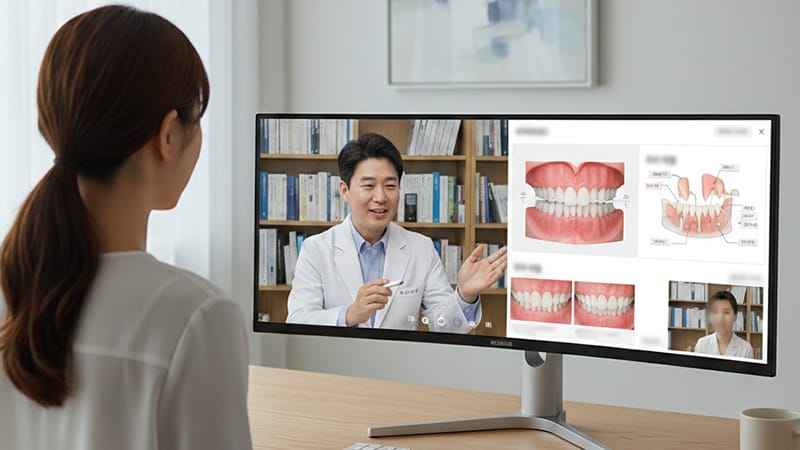

The first 24–72 hours after getting veneers is a critical stabilization period where the bonding agent sets. International patients should limit front tooth use and prepare for potential "barodontalgia" (pressure-related toothache) during flights to ensure a safe transition from treatment to travel.
"Is it okay to fly immediately after the procedure?"
"What should I be careful about when trying local foods?"
The most frequent question international patients ask when leaving the clinic in Korea is, "Can I start my vacation right now?" While it is natural to feel excited about your new smile, it is equally normal to feel anxious about potential issues in an unfamiliar destination.
In medical terms, the 24–72 hours post-bonding is a vital window. We often compare this to a "newly applied smartphone screen protector." Just as a film can lift if friction is applied to the edges before the adhesive dries, veneers are more sensitive to subtle impacts or lateral forces during this initial stage.
This guide outlines dietary standards, flight routines, and emergency responses to help you navigate your stay (Stay) safely.
1. The #1 Rule for Travel Dining: Limit Front Tooth Use
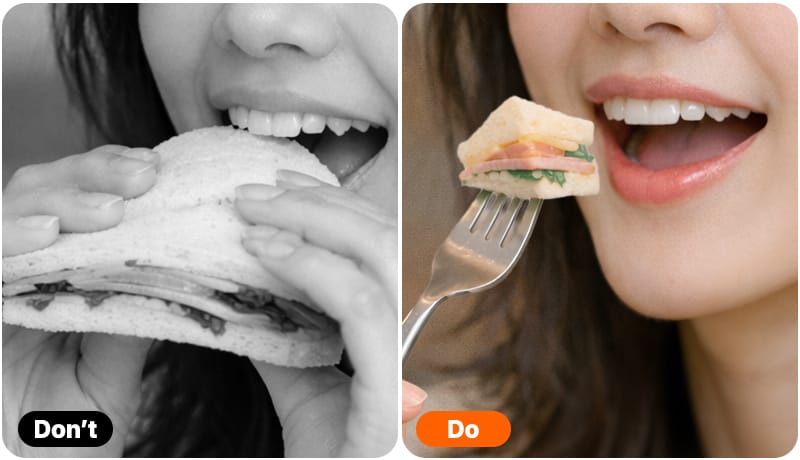
While exploring local cuisine is a highlight of traveling, you must focus on how you eat rather than just what you eat for the first 72 hours.
The biggest risk to new veneers is not just "hard food," but Shear Force—the horizontal twisting force. Your front teeth naturally act like scissors to cut or tear food, which creates significant stress on the edges of the prosthetics. Even soft breads like those in sandwiches or burgers can strain the veneers if you bite and pull.
Apply these standards when dining during your trip:
- For foods that require biting (Sandwiches, Apples, Baguettes): Use a knife and fork to cut them into bite-sized pieces and chew with your molars. The key is to prevent the front teeth from acting as "scissors."
- Sticky Snacks (Sticky Rice Cakes, Taffy, Caramel, Gummies): These create tensile force that can pull on the prosthetics. Avoid them for the first 24–72 hours.
- Staining Substances (Wine, Strong Coffee, Curry): To manage the boundaries of the bonding surface, reduce consumption or rinse your mouth with water immediately after eating during the first 48–72 hours.
Checking yourself with the question, "Am I biting this with my front teeth?" before every meal will significantly reduce the risk of early debonding.
2. Flying and Pain Management: Barodontalgia Prevention
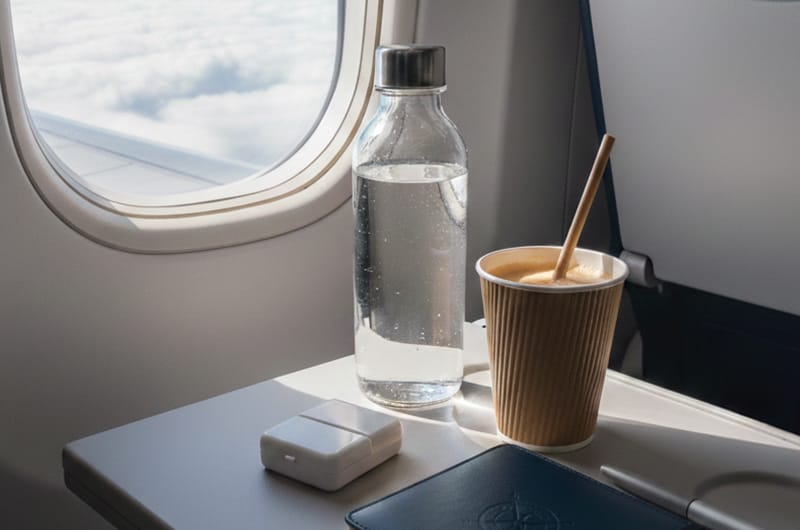
A common misconception among international patients is that "cabin pressure causes veneers to fall off." Atmospheric pressure changes themselves do not physically detach a well-bonded prosthetic. However, you should be aware of Barodontalgia (tooth pain caused by air pressure changes).
As an airplane ascends, air inside the body expands. Pressure changes in the tooth pulp or sinuses can cause pain, especially if the teeth are temporarily sensitive post-procedure. Check this list for a safe flight:
- Buffer Period (Visits): Ideally, stay on the ground for at least 24 hours post-procedure to monitor sensitivity and occlusion before boarding.
- Record Pain Symptoms: If pain occurs, note when (takeoff/after meals), how intense, and what triggers it (cold water/chewing). This helps your doctor diagnose the cause later.
- Hydration and Temperature: Cabin dryness can cause gum swelling. Drink water frequently and use a straw for very hot or cold drinks to bypass the teeth.
- Consultation on Medication: If you plan to carry painkillers, consult your medical team or a pharmacist about allergies and current medications before departure.
3. Emergency Situations: What NOT to Do
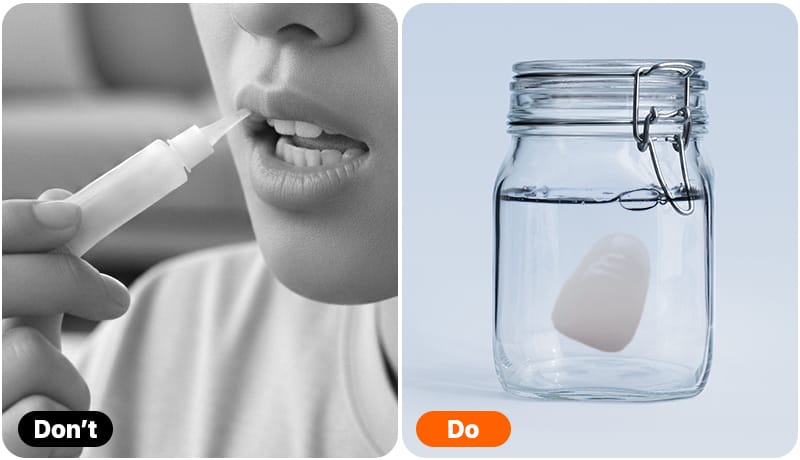
Despite precautions, accidents like fractures or debonding can happen. In these cases, the wrong DIY treatment can make professional repair much harder.
The most important prohibition: Never use household "Super Glue" to reattach a veneer. General adhesives are toxic and unsuitable for oral use. Furthermore, if the glue hardens irregularly on the tooth surface, a case that could have been a simple rebonding may turn into a complex procedure requiring total removal and remaking.
If a veneer falls off:
- Secure the Piece: Carefully find the piece and store it in a small container or plastic bag.
- Protect the Tooth: The exposed tooth may be highly sensitive. Avoid chewing on that side and skip very hot or cold drinks.
- Immediate Contact (Aftercare): Contact your medihi clinic immediately. Send a photo for initial advice. If there is sharp pain, check if a local dentist can provide a Temporary Measure.

The 72 hours following your treatment should prioritize "safety" over "aesthetics." For short-term visitors, please remember the 3-axis checklist:
Visits (Pre-departure): Did you allow 24 hours of ground time for adjustments?
Stay (During Travel): Are you following the "No Biting" rule for your front teeth?
Aftercare (Post-return): Do you have a plan to visit a clinic if you feel lifting or swelling after returning home?
Sources
- National health information and patient guides: Aftercare for Aesthetic Prosthetics/Veneers
- British Dental Journal: Dental tourism and the risk of barotrauma and barodontalgia (2023)
- Journal of Esthetic and Restorative Dentistry: Survival of ceramic veneers: Impact of dentin exposure (2025)
※ The copyright for all content on this blog belongs to medihi. Unauthorized copying, distribution, or derivative use is strictly prohibited, and violations may result in legal action without prior notice.
Recommended reads
 medihi