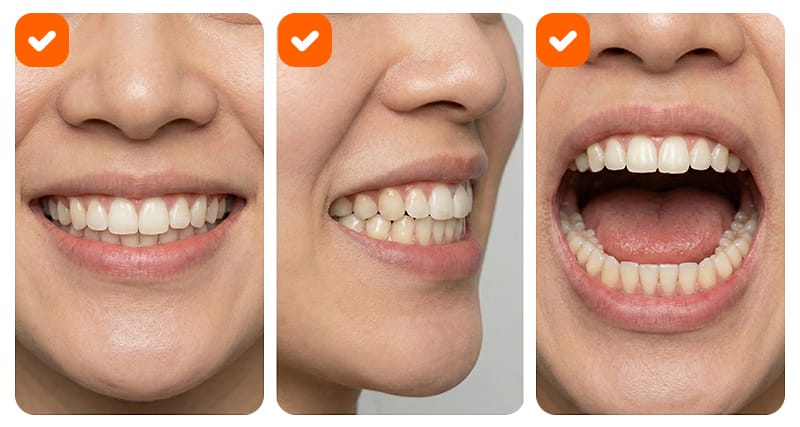

For international patients getting veneers in Korea, securing a comprehensive "Records Package" is essential for seamless post-treatment maintenance and accurate local repairs after returning abroad.
"Can this be repaired locally if it chips?"
"Will they have to shave more of my teeth if they don't have my records?"
The key to resolving these practical concerns is securing Continuity of Care. Once veneers are bonded, it is impossible to determine the internal state or the amount of tooth reduction simply by looking at them.
Just as a blueprint is required during a building renovation to avoid damaging pipes, having your Veneers Records Package—the "blueprint" of your teeth—is crucial. It helps local medical staff reduce unnecessary trial and error and provides a decisive advantage in making an accurate diagnosis.
Below, we outline the 10 essential and recommended records that international patients should secure, along with a guide on scheduling and visits to ensure you obtain them.
1. Variables in Repair and Remaking: Why Records Are Necessary
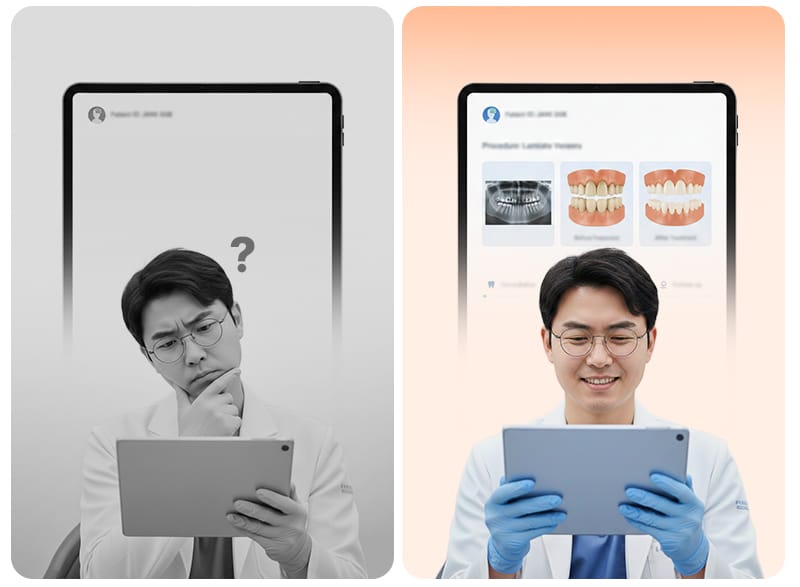
Even after successful treatment in Korea, physical damage can occur to prosthetics due to hard foods or persistent teeth-grinding habits while living abroad. Without records, visiting a local dentist can lead to several hurdles:
- Inability to Identify Prep Design: Local clinicians cannot know how much of the original tooth was reduced (Prep design) or the extent of the reduction. Even if a simple rebonding is possible, the lack of information might lead them to destroy the prosthetic for diagnosis or choose to shave more tooth structure conservatively.
- Lack of Material and Bonding Info: If the specific type of ceramic or bonding agent is unknown, there is a risk of applying an incompatible surface treatment during repair, leading to weak bond strength.
- Absence of a Baseline: When gum lines shift or occlusion (bite) changes, there is no reference point to determine how much the current state differs from the immediate post-treatment result.
Conversely, possessing a detailed records package allows local clinicians to understand the internal structure and plan treatment accordingly. This improves communication accuracy between medical professionals and protects the patient's natural tooth structure.
2. 10 Essential Records for Form and Function
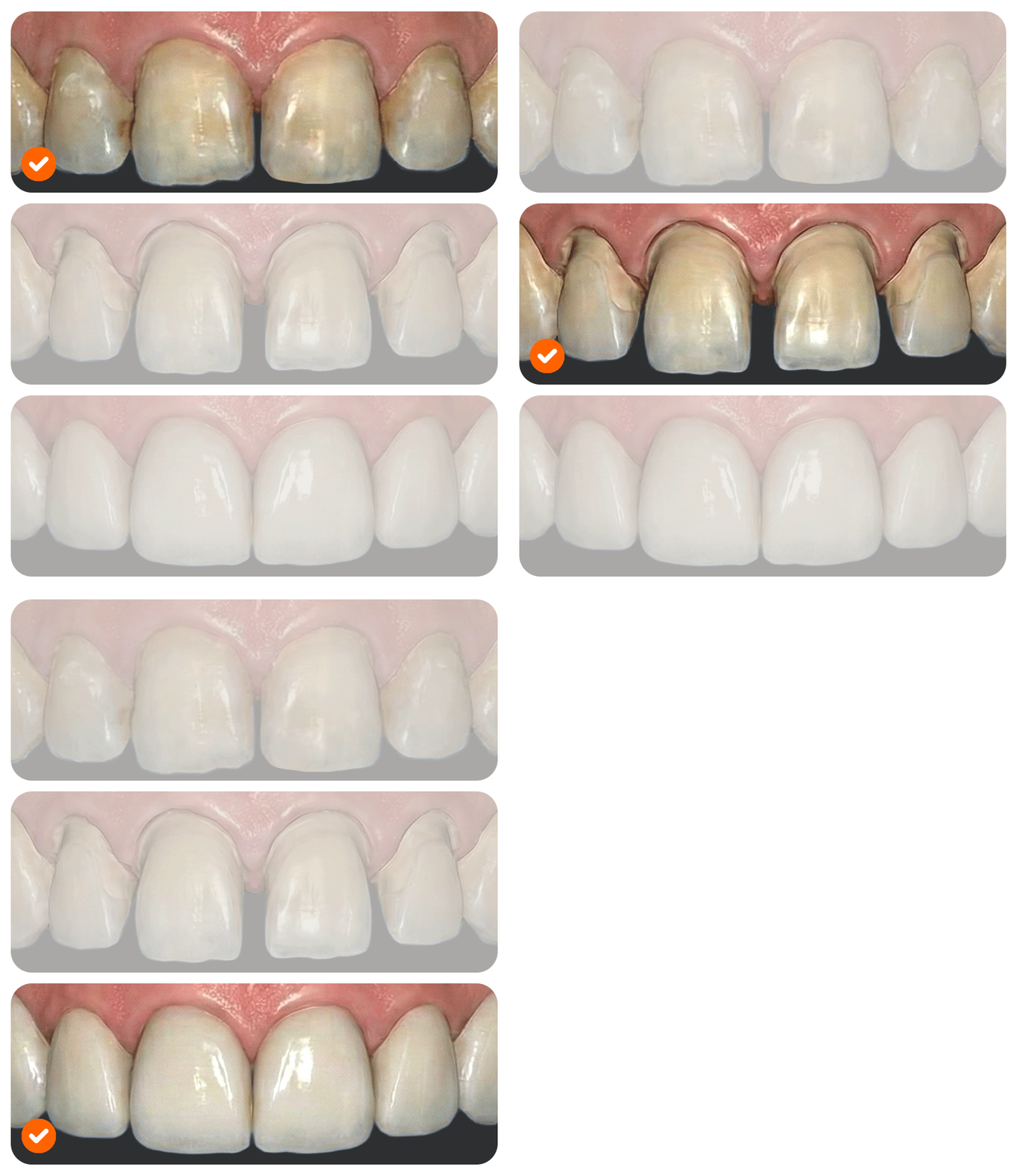
We have categorized the records into "Minimum Essentials" and "Recommended Additions" based on their practical utility for local clinicians. Scan files for veneers and Shade information are the core components.
[A. 6 Minimum Essential Records: Form and Basic Info]
- 3D Scan Data (STL/PLY): The most fundamental data. Having files for the stages ▲Before treatment ▲After preparation (Prep) and ▲After treatment allows for "reverse engineering" if a remake is needed. The "After Prep" data is particularly critical for fitting the internal surface of the prosthetic.
- Clinical Photos: High-resolution intraoral photos (front, side, occlusal). These verify scan data and serve as a visual baseline for the patient to monitor gum changes.
- Material Specs: Instead of a generic term like "ceramic," specific information on the material category and translucency grade is needed. This informs the etching method used during repairs.
- Shade Map: Teeth vary in color by section. This should include a shade map and information on the "stump shade" (the color of the shaved tooth), which influences the final color of thin veneers.
- X-rays: Panoramic and periapical X-rays show the state of the roots and bone. These serve as a comparison group to determine nerve damage if pain occurs later.
- Perio Chart: Records of gum pocket depth and bleeding at the time of treatment. This helps determine if future gum issues are related to the prosthetic or a pre-existing condition.
[B. 4 Recommended Additions: Detail and Communication]
- Occlusion/Bite Records: Information on where the upper and lower teeth meet. This provides evidence for tracking bite changes if a fracture occurs.
- Bonding Protocol: A summary of the resin cement type and surface treatment used. This helps clinicians choose the right tools if the prosthetic needs removal.
- Lab Notes (Texture/Glazing): Notes on micro-texture or glazing help a single new veneer harmonize with surrounding teeth.
- English Referral Letter: A summary including treatment dates, tooth numbers, and key precautions. This lowers language barriers and conveys information quickly.
[Priority Guide by Scenario]
- If worried about "Fracture/Debonding": Prioritize scan data (Prep/Final), bonding protocol, and occlusion records.
- If worried about "Color Dissatisfaction/Discoloration": Focus on the shade map, stump shade info, and before-and-after photos.
(Note: The availability and format of these records may vary depending on the medical institution's policy and equipment. It is safe to inquire about issuance in advance.)
3. The 3-Axis Guide for International Patients (Visits/Stay/Aftercare)
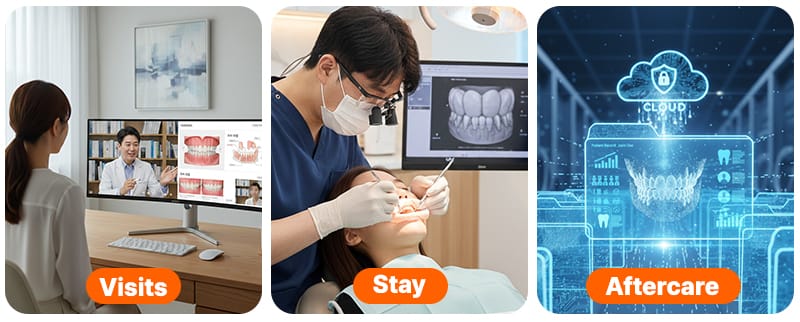
Beyond knowing the list, you need a strategy to secure these within your travel schedule.
1) Visits: Requesting and Receiving Data
Records may not be issued immediately after treatment due to the time required for data organization, conversion, and translation.
- Pre-request: During the consultation stage, clearly state: "I would like to receive copies of my records (scans/photos) for maintenance after I return home." Under Korean medical law, patients have the right to request copies of their records.
- Collection Visit: Rather than rushing to get them on the day the veneers are bonded, plan one final short visit for data collection and a final check, or agree on a secure digital transfer method.
2) Stay: Securing a Buffer Before Departure
Moving straight to the airport after treatment carries risks.
- Minimum 24–48 Hour Buffer: Minor bite discomfort or sensitivity may appear after bonding. You need time for adjustments.
- Data Verification: Check if the received files (STL, JPG, etc.) open correctly on your devices and are not corrupted before leaving the country.
3) Aftercare: Backup and Utilization
- Dual Backup: Physical media like USBs can be lost. We recommend creating a dedicated folder in the cloud and backing up files by date.
- Local Utilization: When visiting a local dentist, inform them that you have records of your previous treatment. However, note that some clinics may have policies regarding external data. Present the records as "reference material" to assist the clinician's diagnosis.
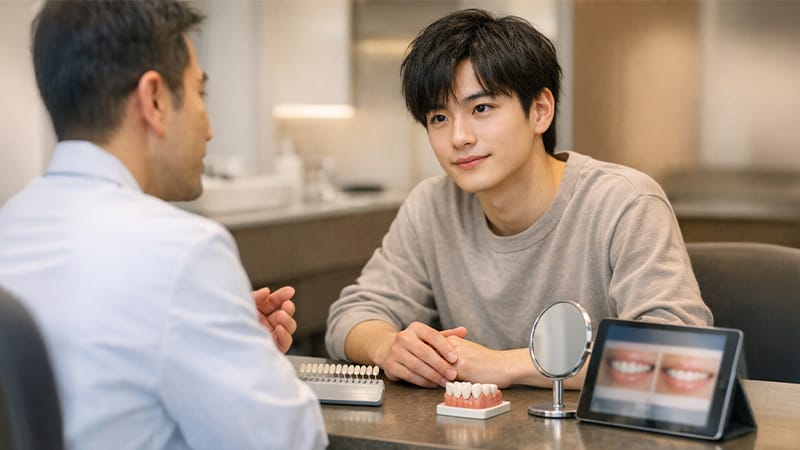
A perfect records package does not provide a "guaranteed" lifespan for your prosthetics. However, there is a clear difference in efficiency and accuracy between "starting from scratch" when a problem arises and approaching it with a detailed "blueprint."
Meticulous records, including Scan files, are the strongest safety net for maintaining continuity of care across borders. We encourage you to discuss the scope of available records with your medihi medical team at the end of your treatment to protect your dental health abroad.
Sources
- Ministry of Health and Welfare (Korea), Guide to Medical Record Access and Copy Issuance System
- Korea Disease Control and Prevention Agency (KDCA), Information on Laminate Veneers
- Komine et al., Systematic Review and Meta-analysis of Ceramic Veneers, Journal of Prosthodontic Research, 2024
※ The copyright for all content on this blog belongs to medihi. Unauthorized copying, distribution, or derivative use is strictly prohibited, and violations may result in legal action without prior notice.
Recommended reads
 medihi