

Finding a thyroid nodule can be frightening, but the presence or size of a nodule is not the primary indicator of danger. We explain the "K-TIRADS" risk classification system used by medical professionals to determine whether a nodule requires a biopsy or can be safely monitored, transforming vague fear into a manageable plan.
"My nodule is over 1cm. Does a large size mean it's definitely cancer?"

In thyroid nodule diagnosis, the first thing experts check is not "is there a lump?" but rather "what is the character (shape) of that lump?" The mere fact that a nodule exists does not confirm cancer; in fact, the vast majority of discovered nodules prove to be benign (non-cancerous) and not life-threatening.
Doctors use a standardized risk classification system called K-TIRADS to calmly determine whether a nodule needs testing or can be safely observed. By understanding this, your fear will turn into a clear, manageable medical plan.
1. Shape, Not Size, Determines the Risk
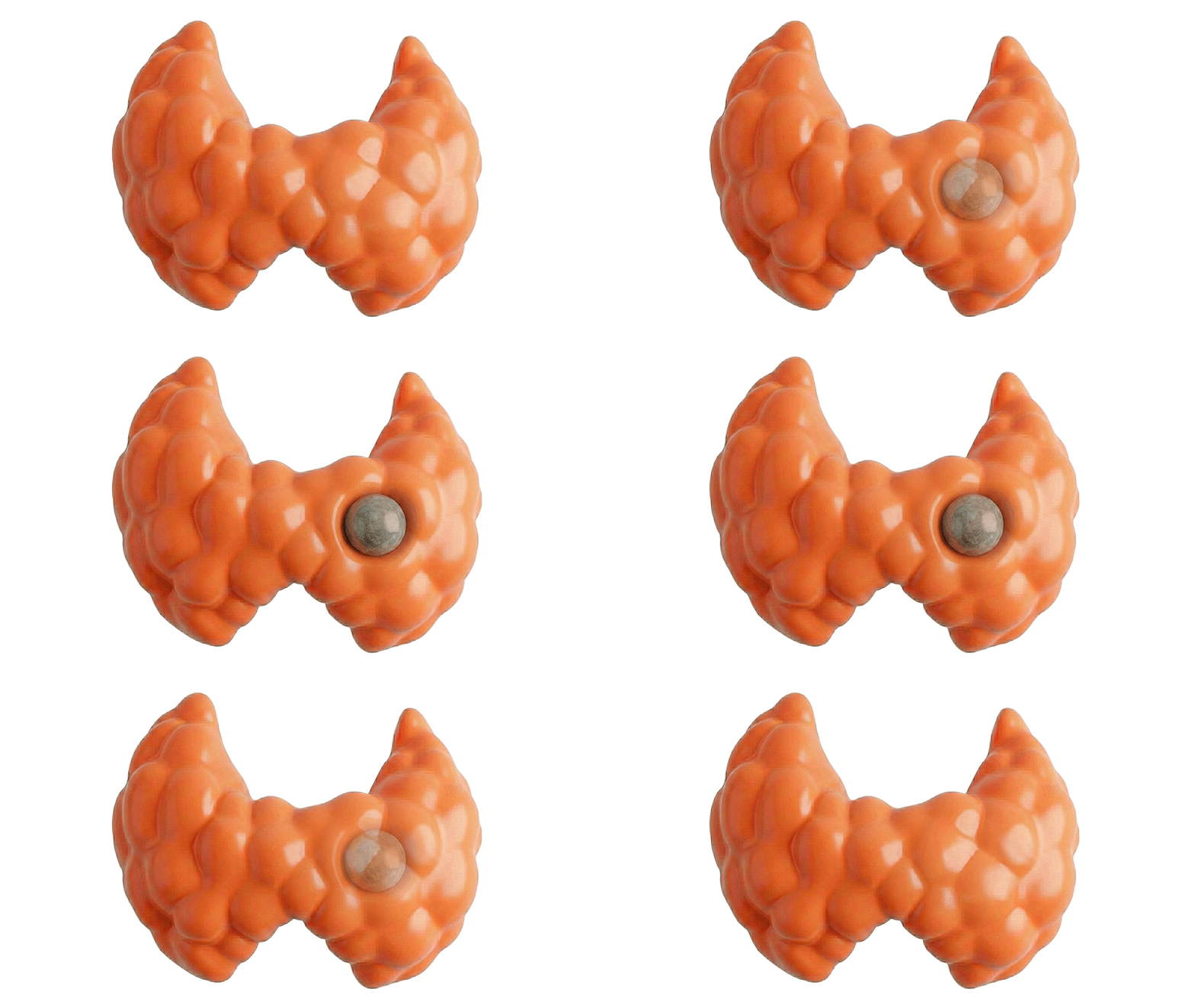
While many patients ask, "Is it dangerous because it's 3cm?", size is not the top priority for determining risk. Medically, the 'character' (shape) of the nodule is much more significant.
To understand this, imagine a 'smooth pebble' versus a 'thorny chestnut burr.'
- Smooth Pebble (Benign Pattern): A round, smooth pebble in a river doesn't hurt your hand, even if it's large. Similarly, if a thyroid nodule has clear boundaries and a flat, smooth shape on an ultrasound, it is likely benign, regardless of size. Doctors call this "good shape."
- Thorny Chestnut Burr (Suspicious Pattern): A chestnut burr in the woods is sharp and prickly even if it is small. If a nodule has irregular boundaries, is taller than it is wide, or contains tiny white spots (microcalcifications), it requires close attention—even if it is smaller than 1cm. Doctors call this "bad shape."
The core is the internal shape and pattern revealed by the ultrasound.
2. The Ultrasound Report Card: K-TIRADS Grade
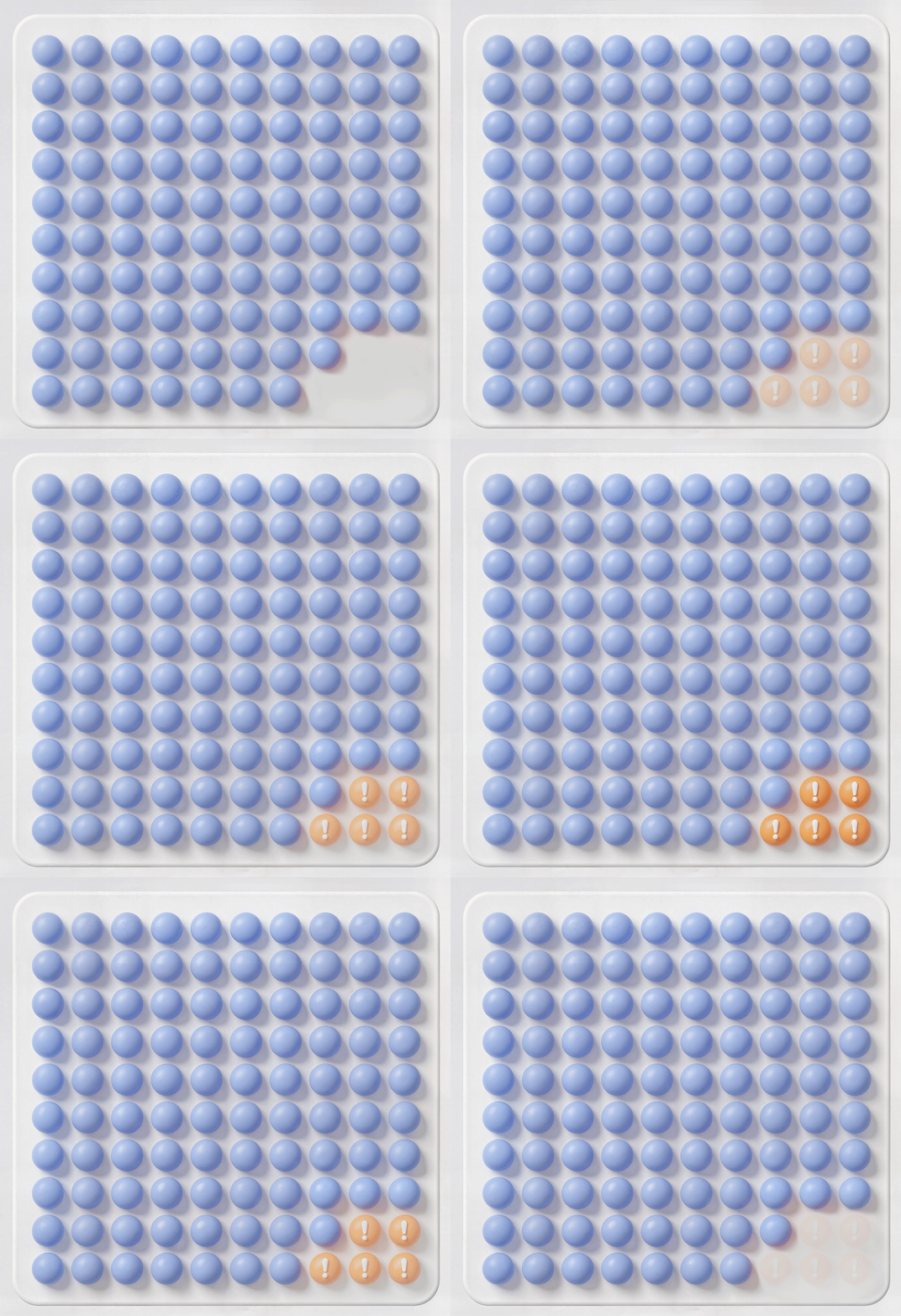
In Korea, medical professionals use the K-TIRADS (Korean Thyroid Imaging Reporting and Data System) to objectively judge risk. Think of it as an "ultrasound report card" that classifies nodules into 5 categories.
| Category | Risk Level | Biopsy (FNA) Recommendation | Note |
| K-TIRADS 5 | High Risk | Perform if ≥ 1.0cm | Consider even if < 1.0cm based on clinical context |
| K-TIRADS 4 | Intermediate Risk | Consider if 1.0 – 1.5cm | Judged based on shape and location |
| K-TIRADS 3 | Low Risk | Consider if 1.5 – 2.0cm | Perform if size increases or changes occur |
| K-TIRADS 2 | Benign | Not performed | Regular ultrasound monitoring is the rule |
Identifying your K-TIRADS grade is the first step toward an accurate diagnosis.
3. When Can You Skip a Biopsy (FNA)?
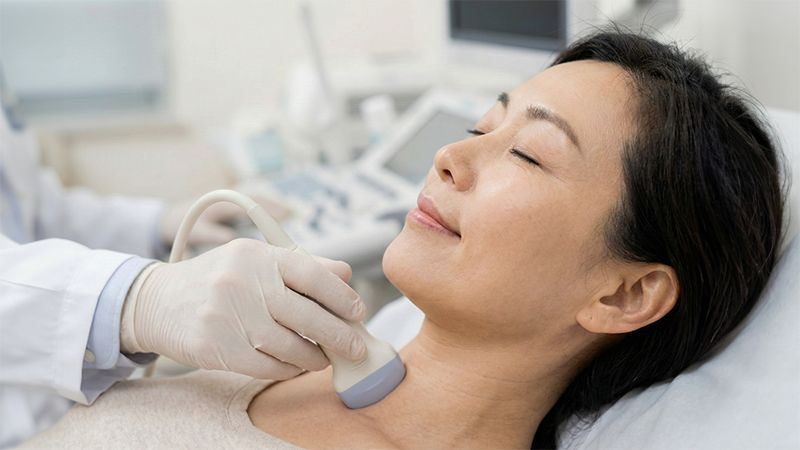
"Do I have to do the needle test (Fine Needle Aspiration, FNA)?" The answer depends on: 1) K-TIRADS Grade, 2) Nodule Size, and 3) Clinical Risk Factors.
To prevent unnecessary over-testing, current guidelines set different size thresholds for biopsies based on risk. If a nodule is K-TIRADS 5 (High Risk), a biopsy is recommended at 1cm because its "thorny" shape makes early confirmation safer.
Conversely, if it is K-TIRADS 3 (Low Risk), a biopsy may be delayed until it reaches 1.5–2cm. Because it looks like a "smooth pebble," there is no need to burden the patient with a needle test at a small size. However, if there is a family history of thyroid cancer or a history of radiation therapy to the neck, testing may be considered at smaller sizes.
4. Why "Wait and See" Even if it's Cancer?
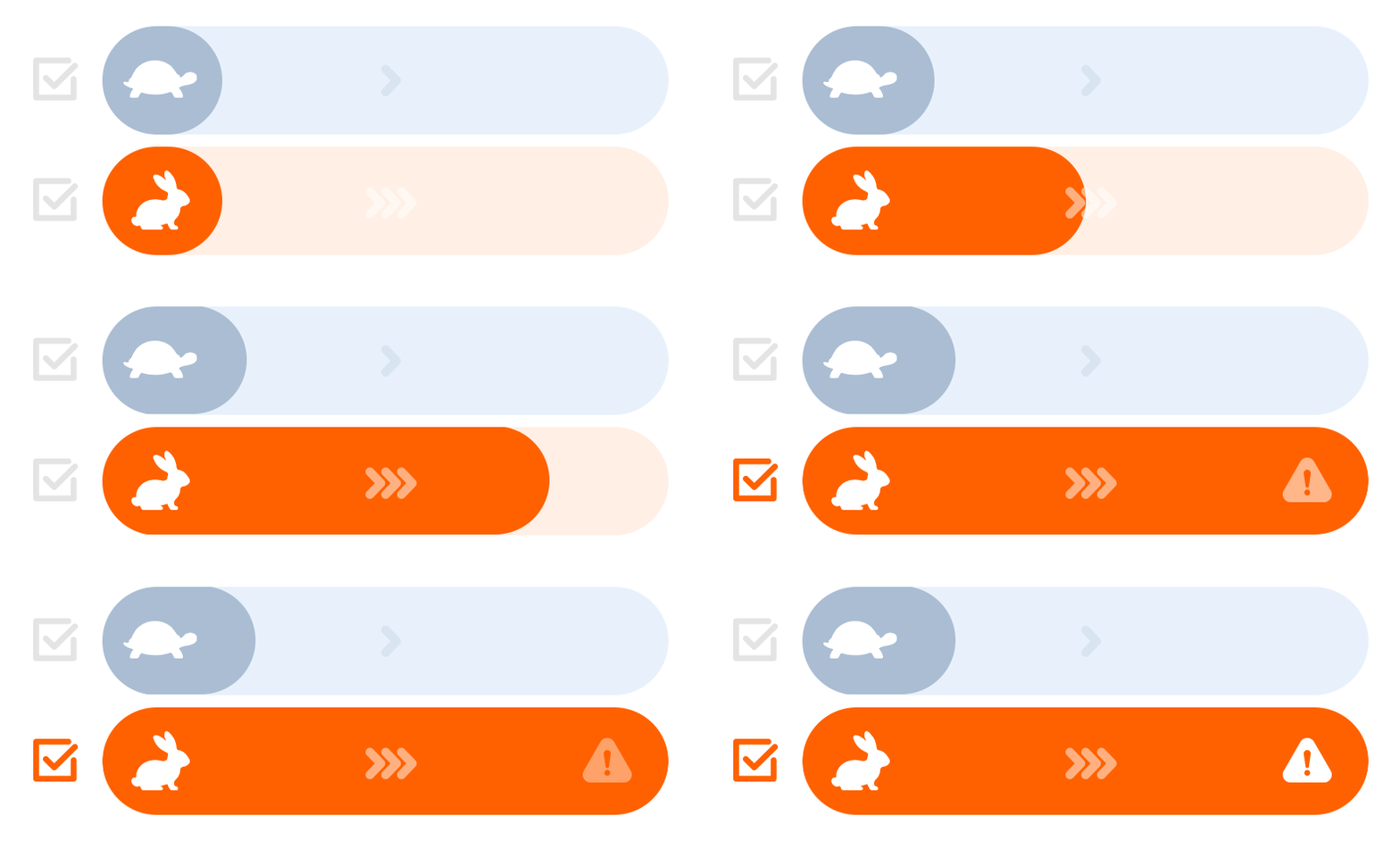
Even if a nodule is diagnosed as cancer (the "chestnut burr"), you don't always need to rush into surgery. The current trend in thyroid cancer treatment is 'Active Surveillance.'
This strategy distinguishes between a 'slow turtle' and a 'fast rabbit':
- The Slow Turtle: Many thyroid cancers (especially papillary microcarcinoma) grow so slowly that they show little to no change for years.
- The Fast Rabbit: In rare cases, cancer spreads quickly. In these instances, surgery is performed without delay.
Conditions for Active Surveillance:
- Is the cancer size less than 1cm?
- Is it located away from the trachea (windpipe) or vocal cord nerves?
- Is there no sign of lymph node metastasis?
- Can the patient commit to regular ultrasound check-ups every 6–12 months?
If the cancer is near the esophagus or trachea, or if metastasis is suspected, surgery is prioritized regardless of small size.
5.Red Flags: When Should You Seek Immediate Evaluation?

While most nodules are not emergencies, certain "red flags" require urgent attention:
- Rapid Growth: If the lump grows noticeably in a short period.
- Voice Changes: Persistent hoarseness not caused by a cold.
- Physical Symptoms: Difficulty swallowing or a hard, fixed lump on the side of the neck (lymph nodes).
- High-Risk History: Family history of thyroid cancer or childhood radiation therapy to the neck.
6.Frequently Asked Questions(FAQ)
Q. I was just told I have a nodule. what should I check first?
Check the K-TIRADS grade or ask the doctor if the "shape" looks good or suspicious. This determines the next step more than size does.
Q. My nodule is over 2cm. Do I need a biopsy?
Not necessarily. If it is smooth and categorized as K-TIRADS 2 or 3, monitoring is often preferred over an immediate biopsy.
Q. My biopsy result is "Atypical" (Inconclusive). Is this common?
Yes. This is known as the "gray zone" (Bethesda Category III). Instead of immediate surgery, doctors usually recommend a retest after a certain period or an additional genetic test to decide the direction.
Q. What are the red flags that require an urgent visit to the hospital?
If you experience changes in your voice, severe discomfort when swallowing, a sudden increase in the size of a lump felt in the neck, or pain, you should visit a clinic as soon as possible for a precision evaluation, such as an ultrasound.

갑상선 결절을 마주했을 때 환자분들에게 필요한 것은 막연한 두려움이 아니라 명확한 판단 기준입니다. 첫째, 결절의 '크기'보다 '모양(K-TIRADS)'이 위험도를 결정하는 핵심임을 기억해 주시길 바랍니다. 둘째, 조직검사는 무조건 하는 것이 아니라, 위험도와 크기 조건이 맞을 때 시행하여 불필요한 고통을 줄일 수 있습니다. 셋째, 설령 암이라 해도 조건에 따라 '능동적 감시'가 가능한 경우가 있으므로, 차분하게 의료진과 계획을 세우는 것이 중요합니다. 지금까지 정확한 상태를 모르고 걱정만 하셨더라도 늦지 않았습니다. 현재의 상태를 객관적인 기준으로 분류하고, 그에 맞는 추적 계획을 세운다면 갑상선 결절은 충분히 안전하게 관리할 수 있습니다.
Sources
- Korean Thyroid Association (KTA), Revised Guidelines for Thyroid Nodules and Cancer, 2023.
- Moon et al., Prevalence of thyroid nodules and their associated clinical parameters, Korean J Intern Med, 2018.
- Kornelius et al., The psychological impact of thyroid nodules and the informational needs of patients, Frontiers in Endocrinology, 2025.
※ The copyright for all content on this blog belongs to medihi. Unauthorized copying, distribution, or derivative use is strictly prohibited, and violations may result in legal action without prior notice.
Recommended reads
 medihi