

Just because a veneer has chipped, cracked, or come off does not automatically mean it must be replaced entirely. Depending on the extent of the damage and the condition of the remaining tooth structure, the issue may be resolved with simple smoothing or a minor repair. Knowing the key decision points in advance helps you respond wisely.
“What do I do? I have an important meeting tomorrow,”
“Is this going to cost a lot again?”

A sudden accident can create cosmetic anxiety and significant stress—especially for working professionals who interact with people frequently. But you don’t need to blame yourself for “not taking good care of your teeth.” This can happen to anyone due to the material’s physical limitations or accumulated bite forces over time. Below is a step-by-step guide to help you stay calm and choose the most reasonable solution for your current situation.
1. What’s my situation? Self-check by damage type
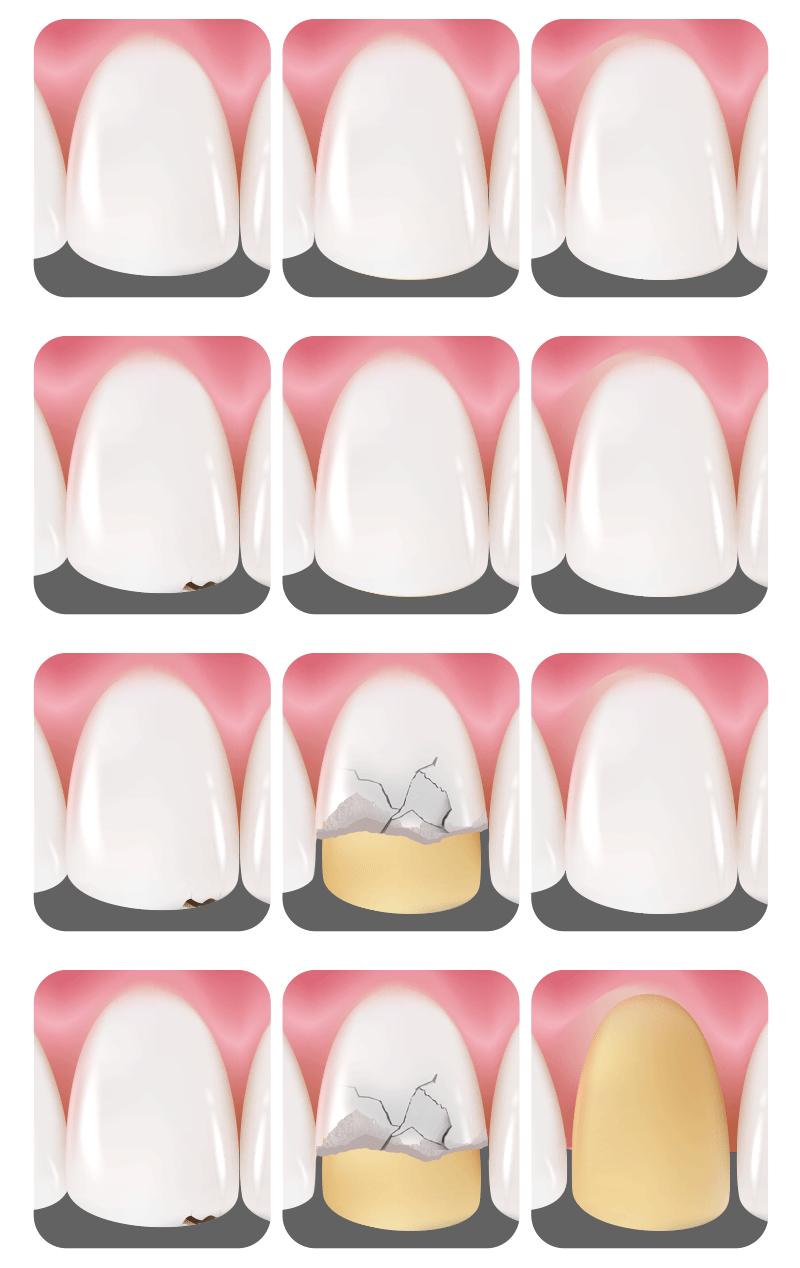
To respond appropriately, first identify which type of veneer damage applies to you. Urgency and treatment options vary depending on the condition.
First is chipping. This is when the edge or corner of the veneer has a very small piece missing. If the natural tooth is not damaged and the restoration is still firmly bonded, this can often be addressed in the simplest way.
Second is fracture. This includes cases where more than half of the veneer is broken, or there is a visible crack. At this point, it’s important to check whether the remaining piece is still attached to the tooth and whether the tooth surface itself has been damaged.
Third is de-bonding. This is when the restoration comes off as a whole. If the piece is clean, it may be more likely a bonding failure. However, if tooth fragments are stuck to the inner surface of the piece, damage to the tooth itself should be suspected. This classification determines the direction of the next treatment.
2. What you must never do—and first aid steps
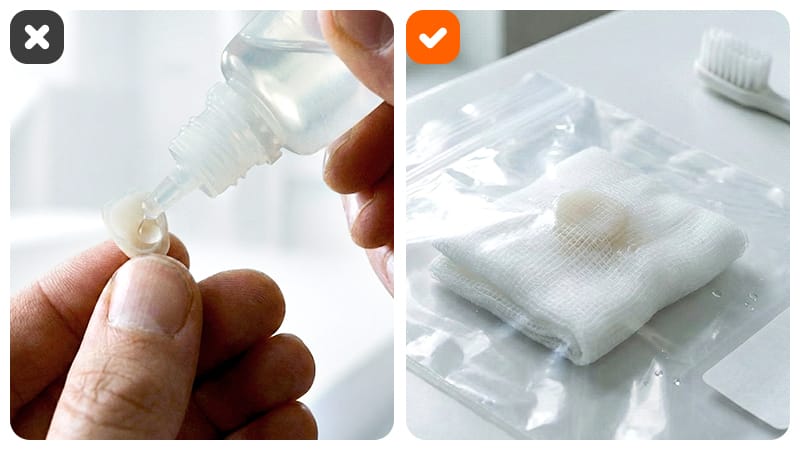
Many people, in a panic, try to reattach the fallen piece using household instant glue. However, this is the single most important action to avoid, because it can turn a simple fix into a complicated case.
Dental bonding agents are biocompatible and their thickness can be precisely controlled at the micrometer level. Household adhesives cannot be controlled this way. Unevenly hardened glue can lift the restoration, interfere with your bite, and create gaps where food gets trapped—leading to secondary problems. In addition, the chemical components of household glue may irritate the tooth surface and gums.
A bigger clinical issue is bonding surface contamination. Once household glue touches the tooth surface, it becomes very difficult to clean completely. During removal, additional healthy tooth structure may need to be reduced, or a case that could have been managed with rebonding may end up requiring a brand-new restoration.
The most common mistake when storing a broken piece is wrapping it in tissue. It can easily be mistaken for trash and thrown away, and it dries out easily. Instead, place it in a small container or plastic bag with wet gauze or saline, and store it separately so it won’t be crushed in your bag.
3. If the damage is minor: “smoothing” and “partial repair”
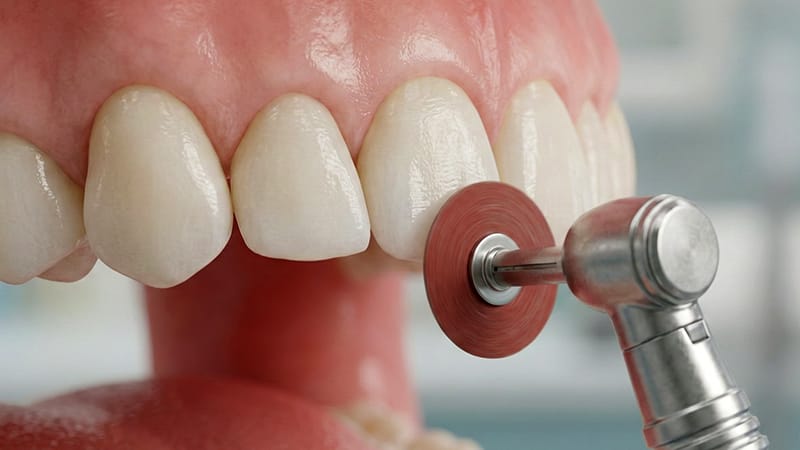
Think of veneer damage like a smartphone screen protector. If the corner is slightly scratched or rough, you don’t necessarily replace the entire protector—you can smooth it and keep using it. Dentistry can take a similar approach.
If the chipped area is very small and the natural tooth is not damaged, enameloplasty—polishing the rough edge—may be enough to maintain function. This is the most conservative approach and typically involves less financial burden. If the change is barely noticeable, refining the existing restoration rather than making a new one may also be beneficial for long-term tooth preservation.
Even if the damaged area is somewhat larger, if the remaining veneer is still firmly bonded to the tooth, a resin repair may be considered. This can avoid potential tooth damage that may occur when forcibly removing the existing veneer and can quickly address the immediate cosmetic concern.
4. Decisive signs that remaking is necessary
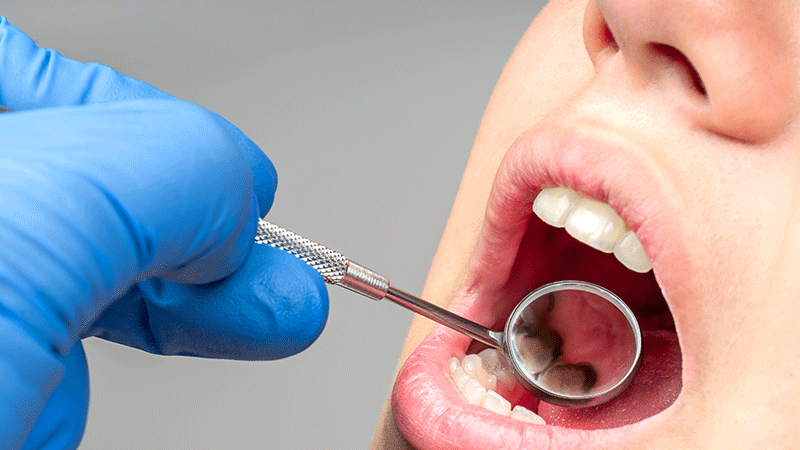
However, repair is not the right answer in every case. If a smartphone screen is severely cracked and risks damaging the internal display, you don’t just replace the protector—you repair the screen. Likewise, there are situations where remaking the veneer is safer in the long run than partial repair.
The biggest criteria are loss of bonding and risk of secondary decay. If the veneer has a crack that allows saliva and bacteria to seep in, simply patching the outside is essentially ignoring decay that may be progressing underneath. Also, if the veneer keeps coming off, the cause may be contamination of the bonding surface or bite interference. Reattaching it again without addressing the cause is only a temporary measure.
In particular, veneers bond more favorably when there is enough underlying enamel (like wallpaper adhering best to a solid base). If repeated remakes increase the amount of tooth reduction, the bonding environment can become less favorable. For this reason, clinicians tend to recommend remaking cautiously—primarily when internal contamination is suspected or when a highly complete cosmetic restoration is truly necessary.
✅Signs you should consider remaking
- Does the tooth look dark through the inside of the veneer? (Possible decay)
- Do you have ongoing sensitivity to cold water or air? (Bonding failure/gap formation)
- Is there odor from the restoration, or are your gums swollen or bleeding?
- Is the damage happening repeatedly?
6.Frequently Asked Questions (FAQ)
Q. It’s slightly chipped but doesn’t hurt. Can I wait and come later?
Even without pain, it’s better to visit early. A sharp edge can injure the oral mucosa, and bacteria can enter through tiny gaps—leading to decay or a larger fracture over time.
Q. If I bring the fallen veneer piece, can it be reattached?
If the piece is intact and not contaminated, rebonding may be possible. However, if the fragment is too small or the bonding surface is damaged, reuse may be difficult. For now, store it in a way that keeps it moist and have a clinician evaluate it.
Q. If it’s patched with resin, will it look obvious?
Modern resin materials come in many shades and translucencies, so restoration can often be done to a level that is not easily distinguished by the naked eye. However, unlike ceramic, resin may discolor over time, so periodic monitoring and maintenance are needed.
Q. I have an important meeting tomorrow—Is there a temporary way to cover it?
If you can’t visit a clinic due to an urgent schedule, applying a small amount of over-the-counter dental wax to cover the sharp area can be a temporary measure. This can help prevent injury to the tongue or lips and may somewhat mask the chipped area cosmetically. However, avoid self-adhesives and visit a dental clinic as soon as your schedule allows.

The key to handling veneer damage is fast and correct initial response.
First, bringing the fallen piece without self-gluing—and keeping it moist—can increase the chance it can be saved.
Second, depending on the extent of damage, smoothing or partial repair may be enough to restore a natural appearance.
Third, repeated breakage should prompt a bite evaluation to help prevent recurrence.
A chipped tooth is understandably upsetting, but it is not the loss of the entire tooth—it is a problem with the restoration. Try not to worry too much, and seek professional help to choose the safest way to protect your natural tooth.
Sources
- Korea Disease Control and Prevention Agency (KDCA), National Health Information Portal: information on tooth reshaping and veneers.
- Korean Dental Association, oral health guidelines.
- Peumans et al., "Five-year clinical performance of porcelain veneers", Journal of Adhesive Dentistry, 2004.
※ The copyright for all content on this blog belongs to medihi. Unauthorized copying, distribution, or derivative use is strictly prohibited, and violations may result in legal action without prior notice.
Recommended reads
 medihi