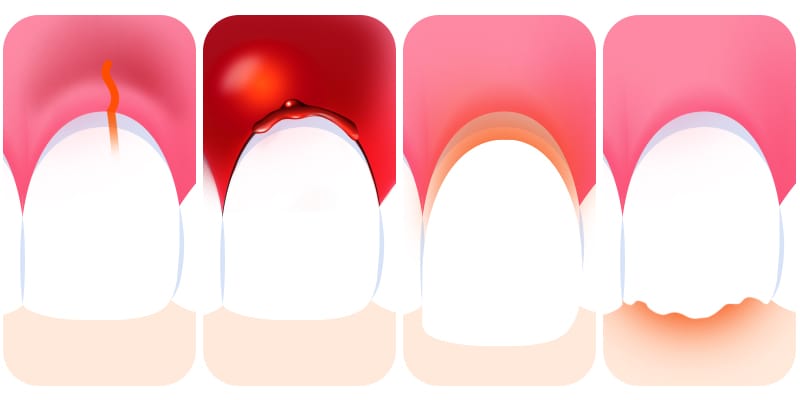

We’ll break down why tooth sensitivity can occur after a veneer procedure, and how to tell whether it’s a case of “temporary adjustment” or a “problem that needs treatment.”
“After getting veneers, my teeth sting when I drink cold water.”
“Could the nerve have been damaged?”

When your teeth feel sensitive after veneers, it’s natural to worry: “Did something happen to the nerve?” or “Does this mean I won’t be able to drink cold water anymore?” Because it’s a symptom you didn’t have before the procedure, you may notice it more intensely—and if it repeats every time you eat or drink, discomfort can quickly turn into anxiety.
Let’s look at clear clinical criteria to determine whether this is simply part of the normal recovery period or a situation that requires additional care.
1. A “zing” right after the procedure—does it mean the treatment failed?
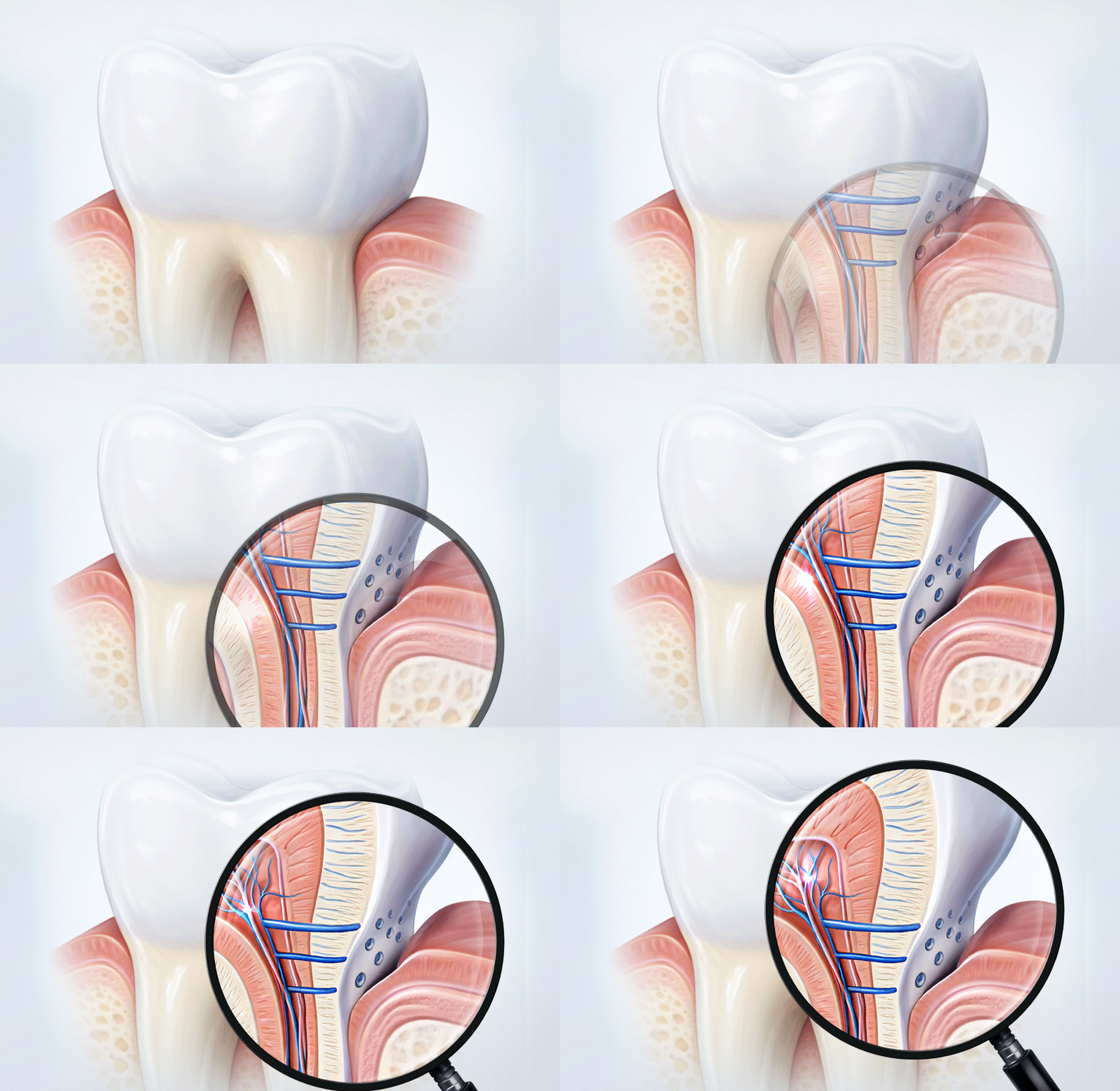
In the early stage after the procedure, a brief “zing” or sensitivity is often a physiological response that occurs as the tooth adapts to a new environment.
Although a tooth looks like one solid, hard structure from the outside, inside it contains countless microscopic channels (dentinal tubules) woven densely throughout. To make this easier to understand, think of a home’s insulation: the hard outer enamel is like insulation that blocks outside cold, while the inner dentin is like the indoor space where plumbing (and the nerve) runs.
Preparing the tooth surface for veneers is similar to thinning part of that thick insulation. When insulation becomes thinner, outside cold reaches the interior more quickly; likewise, the tooth can transmit external stimuli to the nerve more rapidly.
Just as tapping a straw in a cup makes the water inside the straw move, fluid inside these tiny tubules can shift with temperature changes or airflow and stimulate the nerve—leading to sensitivity.
In other words, early sensitivity does not necessarily mean something went wrong. It can simply reflect that the nerve inside the tooth has become temporarily more reactive and may respond strongly even to small stimuli.
2. If less is shaved, will it hurt less? Why “enamel preservation” matters most
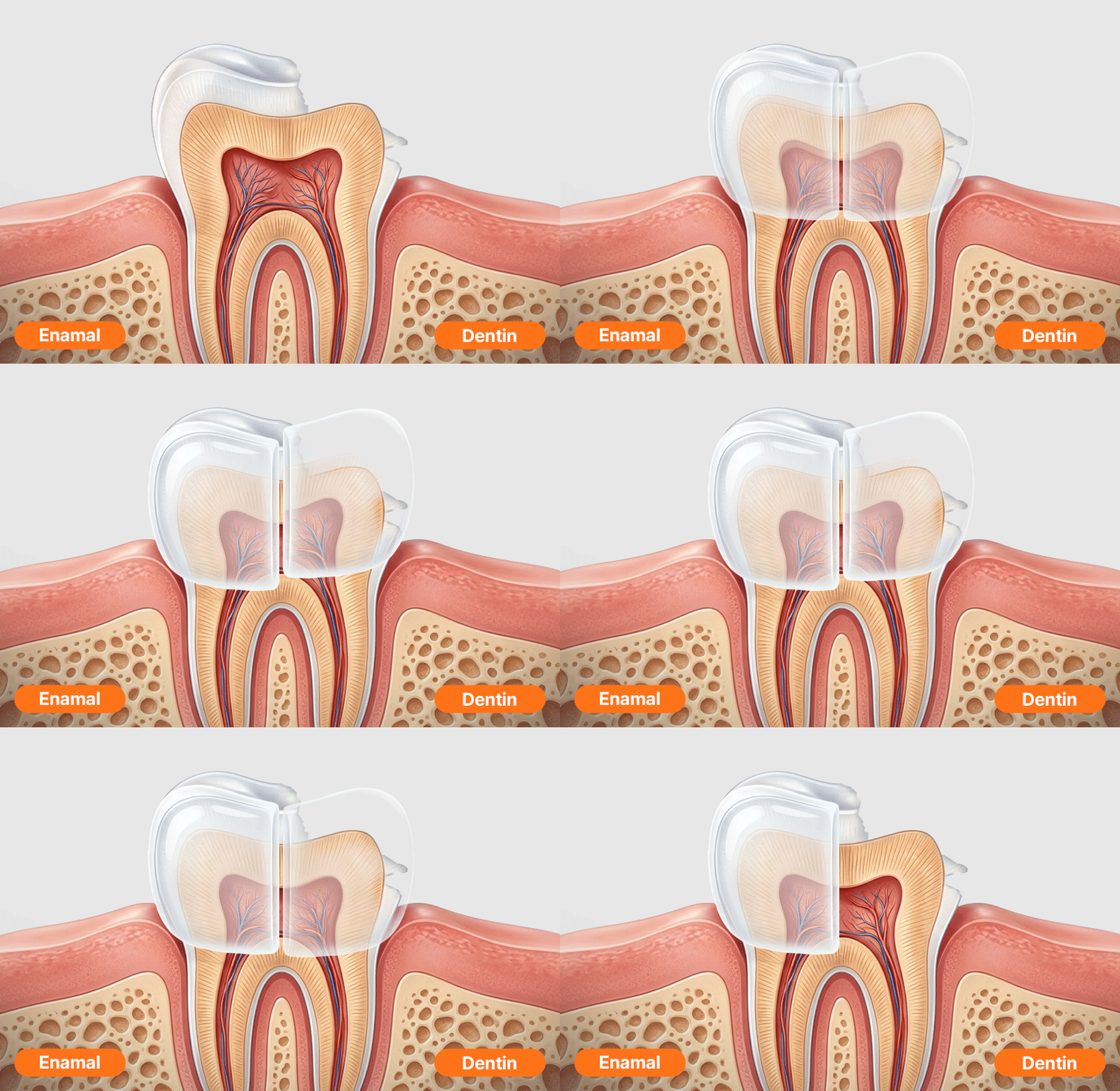
So what is the most important condition for reducing sensitivity—even early on? Many people think of “high-quality ceramic” or a “strong adhesive.” In practice, however, how much of the insulation layer (enamel) is preserved plays a clinically significant role.
If tooth reduction is minimal and enough enamel remains, that protective barrier stays intact, which can help lower the risk of sensitivity.
Also, veneer bonding tends to be far more stable on enamel than on dentin. So, the more enamel that remains, the more reliable the bond tends to be.
On the other hand, if more reduction is required due to alignment issues and a large amount of dentin becomes exposed, the protective barrier is thinner. The nerve is more directly affected by external stimuli, and bonding strength can decrease.
Therefore, to minimize sensitivity and support long-term stability, it’s important—before veneers—to confirm whether the treatment plan is designed to preserve as much enamel as possible.
✅Pre-treatment consultation checklist
- Whether the planned reduction can stay within the enamel (insulation) layer
- Whether you have a teeth-grinding habit and your teeth are already worn down
- Whether you informed the clinician if you had pre-existing sensitivity (dentin hypersensitivity)
3. Is using “sensitive toothpaste” enough?
Clinicians don’t assess your condition based only on the subjective statement “my teeth feel sensitive,” but rather on factors like the duration of pain and the presence or absence of triggers. By checking how long the pain lasts, whether it happens only at the moment you drink cold water, or whether it throbs even at rest, they can estimate how active the nerve inside the tooth is and recommend an appropriate response or treatment. Having symptoms does not automatically mean you need in-office treatment; a stepwise approach is often reasonable.
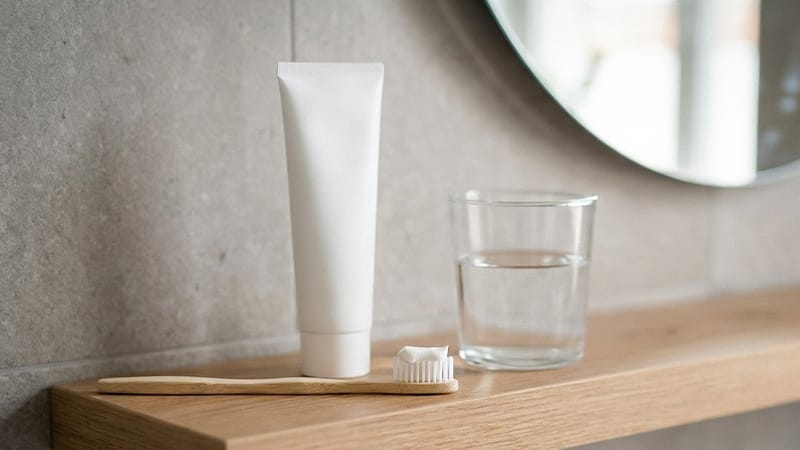
If your teeth react briefly only to cold water and the sensation fades quickly, a first step may be using toothpaste formulated for sensitivity and practicing “low-irritation” care. In many cases, this is consistent with dentin hypersensitivity, which may improve as the nerve adapts over time or can be managed with conservative measures.
Toothpastes containing ingredients such as potassium nitrate or tricalcium phosphate can help reduce discomfort by blocking the openings of exposed dentinal tubules or decreasing nerve responsiveness. However, it’s important to remember that the effect is typically gradual and builds with consistent use rather than appearing immediately after one or two uses.
4. When should you consider professional treatment?
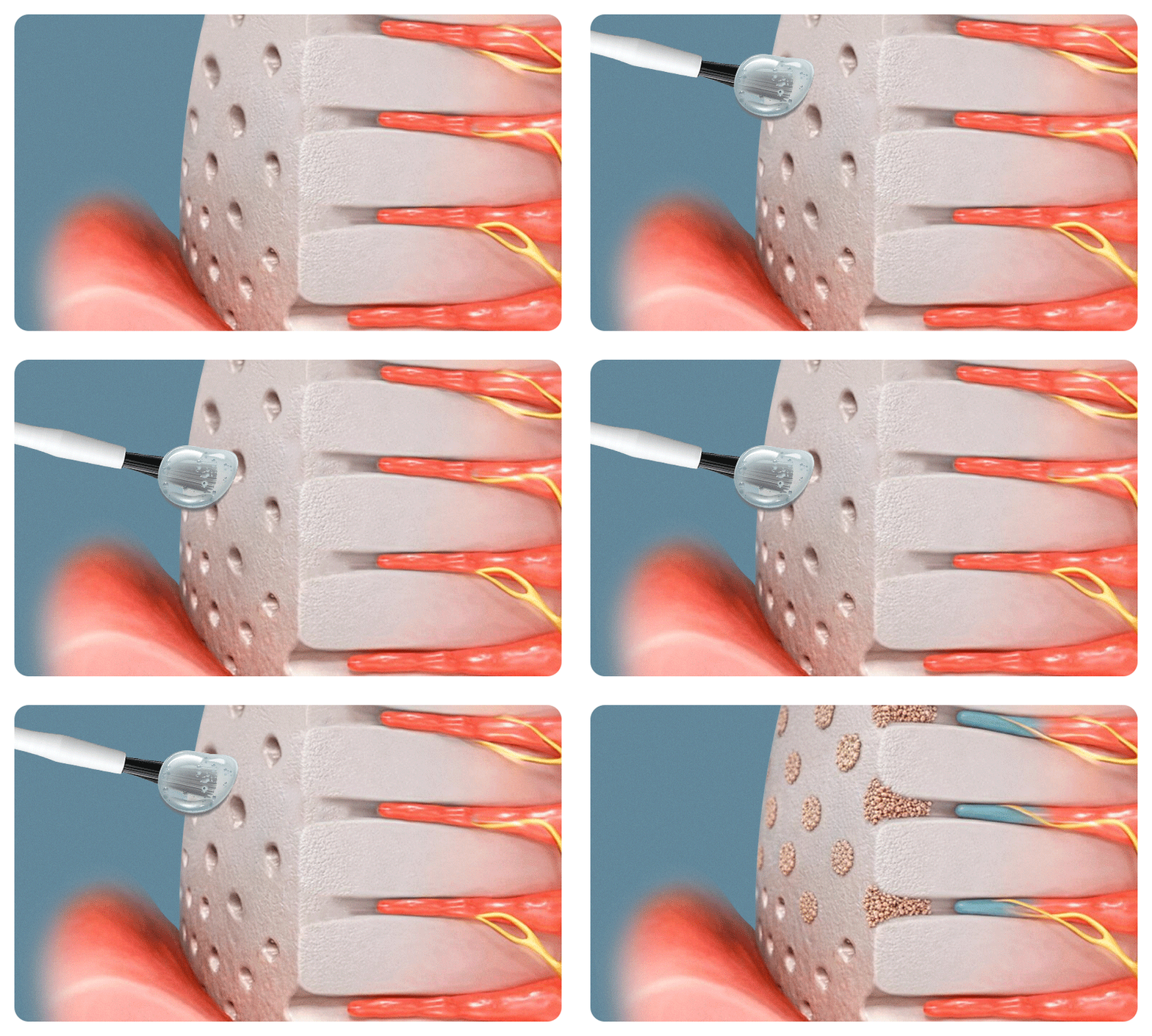
If you have throbbing pain even without cold stimulation, pain severe enough to disrupt sleep, or symptoms that persist for more than 3–4 weeks, it’s worth actively considering professional treatment.
In dental clinics, clinicians may apply high-concentration desensitizing agents (such as varnish) or use lasers to physically seal exposed dentinal tubule openings. This is similar to sealing drafts from gaps in a window using specialized tools.
That said, it’s also important to check whether the underlying cause of sensitivity is related to occlusal interference (a high bite) or marginal issues at the restoration boundary (such as a lifted margin or leakage). Addressing these factors helps reduce recurrence.
In addition, beyond simple sensitivity, there may be a possibility of irreversible inflammation of the nerve inside the tooth (pulpitis). Review the checklist below, and if any item applies, it’s best to visit a dental clinic without delay.
✅Key checklist for deciding whether to visit the clinic
- After drinking cold water, does the pain linger for more than 10 seconds?
- Do you have nighttime pain that doesn’t subside even after taking painkillers?
- Do you have throbbing pain even when you’re not doing anything?
5. What if your teeth become sensitive again years later?
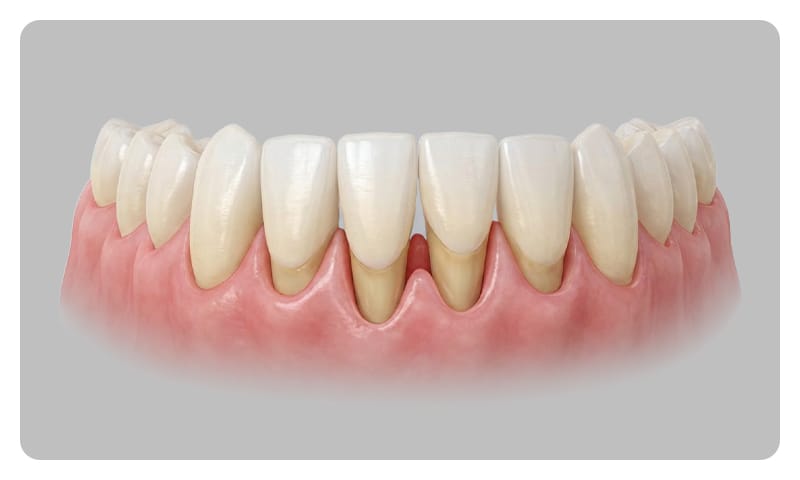
Some people feel fine right after the procedure, but develop sensitivity again years later. In such cases, the cause is often more related to gum health than to the veneer restoration itself.
Just as an old house can settle and develop gaps in the walls, neglected gum care can lead to gum recession, exposing parts of the tooth root that are not covered by the restoration.
The tooth root has no enamel “insulation” layer at all, so even mild stimuli can cause pronounced sensitivity.
In other words, to use veneers comfortably over the long term, it’s often more important to carefully manage the boundary where the restoration meets the gumline than to focus only on cleaning the restoration surface.
Regular scaling and proper brushing are key habits that can help prevent gum recession and lower the risk of secondary sensitivity.
6.Frequently Asked Questions (FAQ)
Q. How long does sensitivity usually last after veneers?
It varies by individual, but it often gradually improves within about **2–4 weeks** after the procedure. This reflects the tooth nerve adapting to a new environment and stabilization of fluid movement within microscopic tubules. If symptoms persist beyond a month or the pain intensity increases, an exam is recommended.
Q. My tooth “zings” every time I chew—does that count as sensitivity?
Unlike cold-triggered sensitivity, sharp pain only when chewing may indicate a different cause. Possibilities include a slightly high restoration causing bite impact, a micro-crack in the tooth, or a gap at the bonding interface. Because this is difficult to resolve naturally, a dental consultation is recommended.
Q. When does sensitive toothpaste start working?
Sensitive toothpaste is not a painkiller, so cumulative effect matters more than immediate relief. Research commonly suggests that using it at least twice daily for a minimum of about 2–4 weeks may help you notice a nerve-desensitizing effect.
Q. In what situations should I consult a dentist?
If you have spontaneous throbbing pain without a trigger, if pain wakes you at night, or if symptoms do not improve even after sufficient time has passed since the procedure, you should visit a clinic to check nerve status and restoration fit.

Sensitivity after veneers is a common concern, but if you observe the pattern of symptoms carefully, you don’t necessarily need to panic.
Short-term sensitivity early on may be part of a natural adjustment process, so conservative management—such as using toothpaste for sensitive teeth—can be a helpful first step. However, if pain persists without external triggers or is severe enough to disturb sleep, it may signal something beyond normal adaptation, and a clinician’s evaluation is important.
Over the long term, it’s also crucial to prevent gum recession that could expose the tooth root. If you keep today’s criteria in mind and check your own dental condition carefully, you can maintain a healthier, more comfortable, and beautiful smile.
Sources
- Korea Disease Control and Prevention Agency (KDCA), National Health Information Portal, information on dentin hypersensitivity, 2023.
- Seoul National University Hospital Medical Information, causes and symptoms of tooth hypersensitivity (Hypersensitivity).
- Etienne, O., et al. "Survival of Ceramic Veneers: Impact of Dentin Exposure and Tooth Vitality After 1 to 15 Years of Follow-Up." The International Journal of Prosthodontics, 2025.
※ The copyright for all content on this blog belongs to medihi. Unauthorized copying, distribution, or derivative use is strictly prohibited, and violations may result in legal action without prior notice.
Recommended reads
 medihi