

If your vision becomes hazy while enjoying art or hobbies, it can create major day-to-day inconvenience. Here, we outline common causes of blurred vision that doesn’t improve even after cleaning your glasses, and practical criteria for deciding on safe evaluation and treatment.
“Even if I clean my glasses, everything still looks hazy.”
“Painting is my hobby, but it’s uncomfortable because I can’t see well.”

People with hobbies that require sensitivity to color and fine detail often notice lens clouding earlier than others. Even if you haven’t known the exact cause until now, it doesn’t mean it’s too late. Once the cause is identified through an eye exam and you understand the options, anxiety often decreases.
Clarifying whether this is simple fatigue or a structural change in the eye is the first step in determining the right treatment direction. If it is structural, the priority is to identify where the cause of the visual obstruction is located.
1. Why It’s Still Hazy After Cleaning Your Glasses: The Cause May Be “Inside the
Camera”
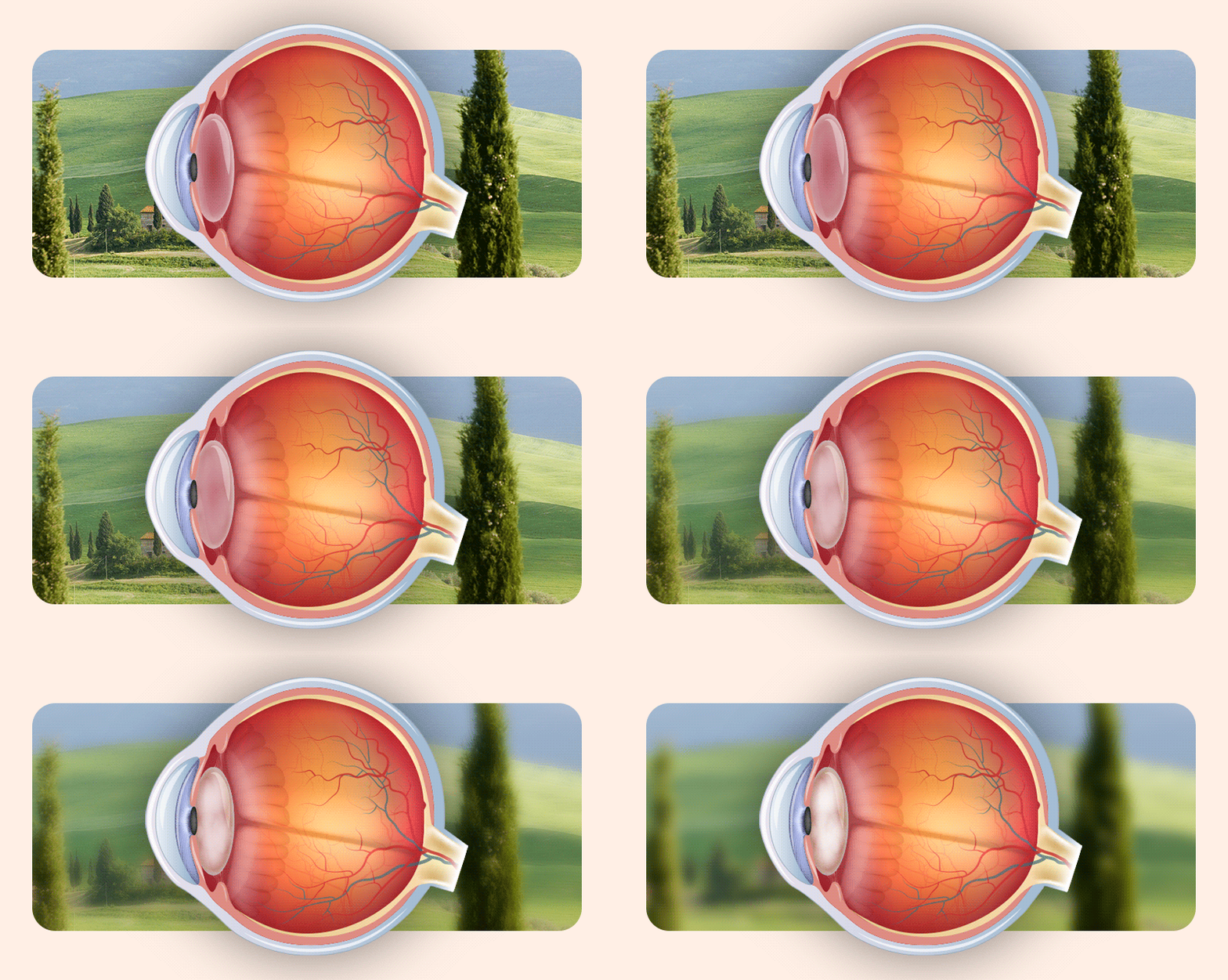
Our eyes are structured much like a high-performance camera. If dust gets on the camera’s front glass, you wipe it with a soft cloth—and the view becomes clear again. But if your vision remains hazy even after cleaning your glasses, you should suspect the internal lens. What if fog forms on the camera’s internal lens itself? No matter how much you wipe the external filter, photos will still come out blurry.
Medically, the eye structure corresponding to that internal lens is the crystalline lens. When the lens—normally clear and transparent—becomes cloudy due to aging and also hardens, incoming light can no longer focus properly on the retina. This condition is called a cataract. When light cannot pass through normally and instead scatters inside the eye, your overall vision can look as if it’s covered in fog. This is also why, during art-making, black may look more like gray, or color contrast may seem to drop sharply.
Even if you get new reading glasses or adjust your prescription, your vision may not become crisp. In many cases, the issue is not external. As the crystalline lens becomes cloudy, images cannot form properly on the retina. This can make it difficult to perceive objects clearly—your eye may not be receiving light fully from deep inside.
2. Simple Blur vs. Visual Distortion: When Do You Need a Detailed Retina Exam?
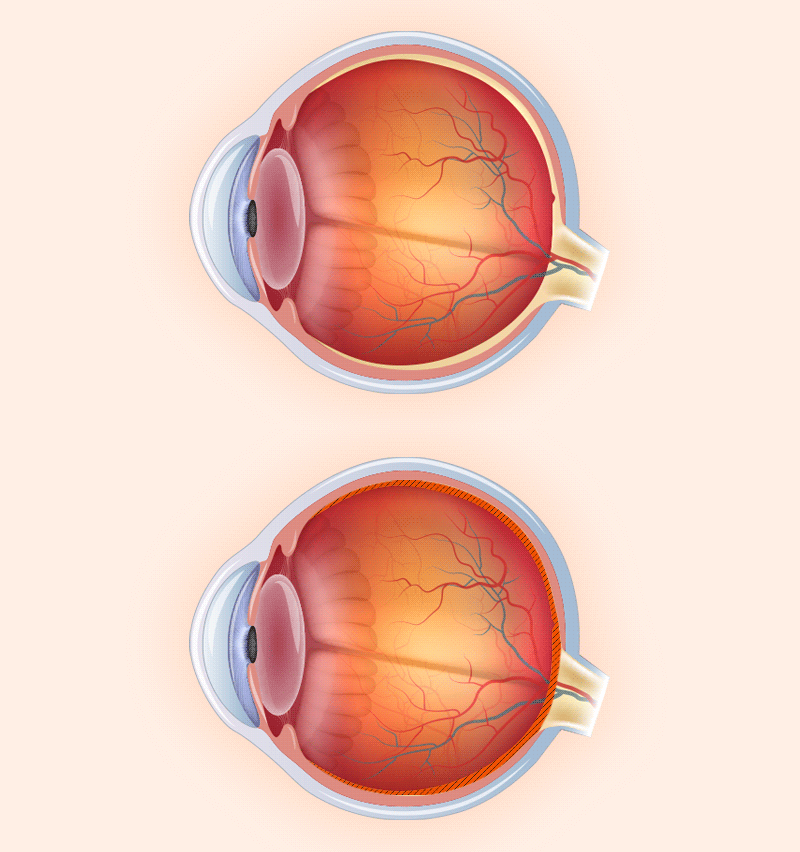
To evaluate lens clouding, ophthalmology clinics typically dilate the pupil and examine the inside of the eye with a slit-lamp microscope to identify the location and severity of the opacity. However, you cannot conclude it is always a cataract based on “hazy vision” alone. Vision can also become blurry if there is a problem with the retina, which functions like a camera sensor. This is where symptom differentiation becomes important.
[주요 증상에 따른 의심 가능 질환군]
| Primary Symptom Characteristics | Suspected Disease Group |
|---|---|
| Stinging, foreign body sensation, temporary vision fluctuations when blinking | Ocular surface (Dry eye, etc.) |
| Uniformly hazy vision across the entire field, glare, diminished color perception | Lens (Potential cataract) |
| Straight lines appearing wavy or darkness in the center of vision | Retina/Macula (Suspected dysfunction) |
✅ Signals that warrant prompt evaluation
- Do straight lines on a canvas or monitor look wavy or bent?
- Have you developed a dark spot (scotoma) in the center of your vision?
- Do you see flashing lights or feel as if a curtain is coming down over your vision?
- Have floaters suddenly increased dramatically?
Blur may be accompanied by subtle distortion or central dimness. In such cases, an OCT(optical coherence tomography) scan can help evaluate deeper structures to differentiate macular and retinal disease. However, if a cataract is advanced, the OCT image itself may appear unclear—so the combination of tests should be selected carefully based on the condition of the eye.
3. The Timing of Surgery Is Based on “Felt Inconvenience,” Not Just the “Diagnosis”

Advertisements often emphasize that you should have surgery as soon as cataracts are detected to regain clear vision. But in real clinical practice, the first priority is how much your daily life is affected. Adult cataracts are not always scheduled for surgery immediately after diagnosis. If the cataract remains in an early stage and daily life is not significantly impacted, observation may be recommended. With regular checkups to monitor progression, it is generally advisable to decide on an appropriate surgical timing.
The key criterion for deciding on surgery is not only the numbers on a visual acuity chart. Your own visual demands in daily life matter. In particular, people who enjoy art or crafts often notice reduced contrast sensitivity before they notice reduced acuity. Common complaints include, “Blue looks duller than it used to,” or “The edges of shadows look smudged.” This happens because a clouded lens can absorb more blue light and affect color perception.
There may come a point when glare or reduced color contrast becomes hard to tolerate. Check whether you’ve reached the stage where you feel forced to give up valued hobbies. If fine detail work becomes difficult and it affects your results, that is an appropriate time to seriously discuss treatment direction and surgical timing.
4. Monofocal vs. Multifocal: Intraocular Lens (IOL) Considerations for Art Activities
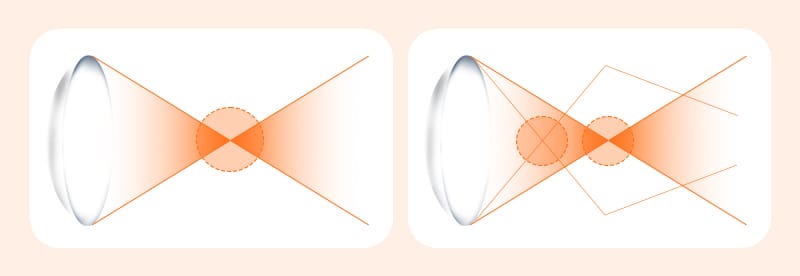
If surgery is decided, the cloudy natural lens is removed and an intraocular lens (IOL) is implanted. The lens you choose can change how you use your eyes after surgery. Since no lens satisfies every situation, a reasonable choice should be made based on your lifestyle, work environment, and tolerance for optical phenomena.
A monofocal lens provides clear focus at a single distance and tends to cause relatively less glare and halo. If you drive frequently at night and are sensitive to halos or glare associated with multifocal lenses, a monofocal lens may be recommended. It may also be advantageous for detailed color work because contrast can appear clearer.
In contrast, multifocal or extended depth of focus (EDOF) lenses aim to help you see both far and near (or intermediate) distances. If intermediate distance (such as an easel or monitor) is a major part of your day, comparing options including EDOF may be helpful. Multifocal lenses can reduce the inconvenience of wearing glasses. However, because they split light, contrast sensitivity may decrease slightly. Individual differences also exist in experiencing halos or glare at night.
✅ In-clinic checklist before choosing a lens
- What is the typical distance to your canvas, palette, and monitor?
- How often do you do precision work that requires distinguishing subtle color differences?
- Do you frequently drive at night, or are you particularly sensitive to glare/halos?
5. What to Do If Things Look Bluish After Surgery—or If Vision Becomes Hazy Again

Some people report that the world looks slightly blue and cool-toned right after surgery. It can feel frightening, as if something went wrong—but you can be reassured. The previously yellowed, cloudy lens had been blocking blue light, and once a clear IOL is implanted, the previously blocked light reaches the retina, creating this perception. This is called a blue-tinted vision shift, and in many cases the brain adapts over time. If you do art, you may need an adjustment period to recalibrate your reference colors.
Months or years after surgery, vision can become cloudy again. This is called posterior capsule opacification (PCO), sometimes referred to as a “secondary cataract.” Cells grow on the surface of the posterior capsule that holds the IOL, forming a thin cloudy membrane. In this case, an outpatient Nd:YAG laser posterior capsulotomy may be considered. It is typically performed quickly, but follow-up is needed as instructed because increased intraocular pressure or inflammation can occur afterward.
Finally, there is a rare but important situation. According to clinical research (the IRIS Registry), retinal tears or retinal detachment within 1 year after cataract surgery have been reported as very uncommon (around 0.1–0.2%). People with high myopia or lattice degeneration may have a slightly higher risk. If floaters suddenly increase or your vision feels like it is being covered by a curtain, you should visit a clinic immediately for a retinal exam.
6. Frequently Asked Questions(FAQ)
Q. My vision stays hazy even after cleaning my glasses—does that automatically mean cataracts?
Not necessarily. In addition to cataracts (lens clouding), severe dry eye disease and macular degeneration can also cause blurred vision. If symptoms persist even after changing glasses, you may need an evaluation that differentiates causes from the ocular surface to the lens and retina.
Q. I do art—what should I consider first when choosing an IOL?
First, identify your primary working distance (near, intermediate, far). If subtle color and contrast are critical, you should carefully review the optical characteristics of the lens. Because multifocal lenses split light, they may slightly reduce contrast sensitivity or cause halos/glare, so it’s best to decide through detailed testing and consultation with your ophthalmologist.
Q. After cataract surgery, the world looks bluish—is that a side effect?
It is more likely a temporary blue-tinted vision shift that occurs when the cloudy lens is removed and a clear lens is implanted. Blue wavelengths that were previously blocked reach the retina, creating a temporary perceptual change, and many people adapt naturally over time.
Q. When should I consult an ophthalmologist or visit a clinic for blurry vision?
If cleaning your glasses doesn’t clear your vision and reduced color contrast interferes with valued hobbies or daily life, an evaluation is recommended. In particular, if straight lines look distorted, or you have flashing lights, a curtain-like shadow, or a dark spot, you should not delay—prompt evaluation is needed to rule out retinal disease.

In summary, “hazy vision” can require different tests and lead to different choices depending on the cause. Common guidance is to decide together with your clinician based on three pillars:
(1) accurate differentiation between lens and retinal causes, (2) the degree of inconvenience you feel in daily life and work, and (3) your working distance and tolerance for optical phenomena.
The priority is to confirm whether the cause lies in the crystalline lens or the retina. For surgical timing, it is often better to weigh your real-life, subjective discomfort more than visual acuity chart numbers alone. When choosing an IOL, rather than simply looking for the “newest” lens, it is generally better to select the type that best fits your lifestyle and work environment.
When your vision becomes hazy, it can feel mentally stifling and discouraging. This frustration may not be because you are overly sensitive—it may be because your daily life demands high visual performance. By identifying the cause and finding an approach that fits you, you can help protect both your vision and the enjoyment of everyday life.
Sources
- National Evidence-based Healthcare Collaborating Agency (NECA), PACEN: Evidence summary related to multifocal intraocular lenses, 2023
- Korean Ophthalmological Society official health information: Cataract disease information page (reference standard)
- Ophthalmology Science (2023). Incidence and Risk Factors for Retinal Detachment and Retinal Tear after Cataract Surgery (IRIS Registry).
※ The copyright for all content on this blog belongs to medihi. Unauthorized copying, distribution, or derivative use is strictly prohibited, and violations may result in legal action without prior notice.
Recommended reads
 medihi