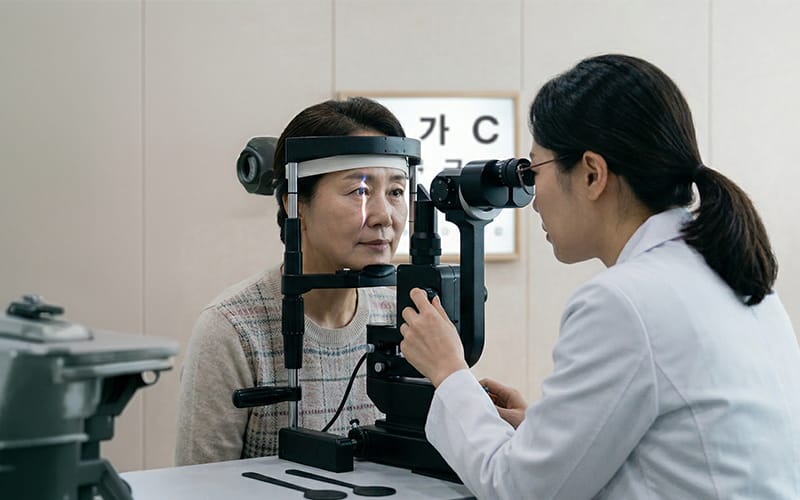

Afraid of driving at night because of glare and halos? This article explains reduced contrast sensitivity—often more important than the numbers on a standard eye chart—along with recommended diagnostic tests and practical criteria for choosing an intraocular lens (IOL) that may be more suitable for night driving.
“Every time I drive at night, the glare is so bad that I’m scared I’ll get into an accident.”

Many patients in their 50s to 70s say that once it gets dark, headlights flare and scatter, making them afraid to drive. This can be a natural age-related change as the eye’s internal structures and light transmission characteristics shift over time. Still, if you must drive at night—or if driving is essential for work—these symptoms can feel especially limiting and stressful.
In clinic, what matters is not only the number you can read on a vision chart. We also need to evaluate how well you can distinguish objects in dim environments and whether the crystalline lens is functioning properly, among other aspects of visual performance.
Below, we’ll review why glare can feel worse at night, how night vision is assessed, and how to think about the timing of cataract surgery.
1. How is nighttime glare related to cataracts?
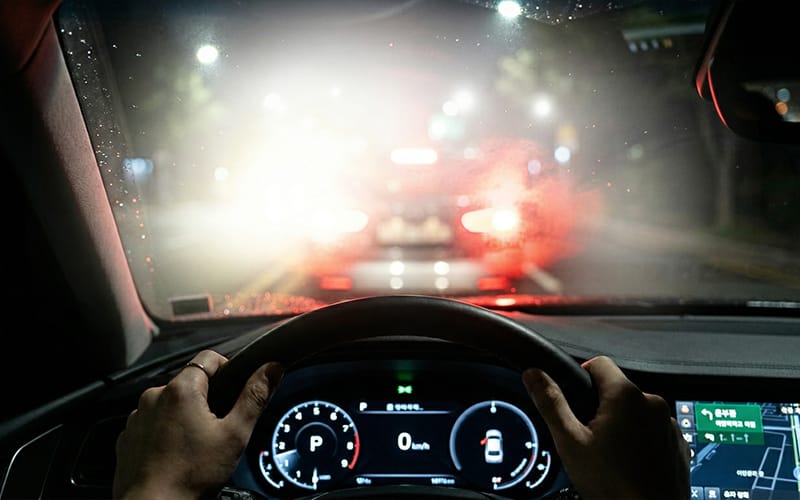
Why do streetlights and car headlights seem to “spread out” and block your view mainly at night? To understand this, it helps to look at how light is refracted and focused inside the eye.
Imagine a car windshield with many tiny scratches or a thin film of frost. In daylight, you may still see reasonably well. But at night, when strong oncoming headlights hit the windshield, the light scatters off those imperfections and spreads in multiple directions, briefly washing out your view.
In the eye, the structure that functions like a camera lens is the crystalline lens. A cataract—age-related clouding of this normally clear lens—can similarly increase light scatter, leading to glare and halos. As the lens becomes less transparent, light cannot focus cleanly to a single point and instead disperses irregularly within the eye. That said, similar symptoms can also occur with dry eye disease, astigmatism, or retinal disorders, so proper differential diagnosis is important.
2. Why is night driving difficult even when visual acuity seems “good”?
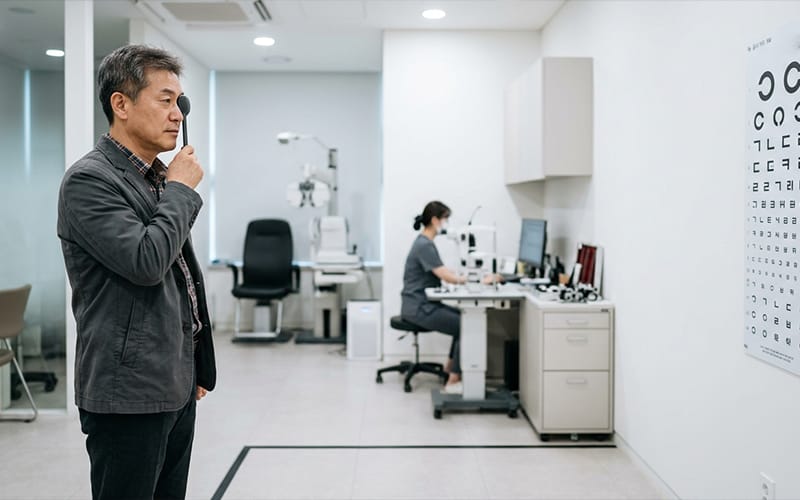
It’s easy to assume that if you can read the numbers on the clinic eye chart, your eyes are fine. However, even if visual acuity measured under bright lighting (high-contrast acuity) is good, it may not reflect how safe you feel while driving at night.
Returning to the windshield analogy: a windshield that looks clear during the day can still make it hard to distinguish lane markings from dark asphalt on a rainy night. In these situations, clinicians pay close attention to contrast sensitivity—the ability to detect differences in brightness between an object and its background. In early cataracts, standard eye-chart testing may still fall within the “normal” range.
When contrast sensitivity declines, you may notice road signs later than usual, or detect pedestrians in dark clothing more slowly—especially at night or in rain. For safety, it’s better not to rely on eye-chart results alone, but to assess visual function under low-contrast and glare conditions as well.
✅ Signs that may suggest reduced contrast sensitivity (self-check)
- My eye-chart test is “normal,” but night driving is unusually difficult.
- On rainy nights or wet reflective roads, lane markings are hard to distinguish.
- When entering/exiting tunnels, my eyes adapt slowly and I feel briefly “blocked” or uncomfortable.
- Oncoming headlights flare/spread, and my vision takes longer to recover.
3. If night vision declines, what do ophthalmologists evaluate?
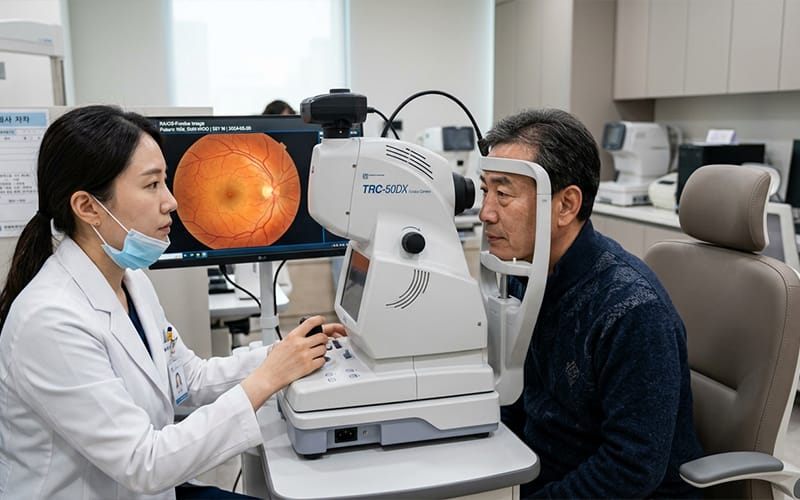
Because multiple factors can contribute to poor night vision, a stepwise evaluation helps clarify what’s driving the symptoms.
- Lens opacity assessment (dilated slit-lamp examination): We evaluate not only whether opacity is present, but also its severity and location. If the opacity is close to the visual axis (center), symptoms may feel more pronounced.
- Retina and optic nerve evaluation (fundus examination, etc.): This helps determine whether symptoms are due solely to cataract or are combined with other causes. It is essential for identifying coexisting disease.
- Low-contrast acuity and glare testing: Some patients read well in a bright exam room but show a marked functional drop under glare. These results can help guide treatment goals.
Some patients ask whether eye drops used for dryness can “clear” a cloudy lens. While certain adjunctive medications may be used clinically with the aim of slowing cataract progression, reversing already-denatured lens proteins is difficult—much like you cannot restore a deeply scratched windshield with washer fluid. If functional impairment becomes significant, it is reasonable to discuss surgical options.
4. Why is cataract surgery timing based more on “daily-life impairment” than “opacity
grade”?
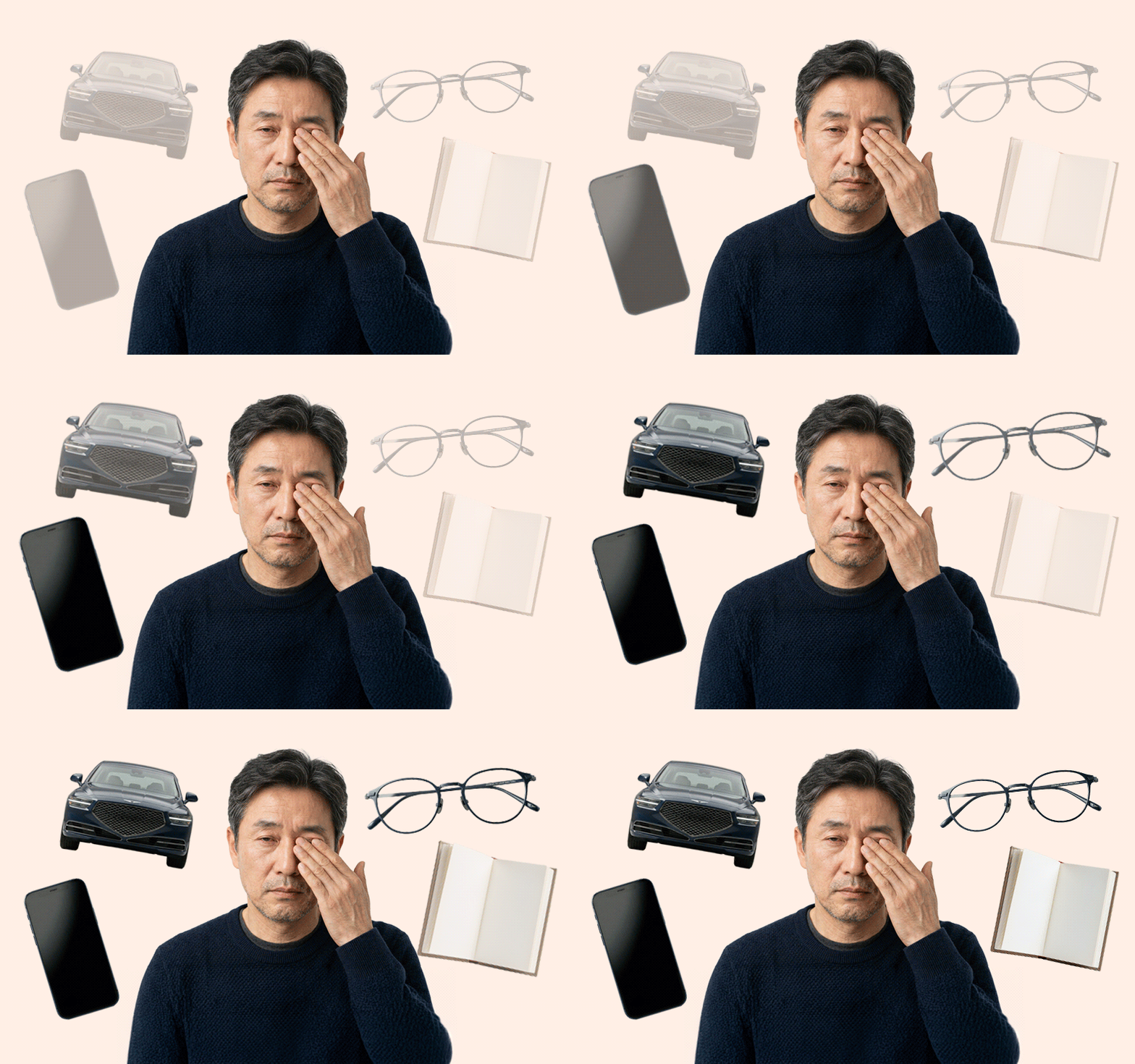
In the past, the degree of lens opacity measured by devices was often used as a main indicator for surgery timing. In current practice, however, greater weight is placed on the patient’s functional decline and real-world inconvenience.
Night driving frequency can be a key deciding factor. Even if the cataract does not appear advanced, if night driving is essential and severe glare limits daily activities, it may be appropriate to actively consider surgery. Conversely, if driving is infrequent and daily life is not significantly affected in the early stage, periodic follow-up may be a reasonable approach.
Delaying surgery indefinitely is not always best. In patients in their 80s and older, overly advanced cataracts can increase surgical difficulty and raise the risk of complications such as posterior capsule rupture and corneal endothelial damage. A conservative and safe approach is to coordinate timing based on overall eye status, coexisting retinal disease, and the degree of lifestyle limitation.
✅ Helpful points to review when discussing surgery timing
- Have I described, in concrete terms, how much glare/visual obstruction I experience during night driving?
- Have I received a clear explanation of expected outcomes based on whether I have coexisting retinal/optic nerve disease?
- Have I discussed whether surgery now vs. continued observation is safer given my lifestyle and driving needs?
5. Choosing an IOL: monofocal vs presbyopia-correcting (multifocal/EDOF) lenses and
night driving

Once surgery is planned, you’ll choose which intraocular lens (IOL) to implant. The key is balancing the desire to “depend less on glasses” with the goal of “minimizing nighttime glare.”
Different IOL designs distribute incoming light differently. Individual experience varies depending on ocular condition and lens design, but the following general comparison can help guide discussion:
| Lens Type | Expected Benefits | Potential Limitations (Including Night Driving Aspect) | Who Might Benefit from Discussing This |
|---|---|---|---|
| Monofocal Lens | The relatively simple optical structure can reduce the potential burden of nighttime light blurring/halos. | Reading glasses or spectacles may be required for near-distance tasks. | Those who drive frequently at night and are sensitive to light blurring/glare. |
| Multifocal / Trifocal Lens | Can potentially reduce dependence on glasses by focusing at various distances. | Since it splits light, it may be accompanied by nighttime halos and glare phenomena. | Those with many near-distance activities who understand the potential for visual disturbances. |
| Extended Depth of Focus (EDOF) Lens | A lower burden of visual disturbances compared to multifocal lenses is often noted (varies by product). | Reading glasses may be needed for near-distance reading, and it cannot be assumed that there is absolutely no nighttime discomfort. | Those seeking a balance between intermediate-distance tasks (such as viewing the dashboard) and the burden of night driving. |
If astigmatism is also present, lights may appear more stretched or streaked. In that case, it can be helpful to discuss whether a toric IOL (astigmatism-correcting lens) is appropriate.
6. Frequently Asked Questions(FAQ)
Q. I can’t see well only at night—could it be cataracts?
Yes, it’s possible. Cataracts can increase light scatter and reduce contrast sensitivity, making symptoms more noticeable in dim environments. However, similar complaints can also occur with dry eye disease, uncorrected astigmatism, or retinal disease, so an eye exam is needed for accurate diagnosis.
Q. My visual acuity is 0.8 (20/25), but night driving is still difficult. Why?
High-contrast acuity measured in a bright room and contrast sensitivity needed for detecting objects at night are different aspects of vision. In early disease, you may still read the chart well while contrast sensitivity declines, delaying recognition of lane markings or signs and making night driving feel unsafe.
Q. If glare returns some time after cataract surgery, what should I do?
During surgery, the IOL is placed inside the capsular bag, a transparent, cellophane-like structure. Over time, cells can migrate and cloud this capsule, causing posterior capsular opacification (PCO) (“secondary cataract”). It commonly occurs from about 6 months after surgery and is a frequent, natural postoperative change. PCO is typically treated effectively with a one-time YAG laser capsulotomy.
Q. How severe should night glare be before I get checked?
If oncoming headlights repeatedly “white out” your view, or if you consistently notice delayed recognition of signs and lane markings compared with before, it’s worth being evaluated. If fear of night driving leads you to reduce outings or activities, a detailed exam can help protect your safety.
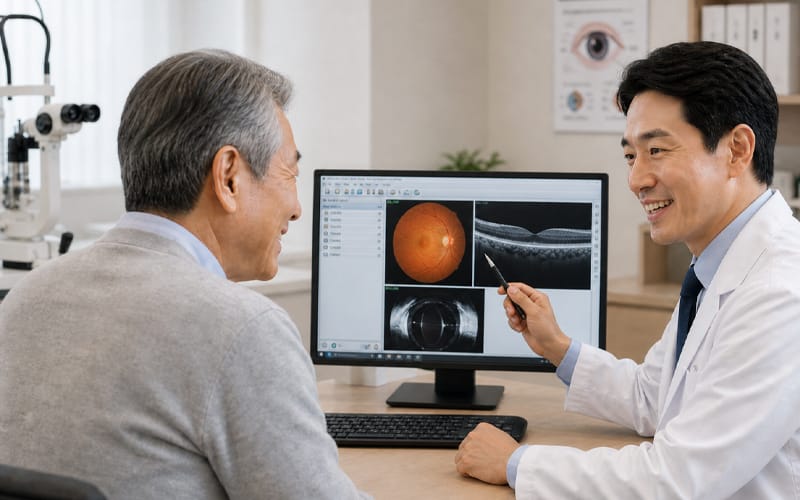
If you’re deciding what to do about reduced night vision and possible cataract surgery, these three points can help:
1) If the main issue is not the eye-chart number but difficulty distinguishing contrast at night, testing for contrast sensitivity and glare-related function can help identify the cause.
2) Surgery timing is determined not only by the measured opacity grade, but also by how much your daily life is affected—especially with night driving. Age also matters, and it is generally advisable not to wait until after the 80s.
3) When selecting an IOL, it’s reasonable to consider both your goal of reducing glasses dependence and your sensitivity to glare, and to review potential visual phenomena in advance.
Safe, comfortable night driving is a major part of maintaining an active life. Rather than enduring anxiety and attributing worsening night vision to “just aging,” consider getting an accurate assessment of your current eye condition and discussing the most appropriate next steps.
Sources
- Korea Disease Control and Prevention Agency (KDCA), National Health Information Portal: Cataract medical information and prevention/management, 2023
- Seoul National University Hospital Medical Information: Cataract symptoms and diagnostic criteria, 2022
- Meuleners et al., The impact of first and second eye cataract surgery on driving simulator performance, Journal of Safety Research, 2021
※ The copyright for all content on this blog belongs to medihi. Unauthorized copying, distribution, or derivative use is strictly prohibited, and violations may result in legal action without prior notice.
Recommended reads
 medihi