

If cataracts are left untreated, the issue can progress beyond simple vision decline to structural problems throughout the eye—such as elevated intraocular pressure (IOP) and optic nerve damage. This post outlines medical decision-making criteria for timing cataract surgery by evaluating not only visual inconvenience, but also the overall risk of cataract-related complications.
“Things just look a bit blurry in front of me... It’s okay to wait longer, right?”

This is something many people say in the exam room. When discussing the timing of surgery, what clinicians pay closest attention to is not just the number on the eye chart. We carefully assess whether the lens has physically enlarged and whether that change could sharply increase pressure inside the eye.
Advertisements sometimes suggest you can do it whenever you feel like it. In real clinical practice, ophthalmologists first consider whether there is a risk of damage to surrounding structures. If you miss the appropriate window simply because you’ve “gotten used to” reduced vision, you may end up facing cataract complications that are difficult to reverse.
Today, we’ll review complications that can arise from cataracts and the criteria used to decide when surgery should not be delayed.
1. A warning from your eyes: the difference between “simple blur” and “structural
swelling”
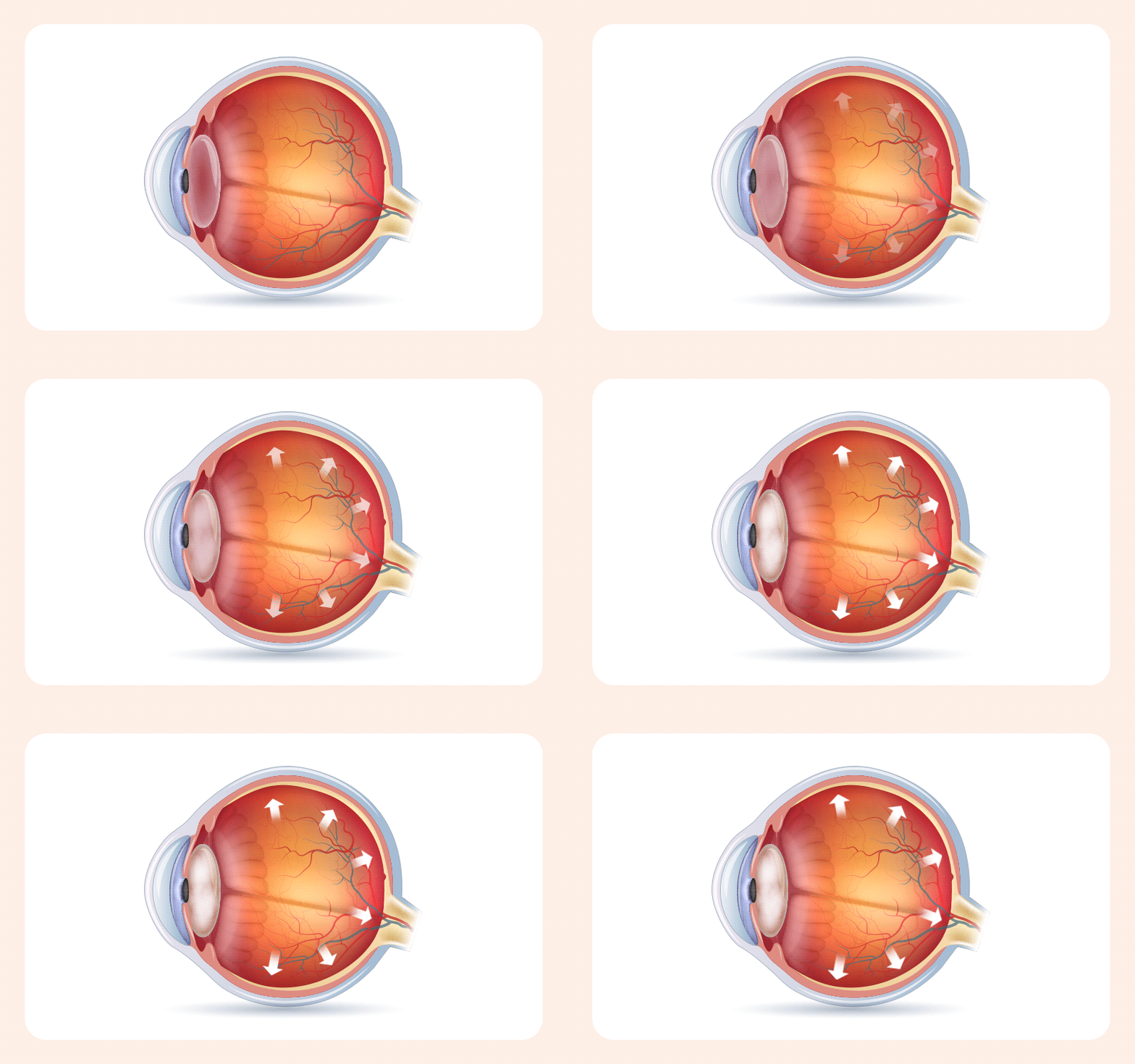
The long-term progression of cataracts is often similar to what happens to an old battery. If a smartphone battery is neglected for too long, it can swell inside the device. The eye’s natural lens can undergo a similar process. Early on, it mainly loses transparency, making your vision look foggy or hazy. Over time, however, the lens absorbs fluid and gradually enters a swelling phase as its volume increases.
Inside the eye, a clear fluid (aqueous humor) circulates to maintain stable pressure. Just as a swollen battery reduces internal space and presses on other components, an enlarged lens narrows the “drain” where fluid exits (the anterior chamber angle). When the outflow pathway becomes narrow, fluid cannot drain properly. This increases the risk that IOP may rise slowly—or sometimes rapidly.
Medically, this is referred to as lens-induced glaucoma caused by cataract. Key structural problems that can occur due to cataracts include the following.
| Cause | Primary Medical Diagnosis | Characteristics |
|---|---|---|
| Lens Swelling | Phacomorphic Glaucoma | Closure of the drainage pathway (anterior chamber angle) and elevated intraocular pressure (IOP) |
| Protein Leakage | Phacolytic Glaucoma | Accompanied by severe intraocular inflammation and elevated intraocular pressure (IOP) |
Patients can adapt to a slow decline in vision to some extent. But rising IOP can become a structural crisis that threatens the health of the entire eye. This is the first reason blurred vision should not be dismissed as “just aging.”
2. Eye pain, headaches: why this can be a warning sign of an emergency—not just
fatigue

When the eyes hurt or the head throbs, it’s easy to assume it’s just fatigue. But if someone who has had blurry vision for a long time starts experiencing pain, it should be viewed differently. It follows the same “swollen battery” principle described earlier. A swollen lens can completely block the eye’s drainage pathway, and in that situation, IOP can rise rapidly at a pace the eye cannot tolerate.
It’s like continuously inflating a balloon until the surface reaches its limit. When IOP rises far beyond the normal range, severe eye pain can occur—sometimes described as the eye feeling like it might burst. This may be accompanied by pounding headaches and even nausea or vomiting. Secondary glaucoma in this setting can present as an acute attack rather than a typical gradual course, because the elevated pressure strongly compresses the optic nerve at the back of the eye.
The optic nerve is delicate tissue; once damaged, it does not return to its original state. If acute IOP elevation persists, optic nerve injury can limit visual recovery. Sometimes the feeling of “I can tolerate it” masks these danger signals. If you have the symptoms below, it may indicate an emergency such as acute IOP elevation—so you should promptly visit an ophthalmology clinic for IOP measurement and an anterior chamber angle evaluation.
✅ If these symptoms occur together, you should check for possible “acute IOP elevation”
- Suddenly worsening eye pain and headache
- Rainbow-colored halos around lights (e.g., fluorescent lights)
- Unexplained nausea and a sensation of vomiting
- A sudden drop in vision that feels different from usual
3. Disadvantages of delaying cataract surgery without a plan
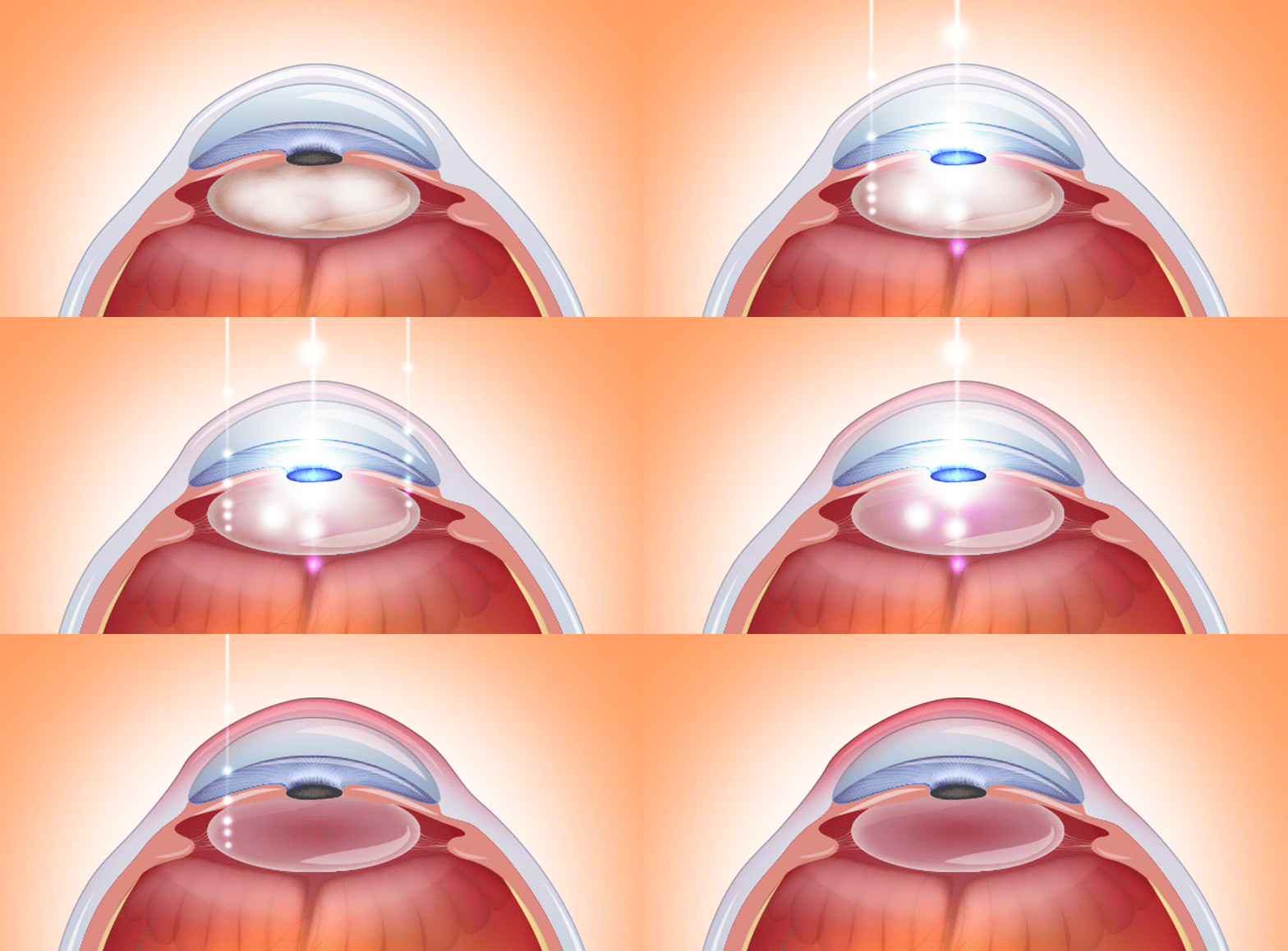
Many people wait because they’ve heard it’s better to let a cataract “fully mature” before having surgery later. However, in today’s microsurgical environment, this can actually create less favorable conditions for the patient. As a cataract progresses into an overmature stage, the once-soft lens can become hard like a stone. At the same time, like battery fluid leaking out, denatured proteins can seep out beyond the lens capsule.
Leaked proteins are recognized inside the eye as unnecessary foreign material. This can trigger a severe inflammatory response called uveitis. Inflammatory debris can float around and block the drainage pathway again, leading to secondary IOP elevation. An even bigger issue arises on the operating table. Modern cataract surgery typically uses an ultrasound device to break the lens into small pieces and remove them by suction.
When the lens becomes rock-hard, stronger ultrasound energy is required to fragment it. Higher energy delivered inside the eye can stress the endothelial cells that maintain corneal clarity, which may lead to longer-lasting postoperative corneal swelling and slower recovery. In addition, the capsule surrounding the lens may become weaker, increasing the risk of posterior capsule rupture during surgery. Delaying surgery without a plan can therefore increase both surgical difficulty and the risk of complications.
4. Daily inconvenience vs. structural risk: criteria for deciding a safer timing
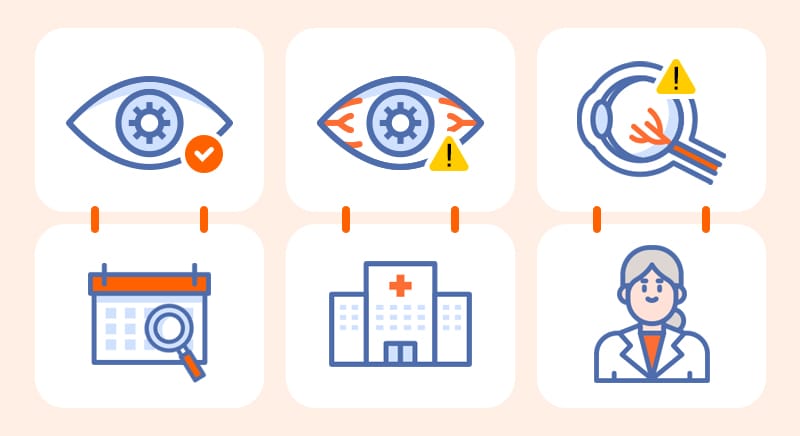
You may struggle with deciding when to proceed with surgery, balancing subtle visual discomfort against the risk of complications. It’s difficult to determine timing based on a single vision number alone. In clinical practice, we assess both quality-of-life factors and the structural condition of the eye to determine the right time for surgery. Based on your exam results, you can refer to the criteria below.
| Current Eye Status & Conditions | Recommended Treatment & Management |
|---|---|
| No pain + Normal IOP + Wide drainage pathway | Focus on regular eye exams (Observation/monitoring is possible) |
| Eye pain, headache, nausea + Rapid decline in vision | Prompt evaluation through urgent ophthalmic care (Differentiating acute IOP spike) |
| Diagnosed with a narrow drainage pathway (Risk of angle closure) | Discuss with a specialist regarding advancing the timing of cataract surgery |
If you are older, glare-related issues and the risk of falls or traffic accidents due to reduced vision are also critical considerations. It’s important to carefully evaluate which category your eye’s physical condition falls into. Even if symptoms are mild, if physical risk factors or coexisting conditions are found, it may be safer to consider a proactive approach.
✅ Helpful questions to ask during your consultation
- Is my lens currently swollen to a stage that could negatively affect IOP?
- Aside from reduced vision, are there pain-related warning signs I should watch for in daily life?
- If I keep delaying surgery, is there a concern that surgical difficulty could increase due to risks such as corneal damage?
5. If vision becomes blurry again after surgery, does that mean vision recovery failed?
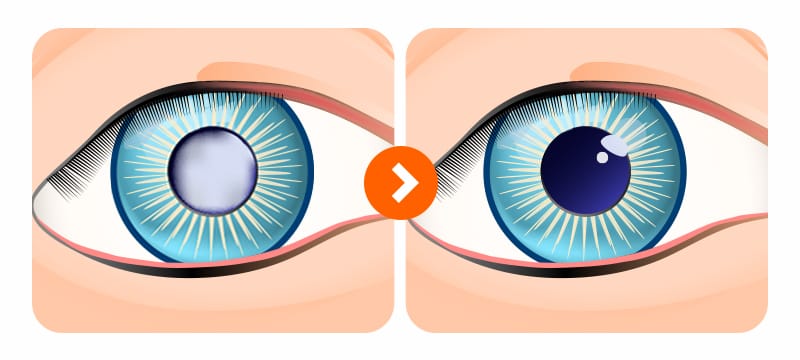
Some people experience blurred vision again after successfully completing surgery at an appropriate time. Many become frightened and discouraged, thinking the cataract has returned. However, this is not because the new artificial intraocular lens has become cloudy. Instead, cells have proliferated on the surface of the thin original capsule that was left in place to hold the artificial lens.
This is a natural bodily response—like frost forming on a window—creating cloudiness on the capsule surface. Medically, it is called posterior capsule opacification (PCO). Although the term includes the word “cataract,” its cause and management differ from the original condition. If the cloudiness covers the center of vision, you may again feel that familiar haziness.
The reassuring part is that it typically does not require complex surgical preparation. It is usually managed as a simple outpatient procedure: while seated in the clinic, a YAG laser is used to gently open the cloudy capsule. Improvement in vision can be expected afterward, and follow-up may be needed depending on your condition. Rather than feeling anxious, it’s best to visit the clinic for a check-up with a calm mindset.
6. Frequently Asked Questions (FAQ)
Q. Is there a specific vision threshold that determines when surgery should be done?
A single number on the eye chart is not an absolute standard. We first listen to how much inconvenience and glare you experience in daily life. Then, a specialist comprehensively evaluates the structural risk of cataract complications—such as secondary glaucoma if left untreated—to decide the timing.
Q. Can cataract surgery also help with glaucoma treatment?
It may help in cases where there is a predisposition to angle-closure glaucoma, in which IOP rises due to a narrowed internal space in the eye. Replacing a swollen, thickened natural lens with a thin artificial lens can widen the drainage pathway inside the eye. This may have a positive effect on IOP management and structural stability.
Q. I already have dry eye—will it get worse after surgery?
During surgery, corneal nerves can be mildly stimulated, so dryness may temporarily increase early on. Over time, it generally improves, and using artificial tears along with eyelid hygiene can help reduce discomfort.
Q. While monitoring my condition, what symptoms mean I should go to the hospital?
If your vision suddenly drops significantly compared with usual, or if severe eye pain and headaches occur, it may be a warning sign related to IOP. If you see rainbow halos around lights (such as fluorescent lights) and feel nausea, you should seek ophthalmic evaluation without delay.

We’ve reviewed several medical variables that can occur when cataracts are left untreated. If the issue is only a simple decline in vision, there may be some room to wait. However, IOP elevation due to lens swelling and inflammatory reactions from protein leakage are clear warning signs that can threaten the safety of the eye.
Deciding when to have surgery is not simply about enduring blurry vision. It is a crucial process to protect the structural safety of your eye and prevent cataract complications. The safest approach is to make the final decision by discussing your exam results with a specialist. If you notice changes in symptoms, don’t just endure them—seek objective testing and work toward a reasonable treatment plan.
Sources
- Korea Disease Control and Prevention Agency (KDCA), National Health Information Portal. Cataract. (Accessed: 2024-05)
- Journal of the Korean Ophthalmological Society, The Effect of Cataract Surgery Alone in Patients with Chronic Angle-Closure Glaucoma, 2007
- Ayub et al., Outcomes and reasons for late presentation of lens-induced glaucoma, 2021
※ The copyright for all content on this blog belongs to medihi. Unauthorized copying, distribution, or derivative use is strictly prohibited, and violations may result in legal action without prior notice.
Recommended reads
 medihi