

We provide a detailed medical guide on the criteria for distinguishing between presbyopia and cataracts, along with the necessity of professional eye examinations. By identifying the root cause of blurry vision, you can establish the right standards for protecting your vision and quality of life.
“My vision is still foggy even when I wear reading glasses.”
“I’m confused whether this is just presbyopia or a disease.”

As we age, it is natural for our vision to become dim or blurry. Until now, you may have struggled to distinguish whether these changes were simply due to presbyopia or an actual eye condition. Many patients visit the consultation room with these exact concerns.
In such cases, the priority is to evaluate the 'quality of vision' and the level of discomfort experienced in daily life, assessing how structural changes within the eye affect one's routine. This is the essential first step in determining the correct treatment path.
Let’s explore the standards for distinguishing between presbyopia and cataracts—two conditions that are frequently confused—and look into the appropriate alternatives.
1. Blurry Even with Glasses? Why It’s Not Simply Presbyopia (Focus vs. Opacity)

When you experience dimming or decreased vision, the first criterion to evaluate is whether the cause is a 'focus' issue or a 'transparency' issue.
Think of the eye as a high-precision camera. Presbyopia is like a camera's 'auto-focus motor' becoming worn out, making it difficult to focus on nearby objects smoothly. In contrast, cataracts are a condition where the 'lens' itself becomes cloudy and hardens.
Presbyopia, which stems from a loss of focusing power (accommodation), is relatively easy to correct. Generally, wearing reading glasses or multifocal lenses restores clear vision.
However, if your vision remains blurry even after changing your prescription or using reading glasses, caution is required. If your overall visual quality feels compromised—as if you are looking through a fog—it may be a signal that the lens itself has developed an opacity.
At this point, the diagnosis and response diverge clearly. If you only feel discomfort during near-work and it is corrected by glasses, managing presbyopia is the priority. Conversely, if blurring persists despite wearing glasses, an opacity should be suspected. Since it is difficult to differentiate these two based solely on symptoms, an eye examination is necessary for any discomfort that glasses cannot resolve.
[Differences Between Presbyopia and Cataracts]
- Presbyopia: A focus (accommodation) issue → Often improved with reading glasses.
- Cataracts: A transparency (opacity) issue → Vision may remain foggy even with glasses.
2. When Near-Vision Suddenly Improves Without Reading Glasses: Is It Better Sight?

There is a surprising situation often encountered in the clinic: patients expressing joy because they can suddenly "read text on a smartphone clearly without reading glasses." While it’s tempting to think your eyes have become younger, this requires careful scrutiny. This is not an improvement in eye health, but rather a symptom arising from changes in the refractive power of the lens.
As a cataract progresses, the nucleus—the center of the lens—hardens, changing the angle at which light is refracted. This can cause index myopia, a temporary shift where the eye focuses better on near objects, paradoxically improving near-vision without glasses.
However, this does not mean the eye is healthier. Because the internal opacity of the lens is already significant, the overall quality of vision declines. This should be viewed as a structural change and is a common early symptom of cataracts. If vision changes repeat or are accompanied by fogginess, it is safe to check the eye's condition through a dilated eye exam (mydriasis).
[Myopia Shift & Warning Sign Checklist]
- You can suddenly see near-text clearly without your usual reading glasses.
- You experience diplopia (double vision), where objects appear overlapped or doubled.
- Your vision seems to improve temporarily, then becomes overall blurry again.
3. Why 'Pupil Dilation' is Essential Beyond Standard Visual Charts
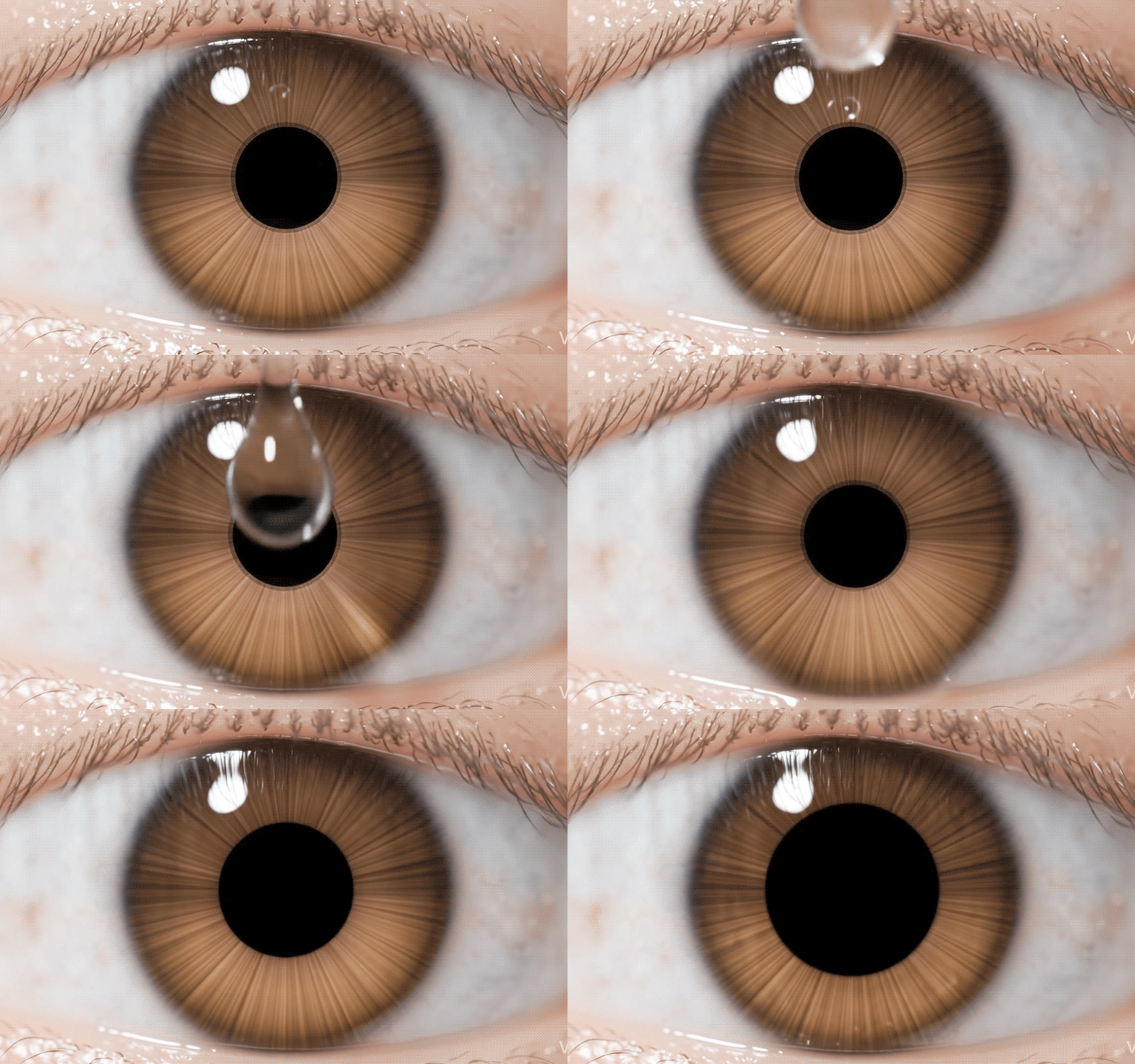
A standard visual acuity chart is not enough to accurately diagnose cataract symptoms. Returning to the camera analogy, to check for stains inside a lens, you must open the aperture wide and shine a light to inspect the interior thoroughly. The 'Mydriasis Exam' (pupil dilation) performed during an eye check-up serves this exact purpose.
In a mydriasis exam, eye drops are used to dilate the pupil, allowing the doctor to observe the inside of the eye using a slit-lamp microscope. This process clearly identifies the location and degree of lens opacity. Cataract opacities can occur in the front (cortical), middle (nuclear), or back (posterior subcapsular) of the lens. Depending on the location, the specific name of the cataract changes, and the patterns of glare or light smearing felt by the patient vary significantly.
For patients with chronic conditions like diabetes or hypertension, the retina and optic nerve are often checked simultaneously. Even without chronic illness, intraocular pressure and fundus exams may be conducted depending on the eye's condition, with the examination customized based on medical judgment.
4. Why 'Lifestyle Discomfort' Outweighs 'Degree of Opacity' for Surgery Timing

Many people worry that they must have surgery immediately if an opacity is found. However, you do not always need to schedule surgery right away. In clinical practice, the primary criterion for determining surgery timing is the 'decline in daily functional ability' experienced by the patient. If the decrease in vision is not significant and does not hinder daily life, the condition is monitored through regular check-ups.
Conversely, even if an opacity is in its early stages, the perceived discomfort can be high. If you feel endangered by severe glare from oncoming headlights during night driving or if outdoor activities are hindered by light sensitivity, surgical treatment should be actively considered.
Furthermore, if a patient is in their late 70s, it is often advisable to consider surgery even if daily discomfort is not extreme. Because the lens inevitably hardens (sclerosis) with age, waiting until the 80s can make the cataract so severe that higher ultrasound energy is required during surgery. This can negatively impact the lens capsule and corneal endothelium, increasing surgical risks.
The choice of intraocular lens (IOL) must also be made carefully based on individual lifestyle. If you drive frequently at night, a monofocal lens may be advantageous. If you perform frequent near-work like smartphone usage, multifocal IOLs for presbyopia correction can be considered. Since the adaptation process varies for each lens, thorough consultation with medical staff is necessary.
✅ Checklist for Determining Surgery Timing
- Glare is significantly worse under indoor lighting or at night than in bright daylight.
- You drive frequently at night and feel fatigue or danger due to light smearing.
- Even with new glasses, your vision feels stifled, interfering with daily tasks.
- You are in your late 70s or older.
5. Vision Blurring Again After Surgery: Alternatives Without Re-surgery
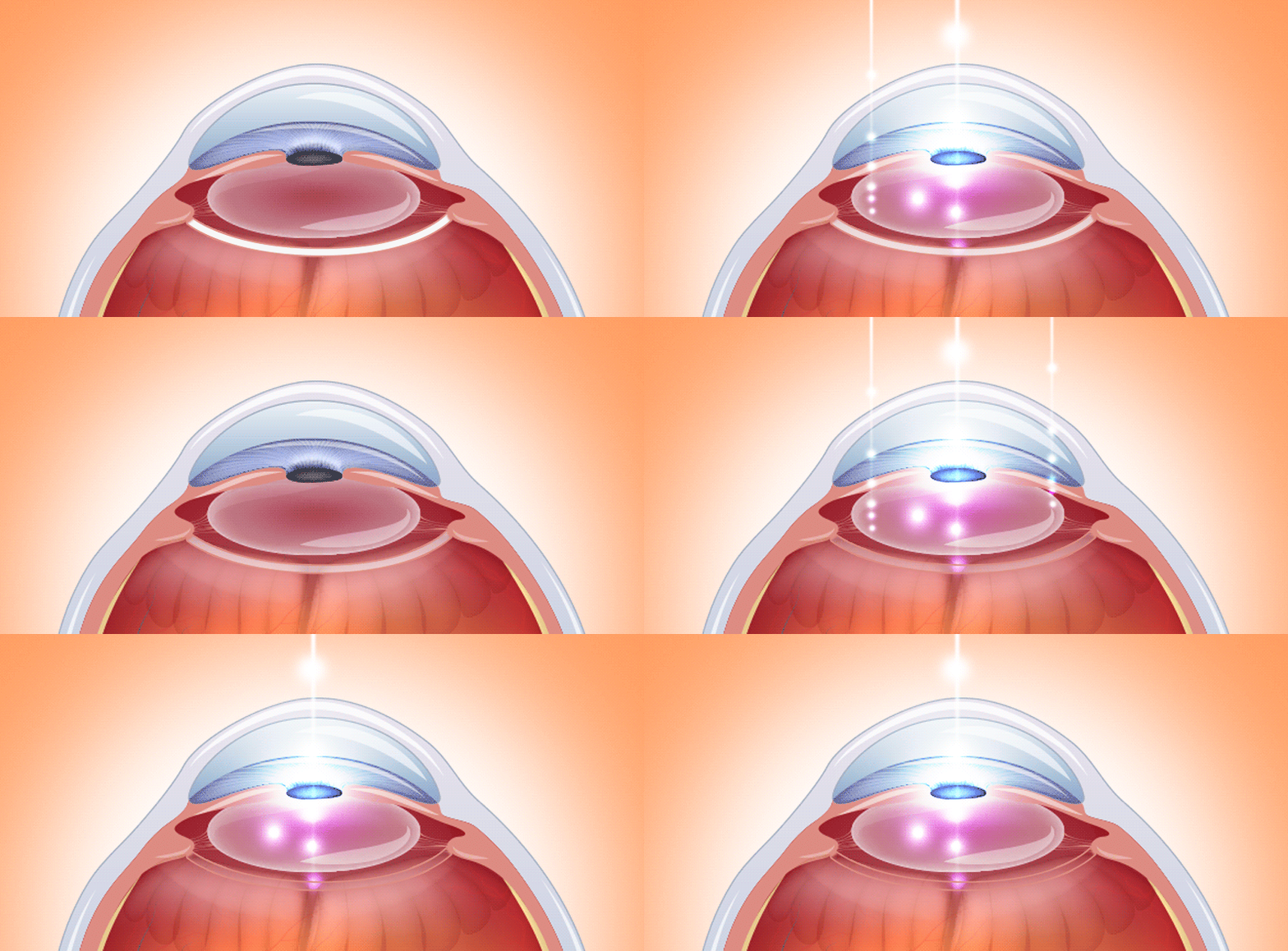
After a successful surgery, patients expect to maintain clear vision for life. However, some experience their vision becoming blurry again years later. In a standard cataract surgery, the cloudy lens is removed while the posterior capsule—a transparent, cellophane-like membrane—is left intact to hold the IOL. Over time, cells may migrate to this capsule, causing it to become cloudy. This is diagnosed as Posterior Capsular Opacification (PCO), often called a 'secondary cataract.'
Experiencing this might make you fear that the surgery failed. However, this is a natural process that occurs in almost all patients who have undergone cataract surgery. In camera terms, it’s like fine dust settling on the sensor behind a new lens. Medically, it is not a problem with the IOL itself, but an opacity in the supporting tissue.
If PCO makes daily life uncomfortable again, there is no need to worry. There is no need for another complex surgery. The blurring can be improved through a simple YAG laser procedure in an outpatient setting. If you experience dimness again after surgery, please seek confirmation from a medical professional.
6.Frequently Asked Questions (FAQ)
Q. Can presbyopia and cataract symptoms occur at the same time?
Yes, it is very common for both changes to overlap after the age of 50 or 60. As cataracts progress and the lens hardens, near-vision adjustment ability decreases, which can worsen presbyopia symptoms.
Q. Can eye drops or medication make a cloudy eye clear again?
Several eye drops were developed years ago to suppress cataract progression and are still prescribed. However, cumulative clinical research shows that these drops have little to no effect on reversing or significantly stopping cataract progression.
Q. Do underlying diseases like diabetes affect the surgery process or results?
Diabetes can cause diabetic retinopathy, which leads to retinal bleeding and membrane formation, potentially decreasing vision independently of cataracts. Furthermore, diabetic patients often have decreased corneal endothelial cell function, making them prone to corneal edema (swelling) after surgery. Therefore, a thorough evaluation of comorbid conditions through fundus and intraocular pressure exams is essential before surgery.
Q. At what level of symptoms should I stop enduring and seek consultation?
You should seek a check-up when your vision remains foggy even after changing glasses, when you feel a safety threat from night glare, or when you suddenly see near-objects better without reading glasses. Additionally, it is recommended to get an eye exam at age 70 even without symptoms, as age-related conditions like cataracts and macular degeneration become more common.

To understand presbyopia and cataracts correctly and find the right solution, please remember these three criteria:
1. If glasses clear your vision, it is likely a focus issue; if it remains blurry, suspect a cataract due to lens opacity.
2. Sudden improvement in near-vision is not 'rejuvenation' but may be index myopia caused by a hardening nuclear cataract.
3. The timing of surgery should be based on the degree of glare and lifestyle discomfort, not just the clinical diagnosis name.
Blurry vision is a natural trace of our eyes working tirelessly over many years. Rather than enduring discomfort with vague anxiety, please undergo a systematic eye examination. We sincerely support you in keeping your vision bright and clear for the rest of your life.
Sources
- Korea Disease Control and Prevention Agency (KDCA) Health Information Portal, Health Information on Presbyopia and Cataracts, 2023.
- Seoul National University Hospital Medical Information, Diagnosis and Treatment of Cataracts, 2023.
- BMC Ophthalmology (2024), Network Meta-analysis Comparing the Effects of Presbyopia-correcting IOLs (Trifocal/EDOF).
※ The copyright for all content on this blog belongs to medihi. Unauthorized copying, distribution, or derivative use is strictly prohibited, and violations may result in legal action without prior notice.
Recommended reads
 medihi