

The appropriate timing for cataract surgery is prioritized based on the decline of functional ability in daily life rather than simple visual acuity chart numbers. Before the lens hardens due to advanced progression, we provide criteria for determining a safe timing by comprehensively considering the patient's lifestyle patterns and comorbid conditions.
“Others say to wait as long as possible, but is it right for me to have surgery now with my current vision?”

This is a common question heard in the consultation room. It is natural to feel anxious about whether you are deciding on surgery too early. When visual acuity remains relatively good, those around you often advise delaying surgery for as long as possible. However, the first criterion medical professionals examine when deciding on cataract surgery timing is not the number on a visual acuity chart. The true standards for gauging surgery timing are the decline in visual function experienced in daily life and the presence of comorbid eye diseases.
Even if you have hesitated to make a surgical decision until now, it is by no means an incorrect response. To help you make a rational choice at this point, we have summarized four clear medical criteria: daily discomfort, signals of progression, comorbid diseases, and the possibility of follow-up observation.
1.Why 'Daily Discomfort' is the Standard Over Visual Acuity Numbers
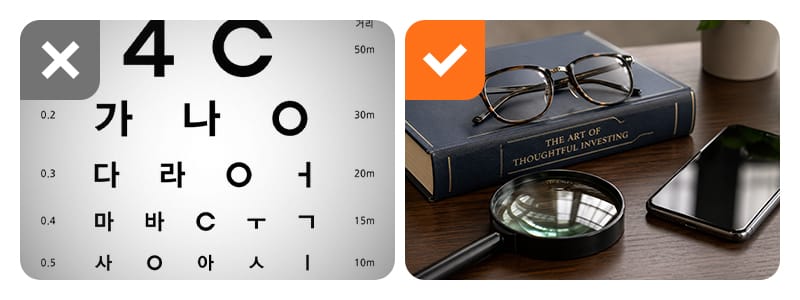
The measurement commonly taken by looking at a chart in an ophthalmology clinic is called visual acuity. It is easy to think that surgery can only be performed when this number drops significantly below a certain level. However, the criteria in actual clinical practice are different. Even if the numbers on the visual acuity chart are good, the quality of daily life can be seriously degraded.
Medically, this is referred to as a decline in Visual Function. When a cataract develops, light cannot enter the eye straight and instead scatters in all directions.
This point is easier to understand if compared to a camera lens. A visual acuity chart test is like a 'test shot' in an environment with perfect lighting and distance settings. In contrast, daily life is 'real-world usage,' mixed with backlighting, nighttime, and rainy weather. If the lens becomes cloudy, the test shot may turn out okay, but real-world photos are prone to light smearing and blurring.
This is why the limitations in life must be identified before simple visual acuity numbers. If the clouded lens significantly interferes with tasks such as work and driving, the timing of surgery can be discussed.
2.Suspect Visual Function Decline if Night Driving and Glare Increase

In cataracts, glare and decreased contrast sensitivity are commonly accompanied by a foggy or blurry feeling in the field of vision. Contrast sensitivity refers to the ability to distinguish between light and dark. If this ability decreases, distinct discomforts may appear, such as:
- Extreme glare that makes it difficult to open one's eyes under strong sunlight.
- Phenomenon where lanes and streetlight glows appear severely smeared during night driving.
- Difficulty distinguishing stairs when walking down.
- Phenomenon where text is actually easier to read in dark places than in bright places.
The situation becomes more sensitive during night driving. As streetlights and headlights overlap, light smearing increases and the field of vision can be restricted. The key criterion for considering surgery here is not the mere presence of symptoms, but how much those symptoms restrict the patient's safety and lifestyle.
If discomfort is mild and the fundus can be observed well, follow-up observation is possible. The goal at this time is not to delay unconditionally, but to coordinate the optimal timing by regularly checking the speed at which the lens is clouding.
✅ Self-Check for Night Driving and Daily Discomfort
- Do headlights smear severely, causing lanes to appear late?
- Have you started returning home early or avoiding driving because you are afraid of night driving?
- Does discomfort increase rapidly on rainy days or in backlit environments?
- Does clarity not improve well even if you change your glasses or reading glasses?
3.“Is Waiting as Long as Possible Beneficial?” Conditions Where Surgery Difficulty Increases
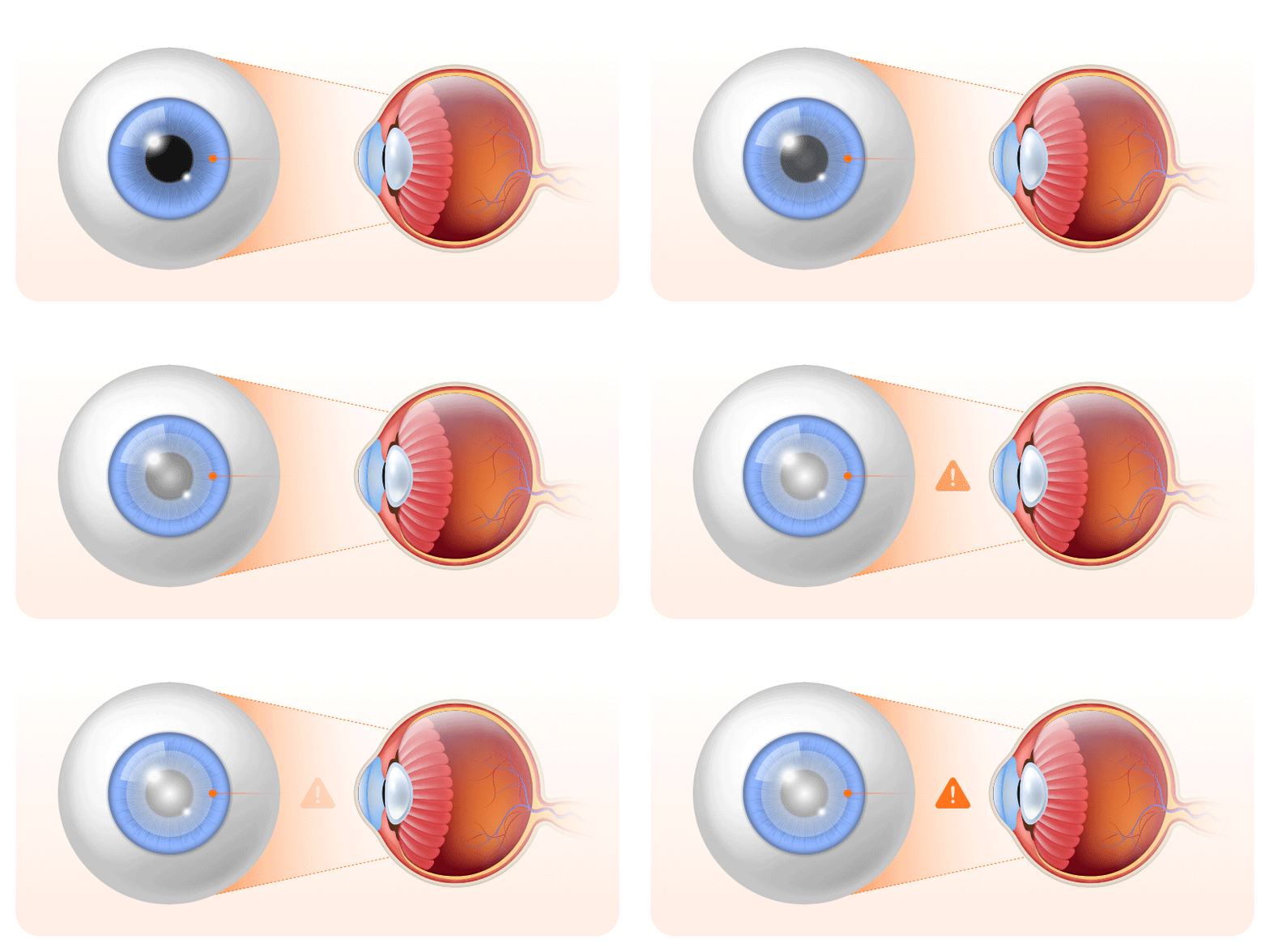
Cataracts are generally not a disease that requires immediate emergency surgery. Therefore, if there is no significant discomfort in daily life, it is common to observe the progress until an appropriate time. However, simply delaying the surgery timing indefinitely is not always the answer. The situation changes when the lens opacity worsens and enters the so-called 'mature' or 'hypermature' stage.
Returning to the camera lens analogy: when light fog forms on the lens surface, it can be gently wiped away to continue shooting. However, if pollutants are pressed hard onto the lens and harden, much stronger physical force is required to remove them. Cataracts are similar.
As the lens enters the hypermature stage and hardens, more ultrasound energy is required during surgery to break it into small pieces for removal. The more intensely and longer ultrasound energy is used, the greater the potential burden of complications, such as damage to corneal endothelial cells. Therefore, rather than delaying surgery unconditionally, it is important to identify signals of progression through regular check-ups.
4.Can Diabetes or Macular Degeneration Accelerate Surgery Timing?

In addition to the degree of cataract progression, comorbid eye diseases are also important variables in determining surgery timing. In particular, for patients suffering from diabetic retinopathy, macular degeneration, or glaucoma, the approach changes. This is because the retina and optic nerve inside the eye must be continuously observed and treated. For example, patients with naturally narrow anterior chamber angles are at high risk of acute angle-closure glaucoma if the lens volume expands due to cataracts. In such cases, cataract surgery may be performed earlier for the purpose of glaucoma prevention and treatment.
A severely clouded lens becomes a major obstacle when medical staff examine the state of the retina deep inside the eye. It makes it difficult to detect fine bleeding or deformation of the retina in a timely manner. This can delay the observation of retinal diseases and the establishment of treatment plans, requiring caution.
In these situations, cataract surgery goes beyond the purpose of simply improving vision. Surgery timing may be moved forward to secure a field of view for safely treating the inside of the eye. Rather than vaguely fearing that surgery might worsen the retinal condition, it is better to closely design the treatment path with medical staff to protect overall vision.
✅ Key Variables to Check Before Surgery
- Is the depth of the anterior chamber (aqueous depth) relatively shallow?
- Is it accompanied by diseases requiring retinal observation, such as diabetic retinopathy?
- Have you recently heard of an increase in intraocular pressure or findings of inflammation inside the eye?
- Are systemic underlying diseases such as diabetes and hypertension well-managed?
5.Choosing an IOL That Fits Your Lifestyle: Glass-Dependence and Night Driving
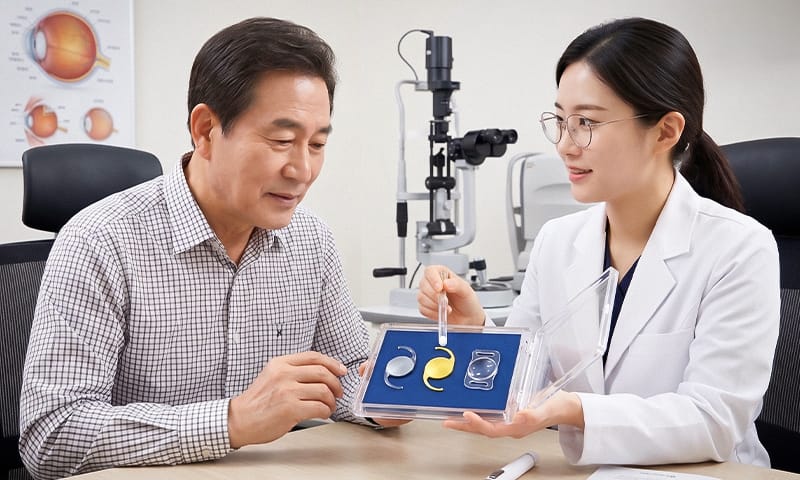
After deciding on the cataract surgery timing, the process of determining which intraocular lens (IOL) to insert follows. The choice of lens should be finely tuned according to the patient's daily life patterns, occupation, and primary hours of activity.
If you prioritize seeing clearly at a single distance and find it comfortable to use reading glasses for near-work, a monofocal lens may be advantageous. Monofocal lenses have less light smearing, making them suitable for those with frequent night driving or activities. On the other hand, if you want to see various distances and overall reduce dependence on glasses, multifocal lenses become a convenient alternative.
Multivocal lenses offer high convenience in daily life, but because light is divided, nighttime light smearing or decreased contrast sensitivity can occur. Since the optical characteristics of each lens are clearly different, there is no single correct answer. We hope you make a decision that meticulously reflects your living environment and work characteristics.
6.Frequently Asked Questions
Q. Can unconditionally delaying cataract surgery make the surgery more difficult?
While it is usually not an emergency surgery, caution is needed against indefinite neglect. If a hypermature stage—where the opacity worsens and the lens hardens—is suspected, the ultrasound energy required for surgery increases, which can change the possibility of complications. It is safer to adjust the timing when daily discomfort increases and signals of progression appear, rather than focusing on visual acuity chart numbers.
Q. I have severe glare during night driving; should I consider surgery based on this alone?
Night driving glare is a representative symptom of visual function decline commonly seen in cataracts. The important criterion is not the mere presence of the symptom, but whether lifestyle functions are restricted, such as avoiding driving or finding it difficult to maintain a safe distance. If discomfort is significant, surgery timing can be discussed based on an evaluation centered on visual function.
Q. Is there a difference in vision recovery after surgery if I have diabetes or macular degeneration?
If there is an underlying retinal disease, the extent of expected vision improvement may be limited even if the cloudy lens is cleanly removed. This is due to the inherent limitations of the retinal function itself. Therefore, a sufficient evaluation of the retinal state and a discussion regarding expected visual acuity must precede the surgery.
Q. What should I do if my vision becomes foggy again after some time has passed since surgery?
Since the lens itself was replaced, the cataract is not recurring. However, there is a possibility of 'secondary cataract,' where opacity develops in the posterior capsule area that supports the inserted IOL. Improvement can generally be expected with YAG laser treatment in an outpatient setting, so it is recommended to first check the exact cause if symptoms appear.

We have examined rational criteria for deciding on the timing of cataract surgery. The degree of decline in visual function felt in daily life, rather than the numbers on a visual acuity chart, serves as the most important standard when considering surgery.
Simply delaying surgery is not always the correct response. If it progresses to the hypermature stage, the surgical difficulty and burden may increase, and if you have retinal diseases such as diabetes or macular degeneration, you may need to flexibly move the surgery timing forward for fundus observation.
The progression of cataracts is one of the natural aging processes. There is no need to be hasty with early worries, nor is there a need to increase anxiety with excessive delays. If you consistently check your current eye condition and the level of discomfort in your life through regular eye examinations, you will be able to find the most comfortable and safe timing for surgery.
Sources
- Korea Disease Control and Prevention Agency (KDCA) National Health Information Portal, Medical Information Guide on Cataract Disease.
- Korean Ophthalmological Society (KOS), Cataract Disease Information and Public Guidance.
- JAMA Network, Cataract in Adults: A Review.
※ The copyright for all content on this blog belongs to medihi. Unauthorized copying, distribution, or derivative use is strictly prohibited, and violations may result in legal action without prior notice.
Recommended reads
 medihi