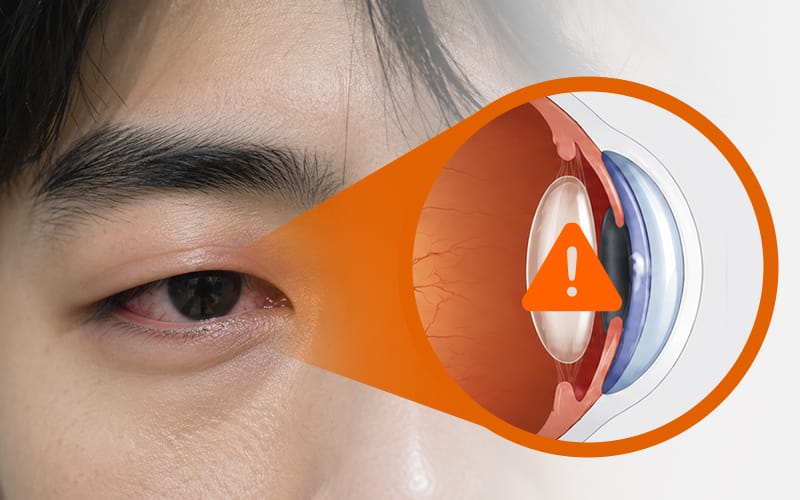

For those who feel burdened by surgery and are considering treatment with eye drops, this post organizes the medical criteria to keep in mind. You can review the realistic limitations of trying to reverse a clouded lens with medication, as well as decision-making standards for protecting vision safely.
“Can cataracts be treated with eye drops only, without surgery?”

Wanting to preserve clear vision with eye drops instead of surgery is something many people can relate to. In reality, quite a few patients hope cataracts can be managed without surgery, using only topical drops. However, if fear of surgery leads someone to insist on non-invasive methods alone, the treatment process can actually become more complicated later on. Understanding the medical limitations accurately is essential for building a safe long-term treatment plan.
In this article, to support a rational choice, we summarize the realistic role and limitations of medication in cataract care, and when it’s time to consult a specialist.
1. Why a lens hardened by protein clumping cannot become clear again with medication
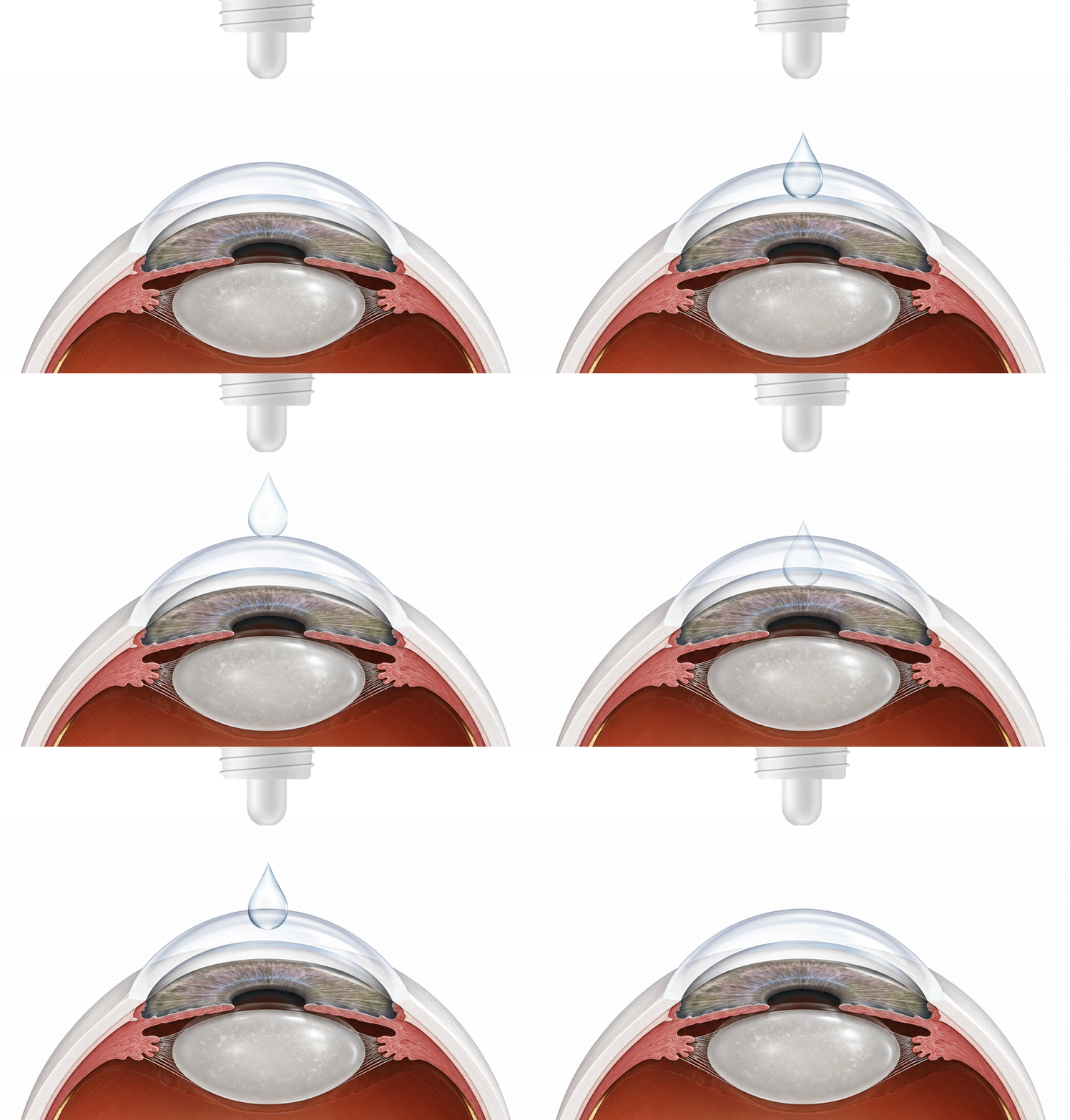
The fundamental cause of cataracts is aggregation (clumping) of lens proteins. Proteins that once acted as a transparent lens inside the eye can, due to aging or other factors, stick together and create cloudiness. This is similar to how the clear white of a raw egg turns white and solid when heated. Just as pouring water onto a fried egg will not make it transparent again, it is difficult to return once-aggregated proteins to their original state. Medically, this is referred to as an irreversible change.
Ingredients marketed as “cataract eye drops” are supportive measures intended to slow the rate of clouding. A medication that fully restores hardened proteins back to complete transparency has not yet been established as a standard treatment. This is because, pharmacologically, it is very difficult for a drug applied to the eye surface to cross anatomical barriers and reach deep into the lens at a sufficient concentration.
Therefore, expecting vision to become completely clear simply by using eye drops
consistently does not match clinical reality. While some recent studies have reported encouraging signals in very early stages, at present the role of eye drops is closer to managing symptoms for a period of time and coordinating the timing of surgery, rather than fully removing the cloudiness.
2. Delaying progression vs. perioperative care: how do cataract-related eye drops play different roles?

Cataract-related eye drops prescribed in ophthalmology can be broadly divided into two categories by purpose. The first is supportive medication aimed at slowing the progression of clouding, and the second is essential medication used before and after surgery to control infection and inflammation. Many patients confuse these two as “eye drops that cure the eye,” so it is important to understand each role accurately.
Clinically, the category with clearly demonstrated effectiveness and necessity is the
latter—medications used around the time of surgery. In contrast, progression-delaying drops may be considered as supportive care in early stages when vision decline is mild, but because the clinical evidence is not sufficiently consistent, relying on them alone is not recommended.
Please use the criteria below to check whether your current eye condition is appropriate for supportive medication-based management.
✅Checking treatment direction based on your current eye condition
- If everyday inconvenience is mild and there is no interference with night driving → supportive eye-drop management may be considered first.
- If nighttime glare is severe, or vision decline is clear enough to affect daily life → you should consult a specialist to address the underlying cause.
3. If daily life feels difficult, why you should not miss the right timing

Cataracts are fundamentally a condition in which surgical treatment—replacing the clouded natural lens with an artificial lens—is central. Major clinical guidelines in Korea and internationally also recommend surgery when decreased vision meaningfully affects daily life. More important than the number on an eye chart is the point at which you begin to fear night driving, or reading and everyday activities become difficult—these are far more practical criteria for deciding surgical timing.
Leaving a lens that continues to become cloudier untreated for a long period due to
concerns about surgery is not recommended. In some cases, structural changes in the lens may be accompanied by increased intraocular pressure. In particular, if you experience sudden eye pain, headache, nausea, or a rapid drop in vision, please visit an eye clinic immediately. Because these symptoms may signal an acute complication rather than simple cataract progression, prompt specialist evaluation is more important than self-judgment.
If cataracts progress to a hypermature stage, the difficulty of surgery can also change. When the lens becomes excessively hardened, the process of breaking it up and removing it with ultrasound can become more complex, and the risk of complications may increase accordingly. Consulting a specialist in advance—before visual obstruction and functional discomfort become pronounced—is safer. Regularly assessing your current level of functional difficulty and whether other eye conditions are present is a realistic strategy for preserving vision over the long term.
4. Non-surgical medication: what conditions must you confirm before placing too much
trust in it?

If you prefer non-surgical methods, the starting point should be clearly understanding the clinical limitations of medication-based treatment. Objectively identifying the current stage of cataract progression is a prerequisite for appropriate management. If you are in an early stage, rather than rushing into surgery, it can be a reasonable approach to monitor the course through prescription glasses, improving lighting in your living environment, and regular eye examinations.
On the other hand, if glare, color spreading, or reduced contrast sensitivity begins to interfere with daily life and work, a more proactive response is needed. If there are ophthalmic complications associated with systemic disease—such as diabetic
retinopathy—continuing management with supportive medication alone may actually be risky. In such cases, rather than relying only on eye drops, it is recommended to establish a definitive treatment plan through specialist consultation, including a detailed retinal evaluation.
The core of treatment is not insisting on non-invasive measures. It is choosing the optimal timing and method that match your current eye condition and stage of progression. During your consultation, reviewing the items below with your specialist can help you make a more rational decision.
✅Items to confirm during a medical consultation
- At my current stage, what benefits can I realistically expect from topical medication, and what are the medical limitations?
- If I delay surgery and maintain only supportive medication, are there risk factors that could accompany this, such as increased intraocular pressure?
- Based on my current level of functional discomfort, when is an appropriate time to discuss definitive treatment?
5. Regular checkups that determine treatment direction: how long should you keep
watching and waiting?

The most rational way to manage eye disease is to choose objective follow-up monitoring rather than expectations without evidence. Once lens protein aggregation begins, it does not naturally return to full transparency. Because this is an irreversible change, regular ophthalmic checkups are essential to periodically confirm the speed and extent of clouding progression.
Follow-up intervals are set differently for each patient depending on the degree of cataract progression and whether there are coexisting conditions. Someone in an early stage with mild functional discomfort and someone whose clouding has progressed with clear vision decline will inevitably require different checkup schedules. It is important to maintain regular visits according to the schedule suggested by your clinician and to track changes in the eye systematically.
Regular checkups are not simply a process of receiving prescriptions. They are an important clinical opportunity to evaluate overall eye health and to detect other eye diseases early, beyond cataracts. In particular, if you are older or have underlying conditions such as diabetes or hypertension, a fundus examination should be performed in parallel to closely assess the retina and optic nerve. Flexibly adjusting the treatment strategy to fit your current eye condition is the key to preserving long-term visual function.
6. Frequently asked questions (FAQ)
Q. If I use eye drops, can I avoid surgery for the rest of my life?
In early stages, it is possible to use supportive eye drops with the goal of slowing the progression of clouding. However, an effect that restores already-developed lens opacity back to transparency has not been medically proven to date. Therefore, supportive eye drops cannot be considered a standard treatment that completely replaces surgical treatment.
Q. While using eye drops, what tests should I get, and how often?
During follow-up, clinicians regularly assess functional vision, the degree of lens opacity, intraocular pressure, and fundus status. Testing intervals vary by patient depending on the speed of cataract progression and whether there are coexisting conditions, so your care team will guide you on a schedule tailored to your individual situation.
Q. Why are there so many different eye drops prescribed after surgery?
Eye drops used after surgery are not medications that treat the cataract itself. They are essential medications to suppress infection and inflammation at the incision site and to manage dryness on the ocular surface. Because each drop has a different role, using them without missing doses according to the clinician’s prescription plan is important for safe recovery.
Q. What symptoms mean I should seek care immediately?
Even while monitoring with supportive medication, if nighttime glare or vision decline begins to clearly interfere with daily life, you should visit an eye clinic. In particular, if sudden eye pain, headache, and nausea occur together, an acute complication related to increased intraocular pressure may be possible, so immediate evaluation is necessary.

If lens clouding is in an early stage, improving the living environment, using progression-delaying eye drops, and monitoring the course can be a clinically meaningful approach. However, if protein aggregation has progressed substantially—making it difficult to secure a clear field of vision and causing obvious disruption to daily life—the situation is different. At that point, rather than attempting to reverse the clouding with medication, it is a far more reasonable choice to determine a safe surgical timing together with a specialist.
It is completely understandable to want to look for non-invasive options first due to fear of surgery. However, postponing specialist care and relying only on medication may instead lead to missing the appropriate treatment window. Based on objective clinical evidence, we encourage you to consult thoroughly with an ophthalmology specialist and preserve your valuable vision over the long term by choosing the most appropriate timing and method for your current eye condition.
Sources
- Korea Disease Control and Prevention Agency (KDCA) National Health Information Portal: medical information and care guide for age-related cataracts
- Seoul National University Hospital medical information: conservative topical treatment for cataracts and follow-up monitoring criteria
- Chen et al., Clinical Paradigms and Pharmacological Review in Cataract Management (including a review of Pirenoxine), Frontiers in Pharmacology, 2022
※ The copyright for all content on this blog belongs to medihi. Unauthorized copying, distribution, or derivative use is strictly prohibited, and violations may result in legal action without prior notice.
Recommended reads
 medihi